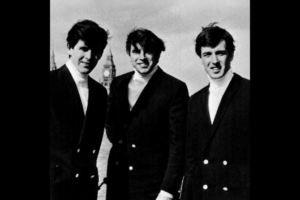
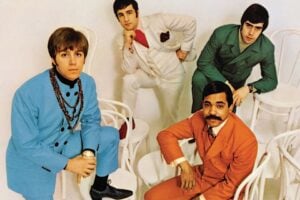
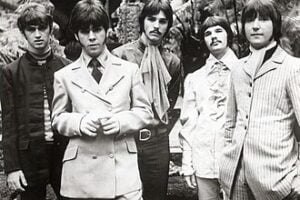
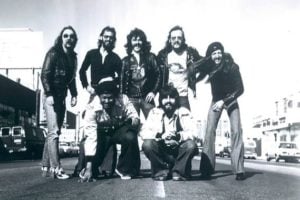
Photo: Motown, Public domain, via Wikimedia Commons
The Spinners began in Ferndale, Michigan, in 1954 as the Domingoes, formed by a group of young singers that included Henry Fambrough, Billy Henderson, Pervis Jackson, C.P. Spencer, and James Edwards. Bobbie Smith soon replaced Edwards, and by the early 1960s the group had become The Spinners and started recording for Harvey Fuqua’s Tri-Phi label. Their first national hit, “That’s What Girls Are Made For,” arrived in 1961 before the group moved into the Motown system later in the decade. Motown never turned them into the stars they should have been, although “It’s a Shame” finally gave them a major hit in 1970. Everything changed after The Spinners signed with Atlantic Records and began working with producer Thom Bell, whose arrangements helped turn their harmonies into a defining sound of 1970s soul. With Bobbie Smith, Philippé Wynne, Henry Fambrough, Billy Henderson, and Pervis Jackson, the group entered the greatest period of its career.
The Atlantic years produced “I’ll Be Around,” “Could It Be I’m Falling in Love,” “Mighty Love,” “Games People Play,” “The Rubberband Man,” and the number-one Dionne Warwick collaboration “Then Came You.” Philippé Wynne left in 1977, and John Edwards eventually became the group’s principal lead singer, but The Spinners continued scoring hits into the early 1980s, including “Working My Way Back to You/Forgive Me, Girl.”
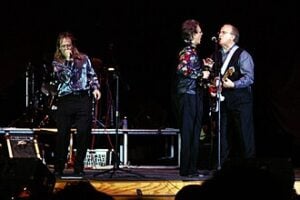
The group returned to the studio in 2021 with ‘Round the Block and Back Again, its first new studio album in decades. Henry Fambrough retired in 2023, the same year The Spinners were finally inducted into the Rock & Roll Hall of Fame, and he died on February 7, 2024. The final album recorded with Fambrough, Full Circle, was released in May 2024. The Spinners continue performing today, carrying forward one of the deepest and most beautiful catalogs in American soul music.
# 10 – That’s What Girls Are Made For

“That’s What Girls Are Made For” was The Spinners’ debut single and the record that first put the young Detroit-area group on the national charts in 1961. Harvey Fuqua and Gwen Gordy wrote the song, with Fuqua producing the recording for Tri-Phi Records. Bobbie Smith sings lead while the early Spinners lineup supplies the harmonies behind him. A young Marvin Gaye played drums on the session, giving the record an incredible historical connection between two careers that were just beginning. The single reached number 27 on the Billboard Hot 100 and number five on the R&B chart. It is a simple early-1960s record, but you can already hear the vocal blend that would eventually become one of the greatest sounds in soul music.
# 9 – I’ll Always Love You
“I’ll Always Love You” became The Spinners’ first charting Motown single when it was released in 1965. William “Mickey” Stevenson and Ivy Jo Hunter wrote and produced the song, giving the group the polished Motown sound missing from its earlier records. Bobbie Smith handles the lead vocal, while The Andantes add background vocals, alongside The Spinners and the Funk Brothers, who provide the instrumental backing. The single reached number 35 on the Billboard Hot 100 and number eight on the R&B chart. “I’ll Always Love You” never became as famous as the Atlantic hits that followed, but Smith’s vocal already has the warmth and emotional control that would define so many of the group’s greatest records.
# 8 – Games People Play
“Games People Play” was released from the 1975 album Pick of the Litter and became another major hit during The Spinners’ remarkable run with Thom Bell. Bobby Smith carries much of the lead, but Pervis Jackson gets one of the great bass-vocal moments in soul music, and Evette Benton of the Sweethearts of Sigma also contributes a female lead part. MFSB provides the instrumental backing while Bell surrounds the singers with the strings, horns, and rhythmic detail that defined Philadelphia soul.
The single reached number five on the Billboard Hot 100, number one on the R&B chart, and became a million seller. Jackson’s famous deep-voiced “12:45” section gives the record a personality nobody could mistake for another group. “Games People Play” is smooth on the surface, but underneath it is one of the most rhythmically alive records The Spinners ever made.
# 7 – Then Came You
“Then Came You” paired The Spinners with Dionne Warwick in 1974 and gave both artists their first Billboard Hot 100 number-one single. Sherman Marshall and Philip Pugh wrote the song, while Thom Bell produced, arranged, and conducted the recording. Warwick and Bobbie Smith carry the main vocal exchange before Philippé Wynne comes charging in near the end with the kind of gospel-fired energy only he could bring.
The track was recorded in stages between Philadelphia and Los Angeles and later appeared on The Spinners’ New and Improved album. “Then Came You” spent one week at number one and became the group’s only Hot 100 chart-topper. The combination of Warwick’s elegance and The Spinners’ vocal power makes the record feel like far more than a one-time collaboration.
# 6 – Mighty Love
“Mighty Love” is the title track from The Spinners’ 1974 album and one of the greatest showcases for the contrast between Bobbie Smith and Philippé Wynne. Smith helps establish the song before Wynne gradually takes control, turning the final section into a vocal explosion filled with gospel-style improvisation. Joseph B. Jefferson, Bruce Hawes, and Charles Simmons wrote the song, while Thom Bell produced the recording at Sigma Sound Studios. MFSB supplies the sweeping Philadelphia soul arrangement underneath the group. The edited “Mighty Love, Pt. 1” reached number one on Billboard’s R&B chart and number 20 on the Hot 100. The full album version is even better because it gives Wynne the space to keep pushing until the song feels almost like a live performance.
# 5 – Working My Way Back To You
The Spinners reinvented “Working My Way Back to You” at the end of the 1970s and turned an old Four Seasons hit into one of the biggest records of their later career. Sandy Linzer and Denny Randell wrote the original song, which The Four Seasons had taken onto the charts in 1966. Producer Michael Zager reshaped it for The Spinners and added the new “Forgive Me, Girl” bridge, creating the medley released in late 1979. John Edwards handles the lead vocal, bringing a different sound to the group after Philippé Wynne’s departure. The record reached number two on the Billboard Hot 100 in 1980 and went all the way to number one in the United Kingdom. It proved that The Spinners could move into the disco era without losing the vocal identity that had made them great.
# 4 – It’s A Shame
“It’s a Shame” was the Motown record that finally showed the wider world what The Spinners could do. Stevie Wonder, Lee Garrett, and Syreeta Wright wrote the song, with Wonder producing the session and contributing keyboards and some of the drumming. G.C. Cameron sings lead, giving the record a sharper and more urgent voice than many of the group’s earlier Motown releases. The single reached number 14 on the Billboard Hot 100 and number four on the R&B chart in 1970. Its funky guitar line and relentless groove point toward a harder sound than the lush Philadelphia soul The Spinners would become famous for a few years later. “It’s a Shame” remains essential because it is the bridge between the group’s Motown struggle and the greatness that was about to come.
# 3 – The Rubberband Man
“The Rubberband Man” became one of The Spinners’ biggest and most joyful hits when it was released in 1976 from Happiness Is Being with the Spinners. Thom Bell and Linda Creed wrote the song after Bell’s son Mark had been teased about his weight, turning an idea originally called “The Fat Man” into something much more positive. Philippé Wynne owns the record from beginning to end, especially once his ad-libs start flying over the groove. MFSB provides the instrumental backing, with Bob Babbitt’s bass and Andrew Smith’s drums helping give the track its elastic funk feel. The single spent three weeks at number two on the Billboard Hot 100 and reached number one on the R&B chart. It was The Spinners’ last major hit with Wynne on lead, and he left the group the following year.
# 2 – Could It Be I’m Falling in Love
“Could It Be I’m Falling in Love” followed “I’ll Be Around” and confirmed that The Spinners’ move to Atlantic Records had completely changed their career. Twin brothers Melvin and Mervin Steals wrote the song, while Thom Bell produced the recording for the group’s 1973 self-titled album. Bobbie Smith handles the main lead vocal with a beautiful restraint that lets the melody do the work, while Philippé Wynne adds his unmistakable energy near the end. MFSB surrounds the singers with the smooth strings, horns, rhythm guitar, and bass that became the foundation of the Philadelphia soul sound. The single reached number four on the Billboard Hot 100, number one on the R&B chart, and sold more than a million copies. Few records capture the excitement of realizing you are falling in love as naturally as this one.
# 1 – I’ll Be Around
“I’ll Be Around” takes the number-one spot because this is the record that opened the door to The Spinners’ greatest era. Thom Bell and Phil Hurtt wrote the song, and Bell produced it during the group’s first sessions for Atlantic Records in 1972. Atlantic originally released it as the B-side of “How Could I Let You Get Away,” but radio programmers quickly realized which side had the magic and began flipping the single over.
Bobbie Smith’s calm lead vocal sits perfectly over Norman Harris’s unforgettable guitar figure, Ronnie Baker’s bass, Larry Washington’s percussion, and Bell’s elegant arrangement. “I’ll Be Around” spent five weeks at number one on the R&B chart, reached number three on the Billboard Hot 100, and became The Spinners’ first million-selling single. Everything that made the Atlantic-era Spinners great is already here: heartbreak, restraint, harmony, rhythm, and a production that still sounds beautiful more than fifty years later.
The Spinners Studio Albums
The Original Spinners (1967)
2nd Time Around (1970)
Spinners (1973)
Mighty Love (1974)
New and Improved (1974)
Pick of the Litter (1975)
Happiness Is Being with the Spinners (1976)
Yesterday, Today & Tomorrow (1977)
8 (1977)
From Here to Eternally (1979)
Dancin’ and Lovin’ (1979)
Love Trippin’ (1980)
Labor of Love (1981)
Can’t Shake This Feelin’ (1981)
Grand Slam (1982)
Cross Fire (1984)
Lovin’ Feelings (1985)
Down to Business (1989)
‘Round the Block and Back Again (2021)
Full Circle (2024)
Updated September 14, 2026.
Top 10 Spinners Songs article published on ClassicRockHistory.com © 2026