Feature Photo: Tower Records, Public domain, via Wikimedia Commons
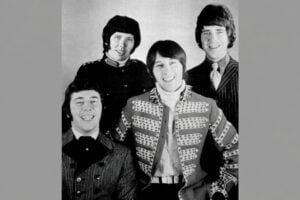
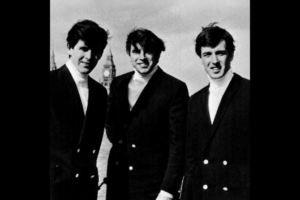
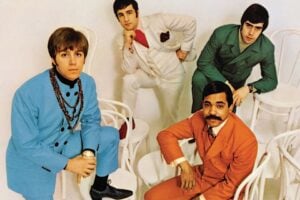
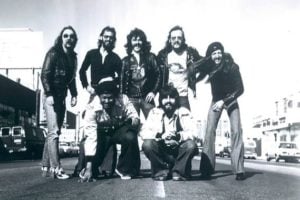
The Standells were formed in Los Angeles, California, in 1962, and their story is closely tied to the city’s club scene, television studios, and film lots. The original lineup featured Larry Tamblyn on keyboards and vocals, Tony Valentino on guitar, Jody Rich on bass, and Benny King on drums. Tamblyn came from an entertainment background as the brother of actor Russ Tamblyn, and the band initially worked as a lounge-style group before gradually moving toward a harder-edged rock sound. Their early years included appearances on television and in films, which helped them gain visibility before they achieved major recording success.
The band recorded for Liberty Records during its early years, releasing the live album The Standells in Person at P.J.’s in 1964. With Dick Dodd later taking over on drums and lead vocals, their music began moving toward raw guitar tones, aggressive rhythms, and confrontational lyrics. Producer Ed Cobb helped bring that sound into focus with “Dirty Water,” which became their defining song and reached number 11 on the Billboard Hot 100 in 1966. Its sharp references to Boston and unpolished sound helped the record stand out when many acts were moving toward more polished production.
Their 1966 studio album Dirty Water captured the band at the moment they fully embraced garage rock. Later that year, The Standells released Why Pick on Me, continuing their tough, rebellious approach with songs such as “Sometimes Good Guys Don’t Wear White” and the title track. The former had first appeared on Dirty Water and later attracted renewed attention during the punk rock era. Their next studio album, Try It, followed in 1967 and explored a broader mixture of garage rock, psychedelia, and R&B.
The Standells released three studio albums during their original mid-1960s run and returned decades later with new recordings. Their singles included several chart entries, although “Dirty Water” remained their biggest and most enduring success. Its legacy has continued through use at sporting events and in film and television, particularly through its association with Boston sports culture. Although the band did not receive major industry awards, later musicians have widely acknowledged their influence on garage rock and punk.
Outside recording and touring, The Standells were deeply involved in film and television, setting them apart from many of their peers. Members of the band appeared in movies such as Get Yourself a College Girl and Riot on Sunset Strip, often performing as themselves. They also appeared on television programs including The Munsters, The Bing Crosby Show, and Ben Casey. These appearances broadened their exposure and connected their music to the youth culture portrayed in mid-1960s Hollywood productions.
# 10 – Can’t Help But Love You
We open our Standells songs list with the track that became the band’s last nationally charting single during their original 1960s run. Released in 1967, “Can’t Help But Love You” reached number 78 on the Billboard Hot 100. This is not the way the band sounded earlier in its career, when the musicians were fueled by a rebellious garage-rock approach. On this one, they sound more like Motown than garage rock, showing a different side of their musical interests.
# 9 – The Boy Next Door
The Standells released “The Boy Next Door” as a non-album single on Vee-Jay Records in 1965. It became the band’s first charting song, reaching number 102 on Billboard’s Bubbling Under the Hot 100 chart, just outside the main Top 100. It arrived before the harder garage-rock sound that would bring them national recognition with “Dirty Water.” You can see the original Vee-Jay label in the video below.
# 8 – Help Yourself
“Help Yourself” appeared on the Standells’ first live album, The Standells in Person at P.J.’s, released by Liberty Records in 1964. The recording captures the band in its earlier club-performing days, before the aggressive garage-rock sound of “Dirty Water” made them famous. It remains an interesting example of the group’s musical beginnings.
# 7 – The Shake
“The Shake” takes us back to a chapter in early-1960s rock and roll that too many people have ignored and few write about. The song was released as a Liberty Records single in 1964, when the Standells were still building their reputation as a performing group. The video below offers an entertaining look at that era, and if you watch closely, you can catch a very young Sonny and Cher in the audience.
# 6 – Get Away From Here
This sensational Standells song appeared on the soundtrack album for the 1967 film Riot on Sunset Strip. The group contributed music to a movie inspired by the unrest along Los Angeles’ Sunset Strip, making the recording part of a particularly interesting moment in California rock history. We go into more detail about the film later in this list when we discuss its title song, which the Standells also wrote and performed.
# 5 – Why Pick on Me
This grooving, politically charged song was released in 1966 and became the title track of the band’s second studio album, Why Pick on Me. Its confrontational attitude fit the Standells’ reputation for speaking to young listeners who felt misunderstood. The melody reminds me of the Sonny Bono song “Bang Bang (My Baby Shot Me Down),” although the Standells give their track a harder garage-rock edge. “Why Pick on Me” also reached number 54 on the Billboard Hot 100.
# 4 – Sometimes Good Guys Don’t Wear White
“Sometimes Good Guys Don’t Wear White” was written by Ed Cobb and appeared on the band’s 1966 album Dirty Water. Released as the follow-up single to “Dirty Water,” it reached number 43 on the Billboard Hot 100 and was later included on Why Pick on Me. The song challenged the notion that appearances determine a person’s character, with the band delivering the message through its familiar raw sound. Its rebellious attitude helped the recording find admirers among later garage-rock and punk musicians.
# 3 – Ooh Poo Pah Doo
“Ooh Poo Pah Doo” began as a Jessie Hill song, released as a single in February 1960 on Minit Records. Hill was credited as its songwriter, while Allen Toussaint arranged and produced the recording. The single reached number three on the Billboard R&B chart and number 28 on the Hot 100, where the instrumental B-side, “Ooh Poo Pah Doo, Part II,” received the chart listing. The song’s origins reportedly trace back to a New Orleans pianist known as “Big Four,” whose live performance helped inspire Hill’s version.
Hill reportedly wrote down the melody and lyrics after hearing the song performed, then added an introduction he said came from Dave Bartholomew. The tune proved durable enough to keep cycling through new interpretations, including a live recording by Ike and Tina Turner issued in 1964 as “Ooh Poop A Doo.” The duo later recorded a studio version for their 1970 album Workin’ Together. Released as a single in 1971, that recording reached number 31 on the Billboard R&B chart and number 60 on the Hot 100.
The Standells entered that lineage early by performing “Ooh Poo Pah Doo” on their live album The Standells in Person at P.J.’s, released in September 1964 on Liberty Records. Their version captures the exuberant R&B side of a group that had not yet become synonymous with the harder sound of “Dirty Water.” The song also appeared as a 1966 Sunset Records single backed with “Help Yourself,” giving listeners another way to hear the band’s early material.
# 2 – Riot on Sunset Strip
The Standells played a direct role in capturing a volatile moment in Los Angeles youth culture by writing and performing the title song for the 1967 film Riot on Sunset Strip. Directed by Arthur Dreifuss and distributed by American International Pictures, the film began opening in March 1967 after being rushed into production following the real-life Sunset Strip curfew riots of late 1966. Those events involved clashes between young concertgoers and police outside popular clubs. The movie centers on generational conflict, police authority, and teenage rebellion, following characters whose lives collide amid the unrest.
One of the storylines follows a young woman caught between her parents and the rapidly changing youth scene. Filmed within weeks of the actual events, the picture aimed to capitalize on a current controversy rather than approach it from a historical distance. The Standells appeared in the film and gave it much of its musical identity through the aggressive theme song, written by band members Tony Valentino and John Fleck. The soundtrack also featured the Chocolate Watchband, further connecting the movie to the Los Angeles garage-rock scene that the Standells helped define.
# 1 – Dirty Water
“Dirty Water” was recorded on March 5, 1965, at Universal Recording Studios in Hollywood, California, with Ed Cobb serving as its writer and producer. The recording features Dick Dodd on lead vocals and drums, Tony Valentino on electric guitar and harmonica, Larry Tamblyn on organ and backing vocals, and Gary Lane on bass and backing vocals. Released in November 1965 on Tower Records, the song was built around a sharp guitar riff and a pounding rhythmic pulse. Its deliberately confrontational portrait of Boston gave the Standells a sound that stood apart from much of the polished pop music heard on radio at the time.
The lyrics reference the Charles River, the city’s curfews, and the Boston Strangler, presenting a rough-edged picture of the city rather than an ordinary love song. “Dirty Water” gained momentum through regional airplay before breaking nationally, reaching number 11 on the Billboard Hot 100 in June 1966 and number eight on the Cash Box chart. It became the Standells’ signature hit and was later included on the album Dirty Water, the band’s only LP to reach the national album charts during its original 1960s career.
The song’s connection to Boston grew far beyond its original chart success. It became a victory anthem for Boston sports fans, most famously after Boston Red Sox home wins at Fenway Park, where the tradition took hold in 1998. The Standells eventually performed the song at Fenway during the 2004 World Series, decades after recording it in California. Few garage-rock singles from the 1960s have enjoyed such a remarkable second life.
Check out similar articles on ClassicRockHistory.com Just click on any of the links below……
Read More: Artists’ Interviews Directory At ClassicRockHistory.com
Read More: Classic Rock Bands List And Directory
Updated October 30, 2026.
Top 10 Standells Songs article published on ClassicRockHistory.com © 2026