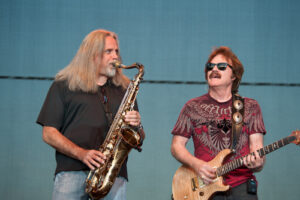
Feature Photo: Randy Miramontez / Shutterstock.com
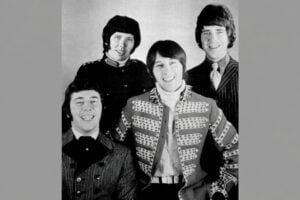
Our Complete List Of The Doobie Brothers Band Members looks at the musicians who helped shape an American rock band formed in San Jose, California, in 1970. Throughout the decades, The Doobie Brothers have experienced numerous lineup changes while moving among rock, pop, R&B, country, and soul. Founding members Tom Johnston, John Hartman, Dave Shogren, and Patrick Simmons established the sound that would carry the group through more than five decades of popular music.
The band’s self-titled 1971 debut did not make a major commercial impact, but it provided a foundation for their blend of rock, rhythm and blues, and folk. Their real breakthrough came with Toulouse Street in 1972 and its hit “Listen to the Music.” Johnston and Simmons supplied much of the songwriting and lead singing that became central to the original group’s success.
The first lineup changes came quickly. Original bassist Dave Shogren gave way to Tiran Porter, and the arrival of drummer Michael Hossack established a two-drummer setup alongside John Hartman. The Captain and Me (1973) brought “Long Train Runnin'” and “China Grove,” while What Were Once Vices Are Now Habits (1974) produced their first No. 1 single, “Black Water.”
Former Steely Dan guitarist Jeff “Skunk” Baxter joined in 1974, before Johnston became seriously ill during the 1975 Stampede tour. Baxter recommended Michael McDonald, whose keyboards, soulful vocals, and songwriting contributed to the band’s changing sound. Takin’ It to the Streets (1976) introduced that direction, and The Doobie Brothers later achieved another commercial peak with “What a Fool Believes” and “Minute by Minute.”
The group disbanded after its 1982 farewell tour but reunited for benefit performances in 1987, bringing together musicians from several different eras. Johnston and Simmons led the renewed band’s touring and recording efforts, eventually joined again by multi-instrumentalist John McFee. As the lineups changed over the years, players such as bassist John Cowan, saxophonist Marc Russo, percussionist Marc Quiñones, and drummer Ed Toth also became familiar parts of its concert sound.
In 2020, The Doobie Brothers were inducted into the Rock and Roll Hall of Fame. Michael McDonald returned for the anniversary touring era, and the group released Walk This Road in June 2025 with McDonald, Johnston, Simmons, and McFee working together in the studio. The band toured again in 2026, and The Doobie Brothers remained an enduring example of a band that could blend its different musical identities without losing its character.
Current Doobie Brothers Lineup
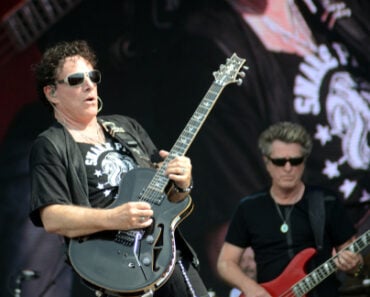
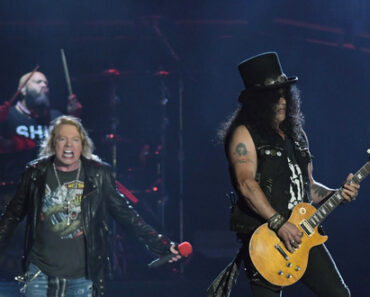
The band’s 2026 performing lineup featured Patrick Simmons, Tom Johnston, John McFee, and Michael McDonald, joined on tour by bassist and vocalist John Cowan, drummer Ed Toth, saxophonist Marc Russo, and percussionist Marc Quiñones. Their stories, along with the histories of earlier members and guests, appear below.
The Doobie Brothers Band Members
Patrick Simmons
Patrick Simmons, born on October 19, 1948, in Aberdeen, Washington, is a founding member of The Doobie Brothers. A guitarist, vocalist, and songwriter, he has been the group’s only continuous member since its formation in 1970, including the years when the band was inactive. His playing helped blend rock, pop, folk, and R&B on such albums as Toulouse Street (1972), The Captain and Me (1973), What Were Once Vices Are Now Habits (1974), and Minute by Minute (1978). He also participated in the band’s later albums, including Walk This Road in 2025.
Simmons wrote some of the group’s most enduring songs, including “South City Midnight Lady” and “Black Water,” the latter becoming the Doobie Brothers’ first No. 1 single in 1975. During the band’s original hiatus, he pursued solo work and released Arcade in 1983; Take Me to the Highway followed in 1996. Those records did not match the commercial heights of his work with The Doobie Brothers, but they displayed his individual musical interests. He helped lead the 1987 reunion and continued to record and perform with the group through its 2026 tours.
Tom Johnston
Tom Johnston, born on August 15, 1948, in Visalia, California, helped found The Doobie Brothers and established their early guitar-driven sound. His powerful vocals and distinctive rhythm guitar playing shaped The Doobie Brothers (1971), Toulouse Street (1972), and The Captain and Me (1973). His songwriting produced such rock-radio staples as “Listen to the Music,” “Rockin’ Down the Highway,” “Long Train Runnin’,” and “China Grove.”
Johnston became seriously ill with a stomach condition while touring behind Stampede in 1975, leading to his withdrawal from live performances and the recruitment of Michael McDonald. He eventually left the regular lineup later in the decade and released the solo albums Everything You’ve Heard Is True (1979) and Still Feels Good (1981). Johnston returned for the 1987 reunion and the 1989 album Cycles. He remained a major voice in the group, recording with McDonald, Simmons, and John McFee on Walk This Road (2025) and taking part in the band’s 2026 performances.
John Hartman
John Hartman, born on March 18, 1950, in Falls Church, Virginia, was a founding member and the original drummer of The Doobie Brothers. He helped develop the group’s trademark two-drummer attack when Michael Hossack joined. Hartman performed on classic early albums including The Doobie Brothers (1971), Toulouse Street (1972), The Captain and Me (1973), and the group’s major late-1970s recordings.
Hartman departed in 1979 but returned for the band’s 1987 reunion, playing on Cycles (1989) and Brotherhood (1991) before retiring again in 1992. Although not identified with the band’s major songwriting credits, his rhythmic contributions were central to the early sound of The Doobie Brothers. Hartman died on December 29, 2021. He had been inducted with the group into the Rock and Roll Hall of Fame in 2020.
Dave Shogren
Dave Shogren was the original bassist for The Doobie Brothers, helping establish the group’s first rhythm section in San Jose, California. He played on the band’s self-titled debut in 1971 and contributed to two tracks on Toulouse Street before Tiran Porter took over on bass. His tenure was brief but came during the formative period when the group was finding the sound that would bring it success.
After leaving the group, Shogren continued working in music and operated a recording studio in the San Jose area. He died in December 1999 at the age of 49. His contributions remain part of the history of the band’s original lineup.
Michael Hossack
Michael Hossack, born on October 17, 1946, in Paterson, New Jersey, joined The Doobie Brothers in 1971 as the band’s second drummer. He contributed to albums including Toulouse Street (1972) and The Captain and Me (1973), helping develop the interlocking rhythms heard on “Listen to the Music” and “China Grove.” He left in 1973 and was succeeded by Keith Knudsen.
Hossack returned during the band’s 1987 reunion and remained an important part of its live sound for many years. Health problems forced him to stop touring in 2010, and Tony Pia subsequently helped fill his role. Hossack died in March 2012, leaving a legacy that included both the band’s breakthrough years and its later touring revival.
Tiran Porter
Tiran Porter, born on September 26, 1948, in Los Angeles, California, joined the Doobie Brothers in the early 1970s after original bassist Dave Shogren’s departure. He played on pivotal albums including Toulouse Street (1972), The Captain and Me (1973), What Were Once Vices Are Now Habits (1974), and Takin’ It to the Streets (1976). His bass playing provided a versatile foundation as the band moved between rock, R&B, and soul.
Porter also contributed backing vocals and occasionally sang lead, notably on “For Someone Special” from Takin’ It to the Streets. He left the regular lineup in 1980, returned for the 1987 reunion, and played in the re-formed band through the early 1990s. He has participated in other projects, but his best-known work remains with The Doobie Brothers.
Keith Knudsen
Keith Knudsen, born on February 18, 1948, in Le Mars, Iowa, joined The Doobie Brothers as a drummer in 1973, replacing Michael Hossack. His playing can be heard on What Were Once Vices Are Now Habits (1974), Stampede (1975), Takin’ It to the Streets (1976), and Minute by Minute (1978). He also contributed backing vocals and co-wrote songs including “Double Dealin’ Four Flusher” and “You’re Made That Way.”
Knudsen remained through the original band’s 1982 farewell tour and later returned for the reunion years, rejoining full-time in 1993. Away from The Doobie Brothers, he played in the successful country-rock group Southern Pacific with John McFee. He continued performing until his death from pneumonia in February 2005, an enormous loss to the band’s longstanding two-drummer sound.
Jeff “Skunk” Baxter
Jeff “Skunk” Baxter, born on December 13, 1948, in Washington, D.C., joined the Doobie Brothers in 1974 after his work with Steely Dan. A guitarist known for both rock and jazz-influenced playing, he added new textures to recordings such as Stampede (1975), Takin’ It to the Streets (1976), and Minute by Minute (1978). He was already in the band when Tom Johnston fell ill, rather than joining as Johnston’s direct replacement.
Baxter recommended his former Steely Dan associate Michael McDonald as a keyboardist and vocalist when the band needed help on tour. He left the Doobie Brothers in 1979 but returned for the special 1987 reunion concerts. Beyond his music career, Baxter developed an unusual second area of expertise as a consultant on defense technology and national security.
Michael McDonald
Born on February 12, 1952, in St. Louis, Missouri, Michael McDonald joined the Doobie Brothers in 1975 as a keyboardist and vocalist when Tom Johnston was unable to tour. His distinctively soulful voice and songwriting helped move the band toward R&B, pop, and blue-eyed soul. McDonald became central to the albums Takin’ It to the Streets (1976), Livin’ on the Fault Line (1977), and Minute by Minute (1978), which won the Grammy Award for Album of the Year.
McDonald’s major Doobie Brothers songs include “Takin’ It to the Streets,” “It Keeps You Runnin’,” and “What a Fool Believes,” the last of which reached No. 1 on the Billboard Hot 100. After the band’s 1982 split he enjoyed a major solo career and collaborated with numerous performers. Michael McDonald made periodic reunion appearances before rejoining for the band’s anniversary touring era beginning in 2021. He returned to the studio alongside Johnston, Simmons, and McFee for Walk This Road (2025) and remained part of the 2026 touring lineup.
John McFee
Born on September 9, 1950, in Santa Cruz, California, John McFee joined the Doobie Brothers in 1979 after Jeff “Skunk” Baxter left. A versatile guitarist, vocalist, fiddler, pedal steel player, and multi-instrumentalist, McFee contributed to One Step Closer (1980) and toured with the group until its 1982 split. He was involved in the 1987 reunion concerts and rejoined the working band in 1993, subsequently appearing on albums such as Sibling Rivalry (2000).
McFee has also been a session musician and a founding member of the country-rock group Southern Pacific. His ability to move among guitar, fiddle, dobro, and harmonica adds variety to the Doobies’ live arrangements. He played with Patrick Simmons, Tom Johnston, and Michael McDonald on the 2025 album Walk This Road and remained in the group’s 2026 lineup.
Chet McCracken
Chet McCracken, born on October 17, 1952, in Seattle, Washington, joined the Doobie Brothers in 1979 as a drummer and percussionist after original drummer John Hartman left. He worked alongside Keith Knudsen, maintaining the band’s two-drummer setup, and played on One Step Closer (1980). McCracken also returned for reunion performances in 1987.
Outside the Doobie Brothers, he built a career as a session musician, bringing his experience with drums, percussion, and vibraphone to different musical settings. His period with the group helped bridge the end of the original 1970s lineup and the 1982 farewell tour.
Cornelius Bumpus
Born on May 7, 1945, in Coffeyville, Kansas, Cornelius Bumpus joined the Doobie Brothers in 1979 as a saxophonist, keyboardist, and vocalist. His most prominent studio work with the band appeared on One Step Closer (1980), including his composition “Thank You Love.” He brought a jazz and soul sensibility to the band’s latter-day arrangements and also took part in reunion performances.
Bumpus was a respected musician beyond the Doobies, performing with Steely Dan, Boz Scaggs, Etta James, and others, while also releasing solo jazz recordings. He died in February 2004, leaving a varied body of music that extended far beyond his time in the band.
Bobby LaKind
Bobby LaKind, born on July 3, 1945, in San Francisco, California, originally worked with the Doobie Brothers as a lighting technician and road crew member. He later became a percussionist and backing vocalist, contributing to the group’s stage sound and recordings during the late 1970s and early 1980s, including the Minute by Minute and One Step Closer eras.
LaKind returned in the reunion years, but serious illness interrupted his career. The band organized benefit performances for him in 1992, and he died that December. His progression from the road crew to an onstage musician made him a distinctive part of the extended Doobie Brothers family.
Willie Weeks
Born on August 5, 1947, in Salemburg, North Carolina, Willie Weeks is a highly respected bassist who toured with the Doobie Brothers during their final early-1980s period, including the band’s farewell concerts. He followed Tiran Porter as a touring bassist, although his involvement was primarily on stage rather than in the group’s principal studio recordings.
Weeks had already developed a distinguished session career, performing with artists such as George Harrison, Aretha Franklin, and Eric Clapton. His flexible playing made him a natural fit for the band’s increasingly soulful material.
Musicians Who Have Contributed To The Doobie Brothers Albums And Tours
John Cowan
Born on August 24, 1952, in Evansville, Indiana, John Cowan played bass and sang with the Doobie Brothers during the 1990s and returned to the touring lineup in 2010. He also contributed songwriting to the band’s 2000 album Sibling Rivalry. His rich, high-register voice adds a particularly valuable harmony part to their concerts. Cowan continued performing with the group on its 2025 and 2026 tours.
Outside the Doobie Brothers, Cowan is celebrated for his influential work with the progressive bluegrass group New Grass Revival, as well as a solo career that mixes rock, bluegrass, country, and soul. His ability to move comfortably among those styles makes him one of the band’s most versatile supporting performers.
Marc Russo
Marc Russo, born on August 15, 1958, in New York City, joined the Doobie Brothers’ touring lineup as a saxophonist in 1998. His distinctive saxophone sound is a vital part of the group’s live arrangements, particularly the Michael McDonald-era songs that originally featured prominent horns. He remained in the official touring lineup in 2026.
Russo previously played in the jazz-fusion group Yellowjackets and has worked as a session musician. His experience with jazz, R&B, and rock complements the band’s broad musical range.
Marc Quiñones
Born on September 25, 1969, in the Bronx, New York, Marc Quiñones joined the Doobie Brothers in May 2018 as a touring percussionist. His use of congas, timbales, and other Latin percussion added an extra rhythmic dimension to the live group. He continued performing with the band through its 2026 concerts.
Quiñones was previously a longtime member of the Allman Brothers Band and also worked with Gregg Allman and numerous Latin and jazz musicians. His wide experience gives the Doobies a rhythmic flexibility that suits both their early rock material and later R&B-influenced recordings.
Wayne Jackson
Wayne Jackson, born on November 24, 1941, in West Memphis, Arkansas, was a celebrated trumpet player and a founding figure in the Memphis Horns. He was associated with the horn arrangements and concert performances of the Doobie Brothers’ mid-1970s soul-influenced period. His broader career included landmark recordings with Otis Redding, Elvis Presley, and Neil Diamond.
Jackson’s work with the Memphis Horns helped define the sound of Southern soul music. He died in 2016, leaving a legacy that extended far beyond his Doobie Brothers association.
Andrew Love
Andrew Love, born on November 21, 1941, in Memphis, Tennessee, was a saxophonist and longtime partner of Wayne Jackson in the Memphis Horns. Their horn work became an important influence on the Doobie Brothers’ more soulful mid-1970s arrangements, particularly around the Takin’ It to the Streets period.
Love performed or recorded with many major artists, including Aretha Franklin, and was celebrated for his contribution to Memphis soul. He died in 2012.
Lewis Collins
Lewis Collins was a saxophonist and horn-section musician associated with the Doobie Brothers’ 1976–1977 touring period. The band had begun incorporating more R&B and soul influences, making additional horn players especially valuable on stage.
The surviving credits for Collins’s exact dates and recording appearances are less detailed than those for the group’s core members, so his contribution is best understood as part of the extended horn ensemble rather than the permanent lineup.
James Mitchell
James Mitchell was a baritone saxophonist associated with horn-section performances during the Doobie Brothers’ mid-1970s shift toward R&B and soul. The larger brass and reed arrangements helped the group reproduce the textures of the Michael McDonald period on stage.
His specific individual studio credits with the group are not as thoroughly documented as those of its permanent members, but the baritone saxophone role was an important part of the expanded horn sound.
Jack Hale
Jack Hale was a trombonist connected with the horn arrangements surrounding the Doobie Brothers’ 1970s concerts. The band used additional brass players when it expanded from its early guitar-centered approach toward a sound influenced by Memphis soul and R&B.
Hale also worked as a session musician. The precise extent of his contributions to individual Doobie Brothers recordings is less clearly documented than those of the band’s long-serving members.
Norton Buffalo
Norton Buffalo, born on September 28, 1951, in Oakland, California, was a virtuoso harmonica player and singer who made guest appearances with the Doobie Brothers during their touring years. His distinctive harmonica style fit naturally with the roots-rock elements of the band’s music.
Buffalo was best known for his long association with the Steve Miller Band and his recordings with other prominent musicians. He died in 2009.
Ed Toth
Ed Toth, born on July 4, 1969, in Worcester, Massachusetts, joined the Doobie Brothers in 2005 following Keith Knudsen’s death. He initially shared drumming duties with Michael Hossack and later Tony Pia, before becoming the band’s sole kit drummer in 2016. Toth continued in the official touring lineup through 2026, with Marc Quiñones providing additional percussion.
Before joining the Doobies, Toth performed with Vertical Horizon, including the period surrounding the group’s successful album Everything You Want. His steady playing supports the band’s broad repertoire, from early rock hits to its later soul-oriented songs.
Rosemary Butler
Rosemary Butler was a backing vocalist who performed with the Doobie Brothers during their late-1970s period, when the band was developing more layered vocal harmonies. Her contributions fit the group’s shift toward a polished pop and soul sound.
Outside the Doobies, Butler became a respected singer and session vocalist, working with musicians including Jackson Browne and James Taylor. She was born on April 6, 1947, in Los Angeles, California.
Maureen McDonald
Maureen McDonald, Michael McDonald’s sister, also sang backing vocals with the Doobie Brothers during part of their late-1970s touring history. Her voice was one of several that helped reproduce the increasingly rich vocal arrangements associated with the Michael McDonald era.
The exact duration of her touring involvement is less well documented than the principal band members’ tenures, but she also performed with musicians outside the group.
Dale Ockerman
Dale Ockerman worked with the Doobie Brothers as a keyboardist and guitarist during their reunion-era tours in the late 1980s and early 1990s. His multi-instrumental skills helped the group cover both its guitar-driven early songs and the keyboard-heavy Michael McDonald material.
Ockerman also played with Quicksilver Messenger Service and other Bay Area acts, bringing extensive live experience to the band.
Richard Bryant
Richard Bryant joined the touring Doobie Brothers around 1989, adding percussion and backing vocals during the band’s late-1980s and early-1990s revival. His performances took place around the Cycles and Brotherhood periods, when the returning original members were rebuilding a regular touring operation.
He was part of the wider live lineup rather than a central songwriter or featured vocalist, but his rhythm and vocal contributions supported the band’s full concert arrangements.
Jimi Fox
Jimi Fox was part of the expanded Doobie Brothers touring ensemble around 1989–1991, providing percussion in the years following the group’s reunion. The band frequently used additional musicians to recreate its layered recordings in concert.
Fox’s role was primarily connected with those live performances, and fewer details of his wider career are publicly documented than those of the long-serving members.
Danny Hull
Danny Hull performed saxophone with the Doobie Brothers in the 1990s, helping support the band’s more soulful songs during its busy touring schedule. His involvement followed the 1993 reformation, when several musicians from different eras of the group performed together.
Hull also worked with other rock and R&B musicians. His time with the band preceded the arrival of Marc Russo in the late 1990s.
Skylark
Skylark performed bass with the Doobie Brothers from the mid-1990s into 2010. His playing provided continuity through a long run of tours and recordings, including the band’s 2000-era work.
Health problems brought his tenure to an end in 2010, when John Cowan returned to the bass position. Skylark’s steady contribution helped anchor the band’s touring sound for roughly fifteen years.
Bernie Chiaravalle
Bernie Chiaravalle is a guitarist and multi-instrumentalist known for his longtime association with Michael McDonald’s solo band. He also filled in on guitar for the Doobie Brothers during selected 1990s appearances when John McFee was unavailable.
Chiaravalle has released solo music and contributed to numerous projects outside the group. His Doobie Brothers appearances were substitute performances rather than a lengthy tenure as a regular member.
Guy Allison
Guy Allison was the Doobie Brothers’ touring keyboardist from the mid-1990s until 2015. He helped the band perform the keyboard-rich music from its Michael McDonald period while providing musical support for songs from other eras.
Allison had previously worked with groups including the Moody Blues. In 2015 he was succeeded by Little Feat’s Bill Payne, who remained with the touring band for several years.
Marvin “M.B.” Gordy
Marvin “M.B.” Gordy joined the Doobie Brothers’ touring rhythm section during the early 2000s. He initially helped cover for drummer Michael Hossack following an injury and later provided additional percussion, strengthening the band’s live arrangements.
Gordy had experience across a variety of styles as a session musician. His work contributed to the band’s busy touring years before another series of drummer changes in the mid-2000s.
Ed Wynne
Ed Wynne was a substitute horn player for the Doobie Brothers during part of their 2002 touring schedule. He filled in when regular saxophonist Marc Russo was unavailable, helping the band preserve the horn arrangements used in its concert repertoire.
His involvement was temporary rather than a regular band appointment, and published details about his wider musical work remain limited.
Tony Pia
Tony Pia joined the Doobie Brothers’ live drum lineup in 2010, initially substituting for Michael Hossack after Hossack could no longer tour. He subsequently performed with Ed Toth in the band’s two-drummer arrangement, continuing until 2016.
Pia has also played with major touring artists and ensembles, including the Brian Setzer Orchestra and musicians associated with Brian Wilson. His years with the Doobies helped maintain their demanding concert schedule through a difficult change in the rhythm section.
Bill Payne
Bill Payne is best known as a co-founder, keyboardist, and songwriter for Little Feat, but his association with the Doobie Brothers extends back to session contributions during their early recording years. He also became their regular touring keyboardist in 2015 after Guy Allison’s departure.
Payne remained with the Doobies until 2021, when commitments to Little Feat took priority and Michael McDonald’s return supplied the keyboards and vocals. His playing brought decades of rock, blues, and Americana experience to the group’s live sound.
Updated October 28, 2026.
Complete List Of The Doobie Brothers Band Members article published on ClassicRockHistory.com © 2026