Feature Photo: Tony Norkus / Shutterstock.com
Putting together a list of the 20 Greatest Vocal Performances of All Time may be the most challenging list I’ve ever written. If it’s not, it’s pretty close. Anyone who’s a music fan like me has immersed themselves in music their whole life. I’ve listened to millions of songs since the 1960s, by thousands of singers.
So putting together a list of just 20 is quite daunting. And truthfully, this list could change tomorrow, and then again the day after that. You know what, that’s okay, because in the end, this is just a celebration of performance, a celebration of people baring their hearts and souls for anyone to hear, everyone to see, and for all to just bask in the glory of music and how it lifts the human spirit, sometimes out of despair, out of depression, and into a world of healing.
And even in a happy mood, performances like this can take you somewhere else and make you feel great to be alive. That’s what music does, and there’s nothing like an incredible singer.
A powerful vocal performance does not always need to be filled with layered high notes, technical efficiency, and skill. It doesn’t have to be filled with mind-blowing riffs, although all of that does help, and plenty of that is on this list. For me, and I think for many others, a great vocal performance is about touching the heart; it’s about bringing the song to life; it’s filled with emotion; it’s filled with tenderness; and it’s real.
I didn’t want to just stick to rock, even though we are a classic rock site. I have said many times over and over that this is a history site, and all styles of music have impacted rock, just like rock has, in fact, impacted all styles of music. And quite simply, I like all types of music, and I like writing about all types of music, so everything is here.
And I think that many people who read this site on a daily basis understand that and actually come here because they like that. So, enough said; let’s get to the music, songs, and performances that have touched us deeply.
# 20 – Since I’ve Been Loving You – Robert Plant
I thought opening this list with a vocalist that many consider the greatest rock and roll singer of all time was just fitting. Few people could touch Robert Plant in his prime. Plant could hit the high notes with a resonance and a soulfulness that would just cut right through you. I remember seeing Led Zeppelin in 1977 at Madison Square Garden, and it was the most religious experience I ever had in the rock and roll world.
There are plenty of songs I could have picked from Led Zeppelin’s catalog for this list because the band has made so many phenomenal recordings. A lot of people would probably point to “Stairway to Heaven” as one of his greatest vocal performances, as well as “Whole Lotta Love” and so many others. However, at the core of Led Zeppelin’s sound has always been the blues and the way they’ve remade the blues.
Plant’s vocal performance on “Since I’ve Been Loving You” is nestled deep in the heart of the blues. You feel all the pain, you feel all the joy. That’s what a brilliant vocal performance does: it affects you and makes you shake. Rock and roll music is always made to shake your body, but it doesn’t always have to be a fast groove or a loud beat.
Sometimes all it takes is a brilliant singer laying it on the line, baring his heart and soul for all to see and feel. That’s exactly what Robert Plant does on “Since I’ve Been Loving You.” That, my friends, is what this list is all about. Led Zeppelin’s “Since I’ve Been Loving You” was released on the band’s third album, Led Zeppelin III, in 1970. Songwriting credit for the song belonged to Robert Plant, Jimmy Page, and John Paul Jones. Many Zeppelin fans feel that their third album is their underrated gem. It’s the one album that’s kind of fallen a little under the radar, with the exception of, of course, the big hit “Immigrant Song” and undoubtedly this tremendous blues ballad.
# 19 – Without You – Harry Nilsson
There are some singers who can hit the highest notes imaginable, and then there are singers who can make you feel like your heart is being torn apart. Harry Nilsson could do both. I don’t think he gets nearly enough credit when people talk about the greatest vocalists of the rock era. He had an incredible range, but what made him so special was the way he could move from a gentle, almost whispered vocal into an absolutely explosive emotional performance. “Without You” may be the greatest example of that remarkable talent.
The song was written by Pete Ham and Tom Evans of Badfinger and originally appeared on the band’s 1970 album No Dice. A lot of people dont that because Nilsson’s recording was so dominant. Nilsson recorded his version for his 1971 album Nilsson Schmilsson. Released as a single, it reached number one on the Billboard Hot 100 in 1972 and also topped the British singles chart. Nilsson won the Grammy Award for Best Male Pop Vocal Performance for his recording. That’s quite an accomplishment for a song that had originally been an album track by another band.
What gets me every time is the way Nilsson builds the performance. He starts so gently that you almost feel as though you’re listening to someone privately confessing their pain. Then the chorus arrives, and he just lets everything go. Those high notes aren’t there simply to show off his range. They’re there because the emotions in the song have reached a point where nothing less would do. I’ve heard plenty of singers cover this song, and some of them are magnificent. But Harry Nilsson’s recording remains the one that absolutely destroys me.
# 18 – Unchained Melody – Bobby Hatfield
Let’s talk about one of the most incredible voices ever heard on a pop record. Bobby Hatfield was one half of the Righteous Brothers, along with Bill Medley, and the two of them created some of the most spectacular blue-eyed soul recordings of the 1960s. Yet when it came to “Unchained Melody,” it was Bobby Hatfield standing alone at the microphone. And what he delivered was a vocal performance so magnificent that it has become almost impossible to separate his voice from the song itself.
“Unchained Melody” was originally written in 1955 by Alex North and Hy Zaret for the film Unchained. The Righteous Brothers released their celebrated recording in 1965, with Hatfield singing the entire lead vocal. The recording later found an enormous new audience when it appeared in the 1990 film Ghost. By that time, the song had already become a standard, but the film introduced Hatfield’s remarkable performance to another generation of listeners.
What makes this recording so extraordinary is the control Hatfield demonstrates throughout the entire performance. He doesn’t rush anything. He allows every phrase to breathe, gradually climbing higher until he reaches those magnificent final notes. And when he gets there, the sound is just breathtaking. It’s one of those performances where you almost forget about the instruments because the voice is carrying so much emotion. I don’t care how many times you’ve heard “Unchained Melody.” When Bobby Hatfield reaches that final section, it’s almost impossible not to stop whatever you’re doing and just listen.
# 17 – All I Know – Art Garfunkel
Art Garfunkel has always had one of the most beautiful voices in popular music. During his years with Paul Simon, his soaring tenor provided the perfect complement to Simon’s songwriting and vocal style. But when Garfunkel stepped out on his own, we really got to hear just how magnificent that voice could be. There was something almost angelic about his tone, especially when he sang a quiet ballad. His recording of “All I Know” is one of those performances that can make you feel like time has stopped for a few minutes.
The song was written by Jimmy Webb and released on Garfunkel’s 1973 solo album Angel Clare. It became a major hit, reaching number nine on the Billboard Hot 100 and number one on the adult contemporary chart. The recording was produced by Garfunkel and Roy Halee, the engineer and producer who had worked so closely with Simon and Garfunkel. Webb wrote a beautiful melody, but Garfunkel’s interpretation is what made the song unforgettable.
I love the way his voice seems to float above the arrangement. There is no attempt to overpower the song. Instead, he lets the melody develop naturally, using that remarkable upper register to express the uncertainty and vulnerability in the lyrics. And that’s what makes the performance so moving. Sometimes the softest voice in the room can have the greatest impact. Art Garfunkel didn’t need to scream or push himself to the limit to make this recording special. He simply sang it with that wonderful, unmistakable voice, and the results were extraordinary.
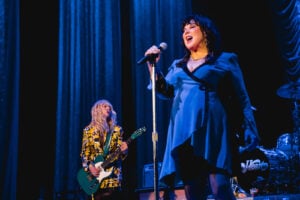
# 16 – Alone – Ann Wilson
There are very few rock singers who can match the power of Ann Wilson. I’ve always thought she belonged in the same conversation as Robert Plant, Freddie Mercury, and the other great vocalists who could simply overwhelm an audience with the strength of their voices. Ann could sing the heaviest Heart songs with incredible authority, but she could also deliver a ballad with a tenderness that was just beautiful. “Alone” brings both sides of her talent together in one spectacular recording.
The song was written by Billy Steinberg and Tom Kelly and first recorded by their group i-Ten in 1983. Heart released its version on the 1987 album Bad Animals, and it became one of the band’s biggest hits, reaching number one on the Billboard Hot 100. The recording arrived during the band’s enormously successful 1980s comeback, when Ann and Nancy Wilson were reaching an entirely new generation of fans. There were plenty of great power ballads released during that decade, but this one stood above most of them.
Just listen to the way Ann Wilson handles the chorus. She moves from a vulnerable, almost desperate delivery into these enormous sustained notes that seem to fill every corner of the recording. Yet nothing sounds out of control. There is so much technique behind what she’s doing, but you never hear her showing off. You hear someone whose heart is breaking. That’s the difference between an impressive singer and a truly great one. The impressive singer makes you admire the notes. The great singer makes you forget about the notes and feel the song. Ann Wilson does both.
# 15 – God Bless The Child – Billie Holiday
I don’t think you can put together a list of the greatest vocal performances of all time without including Billie Holiday. She was one of the most influential singers in the history of recorded music, and her impact reaches far beyond jazz. Listen to the way she phrased a line, the way she sometimes sang just behind the beat, and the way she could communicate an entire lifetime of pain through a few simple words. She didn’t have the enormous vocal range of some of the singers on this list. She didn’t need it.
Billie Holiday wrote “God Bless the Child” with Arthur Herzog Jr. and first recorded it in 1941. The song was inspired, according to Holiday’s own account, by an argument with her mother over money. That personal connection is important because the song deals with independence, survival, and the harsh reality that people often treat you differently depending on how much you have. Holiday recorded the composition more than once, but her original 1941 performance remains one of the most remarkable recordings in her catalog.
There is something about Holiday’s voice that just gets under your skin. She never sounds as though she’s trying to impress anybody. She sounds like someone who has lived every word she’s singing, and maybe that’s why her performances have remained so powerful for generations. On “God Bless the Child,” every little change in her phrasing adds something to the story. She can make a single word sound joyful, bitter, resigned, or heartbreaking. That’s not something you can teach somebody in a singing lesson. It’s a gift, and Billie Holiday had one of the greatest gifts popular music has ever known.
# 14 – Backstreets Live 1978 – Bruce Springsteen
Bruce Springsteen’s “Backstreets” was released on the album that made him a household name, Born to Run. Before Born to Run came out, many people hadn’t even heard of Bruce Springsteen. Then he appeared on the covers of Time and Newsweek in the same week. Although “Backstreets” was released on Born to Run in 1975, the version I wanted to include here was the live version from the 1978 tour promoting the album Darkness on the Edge of Town.
Springsteen’s 1978 tour featured a performer who had been held up from recording for a significant period while he fought a lawsuit with his former manager. He had continued performing during that legal battle, but once the lawsuit was over and he could finally release new music, he was like a madman on the loose. If you caught any of his live shows in 1978, you saw one of the greatest rock and roll performers of all time.
To me, the highlight of that tour was his version of “Backstreets.” I don’t mean just the song itself, but the coda he placed at the end, which a lot of people called “Sad Eyes.” It was out of that coda that he developed material for the song “Drive All Night,” which was released two years later on The River.
I always loved the coda of “Backstreets” more than the song “Drive All Night.” The coda defines it as not such a happy ending for Bruce and his friend Terry when they were hiding on the backstreets. Now, he’s a man who’s hurting, a man who knows that the woman he loves, the girl with whom he swore they would be “forever friends” on those backstreets, has betrayed him. And boy, does it hurt when you hear him sing it. If you’ve never heard the live version of this song, you have to listen to one of those 1978 performances. His vocal performance is unbelievable.
# 13 – The Show Must Go On – Freddie Mercury
Freddie Mercury could probably have filled half this list by himself. There was something about that man’s voice that was simply extraordinary. He could sing a delicate ballad, a hard rock anthem, or an operatic passage with a level of control and emotional intensity that very few singers have ever matched. Yet out of all the magnificent recordings Queen made, I keep coming back to “The Show Must Go On.” It’s a song that becomes even more powerful when you understand what Freddie Mercury was going through when he recorded it.
The song appeared on Queen’s 1991 album Innuendo and was released as a single later that year. It was written by the four members of Queen, with Brian May playing a central role in developing the composition. Mercury was seriously ill during the recording sessions and died in November 1991. Knowing that makes the vocal performance almost overwhelming. Here was a singer facing the end of his life, yet still summoning the strength to deliver one of the most powerful performances of his entire career.
What gets me every time is that Freddie doesn’t sound defeated. He sounds defiant. He attacks those enormous notes with everything he has, and you can hear the determination in every phrase. The chorus is magnificent, but it’s the emotion behind it that makes this recording unforgettable. Freddie Mercury had spent his life entertaining millions of people, and here he was, still giving them everything he had left. There are plenty of songs that make me emotional, but this one is different. It’s a performance about refusing to give up, and knowing what happened afterward makes it almost impossible to listen to without being deeply moved.
# 12 – Just Once – James Ingram
James Ingram had one of those voices that could completely overwhelm you without ever sounding like he was trying too hard. He had this beautiful combination of warmth, power, and soul that made him one of the great ballad singers of the 1980s. There are plenty of wonderful recordings in his catalog, but “Just Once” remains the one that always stops me in my tracks. The first time you hear that voice, you know you’re listening to someone special. And by the time the chorus arrives, he’s taking you somewhere else entirely.
“Just Once” was written by Barry Mann and Cynthia Weil and appeared on Quincy Jones’s 1981 album The Dude, with James Ingram singing lead vocals. The song was released as a single and reached number 17 on the Billboard Hot 100. It helped introduce Ingram to a much wider audience and established him as one of the finest new voices in popular music. Quincy Jones certainly knew how to recognize extraordinary vocal talent, and his work with Ingram was another example of that ability.
What I love about this performance is the way Ingram communicates frustration and hope at the same time. He’s singing about a relationship that keeps falling apart, but there’s still this desperate belief that somehow everything can be fixed. His voice rises with the emotion of the song, and when he reaches those powerful upper notes, you feel every bit of that desperation. It’s a tremendous performance because he never loses the soul of the melody while showing just how magnificent his vocal range was. Songs like this are the reason James Ingram should always be remembered as one of the great singers of his generation.
# 11 – Wichita Lineman – Glen Campbell
This one pretty much gets it right away with the first line. It’s such a distinctive line that just cuts right through you. One line says so much. And only Glen Campbell could deliver it the way he did. There was something about Campbell’s voice that made you believe every word he sang. He didn’t need to push himself into some enormous vocal performance to get your attention. He could sing a simple melody with so much sincerity that you felt like you were standing right there beside the person in the song.
“Wichita Lineman” was written by Jimmy Webb and released by Glen Campbell in 1968. It became the title track of one of Campbell’s most successful albums and reached number three on the Billboard Hot 100 while topping the country singles chart. Webb wrote the song after seeing a telephone lineman working alone on a pole, an image that inspired one of the most haunting songs ever written about loneliness and longing. Campbell and Webb would go on to create some incredible music together, but this one may have been their greatest achievement.
What makes Campbell’s performance so special is his restraint. He never overplays the emotion, even though the song is filled with it. His voice seems to carry the loneliness of someone working miles away from the person he loves, and he makes that feeling sound so natural. The arrangement is beautiful, but the performance belongs to Glen Campbell. It’s a reminder that the greatest vocalists aren’t always the ones who can sing the loudest or the highest. Sometimes greatness is found in the way a singer delivers one line and makes it stay with you for the rest of your life. That’s exactly what happens here.
# 10 – Who Can I Turn To (When Nobody Needs Me) – Tony Bennett
Tony Bennett was one of the greatest interpreters of popular songs who ever lived. He could take a beautifully written melody and somehow make you feel as though the song had been written specifically for him. His voice had power, elegance, and a remarkable ability to communicate emotion without overdoing anything. I’ve always loved the way he could hold a note, let it fade away, and then come back with another phrase that seemed even more beautiful than the one before it. His recording of “Who Can I Turn To” is an extraordinary example of that talent.
The song was written by Anthony Newley and Leslie Bricusse for the musical The Roar of the Greasepaint – The Smell of the Crowd. Bennett recorded it in 1964, and his version reached number 33 on the Billboard Hot 100 while becoming a major adult contemporary hit. The song eventually became one of the standards most closely associated with Bennett’s career. Its lyrics deal with loneliness, uncertainty, and the fear of having nobody to turn to when life becomes difficult.
It’s the way Bennett handles those emotions that makes this performance so magnificent. He doesn’t just sing about loneliness. He makes you feel it. Every phrase seems perfectly placed, and the way he moves through the melody is simply beautiful. There’s a sense of vulnerability in his delivery that makes the song feel deeply personal. Some singers approach a ballad by trying to make every note sound impressive. Tony Bennett approached it by trying to tell you something important. That’s why his recordings have lasted for generations, and that’s why this performance belongs on our list.
# 9 – (You Make Me Feel Like) A Natural Woman – Aretha Franklin
Aretha Franklin didn’t earn the title Queen of Soul by accident. She had one of the most powerful, emotional, and instantly recognizable voices in the history of popular music. Whether she was singing gospel, rhythm and blues, jazz, or pop, there was always this extraordinary combination of strength and vulnerability in her performances. I could have picked any number of Aretha Franklin recordings for this list. “Respect,” “Think,” and “I Say a Little Prayer” are all phenomenal. But there’s something about “(You Make Me Feel Like) A Natural Woman” that reaches straight into your heart.
The song was written by Gerry Goffin, Carole King, and Jerry Wexler and released by Aretha Franklin in 1967. It reached number eight on the Billboard Hot 100 and became one of the defining recordings of her career. Carole King later recorded the song herself on her landmark 1971 album Tapestry. The composition is beautiful in either version, but what Aretha did with that melody was nothing short of extraordinary. She brought a gospel intensity to a love song and made it sound like something much bigger.
Listen to the way she starts the recording. There’s this beautiful softness in her voice, almost as though she’s speaking directly to someone she loves. Then the song begins to build, and suddenly you’re hearing the full power of Aretha Franklin. But even when she reaches those magnificent high notes, she never loses the tenderness of the performance. That’s what makes her so special. She could shake the walls with her voice and still make you feel as though she was singing to just one person. This is one of those recordings that reminds us why Aretha Franklin was in a class of her own.
# 8 – Cry Baby – Janis Joplin
I don’t think there has ever been another singer quite like Janis Joplin. She didn’t have the polished vocal technique of someone like Barbra Streisand or the effortless smoothness of Ella Fitzgerald. What Janis had was something far more difficult to define. She had this raw, heartbreaking quality in her voice that made you feel as though she was living every word she sang. Sometimes it almost sounded painful just listening to her. And I mean that in the best possible way. She was absolutely fearless when it came to expressing emotion through music.
“Cry Baby” was written by Bert Berns and Jerry Ragovoy and had originally been a hit for Garnet Mimms and the Enchanters in 1963. Janis Joplin recorded her version for the album Pearl, which was released in January 1971, several months after her death in October 1970. Backed by the Full Tilt Boogie Band, Janis transformed the song into an incredible combination of soul, blues, and rock and roll. Her version became one of the most memorable performances on an album filled with extraordinary recordings.
Just listen to the opening. Before the band has really settled into the song, Janis is already pouring everything she has into that vocal. She’s pleading, screaming, crying, and somehow still holding everything together musically. Then she pulls back and delivers those quieter passages with a tenderness that makes the louder moments even more powerful. It’s almost like listening to someone have an emotional conversation with themselves. There is nothing artificial about it. You can hear the pain in her voice, but you can also hear the love. That’s why Janis Joplin remains one of the greatest vocalists of all time, and “Cry Baby” is a perfect example of everything that made her special.
# 7 – Delilah (Live Ed Sullivan Show) – Tom Jones
There are certain singers who seem to possess an almost unbelievable amount of natural power. Tom Jones is one of those singers. I don’t care what style of music he’s singing. When he opens his mouth, you know immediately that you’re listening to someone with an extraordinary voice. During the 1960s, he was one of the most exciting performers on television, combining that tremendous vocal ability with a stage presence that could practically jump through the screen. His performance of “Delilah” on The Ed Sullivan Show is a wonderful example of just how good he was.
“Delilah” was written by Les Reed and Barry Mason and released by Tom Jones in 1968. The song became a major international hit, reaching number two on the UK Singles Chart. Jones performed it on The Ed Sullivan Show on April 21, 1968, during an appearance that also featured “It’s Not Unusual” and “Danny Boy.” The song’s dramatic story, powerful melody, and almost theatrical arrangement were perfectly suited to Jones’s extraordinary vocal abilities.
What makes that television performance so much fun to watch is the sheer confidence of the man. He attacks the song with everything he has, but he never sounds strained. Those big notes just seem to come pouring out of him. He knows exactly when to build the drama, when to hold back, and when to let that incredible voice take over. And unlike some singers who seem completely focused on the technical side of performing, Tom Jones looks like he’s having the time of his life. That’s what great entertainers do. They make something incredibly difficult look effortless, and Tom Jones was one of the very best at doing that.
# 6 – When A Man Loves A Woman – Percy Sledge
There are love songs, and then there are recordings that seem to capture everything anybody has ever felt about being in love. Percy Sledge’s “When a Man Loves a Woman” belongs in that second category. From the very first moment you hear his voice, you know you’re listening to something special. There’s this incredible combination of tenderness and desperation in his singing, as though he’s trying to explain feelings that are almost too powerful to put into words. He doesn’t just sing about love. He sounds completely overwhelmed by it.
The song was released in 1966 and became a number one hit on the Billboard Hot 100. The original songwriting credits went to Calvin Lewis and Andrew Wright, although Percy Sledge later explained that he had played a significant role in developing the song. Recorded in Alabama and released nationally through Atlantic Records, it became one of the defining soul ballads of the 1960s. Over the years, many artists have recorded the composition, but Sledge’s original version remains the one that established its extraordinary reputation.
I love the way Percy Sledge’s voice rises and falls throughout the recording. He begins with such sincerity, and then the emotion gradually takes over. By the time he reaches the most powerful moments, you can almost feel the heartbreak and devotion coming through the speakers. There isn’t anything complicated about the arrangement. It doesn’t need to be complicated. Everything is built around that magnificent voice and the emotions he’s trying to communicate. Some songs become classics because they’re beautifully written. Others become classics because of the person singing them. This one is both, and Percy Sledge’s performance is one of the greatest ever recorded.
# 5 – Ol’ Man River – Frank Sinatra
Frank Sinatra was one of the greatest singers who ever lived, and I don’t think there’s much of an argument to be made against that. He was a master of phrasing, timing, breath control, and emotional interpretation. But what has always impressed me most about Sinatra is the way he could completely transform a song simply through the way he delivered the lyrics. He could make an ordinary phrase sound deeply personal, and when he was working with a magnificent composition, the results were often breathtaking. His recordings of “Ol’ Man River” demonstrate just how extraordinary his talent really was.
The song was written by Jerome Kern and Oscar Hammerstein II for the 1927 musical Show Boat. Sinatra performed it at different stages of his career, including his dramatic 1940s recordings and the magnificent version included on his 1963 album The Concert Sinatra. That album featured arrangements by Nelson Riddle and a large orchestra, giving Sinatra the opportunity to explore some of the most ambitious material of his recording career. The composition itself is one of the great American theatrical songs, dealing with hardship, injustice, and the determination to keep moving forward.
What makes Sinatra’s performance so powerful is the way he understands the weight of every line. He doesn’t simply attack the song with volume. He allows the melody and the words to develop, then uses that magnificent voice to bring out the full emotional force of the composition. His control is extraordinary, particularly when he moves between the quieter passages and the dramatic climaxes. I know there are many wonderful singers who have performed “Ol’ Man River,” and some have brought very different interpretations to its meaning. But Sinatra’s recordings show what a truly great interpreter can accomplish when he approaches a song with complete respect for its musical and emotional possibilities. It’s simply magnificent singing.
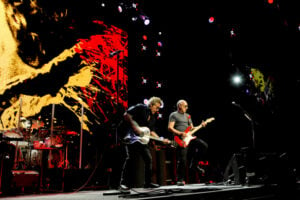
# 4 – Baba O’Riley – Roger Daltrey
I know that the chalk pick is “Love, Reign o’er Me.” That’s the one that everybody talks about as being Roger Daltrey’s greatest vocal performance. And they’re not wrong. He has never sung better on a song than he did on that one. But remember, one hallmark of a great vocal performance is its lasting impact on pop culture.
And for that reason alone, I don’t think there’s any argument here about the impact that “Baba O’Riley” had compared to “Love, Reign o’er Me.” From the song’s opening vocal line, “Out here in the fields, I fight for my meals,” to its soaring chorus, “Teenage Wasteland,” this song stands as maybe not just one of the greatest vocal performances of all time but quite possibly the greatest rock song of all time.
“Baba O’Riley” was written by Pete Townshend and released on the Who’s 1971 album Who’s Next. The recording features that unforgettable synthesizer introduction, followed by one of the most powerful entrances a rock vocalist has ever made. Daltrey doesn’t ease his way into the song. He comes charging in with that incredible voice, immediately establishing the intensity that makes the performance so memorable. The song has become one of the defining anthems of classic rock, and Daltrey’s vocal is one of the biggest reasons why.
What I love most about his performance is the authority in his voice. He sounds completely fearless, but there’s also this tremendous sense of urgency in the way he delivers the lyrics. And when that chorus arrives, it’s as though the entire world has opened up. I can’t imagine anybody else singing this song with the same power and conviction. That’s what great vocal performances do. They become so closely connected to the singer that you can’t separate one from the other. Roger Daltrey’s voice is the sound of “Baba O’Riley,” and that sound has been moving people for more than half a century.
# 3 – Nessun Dorma – Luciano Pavarotti
How do you even begin to describe a voice like Luciano Pavarotti’s? There are great singers, there are magnificent singers, and then there are people who seem to possess something that almost defies explanation. Pavarotti belonged in that last category. His voice had this extraordinary combination of power, beauty, and clarity that made every note sound like a gift. Even people who have never listened to opera in their lives can hear Pavarotti sing and understand immediately that they’re experiencing something special. You don’t need to know anything about classical music to be moved by a voice like that.
“Nessun dorma” is an aria from Giacomo Puccini’s opera Turandot, which premiered in 1926. Although the aria had long been celebrated in the operatic world, Pavarotti brought it to an enormous international audience, particularly during the 1990 FIFA World Cup. His performance became closely associated with the tournament, and his appearance alongside Plácido Domingo and José Carreras in the famous Three Tenors concert introduced millions of listeners to the beauty and excitement of operatic singing.
What makes Pavarotti’s performance so remarkable is the way he combines extraordinary technical skill with genuine emotion. Those magnificent high notes seem to rise effortlessly above the orchestra, yet you never get the sense that he’s simply showing off. Everything serves the drama of the music. And when he reaches the final section, it’s almost impossible not to be overwhelmed by the sheer beauty of the sound. I know there are many tremendous opera singers, and I would never pretend to be an expert on all of them. But I do know what moves me, and Luciano Pavarotti singing “Nessun dorma” is one of the most moving things I’ve ever heard.
# 2 – Stairway To Heaven (Live at the Kennedy Center) – Ann Wilson
I know what some Led Zeppelin fans are thinking. How could anybody sing “Stairway to Heaven” and do justice to Robert Plant’s original vocal performance? It’s almost an impossible assignment. We’re talking about one of the greatest rock songs ever recorded, performed by one of the greatest rock singers of all time. Yet when Ann Wilson stepped onto that stage at the Kennedy Center Honors in 2012, she delivered something so spectacular that even the surviving members of Led Zeppelin were visibly moved by what they were hearing.
The performance was part of the Kennedy Center’s tribute to Led Zeppelin, with Ann Wilson singing lead and Nancy Wilson playing guitar. Jason Bonham, the son of Led Zeppelin drummer John Bonham, performed on drums. As the arrangement developed, a large choir, strings, and additional musicians joined the performance, building toward an enormous emotional climax. Robert Plant, Jimmy Page, and John Paul Jones watched from the audience as the tribute unfolded.
What I love most about Ann Wilson’s performance is the respect she shows for the song while still making it her own. She doesn’t try to imitate Robert Plant, and she doesn’t need to. She begins with such control and tenderness, allowing the melody to develop naturally. Then, as the arrangement builds, she opens up that magnificent voice and takes the entire performance to another level. By the end, it’s almost overwhelming. When you see the expression on Robert Plant’s face, you understand just how special that moment was. Very few singers could have pulled this off. Ann Wilson not only pulled it off, she delivered one of the greatest live vocal performances I’ve ever heard.
# 1 – Star-Spangled Banner – Whitney Houston
I’ve thought long and hard about what performance should finish this list. How do you choose one vocal performance above all the others when there have been so many extraordinary singers throughout history? In the end, I kept coming back to Whitney Houston singing “The Star-Spangled Banner” at Super Bowl XXV in 1991. I don’t think I’ve ever heard another performance of our national anthem that matched the incredible beauty, power, and emotion of what Whitney Houston delivered that day. It was one of those rare moments when a singer seemed to capture the emotions of an entire nation.
The performance took place on January 27, 1991, at Tampa Stadium in Florida, during a particularly emotional period in American history. The United States had entered the Gulf War just days earlier, and the country was filled with anxiety and uncertainty. Houston’s rendition, presented with an orchestral arrangement by John Clayton Jr., was so well received that it was released as a commercial single. The recording reached number 20 on the Billboard Hot 100 in 1991 and climbed even higher when it was reissued following the September 11 attacks in 2001.
But the chart success really has nothing to do with why this performance belongs at number one. Just listen to the way Whitney Houston sings it. There is a magnificent sense of control in her voice, but also a warmth and tenderness that makes the performance feel deeply personal. She doesn’t rush through the melody or try to turn every note into some gigantic display of vocal power. Instead, she allows the song to build naturally, giving each phrase the emotional weight it deserves. And when she reaches those soaring final notes, the effect is simply breathtaking.
Whitney Houston had one of the most extraordinary voices in the history of popular music. She could sing beautiful pop ballads, powerful rhythm and blues songs, and magnificent gospel-inspired performances with equal brilliance. But on that January afternoon in 1991, she delivered something that went beyond any particular musical category. She gave us a performance that brought people together, stirred emotions, and reminded us of the incredible power of the human voice. That’s what this entire list has been about from the beginning. Music can heal us, inspire us, lift us out of despair, and make us feel grateful just to be alive. Whitney Houston’s performance of “The Star-Spangled Banner” did all of those things. And for me, that’s why it stands as the greatest vocal performance of all time.
Don’t miss our fun, in-depth article on the Top 500 Classic Rock Songs Of All Time
If you’re a fan of 1970s rock, check out our 100 Essential Albums From The 1970s article. You will love that one.
Or try our 100 Greatest Rock Songs Of The 1970s article.
If you want to discover some bands you may have never heard of or simply forgotten about, try our 100 Greatest Rock Bands Of All Time article. That is one of our best.
20 Greatest Vocal Performances Of All Time article published on ClassicRockHistory.com © 2026