Feature Photo: s_bukley / Shutterstock.com
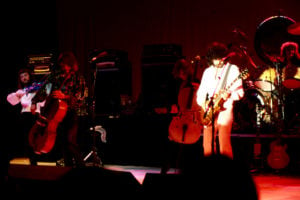
Our Complete List Of Rush Band Members article looks at the musicians who filled one of our favorite bands. I will never forget walking into a record store in 1976 and seeing the album 2112. I had never heard of the band before, but the album cover was so cool I took a chance. The rest is rock and roll history. Rush was formed in Toronto in 1968. The original lineup consisted of Alex Lifeson on guitar, John Rutsey on drums, and Jeff Jones on bass guitar and vocals, with Geddy Lee replacing Jones shortly afterward. The band underwent several early lineup changes before Neil Peart replaced Rutsey in July 1974, establishing the iconic trio of Lee, Lifeson, and Peart.
The band’s breakthrough came with Fly by Night in 1975, followed by a difficult commercial period surrounding Caress of Steel. Their fortunes changed dramatically with 2112 in 1976, beginning an extraordinary run that included albums such as A Farewell to Kings, Hemispheres, Permanent Waves, Moving Pictures, and Signals.
Following a hiatus after 1997 brought on by devastating personal tragedies in Neil Peart’s life, Rush returned to the studio and stage with Vapor Trails in 2002, followed by Snakes & Arrows in 2007 and Clockwork Angels in 2012. The classic trio concluded its touring career with the R40 Tour in 2015. Peart died from glioblastoma in January 2020, and for several years it appeared that Rush’s performing history had ended with him.
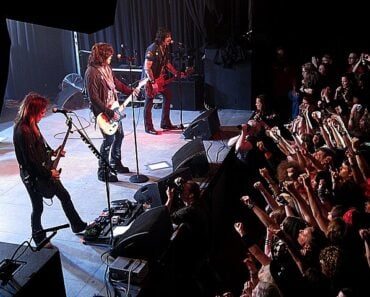
That changed in 2026. Geddy Lee and Alex Lifeson returned to the stage under the Rush name for the Fifty Something tour, celebrating more than 50 years of Rush music while honoring Peart’s legacy. German drummer Anika Nilles joined them behind the kit, while veteran keyboardist and backing vocalist Loren Gold expanded the live lineup. The tour began in June 2026 and has been extended into 2027 with dates in South America, the United Kingdom, and Europe.
Rush’s music is known for its musicianship, complex compositions, and diverse lyrical themes spanning science fiction, philosophy, individualism, social commentary, and the human experience. The band’s sound evolved from blues-inspired hard rock to progressive rock, embraced synthesizers heavily during the 1980s, and later returned to a more guitar-driven approach without abandoning its progressive instincts. Rush has earned a remarkable collection of gold and platinum records, numerous Juno Awards, seven Grammy nominations, induction into the Canadian Music Hall of Fame, and induction into the Rock and Roll Hall of Fame in 2013.
CURRENT RUSH BAND MEMBERS
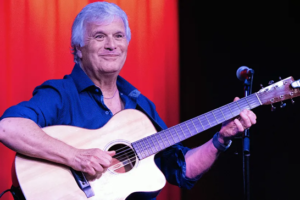
Geddy Lee

s_bukley / Shutterstock.com
Geddy Lee was born Gary Lee Weinrib on July 29, 1953, in Willowdale, Toronto. He is the son of Morris Weinrib and Mary “Manya” Rubinstein, Jewish Holocaust survivors from Poland. His parents survived Nazi concentration camps during World War II before building a new life in Canada. Lee’s nickname “Geddy” grew from the way his mother, speaking with her accent, pronounced “Gary,” and the nickname eventually became his professional name.
Lee joined Rush shortly after the band’s formation in 1968, replacing original bassist and singer Jeff Jones. His high-register vocals, muscular bass playing, keyboards, synthesizers, and bass pedals became central to the band’s sound. His influences included Jack Bruce, John Entwistle, Chris Squire, Paul McCartney, and James Jamerson, among many others.
Geddy Lee’s contributions to music have been widely recognized throughout his career. Along with Alex Lifeson and Neil Peart, he was appointed an Officer of the Order of Canada in 1996. Rush was inducted into the Canadian Music Hall of Fame in 1994, received a star on the Hollywood Walk of Fame in 2010, and entered the Rock and Roll Hall of Fame in 2013.
After Rush’s R40 Tour ended in 2015 and Peart died in 2020, Lee pursued writing, archival projects, and occasional performances with Lifeson. In 2025, Lee and Lifeson announced that Rush would return to the road. Lee resumed performing Rush’s catalog in 2026 on the Fifty Something tour, sharing the stage with Lifeson, drummer Anika Nilles, and touring keyboardist Loren Gold.
Alex Lifeson

Kathy Hutchins / Shutterstock.com
Aleksandar Živojinović, widely known by his stage name Alex Lifeson, was born in Fernie, British Columbia, to Serbian immigrant parents. Raised in Toronto, Lifeson developed an early interest in music before guitar became his primary instrument. As a teenager, he drew inspiration from guitarists including Jimi Hendrix, Pete Townshend, Jeff Beck, Eric Clapton, and Jimmy Page.
Lifeson co-founded Rush in 1968 with John Rutsey and Jeff Jones. Geddy Lee replaced Jones shortly after the band’s first performance, beginning the musical partnership between Lifeson and Lee that has lasted for more than five decades. Lifeson remained the band’s only member present from its original 1968 lineup through the entire classic era.
Within Rush, Lifeson’s musical contributions extended beyond electric and acoustic guitar. He also played mandola, mandolin, bouzouki, keyboards, synthesizer pedals, and other stringed instruments while contributing backing vocals. His guitar style moved comfortably between heavy riffs, atmospheric chord voicings, acoustic passages, and adventurous solos, making him one of progressive rock’s most distinctive players.
Lifeson, along with Lee and Peart, was appointed an Officer of the Order of Canada in 1996 and inducted into the Rock and Roll Hall of Fame with Rush in 2013. Outside Rush, he released the solo project Victor in 1996 and later formed Envy of None. In 2026, Lifeson returned to touring with Lee as Rush began its Fifty Something tour.
CURRENT RUSH TOURING MUSICIANS
Anika Nilles
Anika Nilles joined Geddy Lee and Alex Lifeson for Rush’s return to the stage in 2026. The German drummer, composer, and producer had already built an international reputation through her solo work, clinics, teaching, and extensive touring with Jeff Beck. Lee and Lifeson introduced Nilles as the drummer who would help them celebrate Rush’s catalog while honoring Neil Peart’s irreplaceable legacy.
Nilles made her first public performance with Lee and Lifeson at the 2026 Juno Awards and then took the drum chair for the Fifty Something tour, which opened at the Kia Forum in Los Angeles on June 7, 2026. Rather than attempting to impersonate Peart, she brought her own precision, power, and musical personality to some of rock’s most demanding drum parts.
Loren Gold
Loren Gold joined Rush’s Fifty Something tour as keyboardist and backing vocalist in 2026. A veteran touring musician and musical director, Gold previously worked extensively with The Who and Roger Daltrey and also performed with Chicago and numerous pop and rock artists.
Gold’s presence marked a significant change for Rush’s live presentation. For decades, Geddy Lee handled an extraordinary combination of bass, keyboards, vocals, and pedal-triggered sounds himself. Adding Gold allowed Lee greater freedom to concentrate on bass and vocals while preserving the complex keyboard and synthesizer layers found throughout Rush’s catalog.
CLASSIC RUSH BAND MEMBER
Neil Peart

s_bukley / Shutterstock.com
Neil Peart was born in Hamilton, Ontario, and raised in Port Dalhousie, now part of St. Catharines. He embarked on his musical journey during adolescence, playing with regional bands and aspiring to become a full-time drummer. Following a period living in England, Peart returned to Canada and joined Rush in July 1974, replacing original drummer John Rutsey immediately before the band’s first major U.S. tour.
Peart made his recording debut with Rush on Fly by Night in 1975 and appeared on every subsequent full-length Rush studio album through Clockwork Angels in 2012. His drumming was heavily influenced early on by hard rock players such as Keith Moon, Ginger Baker, and John Bonham. Over the years, Peart expanded his musical vocabulary through jazz and big-band influences, including Gene Krupa and Buddy Rich. His studies with Freddie Gruber during the 1990s led him to rethink elements of his technique and physical approach to the drum kit.
Beyond his remarkable skills as a drummer, Peart became the principal lyricist for Rush. His lyrics explored science fiction, fantasy, philosophy, individualism, social observation, loss, faith, skepticism, and the passage of time. The combination of Lee and Lifeson’s music with Peart’s lyrics became one of the defining creative relationships in progressive rock.
Peart’s literary contributions extended beyond song lyrics. He authored several nonfiction books chronicling his travels, observations, and personal experiences. He also collaborated with author Kevin J. Anderson on novels inspired by Clockwork Angels and its fictional world. His work with Rush ultimately extended far beyond drumming, helping define the intellectual and emotional identity of the band.
Neil Peart died on January 7, 2020, in Santa Monica, California, after a private three-and-a-half-year battle with glioblastoma. His family announced his death on January 10. When Lee and Lifeson returned Rush to the stage in 2026, the tour was explicitly presented as both a celebration of Rush’s music and a tribute to Peart’s extraordinary legacy.
EARLY RUSH BAND MEMBERS
John Rutsey
John Rutsey was born on July 23, 1952. He was Rush’s original drummer and a founding member of the band alongside Alex Lifeson and Jeff Jones in 1968. After Geddy Lee replaced Jones, Rutsey, Lifeson, and Lee became the trio that built Rush’s reputation throughout the Toronto club circuit.
Rutsey played drums on Rush’s self-titled debut album in 1974. He left the band that July because of a combination of health concerns connected with diabetes, the demands of touring, and musical differences as Lee and Lifeson became increasingly interested in more complex progressive rock. Neil Peart replaced him shortly afterward. Rutsey died on May 11, 2008.
Jeff Jones
Jeff Jones was part of Rush’s original 1968 lineup alongside Alex Lifeson and John Rutsey, serving as bassist and lead vocalist. His tenure was extraordinarily brief: Jones performed at the band’s first show before leaving, after which Geddy Lee was brought in as his replacement.
Jones later found success with the Canadian band Ocean, whose recording of “Put Your Hand in the Hand” became an international hit in 1971. He also went on to play bass with Red Rider and continued working with Tom Cochrane.
Lindy Young
Lindy Young joined the developing Rush lineup in late 1968 and remained into 1969, contributing keyboards, rhythm guitar, vocals, percussion, and harmonica. His presence expanded the group’s sound during a period when the young musicians were experimenting with different lineups and even temporarily performed under the name Hadrian.
Joe Perna
Joe Perna played bass and contributed vocals during the 1969 period when Geddy Lee was temporarily outside the group and the band was operating under the Hadrian name. Perna’s tenure was brief, and Lee eventually returned as bassist and lead singer.
Bob Vopni
Bob Vopni contributed guitar and backing vocals during the band’s 1969 transitional period. He was part of the broader collection of young Toronto-area musicians who passed through the group before the lineup returned to the core trio of Lifeson, Lee, and Rutsey.
Mitch Bossi
Mitch Bossi played additional guitar and contributed backing vocals with Rush during the early 1970s. His brief tenure came before the group recorded its debut album and before Rush settled permanently into the power-trio format that would define its classic career.
Rush’s story once appeared to have reached its final chapter with the end of the R40 Tour in 2015 and Neil Peart’s death in 2020. The return of Geddy Lee and Alex Lifeson in 2026 opened an unexpected new chapter. With Anika Nilles and Loren Gold joining them onstage, Rush’s music is once again being performed around the world while Peart’s legacy remains at the heart of the celebration.
Updated August 7, 2026.
Complete List Of Rush Band Members article published on ClassicRockHistory.com © 2026