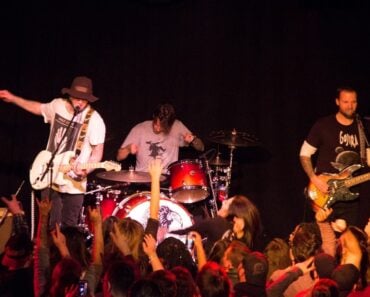
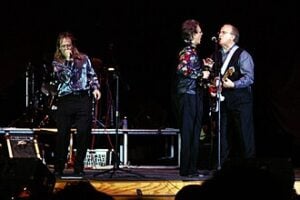
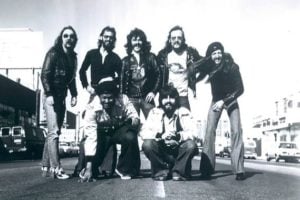
Feature Photo: William Henderson darkfiber22, CC BY 2.0 <https://creativecommons.org/licenses/by/2.0>, via Wikimedia Commons
In the expansive landscape of soul and R&B music, few groups have maintained the devoted following and consistent musical excellence of Maze. Born from the creative vision of Frankie Beverly in Philadelphia in 1970, Maze began its journey as Raw Soul. The group relocated to San Francisco in 1971, where its fortunes changed dramatically after an introduction to Marvin Gaye.
The legendary singer took them on tour as his opening act. He also suggested they change their name, with founding member Roame Lowry ultimately suggesting “Maze.” This pivotal moment led to the group signing with Capitol Records in 1976 and releasing their debut album “Maze Featuring Frankie Beverly” in 1977, launching a career that would span decades.
Throughout their history, Maze released nine gold albums between 1977 and 1993, establishing themselves as a formidable force in soul music. Their catalog includes widely beloved hits such as “Happy Feelin’s,” “While I’m Alone,” “Golden Time of Day,” “Southern Girl,” “Joy and Pain,” “Before I Let Go,” and “Back in Stride.” The band became known for their distinctive laid-back yet soulful sound, impeccable musicianship, and Beverly’s smooth, unmistakable vocals. Perhaps most notably, Maze cultivated one of the most loyal fan bases in music, with audiences traditionally donning all-white attire at their concerts to honor the group’s signature stage appearance.
Maze’s journey includes a transition from Capitol Records to Warner Bros. in 1989, continuing their gold record streak with albums like “Silky Soul” and “Back to Basics.” Although the band experienced various lineup changes throughout the decades, they remained a consistent live draw, selling out venues across the United States and building a particularly strong following in the United Kingdom. A major transition came in May 2023, when several long-time members departed after a labor dispute with Beverly’s management and formed TMF, short for “The Music Forever.”
TMF later became MAZE The Music Forever. In September 2025, the group signed an exclusive worldwide licensing agreement with the Estate of Frankie Beverly allowing it to perform under the Maze name.
Beverly remained with another Maze lineup and announced his retirement in 2024, completing a farewell tour before passing the lead vocalist role to Tony Lindsay. Beverly made a guest appearance with Maze Honoring Frankie Beverly at the San Jose Jazz Summer Fest on August 11, 2024. He died on September 10, 2024, at age 77, while Maze Honoring Frankie Beverly continued the musical legacy after his death.
Frankie Beverly
Howard Stanley “Frankie” Beverly, born December 6, 1946, in Philadelphia, Pennsylvania, was the founder, lead vocalist, songwriter, producer, arranger, keyboardist, and guitarist of Maze. Beverly’s musical journey began in church, where he performed solos as a child. By age 12, he had renamed himself “Frankie” in homage to his idol Frankie Lymon of the Teenagers. Beverly’s early career included forming The Butlers in Philadelphia during his high school years, recording singles like “The Sun’s Message” and “She Tried to Kiss Me.”
In 1970, Beverly established Raw Soul, which would evolve into Maze following the group’s relocation to San Francisco in 1971. After struggling initially, the band secured a regular gig at a club called The Scene. Their fortunes changed dramatically when Marvin Gaye saw them perform, took them on tour, and helped secure their recording contract with Capitol Records. Beverly’s creative vision was the consistent driving force behind Maze, as he wrote, produced, and arranged the group’s material.
Beverly’s distinctive smooth vocals and soul-stirring compositions yielded the band’s signature sound, a blend of Philadelphia soul with a laid-back California vibe. Under his leadership, Maze released nine gold albums between 1977 and 1993. Hits included “Happy Feelin’s,” “While I’m Alone,” “Golden Time of Day,” “Joy and Pain,” and “Before I Let Go.” His song “Back in Stride” gave the group their first number-one R&B hit in 1985, followed by another chart-topper with “Can’t Get Over You.”
After more than five decades of performing, Beverly announced his retirement in 2024 and undertook the “I Wanna Thank You” farewell tour. He later made a guest appearance with Maze Honoring Frankie Beverly at San Jose Jazz Summer Fest on August 11, 2024. Beverly died on September 10, 2024, at age 77. In 2025, the Recording Academy honored him posthumously with a Lifetime Achievement Award, accepted by his son Anthony Beverly.
Throughout his career, Beverly maintained artistic integrity and focused on soul music that connected deeply with audiences even as musical trends changed. His legacy includes his own musical contributions and the opportunities he gave other artists. Toni Braxton, Regina Belle, and Anita Baker were among the performers who gained exposure as opening acts for Maze.
McKinley “Bug” Williams
McKinley “Bug” Williams, a Philadelphia native, was an original member of Maze and Frankie Beverly’s lifetime friend and musical partner. Williams served as the band’s percussionist and background vocalist from its inception until his passing in 2011. His relationship with Beverly began when they were teenagers around age 13 or 14, with both young men singing in local groups and in church.
When the original lineup of The Butlers, Beverly’s high school group, disbanded, Williams joined Beverly’s musical journey. He remained with Beverly through the transition from Raw Soul to Maze. Williams contributed his percussion skills and vocals to every Maze album from their self-titled 1977 debut through their final studio release, “Back to Basics,” in 1993.
Williams was often described as the “Tambourine Man” by fans and was known as the guardian and “Papa Hen” of the band. According to Beverly, Williams was “an excellent, schooled musician, top of the line” who “knew music” and was “very well respected.” He kept the band in line and was regarded with deep affection by his bandmates and fans alike.
On September 2, 2011, Williams died suddenly of an apparent heart attack at age 65 while the band was in Chattanooga, Tennessee, for a performance. His passing was a significant loss to the Maze family. Beverly later remarked, “Bug was my brother.” He added, “He was with me for 50 years.”
“He was the father of the band, very much like the guardian of the band,” Beverly said. Beverly considered Williams irreplaceable. “Someone asked me if I was going to replace him,” he recalled. “I said, ‘That’s impossible, there is no replacing Bug.'”
Roame Lowry
Roame Lowry stands as a pivotal figure in Maze’s history as the last remaining original member alongside Frankie Beverly until May 2023. Lowry served as the band’s congas player and background vocalist. His contributions extended beyond his musical talents to include naming the band itself. When Marvin Gaye suggested that Raw Soul needed a new name in 1976, it was Lowry who proposed “Maze,” establishing the identity that would define their career for over four decades.
Lowry’s percussion work and vocals appear on every Maze album from their 1977 debut through their final studio release in 1993. His distinctive conga rhythms helped shape the group’s signature sound, blending Philadelphia soul traditions with West Coast smoothness. Throughout Maze’s touring years, Lowry remained a constant presence alongside Beverly, creating the rhythmic foundation for their live performances.
In May 2023, after more than 50 years of collaboration with Beverly, Lowry departed Maze amid a labor dispute with Beverly’s management. He subsequently became a founding member of TMF, short for “The Music Forever,” a group formed by former Maze musicians to continue their musical legacy. TMF later became MAZE The Music Forever, with Lowry continuing on congas and vocals. In September 2025, the Estate of Frankie Beverly granted the group an exclusive worldwide license to use the Maze name. As the last original Maze member besides Beverly himself, Lowry’s departure marked the end of an era for the band that had begun in Philadelphia in the early 1970s.
Robin Duhe
Robin Duhe, born in Oakland, California, was the longest-serving bassist for Maze, performing with the group for over three decades. Coming from a large musical family, Duhe began his musical journey in third grade, initially playing trumpet before switching to French horn in high school. His transition to string instruments occurred when his mother gave him a four-string guitar. He instinctively played it like a bass and found his true instrumental calling.
After high school, Duhe performed around the San Francisco Bay Area with groups including the Soul Messengers. He also backed artists like Etta James and Bobby Womack. While attending college, he was introduced to members of Frankie Beverly’s band. Duhe joined what would become Maze and remained with them for more than 30 years.
Duhe’s dynamic bass lines provided the foundation for many of Maze’s classic recordings. Those recordings included “Happy Feelin’s,” “Golden Time of Day,” “Joy and Pain,” and “Back in Stride.” His playing style embodied the laid-back yet groove-oriented approach that defined the group’s sound. He appeared on all of Maze’s studio albums from their 1977 self-titled debut through their final album “Back to Basics” in 1993.
In 2004, Duhe began a solo career with the release of his first album “Do It Duhe,” followed by “Life” in 2009. His solo work evolved from the R&B sound he cultivated with Maze to incorporate smooth jazz with R&B undertones and eventually a fusion of various genres. In 2022, he released a contemporary jazz single titled “Cruis’n,” continuing to build on his musical legacy beyond his time with Maze.
Wayne Thomas
Wayne Thomas, also credited as Wuaneg Thomas, was one of the original guitarists for Maze. He joined when the band was still known as Raw Soul in the early 1970s. As a founding member of Maze, Thomas contributed his guitar skills to the band’s early development and their transition from Philadelphia to San Francisco.
Thomas played lead guitar on Maze’s self-titled debut album in 1977. His melodic guitar work helped establish the band’s distinctive sound on tracks like “Happy Feelin’s,” “While I’m Alone,” and “Lady of Magic.” His guitar style blended elements of soul, funk, and jazz. The tasteful, understated playing complemented Frankie Beverly’s compositions and prioritized the overall groove.
After contributing to several of the band’s early albums, Thomas eventually departed Maze as the group experienced lineup changes throughout the late 1970s and early 1980s. He later returned to work with the band on their 1985 album “Can’t Stop the Love,” demonstrating his continued musical connection with Beverly’s vision. Thomas’s guitar work helped define Maze’s early sound and laid the groundwork for the guitar approach that would become part of their signature style throughout their career.
Ron Smith
Ron Smith joined Maze as a guitarist during a period of personnel changes in the late 1970s. He made his debut on the album “Joy and Pain” in 1980. Smith replaced earlier guitarist Wayne Thomas and brought a fresh guitar approach to the group’s evolving sound.
Smith’s guitar work can be heard on several of Maze’s successful albums, including “Joy and Pain” (1980), “We Are One” (1983), and “Can’t Stop the Love” (1985). His playing contributed to hit singles like “Southern Girl,” “The Look in Your Eyes,” “Joy and Pain,” and “Running Away.” Smith’s guitar style complemented the band’s smooth soul sound. He provided tasteful rhythm parts and melodic solos that enhanced the music without overshadowing Beverly’s vocals.
As a member of Maze through much of the 1980s, Smith was part of the band’s lineup during their popular live period. His playing can be heard during the era represented by “Live in New Orleans” (1981), while the lineup continued to evolve afterward. His contributions helped maintain the band’s musical consistency even as personnel shifted around Beverly and original members like McKinley Williams and Roame Lowry.
Smith later returned to work with Maze on their Warner Bros. albums “Silky Soul” (1989) and “Back to Basics” (1993). Both releases continued the band’s long run of commercial success and attained gold status. His long association with the group underscores his importance to their sound during one of their most commercially successful periods.
Sam Porter
Sam Porter was a keyboardist who joined Maze during their early days as the band transitioned from Raw Soul to Maze. He was one of the original members of the newly named Maze in 1976. Porter contributed to establishing the group’s signature sound on their Capitol Records debut.
Porter’s keyboard work can be heard on Maze’s self-titled 1977 debut album and their follow-up “Golden Time of Day” (1978). His playing provided melodic support and harmonic richness that complemented Beverly’s compositions. Porter blended elements of soul, jazz, and funk, helping create the smooth, sophisticated sound that became the band’s trademark.
After departing from the main lineup, Porter returned to contribute to Maze’s 1985 album “Can’t Stop the Love.” The album featured the band’s first number-one R&B hit, “Back in Stride.” Throughout his time with Maze, Porter collaborated closely with Frankie Beverly and helped translate Beverly’s musical vision through his keyboard arrangements and performances.
Joe Provost
Joe Provost served as the drummer for Maze during their formative period after the group relocated to San Francisco. He was part of the band when it became the house band at a local club called The Scene. As one of the original members of Maze when they signed with Capitol Records in 1976, Provost provided the rhythmic foundation for the band’s earliest recordings.
Provost’s drumming can be heard on Maze’s self-titled debut album released in 1977. The album included “Happy Feelin’s,” “While I’m Alone,” and “Lady of Magic.” His playing contributed to the laid-back yet groove-oriented approach that defined Maze’s sound and complemented the percussion work of Roame Lowry.
After contributing to the band’s successful debut, Provost departed Maze as the group underwent several personnel changes in its early years. His drumming on their first gold record helped establish the rhythmic template that would influence the band’s approach throughout its career. Other drummers carried that approach forward in subsequent years.
Ahaguna Sun
Ahaguna Sun joined Maze during the sessions for their second album, “Golden Time of Day,” before becoming the principal drummer for “Inspiration” in 1979. He took over much of the drum chair from Joe Provost. Sun brought a fresh rhythmic approach as the band continued to refine its musical identity.
On “Inspiration,” Sun’s drumming supported tracks like “Feel That You’re Feelin’.” His work helped the album earn gold certification and further established Maze’s reputation for sophisticated soul music. His playing maintained the laid-back groove that characterized Maze’s sound while adding his own subtle touches to the rhythmic foundation.
Sun’s tenure with Maze was relatively brief. He was replaced by Billy Johnson for the band’s fourth album, “Joy and Pain,” in 1980. Despite his short time with the group, Sun’s contributions to “Inspiration” helped maintain Maze’s commercial and artistic momentum during a crucial period in their development.
Billy Johnson
Billy Johnson, also known as Billy “Shoes” Johnson, joined Maze as their drummer in 1980. He made his debut on the album “Joy and Pain.” Taking over from Ahaguna Sun, Johnson brought a solid rhythmic foundation to the band during a significant period in their development.
Johnson’s crisp, precise drumming can be heard on several of Maze’s successful albums, including “Joy and Pain” (1980), “Live in New Orleans” (1981), and “We Are One” (1983). His playing supported hit singles like “Southern Girl,” “Joy and Pain,” “Running Away,” and “Love Is the Key.” That work helped maintain the group’s commercial success throughout the early 1980s.
As Maze’s primary drummer during much of their Capitol Records period, Johnson’s rhythmic contributions were essential to the band’s laid-back yet groove-oriented sound. He maintained the pocket while adding subtle embellishments. That approach complemented Beverly’s compositions and the overall ensemble style that characterized Maze’s music.
Johnson’s tenure with Maze established him as an important member of their classic lineup. His playing helped define the band’s sound during the peak of their popularity. His drumming on both studio albums and acclaimed live recordings demonstrated his versatility and sensitivity to Maze’s musical dynamics.
Carl Wheeler
Carl Wheeler became part of Maze’s later touring history after first establishing himself as a founding member, keyboardist, and musical director of Tony! Toni! Toné! in the 1980s. Wheeler is a multi-instrumentalist, songwriter, producer, and arranger with deep roots in Bay Area R&B and gospel music. He later spent more than two decades touring with Frankie Beverly and Maze.
Wheeler’s career outside Maze includes songwriting and production work as well as collaborations across R&B, gospel, rock, and pop. With Tony! Toni! Toné!, he contributed to major recordings and co-wrote songs including “Anniversary.” His broad musical background made him a natural fit for Maze’s blend of soul, funk, and jazz influences.
During Frankie Beverly’s farewell period, Wheeler served as keyboardist and musical director. He remained part of the lineup that became Maze Honoring Frankie Beverly after Beverly stepped away from lead vocal duties. Wheeler was also among the musicians who carried the Maze catalog forward after Beverly’s death in 2024.
Philip Woo
Philip Woo joined Maze around 1980 after establishing himself as a keyboardist and synthesizer player with Roy Ayers and Ubiquity. His addition brought contemporary keyboard textures to the band’s arrangements. Woo’s experience in funk and soul expanded the group’s musical palette during the early 1980s.
Woo’s electric piano and synthesizer work can be heard on Maze recordings including “Live in New Orleans” and “We Are One.” His playing added sonic depth and color to the group’s smooth soul sound. Those textures helped Maze adapt to changing production styles without abandoning its soulful essence.
As part of Maze’s keyboard arrangements, Woo helped create the lush, layered sound heard on many of the band’s recordings and performances. His contributions were particularly valuable as Maze navigated the changing musical landscape of the early 1980s. He helped incorporate contemporary sounds while maintaining the group’s established identity.
Woo also contributed to Maze’s acclaimed live performances during his tenure with the band. His work with Maze established him as a skilled keyboardist in the soul and R&B world. His distinctive approach to synthesizer playing enhanced the group’s signature sound.
Wayne “Ziggy” Lindsay
Wayne “Ziggy” Lindsay joined Maze as a keyboard player and synthesizer specialist in the mid-1980s. He contributed to the band’s evolving sound during a period of commercial success. His keyboard work complemented the established Maze style while adding contemporary elements.
Lindsay’s synthesizer and keyboard talents can be heard on Maze’s 1985 album “Can’t Stop the Love.” The album featured the group’s first number-one R&B hit, “Back in Stride,” and the Top 5 follow-up “Too Many Games.” His playing helped update the band’s sound for the mid-1980s while maintaining its soulful essence.
Working alongside other keyboard players in various Maze lineups, Lindsay contributed to the lush, layered arrangements that characterized the band’s recordings. His playing blended traditional soul keyboard approaches with modern synthesizer textures. That combination gave Maze’s music a contemporary edge while respecting its musical heritage.
Lindsay’s contributions during the mid-1980s helped Maze achieve some of its greatest commercial success. His keyboard parts enhanced Beverly’s compositions without overwhelming their inherent soulfulness. His work represents an important chapter in the band’s long musical evolution.
Larry Kimpel
Larry “Bear” Kimpel joined Maze as a bassist in the early 2000s and became one of the band’s longest-serving later members. Before joining Maze, Kimpel had already established himself as a respected bassist. His professional career began in 1978 with Mavis Staples and The Staple Singers, and he also recorded in Chicago with artists like Gene Chandler, Jerry Butler, and Shirley Bassey.
During his approximately 20-year tenure with Maze, Kimpel served as both bassist and Musical Director. His solid, groove-oriented playing maintained the smooth, soulful foundation that had characterized Maze since its inception. He also added his own musical personality to the group’s later sound.
Kimpel recorded and toured with numerous notable artists outside Maze, including Steve Perry, Babyface, Whitney Houston, George Duke, Anita Baker, and Diana Ross. His work across R&B, soul, pop, and jazz demonstrated his versatility. That broad experience informed his approach to Maze’s music during the band’s later years.
In May 2023, Kimpel was among the long-time Maze members who departed amid a labor dispute with Beverly’s management. He subsequently became a founding member of TMF, short for “The Music Forever.” The group later became MAZE The Music Forever, where Kimpel continued on bass and vocals and served as music director.
Vance “Maestro” Taylor
Vance “Maestro” Taylor joined Maze as a keyboardist in May 2003 and became an important part of the band’s later lineup. Before joining Maze, Taylor had already established himself as a professional musician. He landed his first professional touring gig at age 22 with Grammy Award-winning artist Peabo Bryson.
During his approximately 20-year tenure with Maze, Taylor’s keyboard work helped maintain the lush, melodic quality that had long been a hallmark of the band’s sound. His playing incorporated elements of soul, jazz, and gospel. Taylor provided rich harmonic support for Beverly’s vocals while adding tasteful solos and embellishments.
Beyond Maze, Taylor performed and recorded with artists including Earth, Wind & Fire, Elton John, Aretha Franklin, Will Downing, and Toni Braxton. He also served as musical director for Braxton. That broad experience informed his approach to Maze’s music while helping him respect the band’s traditional elements.
In May 2023, Taylor was among the long-time Maze members who departed amid the labor dispute with Beverly’s management. He became a founding member of TMF, which later became MAZE The Music Forever. Taylor also released a solo contemporary jazz and funk album titled “Long Overdue,” showcasing his talents outside Maze.
Jubu Smith
Jubu Smith, born John Smith, joined Maze as lead guitarist in the early 2000s and became one of the band’s most prominent later members. Before joining Maze, Smith had established himself as a skilled guitarist and sideman. His earlier work included touring with Tony! Toni! Toné!, whose members had connections to Maze’s Bay Area musical circle.
During his approximately 20-year tenure with Maze, Smith became known for dynamic guitar work that blended blues, soul, and jazz. His strong, melodic, bluesy tone was often compared to that of B.B. King. The style added a contemporary dimension to Maze’s classic sound while respecting the band’s musical traditions. Smith’s guitar solos became highlights of Maze’s live performances and earned him a strong following among fans.
Beyond Maze, Smith recorded with Luther Vandross, Mary J. Blige, Boyz II Men, Toni Braxton, George Duke, and George Benson. Those experiences demonstrated his versatility across R&B, soul, and jazz. They also informed his approach to Maze’s music and allowed him to add his own musical personality.
In May 2023, Smith was among the long-time Maze members who departed amid the labor dispute with Beverly’s management. He became one of the founding musicians associated with TMF during its early formation. Outside Maze, Smith also fronted his own soul-blues band, Legally Blynd.
Calvin Napper
Calvin Napper joined Maze as their drummer in the late 2000s and became an integral part of the band’s later rhythm section. A Grammy Award-winning drummer from Winston-Salem, North Carolina, Napper brought considerable experience to Maze. He had already performed and recorded with artists across numerous genres.
During his approximately 13-year tenure with Maze, Napper provided the solid rhythmic foundation essential to the band’s laid-back yet groove-oriented sound. His precise, tasteful drumming maintained the pocket while adding subtle embellishments. That approach enhanced Beverly’s compositions and complemented the overall ensemble.
Outside Maze, Napper worked with Donnie McClurkin, Kirk Franklin, Shirley Caesar, Stephanie Mills, Patti LaBelle, and many other artists across gospel, R&B, jazz, and soul. He won a Grammy through his work with McClurkin’s “Psalms, Hymns & Spiritual Songs.” That diverse experience informed his approach to Maze’s rhythmic traditions.
Napper also established himself as a solo artist, releasing “Sticks of Praise” (1999), “Soul Rhythms” (2005), “Good Vibes” (2015), and “Making Moves” (2020). Those projects demonstrated his versatility as both a drummer and producer. His production work also extended to DVD projects including “Diligent Hands” (2004) and “Rhythmic Inspiration” (2007).
In May 2023, Napper was among the long-time Maze members who departed amid the labor dispute with Beverly’s management. He became a founding member of TMF. The group later became MAZE The Music Forever, with Napper continuing on drums and vocals.
Daniel Weatherspoon
Daniel “Spoon” Weatherspoon was one of the newest members of Maze’s later lineup before the 2023 split. A Grammy and Dove Award-winning keyboardist, producer, composer, and musical director based in the Washington, D.C. area, he brought considerable experience to the group. His career background combined gospel, jazz, and R&B.
Known for a passionate, jazz-influenced gospel and R&B playing style, Weatherspoon contributed keyboard parts that complemented Maze’s established sound. His musical background aligned well with the band’s soulful aesthetic. That combination allowed him to integrate contemporary elements into Maze’s performances.
In May 2023, shortly after joining Maze, Weatherspoon was among the members who departed amid the labor dispute with Beverly’s management. He became a founding member of TMF. The group later became MAZE The Music Forever, with Weatherspoon continuing on keyboards and organ.
Despite his relatively brief association with Maze, Weatherspoon joined TMF alongside longer-serving Maze members including Roame Lowry, Larry Kimpel, Vance Taylor, Jubu Smith, and Calvin Napper. His inclusion reflected the respect his fellow musicians had for his talents. It also reflected his connection to the musical tradition they were seeking to maintain. He continued working within that circle after leaving Beverly’s lineup.
Tony Lindsay
Tony Lindsay became the new lead vocalist for Maze Honoring Frankie Beverly as Frankie Beverly prepared to retire in 2024. Beverly publicly said he was passing the lead vocalist role to Lindsay. The band continued under the name “Maze Honoring Frankie Beverly.”
Before joining the Maze organization, Lindsay was best known for his long tenure as a lead vocalist with Santana. His extensive professional experience prepared him for the difficult task of taking over songs closely identified with Beverly. Lindsay brought decades of stage experience to the new lineup.
Lindsay’s role represents a new chapter in Maze’s history as the band continues without its founder and defining voice. Maze Honoring Frankie Beverly made its first performance after Beverly’s death at the New Orleans Jazz & Heritage Festival on May 4, 2025. Lindsay remained the lead vocalist as the group carried Beverly’s catalog into the post-2024 period.
Maze Honoring Frankie Beverly: The Legacy Band
During Beverly’s final performances, the Maze Honoring Frankie Beverly lineup included Carl Wheeler on keyboards and as musical director, Tony Lindsay on lead vocals, and Vernon “Ice” Black on lead guitar. Kevin Stancil played bass, Larry Wims Jr. played drums, and Kevin “FlyGuyByrd” Lloyd handled lead and rhythm guitar. Cecil Green played keyboards, while Marlon B. “Wild Bill” Curry played congas.
Those musicians were identified as the Legacy Band for the group’s first performance after Beverly’s death at the 2025 New Orleans Jazz & Heritage Festival. Vernon “Ice” Black brought a particularly deep connection because he had previously performed and recorded with Maze from the late 1980s into the 1990s. Together, the lineup carried Beverly’s songs into the period following his death.
Michael White
Michael White joined Maze as a drummer in the mid-1980s and became part of the lineup during an important transitional period. His drumming can be heard on Maze’s live album “Live in Los Angeles,” recorded in 1986. The album captured the band’s dynamic concert performances during this era.
White’s precise, groove-oriented drumming helped maintain the rhythmic foundation that had always been essential to Maze’s sound. His playing complemented the percussion work of original member Roame Lowry. Together, they created the pocket that supported Beverly’s vocals and the band’s smooth instrumental arrangements.
As part of Maze’s rhythm section during the mid-1980s, White contributed as the band moved through the later stages of its Capitol Records period. His drumming helped bridge different phases of the band’s career. He maintained continuity in Maze’s rhythmic approach while accommodating changes in its musical direction.
White’s contributions to Maze, particularly on “Live in Los Angeles,” helped document the band’s acclaimed live performances. Those concerts were a major factor in Maze’s enduring popularity and passionate fan base. His work established him as a skilled drummer capable of supporting the band’s sophisticated, groove-oriented approach.
Read More: Artists’ Interviews Directory At ClassicRockHistory.com
Read More: Classic Rock Bands List And Directory
Updated October 7, 2026
Complete List Of Maze Band Members article published on ClassicRockHistory.com © 2026