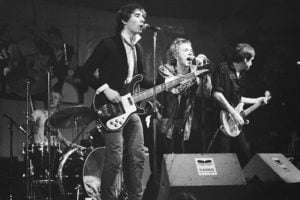
Feature Photo: English: Photograph by Naomi Petersen. Distributed by SST Records., Public domain, via Wikimedia Commons
The band Hüsker Dü formed in 1979 with guitarist and vocalist Bob Mould, bassist and vocalist Greg Norton, and drummer and vocalist Grant Hart. What started as a hardcore punk group soon evolved into something far more innovative. Hüsker Dü quickly began incorporating melody and emotional depth into their songs, blending aggression with introspection in a way that few bands had attempted before. Their early shows in the Minneapolis–Saint Paul area earned them a reputation for their speed, power, and energy, and it was not long before they became one of the most influential underground bands in America.
The group’s first releases came through Reflex Records, a label founded by Hart and Mould to maintain creative control over their work. Their first album, the live hardcore document Land Speed Record, appeared in 1982. The debut studio album, Everything Falls Apart, followed in 1983 and captured their raw, uncompromising energy. Hüsker Dü then made a major artistic leap with the 23-track double album Zen Arcade, released by SST Records in 1984. The record was a major artistic leap forward, fusing punk ferocity with experimental song structures and emotionally charged lyrics. The ambitious concept album told the story of a young man leaving home and confronting the harsh realities of life, exploring themes of disillusionment, identity, and personal growth. Zen Arcade became one of the defining works of the American underground music scene and is widely regarded as one of the most important albums of the 1980s.
Following Zen Arcade, Hüsker Dü continued their prolific output with New Day Rising in 1985 and Flip Your Wig later that same year. Both albums showcased the band’s growing melodic sensibilities, balancing Mould’s intense songwriting with Hart’s more pop-influenced approach. Songs like “Celebrated Summer,” “Makes No Sense at All,” and “Green Eyes” demonstrated their ability to craft accessible yet deeply emotional music without losing their edge. The group’s evolution during this period positioned them as pioneers of the alternative rock movement that would later dominate the 1990s, influencing artists such as Nirvana, The Pixies, and R.E.M.
In 1986, Hüsker Dü made a major move by signing with Warner Bros. Records, becoming one of the first American underground bands to transition to a major label while retaining full creative control. Their Warner debut, Candy Apple Grey, marked another step forward, featuring a mix of electric and acoustic songs that reflected both personal struggles and artistic maturity. Tracks like “Don’t Want to Know If You Are Lonely” and “Sorry Somehow” captured the balance between intensity and melody that had become the band’s hallmark. The album received critical acclaim and brought the band greater exposure while maintaining their integrity and independence.
Their final studio album, Warehouse: Songs and Stories, was released in 1987 as a double album that served as both a creative high point and the end of an era. The record featured standout tracks such as “Could You Be the One,” “These Important Years,” and “Ice Cold Ice.” The songwriting split between Mould and Hart highlighted both their chemistry and the growing tension within the band. Despite the album’s success, internal conflicts, exhaustion from touring, and personal struggles brought the band to an end following its final tour, with the breakup becoming official in early 1988.
After the band’s dissolution, all three members went on to pursue their own paths in music. Bob Mould formed the band Sugar in the early 1990s and released acclaimed solo albums including Workbook and Black Sheets of Rain. Grant Hart embarked on a solo career and formed the band Nova Mob, continuing to write and perform until his passing in 2017. Greg Norton moved away from music for several years before returning with new projects in the 2010s. Each member’s later work reflected the creative spirit and emotional honesty that had defined Hüsker Dü’s sound.
Though Hüsker Dü never achieved mainstream commercial success, their influence on rock music is immeasurable. They helped bridge the gap between the raw aggression of punk and the more melodic, introspective sounds that would define alternative rock. Their willingness to experiment, write from personal experience, and push beyond genre limitations inspired generations of musicians. Many critics and fans consider Hüsker Dü one of the most important and influential American bands of the 1980s, not just for their music but for their uncompromising commitment to artistic integrity.
Archival releases have continued to expand Hüsker Dü’s recorded history. Numero Group issued the sixty-nine-track Savage Young Dü box set in 2017 and the digital EP Extra Circus, followed by the twenty-eight-track live collection Tonite Longhorn through Reflex Records in 2023. On November 7, 2025, Numero released 1985: The Miracle Year, a forty-three-track live box centered on the band’s January 30, 1985, First Avenue concert and supplemented with twenty performances from later shows that year. As of July 29, 2026, it remained the newest official Hüsker Dü release listed on the band’s principal digital catalog.
Complete List Of Hüsker Dü Songs From A to Z
0–9
- “59 Times the Pain” – New Day Rising (1985)
A–E
- “Actual Condition” – Warehouse: Songs and Stories (1987)
- “Afraid of Being Wrong” – Everything Falls Apart (1983)
- “All I’ve Got to Lose Is You (Demo)” – Savage Young Dü (2017)
- “All Tensed Up” – Land Speed Record (1982)
- “All This I’ve Done for You” – Candy Apple Grey (1986)
- “All Work and No Play (Live, Long Beach, 1985)” – 1985: The Miracle Year (2025)
- “Amusement” – Everything Falls Apart (1983)
- “The Baby Song” – Flip Your Wig (1985)
- “Back from Somewhere” – Warehouse: Songs and Stories (1987)
- “Bed of Nails” – Warehouse: Songs and Stories (1987)
- “Beyond the Threshold” – Zen Arcade (1984)
- “Big Sky” – Land Speed Record (1982)
- “The Biggest Lie” – Zen Arcade (1984)
- “Blah Blah Blah” – Everything Falls Apart (1983)
- “Books About UFOs” – New Day Rising (1985)
- “Bricklayer” – Everything Falls Apart (1983)
- “Broken Home, Broken Heart” – Zen Arcade (1984)
- “Call on Me (Live)” – Savage Young Dü (2017)
- “Can’t See You Anymore (Demo)” – Savage Young Dü (2017)
- “Celebrated Summer” – New Day Rising (1985)
- “Charity, Chastity, Prudence and Hope” – Warehouse: Songs and Stories (1987)
- “Chartered Trips” – Zen Arcade (1984)
- “Chinese Rocks (Rehearsal)” – Savage Young Dü (2017)
- “Could You Be the One?” – Warehouse: Songs and Stories (1987)
- “Crystal” – Candy Apple Grey (1986)
- “Data Control” – Land Speed Record (1982)
- “Dead Set on Destruction” – Candy Apple Grey (1986)
- “Deadly Skies” – Metal Circus (1983)
- “Diane” – Metal Circus (1983)
- “Divide and Conquer” – Flip Your Wig (1985)
- “Do the Bee” – Land Speed Record (1982)
- “Do You Remember” – Everything Falls Apart (1983)
- “Don’t Have a Life” – Land Speed Record (1982)
- “Don’t Know Yet” – Flip Your Wig (1985)
- “Don’t Try It (Live)” – Savage Young Dü (2017)
- “Don’t Try to Call” – Land Speed Record (1982)
- “Don’t Want to Know If You Are Lonely” – Candy Apple Grey (1986)
- “Dreams Reoccurring” – Zen Arcade (1984)
- “Drug Party (Live)” – Savage Young Dü (2017)
- “Eiffel Tower High” – Candy Apple Grey (1986)
- “Eight Miles High” – Non-album single (1984)
- “Every Everything” – Flip Your Wig (1985)
- “Everything Falls Apart” – Everything Falls Apart (1983)
F–J
- “Find Me” – Flip Your Wig (1985)
- “First of the Last Calls” – Metal Circus (1983)
- “Flexible Flyer” – Flip Your Wig (1985)
- “Flip Your Wig” – Flip Your Wig (1985)
- “Folklore” – New Day Rising (1985)
- “Friend, You’ve Got to Fall” – Warehouse: Songs and Stories (1987)
- “From the Gut” – Everything Falls Apart (1983)
- “Games” – Flip Your Wig (1985)
- “Gilligan’s Island” – Land Speed Record (1982)
- “The Girl Who Lives on Heaven Hill” – New Day Rising (1985)
- “Gravity” – Everything Falls Apart (1983)
- “Green Eyes” – Flip Your Wig (1985)
- “Guns at My School” – Land Speed Record (1982)
- “Hardly Getting Over It” – Candy Apple Grey (1986)
- “Hare Krsna” – Zen Arcade (1984)
- “Hate Paper Doll” – Flip Your Wig (1985)
- “Heavy Handed” – Extra Circus (2017)
- “Helter Skelter (Live at First Avenue)” – 1985: The Miracle Year (2025)
- “How to Skin a Cat” – New Day Rising (1985)
- “I Apologize” – New Day Rising (1985)
- “I Don’t Know for Sure” – Candy Apple Grey (1986)
- “I Don’t Know What You’re Talking About” – New Day Rising (1985)
- “I’ll Never Forget You” – Zen Arcade (1984)
- “I’m Not Interested” – Land Speed Record (1982)
- “I’m Tired of Doing Things Your Way (Live)” – Savage Young Dü (2017)
- “Ice Cold Ice” – Warehouse: Songs and Stories (1987)
- “If I Told You” – New Day Rising (1985)
- “In a Free Land” – Everything Falls Apart (1983)
- “Indecision Time” – Zen Arcade (1984)
- “Industrial Grocery Store (Live)” – Savage Young Dü (2017)
- “Insects Rule the World (Live)” – Savage Young Dü (2017)
- “Is Today the Day” – Extra Circus (2017)
- “It’s Not Fair (Live)” – Savage Young Dü (2017)
- “It’s Not Funny Anymore” – Metal Circus (1983)
- “It’s Not Peculiar” – Warehouse: Songs and Stories (1987)
K–O
- “Keep Hanging On” – Flip Your Wig (1985)
- “Let’s Go Die” – Everything Falls Apart (1983)
- “Lifeline” – Metal Circus (1983)
- “Love Is All Around” – B-side of “Makes No Sense at All” (1985)
- “M.I.C.” – Everything Falls Apart (1983)
- “Makes No Sense at All” – Flip Your Wig (1985)
- “Masochism World” – Zen Arcade (1984)
- “Masochism World (Live)” – B-side of “Eight Miles High” (1984)
- “Misty Modern Days (Live, Seattle, 1985)” – 1985: The Miracle Year (2025)
- “Monday Will Never Be the Same” – Zen Arcade (1984)
- “MTC” – Land Speed Record (1982)
- “Never Talking to You Again” – Zen Arcade (1984)
- “New Day Rising” – New Day Rising (1985)
- “Newest Industry” – Zen Arcade (1984)
- “No Promise Have I Made” – Candy Apple Grey (1986)
- “No Reservations” – Warehouse: Songs and Stories (1987)
- “Now That You Know Me (Live)” – The Living End (1994)
- “Nuclear Nightmare (Demo)” – Savage Young Dü (2017)
- “Obnoxious” – Everything Falls Apart (1983)
- “Ode to Bode (Live, July 16, 1980)” – Tonite Longhorn (2023)
- “One Step at a Time” – Zen Arcade (1984)
- “Out on a Limb” – Metal Circus (1983)
- “Outside (Live)” – Savage Young Dü (2017)
P–T
- “Perfect Example” – New Day Rising (1985)
- “Picture of You (Demo)” – Savage Young Dü (2017)
- “Pink Turns to Blue” – Zen Arcade (1984)
- “Plans I Make” – New Day Rising (1985)
- “Powerline” – New Day Rising (1985)
- “Pride” – Zen Arcade (1984)
- “Private Hell (Live)” – Savage Young Dü (2017)
- “Private Plane” – Flip Your Wig (1985)
- “Punch Drunk” – Everything Falls Apart (1983)
- “Push the Button” – Land Speed Record (1982)
- “Real World” – Metal Circus (1983)
- “Recurring Dreams” – Zen Arcade (1984)
- “Sex Dolls (Live)” – Savage Young Dü (2017)
- “Sexual Economics (Live)” – Savage Young Dü (2017)
- “She Floated Away” – Warehouse: Songs and Stories (1987)
- “She’s a Woman (And Now He Is a Man)” – Warehouse: Songs and Stories (1987)
- “Signals from Above” – Everything Falls Apart (1983)
- “Signals from Above (In a Free Land Session)” – Savage Young Dü (2017)
- “Something I Learned Today” – Zen Arcade (1984)
- “Somewhere” – Zen Arcade (1984)
- “Sore Eyes (Demo)” – Savage Young Dü (2017)
- “Sorry Somehow” – Candy Apple Grey (1986)
- “Standing by the Sea” – Zen Arcade (1984)
- “Standing in the Rain” – Warehouse: Songs and Stories (1987)
- “Statues” – Non-album single (1980)
- “Statues (Unedited Version)” – Everything Falls Apart (1983)
- “Stick It to Me (Live)” – Savage Young Dü (2017)
- “Strange Week” – Land Speed Record (1982)
- “Sunshine Superman” – Everything Falls Apart (1983)
- “Target” – Everything Falls Apart (1983)
- “Target (In a Free Land Session)” – Savage Young Dü (2017)
- “Tell You Why Tomorrow” – Warehouse: Songs and Stories (1987)
- “Termination (Live)” – Savage Young Dü (2017)
- “Terms of Psychic Warfare” – New Day Rising (1985)
- “These Important Years” – Warehouse: Songs and Stories (1987)
- “Ticket to Ride (Live at First Avenue)” – 1985: The Miracle Year (2025)
- “Tired of Doing Things” – Land Speed Record (1982)
- “Too Far Down” – Candy Apple Grey (1986)
- “Too Much Spice” – Warehouse: Songs and Stories (1987)
- “The Tooth Fairy and the Princess” – Zen Arcade (1984)
- “Travel in the Opposite Car (Live)” – Savage Young Dü (2017)
- “The Truth Hurts (Demo)” – Savage Young Dü (2017)
- “Turn It Around” – Warehouse: Songs and Stories (1987)
- “Turn On the News” – Zen Arcade (1984)
U–Z
- “Ultracore” – Land Speed Record (1982)
- “Uncle Ron (Rehearsal)” – Savage Young Dü (2017)
- “Up in the Air” – Warehouse: Songs and Stories (1987)
- “Visionary” – Warehouse: Songs and Stories (1987)
- “Walk Within the Wounded (Live)” – Savage Young Dü (2017)
- “What Do I Want?” – Everything Falls Apart (1983)
- “What Went Wrong (Live)” – Savage Young Dü (2017)
- “What’s Going On” – Zen Arcade (1984)
- “Whatcha Drinkin'” – New Day Rising (1985)
- “Whatever” – Zen Arcade (1984)
- “Wheels” – Everything Falls Apart (1983)
- “The Wit and the Wisdom” – Flip Your Wig (1985)
- “Won’t Change” – Extra Circus (2017)
- “Won’t Say a Word (Live)” – Savage Young Dü (2017)
- “Writer’s Cramp” – Non-album single (1981)
- “You Can Live at Home” – Warehouse: Songs and Stories (1987)
- “You Think I’m Scared” – Extra Circus (2017)
- “You’re a Soldier” – Warehouse: Songs and Stories (1987)
- “You’re Naive” – Land Speed Record (1982)
- “You’re Too Obtuse (Live)” – Savage Young Dü (2017)
Check out similar articles and more, all on ClassicRockHistory.com.
Read More: Artists’ Interviews Directory At ClassicRockHistory.com
Read More: Classic Rock Bands List And Directory
Hüsker Dü Albums, EPs, Singles, Live Albums, and Archival Releases
Statues / Amusement (single, 1980)
Land Speed Record (live album, 1982)
In a Free Land (single, 1982)
Everything Falls Apart (1983)
Metal Circus (EP, 1983)
Eight Miles High (single, 1984)
Zen Arcade (1984)
New Day Rising (1985)
Flip Your Wig (1985)
Makes No Sense at All (single, 1985)
Candy Apple Grey (1986)
Warehouse: Songs and Stories (1987)
The Living End (live album, 1994)
Savage Young Dü (archival box set, 2017)
Extra Circus (archival EP, 2017)
Tonite Longhorn (archival live album, 2023)
1985: The Miracle Year (archival live box set, 2025)
Updated July 29, 2026.
Complete List Of Hüsker Dü Songs From A to Z article published on ClassicRockHistory.com © 2026
ClassicRockHistory.com claims ownership of all its original content and intellectual property under United States copyright laws and those of other countries. No person, business, or organization may republish our original content online or in print without permission. All photographs used are either public-domain or Creative Commons images, or are officially licensed from Shutterstock for ClassicRockHistory.com. Photo credits appear with the applicable images. Album-cover images are affiliate links, remain the property of Amazon, and are stored on Amazon servers. Unauthorized copying of our content may result in legal action against the infringing website or publisher.