Feature Photo: Randy Miramontez / Shutterstock.com
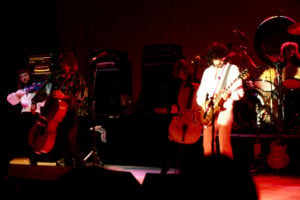
Tampa, Florida, proved a fertile ground for the birth of the Outlaws, the Southern rock band that would carve a name for themselves through tireless touring, three-guitar fireworks, and harmonized vocals. The story begins in the late 1960s, when guitarist-vocalist Hughie Thomasson and drummer David Dix were involved in early versions of the group.
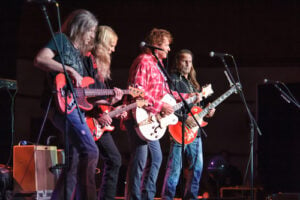
By the early 1970s, the lineup that would make the band famous was taking shape with Frank O’Keefe on bass, drummer Monte Yoho, Henry Paul on guitar and vocals, and Billy Jones, who joined on guitar and vocals in 1973. Paul’s arrival gave the band a distinct melodic direction. By the time they began playing clubs around Florida, their mix of rock, country, and blues already stood apart in a crowded Southeastern bar scene.
After several years spent building their reputation regionally, the Outlaws’ fortunes changed dramatically in 1974. They landed a crucial opening slot for Lynyrd Skynyrd, whose singer Ronnie Van Zant helped them secure a contract with Arista Records. That partnership led to their self-titled debut, Outlaws, in 1975.
Recorded at Criteria Studios in Miami and produced by Paul A. Rothchild, the album introduced the world to the band’s soaring harmonies and three-lead-guitar attack. “There Goes Another Love Song” and the nine-minute epic “Green Grass & High Tides” became immediate signatures; the former cracked the Billboard Hot 100, while the latter became a staple on classic rock radio.
Building on this momentum, the Outlaws quickly issued Lady in Waiting in 1976. This sophomore effort, featuring a popular cover of “Freeborn Man,” kept their profile high and showcased their three-guitar interplay and country influences.
Their third album, Hurry Sundown (1977), produced by Bill Szymczyk, yielded another memorable song with the title track and found the band tightening their songwriting and arrangements. This period marked the group’s commercial peak, and their relentless touring schedule earned them a devoted fanbase across the United States.
Playin’ to Win followed in 1978, with a lineup that now included guitarist and vocalist Freddie Salem, who replaced Henry Paul after Paul left following Hurry Sundown. However, lineup changes would become a recurring theme. Bassist Frank O’Keefe was succeeded by Harvey Dalton Arnold, and David Dix returned as a second drummer.
By 1980’s Ghost Riders, the group had weathered further shifts. The album delivered a surprise Top 40 hit with the haunting “(Ghost) Riders in the Sky,” a reimagined version of the cowboy classic that exposed the Outlaws to a wider pop and rock audience. Billy Jones remained on the album but departed during the following period.
Throughout the early 1980s, the band navigated changing tastes in popular music and internal struggles after releasing a run of records that included In the Eye of the Storm (1979), Ghost Riders (1980), and Los Hombres Malo (1982). By the mid-1980s, Hughie Thomasson was the last original member standing.
Despite the setbacks, the Outlaws’ road warrior spirit never flagged, and they remained a fixture on the concert circuit, even as mainstream success waned.
Beyond studio releases, the Outlaws issued live albums such as Bring It Back Alive (1978), capturing the sweat and energy of their stage shows. These recordings preserved the band’s reputation as a must-see live act, especially noted for extended versions of “Green Grass & High Tides.”
Even as members departed, formed new groups (like Henry Paul’s BlackHawk), or pursued solo work, the Outlaws name persisted, maintained by Thomasson’s unwavering commitment to the band’s legacy.
The late 1980s and early 1990s brought hiatuses and reunions. Thomasson himself joined Lynyrd Skynyrd for several years before returning to relaunch the Outlaws. The band’s later albums, Diablo Canyon (1994), It’s About Pride (2012), and Dixie Highway (2020), saw them return to their roots with renewed energy, appealing to longtime followers and introducing the sound to a new generation.
Though the Outlaws never garnered a long list of industry awards, their influence on the Southern rock genre remains profound. The band’s signature style, melding country lyricism, hard-driving rock rhythms, and high-flying guitar solos, has inspired generations of musicians.
They are regularly credited with helping shape the so-called “Florida sound,” a distinct branch of Southern rock that balances the bluesiness of the Allman Brothers with West Coast harmonies.
In terms of recognition, the Outlaws are frequently cited in retrospectives on classic rock, their biggest hits routinely featured in anthologies, film soundtracks, and radio playlists. They have played alongside heavyweights such as the Allman Brothers Band, Lynyrd Skynyrd, and the Marshall Tucker Band, and have remained a favorite at major festivals and reunion shows.
The group’s resilience is further reflected in the Outlaws’ ability to weather the loss of key members. Billy Jones’s tragic death in 1995 and Hughie Thomasson’s passing in 2007 were major blows. Founding bassist Frank O’Keefe also died in 1995.
Still, the Outlaws continued, with Henry Paul and Monte Yoho, both longtime contributors, guiding a new lineup forward after Thomasson’s death. Yoho retired from the touring lineup in 2019, while Paul continued to lead the band, paying tribute to the past while embracing the future.
Outside of music, members of the Outlaws have been involved in numerous charitable events and local community initiatives, supporting causes ranging from disaster relief to veterans’ organizations. Their reputation as road warriors is matched by a sense of loyalty to their roots and their audience, fostering connections that extend well beyond album sales or chart positions.
Today, the Outlaws remain one of the longest-running acts in Southern rock, their discography spanning more than a dozen studio and live albums. While trends have come and gone, their dedication to their original sound and the spirit of American music endures.
The Outlaws’ legacy is not just measured in record sales or radio hits, but in the passion they inspire among their fans and the distinct stamp they left on American rock history.
Outlaws Albums And Discography
Outlaws (1975)
Studio album.

Lady in Waiting (1976)
Studio album.

Hurry Sundown (1977)
Studio album.

Playin’ to Win (1978)
Studio album.

Bring It Back Alive (1978)
Live album.

In the Eye of the Storm (1979)
Studio album.

Ghost Riders (1980)
Studio album.

Los Hombres Malo (1982)
Studio album.

Greatest Hits of the Outlaws, High Tides Forever (1982)
Compilation album.

Soldiers of Fortune (1986)
Studio album.

Hittin’ the Road Live (1993)
Live album.

Diablo Canyon (1994)
Studio album.

Best of the Outlaws: Green Grass and High Tides (1996)
Compilation album.

So Low (2000)
Hughie Thomasson solo album.

Extended Versions (2002)
Live album.

Platinum & Gold Collection: The Best of the Outlaws (2003)
Compilation album.

Once an Outlaw (2007)
Unreleased studio album. Recorded before Hughie Thomasson’s death in 2007; not officially issued as a commercial studio release.

Green Grass and High Tides Forever (Live) (2009)
Four-track live EP.
Super Hits (2009)
Compilation album.

It’s About Pride (2012)
Studio album.

Anthology – Live & Rare (2012)
Archival collection of live performances and rare studio recordings. Originally issued in 2012, with a remastered edition in 2022 and a digital edition in 2023.
Live in Los Angeles 1976 (2015)
Archival live recording.
Legacy Live (2016)
Live album.

The Hits Live! (2018)
Live album.
Knoxville Girl (2019)
Archival live recording from 1976.

Dixie Highway (2020)
Studio album.

Live at Rockpalast 1981 (2020)
Archival concert release.

Three Giants, One Tour – Live in Germany in 1992 – feat. Leslie West (2022)
Archival live release, featuring Leslie West.

Alive In America (2022)
Live album.

Check out similar articles on ClassicRockHistory.com Just click on any of the links below……
Read More: Artists’ Interviews Directory At ClassicRockHistory.com
Read More: Classic Rock Bands List And Directory
Updated October 11, 2026
Complete List Of Outlaws Albums And Discography article published on ClassicRockHistory.com © 2026