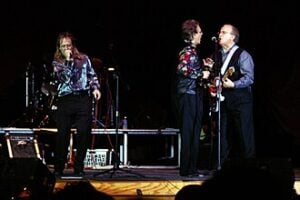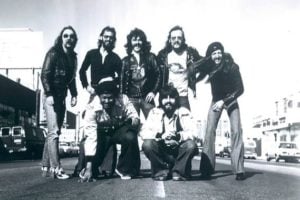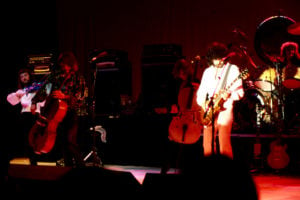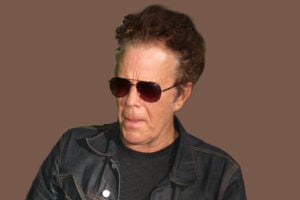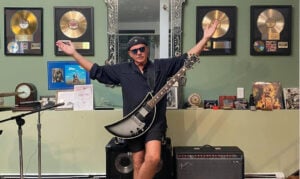
Feature Photo courtesy of Peppy Castro
Considered to be one of the early pioneers of the psychedelic garage band rock era, Peppy Castro has done it all.
He is a successful, seasoned professional with a wide range of musical styles. His fame and first hit record began at age 17, when he was one of the founding members of the legendary rock group The Blues Magoos. This led him to a starring role in the original Broadway Production of Hair.
Peppy followed up by being awarded Drama Logue Magazine’s Outstanding Achievement Award for his music and lyrics for the groundbreaking show Zen Boogie, which ran to rave reviews in Beverly Hills.
His songs have been recorded by the likes of Diana Ross, Kiss, and Cher, among others. He is also Emmy-nominated, an award-winning playwright and multi-instrumentalist who has penned and/or performed hundreds of well-known jingles for decades.
Favorite jingles include Budweiser, Chevy, Bounty, Nestlé’s Crunch, Kodak, among others — the list is endless. His potent vocals have appeared on numerous platinum records for well-known recording artists.
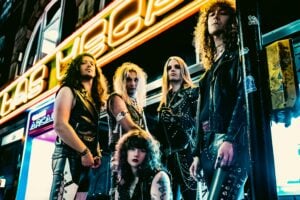
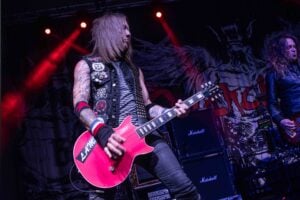
He’s enjoyed years of diverse musical experience as an original member of the bands The Blues Magoos, Balance, Wiggy Bits, and the Long Island Music Hall of Fame’s Barnaby Bye. Peppy recently recorded and penned three songs with longtime friend Joey Kramer of Aerosmith for a new video game that hit the market in 2024.
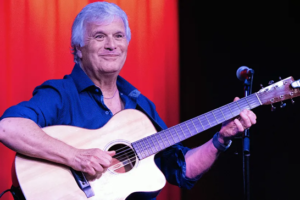
Some of the extensive list of artists Peppy has worked with over the years includes Laura Branagin, Michael Bolton, Liza Minnelli, Ronnie Spector, Peter Allen, Paul Stanley, Gene Simons, Ace Frehley, Joan Jett, Buzzy Lindhart, Rex Smith, Richie Havens, John Denver, Aldo Nova, David Johansen, Darlene Love, Melanie, Jay and The Americans, Cher and Diana Ross.
On deck for 2026 is that Peppy has been working on a hush-hush project with the iconic director Sir Trevor Nunn (Cats and Les Mis).
What inspired you to pick up the bass and guitar, and what keeps you inspired to pick them up?
Bass is a game-changer. It holds everything down and moves the air. It’s sonic, powerful, and very sexy. Having been in bands my whole life, I was naturally curious about the other members’ instruments. So, it allowed me to become proficient in everyone else’s instrument.
Inspiration is the gift of music. It’s endless.
What sort of scene did you grow up in, and how did that shape you?
As I am six years into writing my book, there is an abundance of life experiences. However, I did leave home at 14 years. old. That should tell you something. Let’s just say I had a quest for what was out there in life, instead of my childhood growing up in the Bronx from four to 14 years old, with five kids in a room.
Tell us about the formation of The Blues Magoos.
The Magoos were formed as the Trenchcoats. [laughs] I was just teaching myself guitar and went to an Italian Feast in the Bronx and saw some guys playing in a band. They had a few years on me, and when they got off, I approached them and started chatting.
They would end up being two of the original Blues Magoos. Ralph Scala and the now departed. Ronnie Gilbert. They told me they were looking for a rhythm guitarist, and we started playing together. We’d take days learning and learning songs. Of course, I should have been in school. They had already graduated.
What are your memories of recording the band’s first few albums? What gear were you using then, and why?
We recorded at Regent Sound Studios on 57th Street in NYC. It was a dream come true that we had evolved up to that level. Eight-track recording had just come into being; however, I do remember in my first recording sessions having Local 802, the musicians’ union, being present to make sure you had a union card. Not only were you not allowed to overdub any other parts because, to the union, but you were also keeping another musician out of a job. Can you imagine?
Tell us about the writing and recording of “(We Ain’t Got) Nothin’ Yet.”
The song was a group effort written in the basement of The Hotel Albert. The hotel actually used to let us rehearse in the basement. That in itself was amazing.
What led to the end of the Blues Magoos, and how do you measure their impact on psych rock?
The Magoos were riding high, new rock stars with a top-10 single and a great album. However, on our second single, “Pipe Dream,” it was banned by the ABC Network. They feared it was too much of a drug reference. In reality, it was an anti-drug song telling people not to get hung up on drugs and to come back to reality. That was the beginning of the end. Then it was the domino effect. Thankfully, I’ve made a successful life and career in spite of it.
You met a young Ace Frehley in the late ‘60s and taught him some things. Tell us about that.
Yes, I knew Ace as Paul [Frehley] when I was a young kid. I actually remember him sniffing glue in a paper bag when he was around 13. [laughs]
What was Ace like then? Did you have an idea that he might become famous?
I had a few years on Ace, and when you are young, that’s a lot. When you get older, it means nothing, as I was only two years older. Ace was in shock when he realized I was a rock star and made it. He sought me out through my mother and asked me if I would sit with him and show him some guitar.
I was his inspiration. After I had taught Ace some guitar, I heard bits and pieces about him playing in bands, etc., but by the time he joined Kiss, and they were just starting to play out, I was friendly with [Kiss manager] Bill Aucoin.
I never thought one way or another about Ace’s future as a rock star. However, when I sat in Bill Aucoin’s first very small office and saw the smoke stains on the ceiling from Gene [Simmons] breathing fire and saw where they were going, I knew they were going to be huge.
In the ‘70s, Ace borrowed a solo of yours for “Love Gun.” What did you think of that, and what did he say when you asked him about it?
[laughs] The beauty of Ace was that he had no filter. He would just come out and say, “Yeah, I stole that solo from The Blues Magoos note for note…” Hey, if ya gonna pick, pick from the winners! [laughs]
Later in life, he came over to my house to sit with all the veterans on Veterans Day. He brought photos and records for all of them. He made their day and mine as well, as I threw a party to celebrate them. When Ace walked in, they all surrounded him and told him how great he looked. Ace said, “Yeah, I just had some Plastic surgery” [laughs] That was Ace.
You were good friends with Gene Simmons and Paul Stanley, too, right? Did you ever work with them as a songwriter for KISS?
I wrote “Naked City” with Gene, Bob Kulick, and Vini Poncia, and worked on Paul’s solo album. The Song started with Bob and I .
How did you meet Bob Kulick, leading to the formation of Balance?
I was very close with Paul, whom I had met through their publicist Carol Kaye, who is one of my dearest friends in life, as I know you have a history with her. I remember seeing Bob Kulick as young teenagers in the Village. We never had words, but I knew he played guitar.
Fast forward 15 years, Paul comes over to my apartment for a hang with friends, which was in the same neighborhood as Paul. He walked in with this guy and said, “Peppy, I want you to meet my friend Bob. I shook his hand and was like, “Wait a minute… I know this guy…”
I realized it was that guy I would see way back in the Village. Bob, naturally knowing my history with the Magoos because we were one of the successful bands to break out of the Village, and realizing that I was being managed by the biggest managers in the business, suggested that we start a band. Thus, Balance was born.
Tell us about the guitar yin and yang between you and Bob? You were very different players, but it worked.
Well, I was a singer-songwriter first and foremost. So, I would write on guitar or keyboards, and I would naturally jump on bass or keys when Bob was Playing guitar.
What do you remember about the writing and recording of Balance’s records?
Writing was constant because we needed material. Also, I had brought in Doug Katsaros on keyboards to round out the band. Doug is nothing short of sheer brilliance, and we had been working together for years. We co-produced with the infamous Tony Bongiovi, who was the owner and built the world-famous studio, The Power Station, in NYC. That ensured the record would be top-shelf in quality.
Why do you think Balance didn’t hit, and what led to the end of the band?
Balance’s first single, “Breakin’ Away,” was actually a top-ten hit. However, on the release of our second LP, the label wasn’t behind the record. They thought we went too heavy, even though the second LP is considered a classic.
Plus, they had a Black Friday, which happened on the release date of the record. Half of the label got pink slips. It was just too hard to keep the band together. There was no business for us with us. Still, those records are fabulous, and I am super proud of them.
Circling back to “Naked City,” as you alluded to, it originates with you, while you were with Balance. It ended up on Kiss’s Unmasked album. What can you tell us about that?
Really, it was a matter of Gene calling us up, asking if we had any material to submit. We submitted a few things, and “Naked City” stuck, although Gene did title the song and wrote great lyrics.
You kept doing sessions and got into jingle work. What led to that, and how did you approach it?
First off, the jingle business was not for basic musicians. This was a very competitive business, and you were only working with the best in the business—the best singers and musicians known to man. I never knocked on a door. I was asked in by a guy who owned a music production company by chance.
A songwriting lyricist buddy of mine, who was a copywriter for an ad agency, called me up and asked if I would go down to the studio he was in and help him out with a song. I agreed, and the guy who owned the music house was a huge Magoo fan. [laughs]
He asked me if I’d work with him. I told him: “As long as you understand my recording career is my first choice…” Years later, I retired with a pension and was Emmy-nominated.
When the Blues Magoos reunited later on, why weren’t you a part of it? Do you regret that?
No. Even though, in 1969, the rest of the band went off and said, “You’re not in the band anymore,” I was all of 19 years old. Old, they all went to California and wanted to continue being the Magoos without me. I licked my wounds and always kept going forward.
It was a brutal hit. My guess is that there was some jealousy as I was evolving as a songwriter and getting lots of attention. However, I’m the one who kept at it and made a life. So, everything is for a reason.
The bottom line for me is that there are lots of “Magoosies,” my affectionate name for Magoo fans. [laughs] Those are still out they and deserve to be appreciated. They come first to me over any misguided egos.
You stayed in touch with Ace until the end. What can you say about your friendship, and what was it like finding out that he passed?
Ace and I were brothers till the end. I had originally called him up at the onset of what was [Ace’s final solo album] 10,000 Volts. I said, “Ace, before I kick, let’s do something together because our story is so unique…” That’s a whole other story for another time. I’m very spiritual and let fate take its course.
I do have material and masters of me recently working with Ace. So, in a way, it began with me, and in some strange way, it ends with me. As far as his passing goes, it hits me to my core. I had a good cry with Carol Kaye as she managed Ace as well for so many years. Just so sad.
Ace was working on another Origins album, and as you said, you’d also written with him in recent years. Will we ever hear the songs you wrote with Ace?
I’m sure what I did with Ace will see the light of day. It is totally worthy of him and puts a great cap on our friendship together.
Are you still playing guitar? What are you up to now?
[laughs] I’m a lifer! I have seven songs written, and I’m a writer on Robin Beck’s new LP coming out in April. And I also co-produced with James Christian from House of Lords. Then there are my musicals, the book, and endless amounts of projects that keep me busy.
Do you have any regrets or wish anything had worked out differently?
The “shoulda woulda couldas” in hindsight to wonder what life would’ve been like had I made different decisions is staying in acting. But hell no! I’ve lived the life of 20 men in this one life.
![Blues Magoos: Electric Comic Book [Vinyl]](https://m.media-amazon.com/images/I/51GMzm4bLkL._SL500_.jpg)
Check out similar articles on ClassicRockHistory.com Just click on any of the links below……
Read More: Artists’ Interviews Directory At ClassicRockHistory.com
Read More: Classic Rock Bands List And Directory
Read More: 1970s’ Saddest Rock And Pop Songs
Read More: 25 Best Classic Rock Live Albums Of All Time
An Interview With Peppy Castro of The Blues Magoos & Balance article published on ClassicRockHistory.com© 2026
Classicrockhistory.com claims ownership of all its original content and Intellectual property under United States Copyright laws and those of all other foreign countries. No one person, business, or organization is allowed to republish any of our original content anywhere on the web or in print without our permission. All photos used are either public domain Creative Commons photos or licensed officially from Shutterstock under license with ClassicRockHistory.com. All photo credits have been placed at the end of the article. Album Cover Photos are affiliate links and the property of Amazon and are stored on the Amazon server. Any theft of our content will be met with swift legal action against the infringing websites.