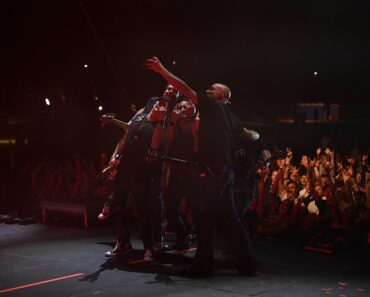
Feature Photo: Lufke, Public domain, via Wikimedia Commons
Faith No More originated in San Francisco in 1979, initially performing under the name Sharp Young Men before adopting the Faith No Man moniker in 1982 and finally settling on Faith No More in 1983. The band has released seven studio albums across their career, experiencing two significant hiatuses from 1998 to 2009 and again from 2015 to present. Their commercial breakthrough came with “The Real Thing” in 1989, which sold over four million copies worldwide and produced the hit single “Epic” that reached number nine on the Billboard Hot 100.
The band’s lineup has undergone several notable changes throughout their history, most significantly the replacement of original vocalist Chuck Mosley with Mike Patton in 1988 and the departure of guitarist Jim Martin in 1993. Faith No More disbanded in 1998 after releasing “Album of the Year” and remained inactive until reuniting in 2009 with the lineup of Patton, Gould, Bordin, Bottum, and Hudson. They released “Sol Invictus” in 2015, their first studio album in eighteen years, which debuted at number two on the Billboard Rock Albums chart. The band has earned gold certifications for multiple releases and achieved significant chart success in various international markets.
Faith No More’s discography includes “We Care a Lot” in 1985, “Introduce Yourself” in 1987, “The Real Thing” in 1989, “Angel Dust” in 1992, “King for a Day… Fool for a Lifetime” in 1995, “Album of the Year” in 1997, and “Sol Invictus” in 2015. The band has experienced multiple extended breaks between recording and touring activities. They performed their final shows in 2015 before entering another indefinite hiatus. The group’s members have pursued numerous side projects and collaborations throughout Faith No More’s periods of inactivity.
Billy Gould
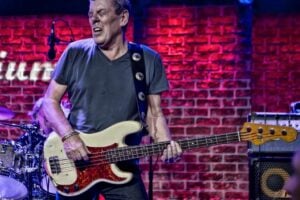
Billy Gould co-founded Faith No More in 1979 and has served as the band’s bassist throughout their entire recording history. He was present during the band’s earliest incarnations as Sharp Young Men and Faith No Man before the group adopted their final name. Gould appears on every Faith No More release, beginning with the early singles “Quiet in Heaven” and “Song of Liberty” in 1982 and continuing through all seven studio albums. His bass playing provides the rhythmic and melodic foundation for the band’s sound, with his lines often incorporating funk, metal, and experimental influences. On “We Care a Lot” in 1985, Gould’s bass work established the groove-oriented approach that would become central to the band’s identity.
His contributions extended beyond bass playing to include production work and business management for the band. Gould’s bass lines on “The Real Thing” in 1989 were essential to the album’s commercial success, particularly on tracks like “Epic” where his playing anchored the song’s distinctive rhythm. On “Angel Dust” in 1992, Gould’s bass work became more experimental and aggressive, matching the album’s darker tone. He contributed to “King for a Day… Fool for a Lifetime” in 1995 during the period of guitarist turnover, maintaining musical continuity through personnel changes. Gould’s work on “Album of the Year” in 1997 demonstrated his matured approach to composition and arrangement. After the band’s reunion in 2009, his bass playing on “Sol Invictus” in 2015 reflected decades of experience while incorporating contemporary production techniques.
Outside of Faith No More, Gould has maintained an active career in music production and artist management. He founded Koolarrow Records, which has released music by various alternative and experimental artists. Gould has produced albums for other bands and worked as an audio engineer on numerous projects. He has been involved in soundtrack work for films and television. Gould established Kool Arrow Studios in San Francisco, which has served as a recording facility for multiple artists. His business acumen has contributed to Faith No More’s ability to maintain creative control throughout their career. Gould has been involved in various collaborations with musicians outside the band, though he has primarily focused on production and business activities rather than performing with other groups.
Mike Bordin
Mike Bordin joined Faith No More at its inception in 1979 and has remained the band’s drummer throughout their entire history. He was part of the original lineup that performed as Sharp Young Men and continued through all subsequent name changes and personnel shifts. Bordin appears on every Faith No More recording, from their earliest singles through “Sol Invictus” in 2015. His drumming style combines power with technical precision, incorporating influences from hard rock, funk, and progressive music. On “We Care a Lot” in 1985, Bordin’s drum work established his ability to navigate complex rhythmic patterns while maintaining groove.
His contributions to “Introduce Yourself” in 1987 showcased his developing sophistication as a drummer, with his playing adapting to the band’s increasingly diverse musical approaches. Bordin’s work on “The Real Thing” in 1989 was crucial to the album’s success, with his drumming providing both power and dynamics across varying musical styles. On “Angel Dust” in 1992, his playing became more experimental, incorporating unusual time signatures and unconventional patterns. Bordin’s drumming on “King for a Day… Fool for a Lifetime” in 1995 demonstrated his ability to work with different guitarists and adapt to new musical directions. His work on “Album of the Year” in 1997 and “Sol Invictus” in 2015 showed continued evolution while maintaining his distinctive approach to the instrument.
Bordin has maintained significant musical activities outside of Faith No More, most notably serving as touring drummer for Ozzy Osbourne from 1996 through various periods in the 2000s. He performed on Osbourne’s live releases and toured extensively with the former Black Sabbath vocalist. Bordin appeared on Osbourne’s studio album “Down to Earth” in 2001 and subsequent releases. His work with Osbourne provided him with exposure to larger audiences and different musical contexts than Faith No More typically encountered. Bordin has participated in various session work and guest appearances with other artists. He has been recognized by drumming publications for his technical abilities and musical versatility. Bordin’s dual career with both Faith No More and Ozzy Osbourne has made him one of the more visible members of the band outside of their primary work.
Roddy Bottum
Roddy Bottum joined Faith No More in 1983, becoming the band’s keyboardist and contributing to their distinctive sound. He came into the group during their transition from Faith No Man to Faith No More and has remained with the band through both their active periods and reunions. Bottum appears on all Faith No More albums except the earliest singles recorded before his arrival. His keyboard work incorporates elements of classical music, industrial noise, and pop sensibility. On “We Care a Lot” in 1985, Bottum’s keyboards added atmospheric texture and melodic counterpoint to the band’s rhythm section.
His contributions to “Introduce Yourself” in 1987 expanded the band’s sonic palette with his use of piano and synthesizers. Bottum’s work on “The Real Thing” in 1989 was significant to the album’s commercial appeal, with his keyboards providing memorable hooks and textural depth. On “Angel Dust” in 1992, his playing became more experimental and abrasive, incorporating noise elements and unconventional sounds. Bottum’s keyboards on “King for a Day… Fool for a Lifetime” in 1995 showed continued willingness to explore different timbres and approaches. His work on “Album of the Year” in 1997 included both traditional keyboard parts and more abstract sound design. After the reunion, Bottum’s contributions to “Sol Invictus” in 2015 reflected his accumulated experience while incorporating contemporary production aesthetics.
Bottum has pursued various musical projects outside of Faith No More, including forming the band Imperial Teen in 1996, which has released multiple albums and maintained an active career. Imperial Teen’s pop-oriented approach differs significantly from Faith No More’s heavier sound. Bottum has worked on solo material and collaborated with various artists in the alternative and indie rock communities. He has contributed to film soundtracks and other media projects. Bottum has been open about his identity as a gay man in the rock music community, becoming one of the few openly LGBTQ members of a major rock band during the 1990s. He has participated in various artistic endeavors beyond music, including visual art projects. Bottum’s work outside Faith No More has demonstrated his versatility as a musician and artist.
Mike Patton
Mike Patton joined Faith No More in 1988, replacing original vocalist Chuck Mosley and transforming the band’s vocal approach. Prior to joining Faith No More, Patton had been performing with his high school band Mr. Bungle in Eureka, California. His first album with Faith No More was “The Real Thing” in 1989, which became the band’s commercial breakthrough. Patton’s vocal range and technical abilities allowed the band to explore more diverse musical territory than had been possible with their previous vocalist. His performance on “The Real Thing” demonstrated his capacity for both aggressive rap-influenced delivery and melodic singing, with his vocals on “Epic” becoming one of the defining performances of alternative rock in the late 1980s.
Patton’s work on “Angel Dust” in 1992 showcased his experimental approach to vocals, incorporating extreme techniques, multiple characters, and unconventional uses of his voice as an instrument. The album featured his vocals across genres ranging from lounge music to extreme metal. On “King for a Day… Fool for a Lifetime” in 1995, Patton’s vocal performances adapted to the album’s diverse musical styles, from Middle Eastern influences to punk rock. His work on “Album of the Year” in 1997 reflected a more introspective approach while maintaining his technical virtuosity. After the band’s reunion, Patton’s vocals on “Sol Invictus” in 2015 demonstrated that his abilities had remained intact through the lengthy hiatus.
Outside of Faith No More, Patton has maintained one of the most prolific and diverse careers of any alternative rock musician. He has continued working with Mr. Bungle, releasing albums that explore various genres from death metal to electronic music. Patton formed Fantômas, an experimental metal project that has released multiple albums. He collaborated with John Zorn on numerous projects exploring jazz and avant-garde music. Patton formed Tomahawk, a rock band that has released several albums and toured internationally. He has released solo albums, film scores, and collaborated with Italian composer Ennio Morricone. Patton formed Dead Cross with members of Slayer and The Locust. He has worked extensively in experimental music, noise, and contemporary classical composition. Patton’s label Ipecac Recordings has released albums by numerous alternative and experimental artists. His vocal techniques and range have been studied by musicians and vocalists across multiple genres.
Jon Hudson
Jon Hudson joined Faith No More in 1996, replacing Dean Menta and becoming the band’s third guitarist since Jim Martin’s departure in 1993. Prior to joining Faith No More, Hudson had worked as a guitar technician for various bands and had played in local San Francisco groups. His first album with the band was “Album of the Year” in 1997, where his guitar work demonstrated a more atmospheric and textural approach compared to the aggressive style of Jim Martin. Hudson’s playing on the album incorporated effects and ambient elements while maintaining the ability to deliver traditional rock guitar when required. His contributions helped shape the album’s more introspective and mature sound.
Hudson remained with Faith No More until their initial breakup in 1998 and rejoined when the band reunited in 2009. His return for the reunion tours and subsequent recording sessions maintained continuity with the pre-breakup lineup. Hudson’s guitar work on “Sol Invictus” in 2015 reflected nearly two decades of experience with the band, with his playing demonstrating confidence and integration with the other members. The album featured his guitar across various contexts, from heavy riffs to subtle textural elements. Hudson’s contributions to the album helped bridge the band’s classic sound with contemporary production approaches. His playing style emphasizes serving the songs rather than technical showmanship, fitting the band’s compositional approach during this later period.
Hudson has maintained a relatively low public profile outside of his work with Faith No More. His activities between the band’s breakup in 1998 and reunion in 2009 included various musical projects in the San Francisco area, though none achieved significant commercial recognition. Hudson has worked as a guitar instructor and session musician during periods when Faith No More has been inactive. He has participated in local music scenes and collaborated with other Bay Area musicians on recordings and live performances. Hudson’s career has been primarily defined by his work with Faith No More rather than outside projects. His approach to the guitar emphasizes atmosphere and texture over virtuosity, distinguishing his playing from other guitarists who have worked with the band.
Mike Morris
Mike Morris co-founded Faith No More in 1979 and served as the band’s original vocalist and guitarist until 1983. He was present during the group’s formation and early development in the San Francisco music scene. Morris appears on the band’s earliest recordings, including the singles “Quiet in Heaven” and “Song of Liberty” released in 1982 under the name Faith No Man. His vocal style during this period was more straightforward rock-oriented compared to the diverse approaches of subsequent vocalists. Morris contributed to establishing the band’s initial musical direction and helped secure their early live performances in the Bay Area.
His tenure with the band ended in 1983 before they achieved any significant recognition or released their first full-length album. The departure came as the band was evolving their sound and seeking new directions. Morris’s time with Faith No More represented the group’s formative period when they were developing their identity and musical approach. The recordings from this era demonstrate a more conventional rock sound than the band would later adopt. Morris’s contributions to the band’s early development helped establish the foundation upon which subsequent lineups would build.
Following his departure from Faith No More, Morris did not achieve notable success in the music industry. Information about his subsequent musical activities is limited, suggesting he did not pursue a high-profile career after leaving the band. Morris’s place in music history is primarily as a founding member who helped establish Faith No More during their earliest phase. The band’s evolution after his departure moved in directions significantly different from their original sound. Morris’s contributions are documented primarily through the band’s earliest recordings, which are not widely known outside of dedicated fans who have explored the group’s complete history.
Wade Worthington
Wade Worthington was an early member of Faith No More, serving as keyboardist during the band’s initial period in 1979 and early 1980s. He was part of the original lineup alongside Mike Morris, Billy Gould, and Mike Bordin during their time as Sharp Young Men and Faith No Man. Worthington appears on the early singles “Quiet in Heaven” and “Song of Liberty” recorded in 1982. His keyboard work during this period contributed to the band’s developing sound, though these early recordings demonstrate a more conventional rock approach than the band would later adopt. Worthington’s time with the group came before they had developed the distinctive style that would eventually bring them success.
His departure from Faith No More came in 1983 during a period of significant lineup changes for the band. Worthington left before the group recorded their first full-length album and before they achieved any commercial recognition. His contributions to the band’s early development helped establish their initial musical direction, though the group would evolve substantially after his exit. The recordings featuring Worthington are primarily of interest to collectors and historians rather than representing the band’s mature sound. His role in the band’s history marks the very earliest phase of their development.
Information about Worthington’s musical activities following his departure from Faith No More is scarce, suggesting he did not pursue a prominent career in the music industry. His place in music history is limited to his participation in Faith No More’s earliest incarnation. Worthington’s contributions are documented through the band’s first recordings, which are not widely available or known outside of dedicated Faith No More enthusiasts. The band’s sound and approach changed substantially after his departure, with subsequent keyboardists taking the instrument in different directions. Worthington represents the transitional period when Faith No More was finding their identity as a band.
Mark Bowen
Mark Bowen served as a guitarist for Faith No More briefly in 1984, joining during the chaotic period when the band was experiencing rapid lineup changes. His tenure with the group was short and did not result in any recorded material or significant performances. Bowen’s time with Faith No More came during the same transitional phase when the band was struggling to establish a stable lineup and clear musical direction. He joined after Mike Morris had departed and during the period when the band was cycling through various vocalists including Paula Frazer. Bowen’s contributions to the band’s development were minimal due to the brevity of his involvement.
His departure from Faith No More opened the guitarist position that would be filled by Jim Martin later in 1984. Martin would go on to play a significant role in shaping the band’s sound through their first four albums. Bowen’s exit was part of the larger pattern of instability that characterized Faith No More in 1984 before they found the lineup that would record “We Care a Lot.” The circumstances of his time with the band are not well documented, with limited information available about his specific contributions or reasons for leaving. Bowen represents another false start in the band’s difficult path toward finding a working lineup.
Information about Bowen’s musical activities outside of his brief time with Faith No More is extremely limited. He does not appear to have achieved any notable success in the music industry following his departure from the band. Bowen’s connection to Faith No More is primarily of interest to completists and historians documenting every person who passed through the band during their formative period. His brief tenure had no lasting impact on the band’s sound or development. Bowen’s place in music history is limited entirely to his momentary involvement with Faith No More during their most unstable period. The band’s evolution after his departure moved in directions that likely bore no relationship to anything he contributed during his short time with the group.
Jim Martin
Jim Martin joined Faith No More as guitarist in 1984 and remained with the band until his departure in 1993. He arrived during the year when the band experienced extensive lineup instability and helped establish the foundation for their eventual success. Martin appears on four Faith No More albums: “We Care a Lot” in 1985, “Introduce Yourself” in 1987, “The Real Thing” in 1989, and “Angel Dust” in 1992. His guitar playing emphasized heavy riffs and aggressive tone, incorporating influences from metal and hard rock. On “We Care a Lot,” Martin’s guitar work established the powerful sound that would become central to the band’s identity during their most successful period.
His contributions to “Introduce Yourself” in 1987 showcased his developing chemistry with the band, though this would be the last album featuring original vocalist Chuck Mosley. Martin’s guitar work on “The Real Thing” in 1989 was crucial to the album’s commercial breakthrough, with his riffs on “Epic” becoming iconic within alternative rock. On “Angel Dust” in 1992, Martin’s playing reached its peak with the band, delivering both crushing heaviness and surprising versatility across the album’s diverse styles. His guitar tone and approach during this period influenced numerous musicians in the alternative metal and rock communities. Martin’s departure in 1993 came amid creative differences with other band members, particularly Mike Patton, regarding musical direction.
Following his exit from Faith No More, Martin pursued various musical projects with limited commercial success. He formed a band called Earcake in the late 1990s, though it did not achieve recognition. Martin appeared on a Primus album as a guest guitarist and participated in other collaborations within the Bay Area music scene. He has been candid in interviews about his conflicts with Faith No More, particularly regarding Mike Patton’s leadership and the band’s increasingly experimental direction. Martin has worked in various capacities outside of music during periods of reduced musical activity. His guitar playing during the Faith No More years has been recognized by guitar publications and influenced alternative metal guitarists. Martin’s legacy is primarily defined by his work on Faith No More’s most commercially successful albums rather than his subsequent projects.
Chuck Mosley
Chuck Mosley served as Faith No More’s lead vocalist from 1984 to 1988, bringing a distinctive rap-influenced style to the band’s early sound. He joined during the turbulent year when the band experienced numerous lineup changes and helped stabilize the vocalist position. Mosley appears on two Faith No More albums: “We Care a Lot” in 1985 and “Introduce Yourself” in 1987. His vocal approach combined rap delivery with rock singing, anticipating the rap-rock fusion that would become popular in the 1990s. On “We Care a Lot,” Mosley’s vocals established his unique style, which differed significantly from conventional rock singing of the mid-1980s.
His work on “Introduce Yourself” in 1987 demonstrated his developing confidence as a vocalist, though tensions within the band were already emerging. Mosley’s stage presence was energetic and unpredictable, contributing to the band’s reputation as a compelling live act. His lyrics often incorporated humor and social commentary, distinguishing Faith No More from other bands in their scene. Mosley’s dismissal from Faith No More in 1988 came due to creative differences and personal conflicts with other band members. The band’s decision to replace him with Mike Patton would prove pivotal to their commercial breakthrough. Mosley maintained that he was unfairly treated by the band, though he eventually reconciled with them in later years.
Following his departure from Faith No More, Mosley formed several bands including Bad Brains and Cement, neither of which achieved significant success. He struggled with substance abuse issues throughout much of his post-Faith No More career. Mosley performed reunion shows with Faith No More in 2010 and 2015, where he sang songs from the albums he had recorded with the band. He released solo material and worked with various musicians in the alternative rock scene. Mosley was open about his personal struggles in interviews and on social media. He passed away in 2017 from what was determined to be an accidental drug overdose. Tributes from Faith No More members and fans acknowledged his contributions to the band’s early development. Mosley’s vocal style on the first two Faith No More albums influenced the development of rap-rock and alternative metal, even though the band achieved greater success after his departure.
Trey Spruance
Trey Spruance served as Faith No More’s guitarist from 1993 to 1994, replacing Jim Martin after his departure from the band. Prior to joining Faith No More, Spruance had been a founding member of Mr. Bungle alongside Mike Patton, giving him an established musical relationship with the vocalist. His tenure with Faith No More resulted in his guitar work appearing on “King for a Day… Fool for a Lifetime” in 1995. Spruance’s guitar playing brought a different approach than Jim Martin’s, incorporating more experimental and diverse influences including Middle Eastern music, jazz, and avant-garde composition. On “King for a Day… Fool for a Lifetime,” Spruance’s guitar work contributed to the album’s eclectic sound, with his playing ranging from traditional rock to more unconventional textures.
His contributions to the album demonstrated technical proficiency and willingness to explore unusual musical territory. Spruance’s time with Faith No More was always understood to be temporary, as he had commitments to other projects and different musical priorities. His departure from the band in 1994, before the album’s release, came as he chose to focus on Mr. Bungle and his own solo projects rather than continuing with Faith No More. Spruance returned for guest appearances with Faith No More in 2011, performing songs from the “King for a Day” era. His brief tenure with the band represented a transitional period as they adapted to life without Jim Martin.
Outside of his time with Faith No More, Spruance has maintained an extensive career in experimental and avant-garde music. He continued working with Mr. Bungle through their initial run and participated in their reunion activities. Spruance formed Secret Chiefs 3, a project that explores various musical traditions including Middle Eastern, electronic, and surf rock influences. Secret Chiefs 3 has released numerous albums and developed a dedicated following in experimental music circles. Spruance has worked on film soundtracks and collaborated with various musicians in avant-garde and metal contexts. He has been involved in numerous side projects and one-off collaborations throughout his career. Spruance’s work outside Faith No More has been far more extensive and significant to his musical identity than his brief tenure with the band. His contributions to experimental and progressive music have earned him recognition in those communities.
Dean Menta
Dean Menta served as Faith No More’s guitarist from 1995 to 1996, replacing Trey Spruance after his departure. Prior to joining Faith No More, Menta had worked as a guitar technician and had played in local bands without achieving significant recognition. His time with the band was brief and did not result in any full album appearances, though he does appear on some B-sides from the “King for a Day” single releases. Menta’s guitar playing during live performances maintained the band’s ability to perform their catalog while they searched for a more permanent guitarist. His contributions during this transitional period helped the band continue touring and fulfilling professional commitments.
Menta’s tenure ended in 1996 when the band recruited Jon Hudson, who would remain with Faith No More through their breakup in 1998 and subsequent reunion. The circumstances of Menta’s departure suggested the band was seeking a different fit for the guitarist position. His time with Faith No More represented the final guitarist change before they stabilized their lineup for “Album of the Year.” Menta’s contributions to the band are minimal in terms of recorded output, with his primary role being maintaining continuity during a transitional phase. His brief association with Faith No More is primarily of interest to completists rather than casual fans.
Check out more Faith No More articles on ClassicRockHistory.com Just click on any of the links below……
Top 10 Faith No More Songs
Faith No More Angel’s Dust: Album Review – Mind Twisting Metal!
Read More: Artists’ Interviews Directory At ClassicRockHistory.com
Read More: Classic Rock Bands List And Directory
Complete List Of Faith No More Band Members article published on ClassicRockHistory.com© 2025