Feature Photo: DFree / Shutterstock.com
Cranking the volume up to eleven and testing the endurance of countless fictional drummers, Spinal Tap rocketed from satirical concept to cultural phenomenon through the 1984 mockumentary “This Is Spinal Tap,” forever blurring the line between parody and reality in the annals of rock history.
Created by comedy masterminds Rob Reiner, Christopher Guest, Michael McKean, and Harry Shearer, the fictional heavy metal outfit began as a sketch on a 1979 television pilot before evolving into the quintessential rock film that would influence generations of musicians and filmmakers with its eerily accurate portrayal of rock and roll excess, pretension, and misadventure.
With their Stonehenge props precisely 18 inches tall rather than 18 feet, their amps that go “one louder” to eleven, and their drummers prone to spontaneously combusting, drowning in bizarre gardening accidents, or choking on someone else’s vomit, Spinal Tap perfectly captured the absurdity of heavy metal culture. The satire was so authentic that countless real bands have claimed, “That happened to us!”
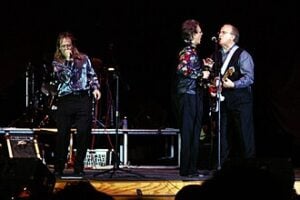
Following the film’s transition from underappreciated theatrical release to cult VHS phenomenon, the fictional band achieved the ultimate meta-triumph by becoming a genuine touring act. Guest, McKean, and Shearer performed in character at major venues worldwide, released actual albums, and attracted famous guest musicians eager to share the stage with rock’s most lovably hapless power trio.
More than four decades after their celluloid debut, Spinal Tap remains both brilliant satire and beloved cultural institution, the rare parody that transcended its origins to become the very thing it was mocking without losing its comedic edge. The band returned to the screen in Spinal Tap II: The End Continues, released on September 12, 2025, with Michael McKean, Christopher Guest, Harry Shearer, and Rob Reiner reprising their central roles.
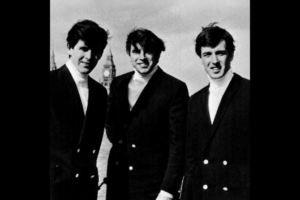
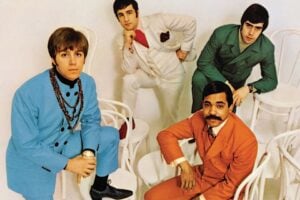
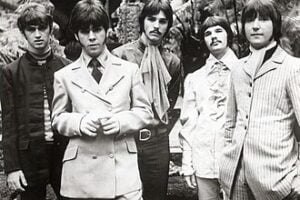
The film was accompanied by the 13-track album The End Continues, featuring nine new songs and four reworked Spinal Tap classics, with guests including Elton John, Paul McCartney, Garth Brooks, and Trisha Yearwood. From their earliest incarnation as The Originals, briefly the New Originals before reverting back, through their psychedelic period as The Thamesmen and their heavy metal rebirth, the mock legends of Spinal Tap continue to influence music, comedy, and filmmaking.
David St. Hubbins (Michael McKean)
David St. Hubbins, the good-natured, spiritually inclined lead vocalist and rhythm guitarist of Spinal Tap, was brought to life by Michael McKean, whose natural charisma and musical talent made this fictional frontman surprisingly believable despite the absurdity surrounding him.
Named after “the patron saint of quality footwear,” an intentionally ridiculous fabrication, St. Hubbins represented the archetypal rock vocalist, passionate yet intellectually limited and dedicated to his craft while easily manipulated by those around him, particularly his astrology-obsessed girlfriend Jeanine. McKean’s nuanced portrayal revealed St. Hubbins as the emotional center of Spinal Tap, the diplomatic mediator between Derek Smalls’ stoic pragmatism and Nigel Tufnel’s childlike temperamentality.
His earnest delivery of preposterous lines about the fine line between “stupid and clever” highlighted the comedic genius of McKean’s performance, playing a character utterly convinced of his own profundity while spouting rock star platitudes. Throughout the film and subsequent real-world performances, McKean’s musical abilities lent crucial authenticity to the role, enabling him to convincingly perform as the veteran rock vocalist he was portraying.
Born in New York City on October 17, 1947, Michael McKean was already a recognized comedic talent before donning St. Hubbins’ flowing locks, having achieved fame as Lenny on the hit television series “Laverne & Shirley.” His background in improvisational comedy, combined with genuine musical ability, made him ideally suited for the largely improvised Spinal Tap project.
McKean’s collaboration with Christopher Guest and Harry Shearer extended beyond Spinal Tap to include their folk music parody group The Folksmen, demonstrating his versatility across musical genres and comedic contexts. Following Spinal Tap’s success, McKean continued a prolific acting career spanning television, film, and Broadway, earning an Emmy nomination for “Better Call Saul” and a Tony nomination for “The Little Foxes.”
His dramatic work in films like “1922” and series such as “Good Omens” demonstrated range far beyond comedy, while his two-season run as a “Saturday Night Live” cast member showcased his continued relevance in sketch comedy. Throughout his diverse career, McKean has periodically returned to the character of David St. Hubbins for Spinal Tap reunions, albums, and tours, helping maintain the band’s enduring cultural presence.
When Spinal Tap transitioned from fictional construct to actual performing band, McKean’s musical talents proved essential to their credibility. He and his castmates wrote and performed original material that effectively mimicked heavy metal while simultaneously parodying it.
His vocals on tracks like “Big Bottom,” “Stonehenge,” and “(Listen to the) Flower People” balanced technical competence with subtle comedic exaggeration, capturing the essence of rock excess while delivering genuinely catchy compositions. Beyond Spinal Tap, McKean’s musical endeavors included writing for other productions and performers, demonstrating that his portrayal of St. Hubbins was informed by legitimate musical understanding rather than mere imitation.
This authentic musicianship helped Spinal Tap transcend its satirical origins to become a legitimate cultural phenomenon, with McKean’s contributions as both actor and musician essential to that transformation. He returned as David St. Hubbins in the 2025 sequel Spinal Tap II: The End Continues and on its companion album The End Continues.
McKean’s willingness to revisit the character for albums, tours, and special events has helped maintain Spinal Tap’s relevance across generations. David St. Hubbins remains one of popular culture’s most beloved fictional musicians while McKean continues to be recognized as one of entertainment’s most versatile actors, writers, and musicians.
Nigel Tufnel (Christopher Guest)
Nigel Tufnel, Spinal Tap’s lead guitarist and principal composer whose amplifiers famously “go to eleven,” was masterfully portrayed by Christopher Guest, whose deadpan delivery and genuine guitar prowess made this childlike musical savant one of cinema’s most quotable characters. Tufnel’s combination of technical skill and intellectual vacancy created a perfect comedic contrast, a guitar virtuoso capable of classical compositions on his “lute” yet baffled by basic sandwich preparation and susceptible to near-constant confusion.
Guest imbued the character with a distinctly British petulance, showcasing Tufnel’s artistic temperament through memorably ridiculous outbursts, whether defending the sexist album cover for “Smell the Glove” or storming offstage after a technical mishap. His earnest explanation of his custom Marshall amplifier with its special dial that “goes to eleven” rather than the standard ten, “it’s one louder, isn’t it?”, became instantly iconic and entered the cultural lexicon as shorthand for unnecessary excess.
Throughout the film and subsequent real-world Spinal Tap performances, Guest’s substantial musical abilities allowed him to perform impressive guitar work that lent crucial authenticity to the otherwise absurd proceedings.
Born into British nobility as Christopher Haden-Guest on February 5, 1948, Guest holds the title of 5th Baron Haden-Guest and spent portions of his youth in both England and America, a background that likely informed his pitch-perfect portrayal of a British rocker. Before creating Nigel Tufnel, Guest had established himself in American comedy through work with the National Lampoon Radio Hour and a brief stint on “Saturday Night Live.”
His virtuosic improvisational abilities proved ideal for Spinal Tap’s largely unscripted approach, allowing him to create countless spontaneous moments that felt authentically Tufnel-esque. Following Spinal Tap’s success, Guest pioneered the mockumentary format with films he directed including “Waiting for Guffman,” “Best in Show,” and “A Mighty Wind,” establishing himself as the genre’s preeminent filmmaker.
His musical background extended beyond comedy, having studied classical music at New York University and performed as a proficient multi-instrumentalist. This genuine musical knowledge informed his portrayal of Tufnel, allowing him to satirize rock guitar excess while demonstrating legitimate technical ability.
Guest’s creation of Nigel Tufnel proved so convincing that many viewers of “This Is Spinal Tap” initially believed they were watching a documentary about a real band. The confusion extended to established musicians who recognized scenarios from their own careers.
The character’s childlike enthusiasm, petulant mood swings, and mystical attachment to his instruments, which no one is allowed to look at, let alone touch, captured the essence of rock guitarist stereotypes while transcending mere caricature through Guest’s nuanced performance. When Spinal Tap began performing as an actual band following the film’s release, Guest’s guitar playing stood up to legitimate musical scrutiny, helping cement the group’s unique position as simultaneously parodic and authentic.
Guest returned as Nigel Tufnel in the 2025 sequel Spinal Tap II: The End Continues, in which the estranged core trio reunites for one final concert. He also performed on the companion album The End Continues, continuing the unusual overlap between fictional character and real musician that has always defined Spinal Tap.
His willingness to revisit the character has helped maintain Spinal Tap’s cultural relevance across decades, with fans still quoting Tufnel’s distinctive malapropisms and philosophical musings. Guest transformed what could have been a one-dimensional joke into an enduring cultural touchstone.
Derek Smalls (Harry Shearer)
Derek Smalls, Spinal Tap’s philosophical bassist with a penchant for outrageous stage costumes and foil-wrapped cucumbers, emerged as the grounding force between the volatile personalities of Nigel Tufnel and David St. Hubbins, described by the character himself as “the lukewarm water” between “fire and ice.” Harry Shearer’s deadpan performance captured the essence of countless rock bassists relegated to the background, technically proficient but perpetually overshadowed by more flamboyant bandmates.
Shearer imbued Smalls with a bemused, world-weary acceptance of his status, creating moments of subtle comedy through reactions rather than punchlines, particularly when observing his bandmates’ excesses or enduring humiliations like being detained at airport security when his cucumber-stuffed pants trigger the metal detector. Despite his supporting role within the band’s dynamic, Smalls delivered some of the film’s most memorable lines and musical contributions, particularly on the anatomically explicit “Big Bottom,” which celebrated his obsession with female posteriors.
Throughout the film and subsequent real-world performances, Shearer’s actual bass skills lent authenticity to the role, allowing him to convincingly perform as the journeyman musician he was portraying.
Born in Los Angeles on December 23, 1943, Harry Shearer began his entertainment career as a child actor before developing into a multifaceted talent across radio, television, film, and music. His work on “Saturday Night Live” and the radio program “Le Show” established him as a sharp satirist before his collaboration with Guest and McKean on Spinal Tap.
While creating Derek Smalls represented a career breakthrough, Shearer’s most famous contribution to popular culture came through his voice work on “The Simpsons,” where he has performed numerous characters including Mr. Burns, Waylon Smithers, Ned Flanders, and Principal Skinner across more than three decades.
This vocal versatility parallels his musical adaptability, which enabled him to convincingly embody Smalls while also participating in other musical projects. In 2018, Shearer released “Smalls Change (Meditations Upon Ageing),” a solo album performed in character as Derek Smalls, featuring collaborations with notable musicians including Dweezil Zappa, Donald Fagen, and members of Red Hot Chili Peppers and Steely Dan. This project demonstrated his continued affection for the character while showcasing legitimate musical ambition beyond mere parody.
Shearer’s portrayal of Derek Smalls captured the unique existential plight of the rock bassist, essential to the band’s sound yet frequently marginalized in both creative input and fan adoration. Through subtle mannerisms and expressions, he conveyed Smalls’ resigned acceptance of his secondary status while maintaining a philosophical perspective on the band’s increasingly absurd misfortunes.
When Spinal Tap began performing as an actual band following the film’s release, Shearer’s bass playing withstood legitimate musical scrutiny. His 2018 solo project Smalls Change (Meditations Upon Ageing) extended the character beyond the band, and he returned as Smalls for Spinal Tap II: The End Continues and its 2025 soundtrack album.
Shearer also spearheaded the 2016 legal action over Spinal Tap royalties and rights, later joined by Guest, McKean, and Reiner. His long commitment to the character transformed what could have been a background role into an essential component of Spinal Tap’s enduring appeal.
Mick Shrimpton (Ric Parnell)
Mick Shrimpton, Spinal Tap’s doomed drummer who meets his fate through spontaneous combustion during the film’s climactic Japan tour, was portrayed with deadpan resignation by actual rock drummer Ric Parnell. Unlike the film’s three principal actors, Parnell was a genuine English musician rather than an American playing a Brit, lending additional authenticity to his role in this fictional British metal band.
In one of the film’s most memorable scenes, Shrimpton is interviewed in his bathtub, philosophically accepting the statistical probability of his imminent demise while expressing hope that the “law of averages” might save him from suffering the same fate as Spinal Tap’s numerous deceased former drummers. His casual acknowledgment of the band’s percussion curse, “It can’t always happen to every drummer,” is delivered with the precise blend of denial and fatalism that makes the character simultaneously pathetic and endearing.
Parnell’s actual drumming skills were essential to the film’s musical sequences, allowing him to perform authentic rock percussion while maintaining the character’s bewildered persona, ultimately making his fiery onstage demise all the more memorable.
Born in London on August 14, 1951, Ric Parnell was uniquely qualified for his role in Spinal Tap, having already established himself as a professional drummer with progressive rock band Atomic Rooster in the early 1970s. His father, Jack Parnell, was a jazz drummer and musical director for Associated Television, giving Ric a family legacy in music that prepared him for both performance and the entertainment industry.
Before being cast in Spinal Tap, Parnell had played with various bands including Horse, Stars, and Nova, and had contributed to commercial hits like Toni Basil’s “Mickey.” This legitimate rock career provided the perfect background for portraying Shrimpton, allowing Parnell to draw on actual experiences while participating in the film’s satirical take on the music industry.
Following the film’s release, Parnell joined the real-world incarnation of Spinal Tap as they performed concerts and recorded albums, cleverly sidestepping his character’s on-screen death by playing Mick’s fictional twin brother, Ric Shrimpton. This meta-twist allowed Parnell to continue his association with the project as it transitioned from fictional construct to actual performing band.
Parnell’s involvement with Spinal Tap continued through their reunion in the early 1990s, playing on their album “Break Like the Wind” (1992) and accompanying tour. Beyond his Spinal Tap work, Parnell maintained a career as a session drummer and eventually settled in Missoula, Montana, where he co-hosted a radio program called “Spontaneous Combustion,” a knowing reference to his fictional character’s fate. Unlike the film’s principal actors who regularly pursued high-profile Hollywood projects, Parnell maintained a lower profile while continuing to perform with various bands and musicians.
His authentic British background and legitimate rock credentials made him an ideal match for Spinal Tap’s blend of comedy and music, contributing to the mockumentary’s convincing presentation that famously confused many viewers into believing they were watching a documentary about a real band.
When Parnell died on May 1, 2022, at age 70, tributes highlighted his good humor and musicianship. Harry Shearer wrote, “Ric Parnell, our drummer in This Is Spinal Tap, passed away today. No one ever rocked harder.”
Through his memorable performance as Mick Shrimpton and continued involvement in Spinal Tap’s evolution from fictional band to cultural phenomenon, Parnell created an enduring legacy that transcended the usual boundaries between parody and reality.
Viv Savage (David Kaff)
Viv Savage, Spinal Tap’s enthusiastic keyboard player whose life philosophy, “have a good time, all the time,” perfectly encapsulated the band’s commitment to rock hedonism, was portrayed with infectious energy by British musician David Kaff. Clad in his trademark doctor’s smock and sporting disheveled hair, Savage represented the essential but often overlooked keyboard component of heavy metal bands, contributing crucial atmospheric sounds while rarely receiving the spotlight afforded to guitarists or vocalists.
Kaff’s performance captured the eager-to-please energy of a musician happy to be included in the band’s adventures, with his limited screen time nonetheless yielding memorable moments. His earnest delivery of his philosophical motto during the film’s closing credits became one of Viv Savage’s defining moments.
When asked what he would do without rock and roll, Savage memorably responds: “I’d probably get a bit stupid and start to make a fool of myself in public, ’cause there wouldn’t be a stage to go on,” a response that simultaneously reveals self-awareness and delusion. Though given fewer lines than the central trio, Kaff’s enthusiastic portrayal made Savage a fan-favorite character whose catchphrase continues to resonate with audiences decades later.
Born on April 17, 1946, in England, David Kaff (sometimes credited as David Kaffinetti) brought legitimate musical credentials to his role in Spinal Tap, having been a founding member of the progressive rock group Rare Bird from 1969 to 1975. This band achieved international success with their organ-based hit “Sympathy,” which reportedly sold over a million copies globally after reaching #27 on the UK charts.
Kaff’s experience touring and recording with a genuine rock band provided authentic background for his portrayal of Savage, allowing him to perform convincing keyboard parts throughout the film while understanding the dynamics being satirized. Following Spinal Tap’s theatrical release, Kaff briefly joined the real-world incarnation of the band as they performed concerts and appeared on television programs like “Saturday Night Live.”
However, unlike his castmates who continued their association with Spinal Tap through various reunions and albums, Kaff departed from the project after these initial performances, not returning for the band’s 1992 album “Break Like the Wind” or subsequent tours.
After his association with Spinal Tap, Kaff maintained a relatively low public profile compared with the film’s principal actors while continuing to perform in various musical projects. In later years, he occasionally returned to the character, including a 2018 appearance with Umphrey’s McGee in Oakland for “Tonight I’m Gonna Rock You Tonight.”
David Kaff died in July 2025 at age 79, just months before the release of Spinal Tap II: The End Continues. He did not appear in the sequel, but Viv Savage’s simple philosophy, “have a good time, all the time,” remains one of the original film’s most enduring lines.
C.J. “Caucasian Jeff” Vanston
Keyboardist, producer, and arranger C.J. Vanston became a recurring real-world member of Spinal Tap beginning with the Break Like the Wind era in the early 1990s. Working under the fictionalized band identity “Caucasian Jeff,” Vanston contributed keyboards to Spinal Tap recordings and live performances while also becoming an important behind-the-scenes musical collaborator.
Vanston returned for the 2009 album Back from the Dead and served as a producer and keyboardist on the 2025 album The End Continues. He also appears in Spinal Tap II: The End Continues, extending his association with the band across more than three decades.
Didi Crockett (Valerie Franco)
Didi Crockett became Spinal Tap’s newest drummer in the 2025 sequel Spinal Tap II: The End Continues, portrayed by Valerie Franco. Her arrival continues one of the band’s longest-running jokes, the seemingly endless procession of drummers whose careers with Spinal Tap tend to end in disaster.
The sequel centers on David St. Hubbins, Nigel Tufnel, and Derek Smalls reuniting after fifteen years for one final concert, with Crockett occupying the most statistically dangerous seat in the band. Her addition makes her an important part of the latest chapter in Spinal Tap’s fictional lineup history.
Other Documented Spinal Tap Drummers
Spinal Tap’s fictional history includes a notorious succession of drummers. John “Stumpy” Pepys was said to have died in a bizarre gardening accident, Eric “Stumpy Joe” Childs choked on vomit of uncertain origin, Peter “James” Bond spontaneously combusted onstage, and Mick Shrimpton suffered the same general occupational hazard during the original film.
Joe “Mama” Besser briefly occupied the drum stool before disappearing from the band’s story, while Ric Shrimpton, presented as Mick’s brother, became the drummer during the Break Like the Wind era. The fictional canon has intentionally shifted and expanded over the years, with the running joke being that Spinal Tap has gone through far more drummers than any sensible band could survive.
Key Supporting Characters
Marty DiBergi (Rob Reiner)
Marty DiBergi, the earnest documentary filmmaker chronicling Spinal Tap’s troubled American tour, was portrayed with straight-faced conviction by Rob Reiner, who simultaneously directed the actual film while appearing on-screen as its fictional director. This meta-layered performance allowed Reiner to parody the self-important documentary filmmakers of the era, particularly Martin Scorsese in “The Last Waltz,” through DiBergi’s reverent introduction where he dons a baseball cap and speaks directly to the camera about his admiration for the band.
Declaring himself “a filmmaker, not an actor,” DiBergi positions himself as a serious documentarian while his overwrought narration and intrusive questioning reveal his pompous nature and limited understanding of his subjects. Reiner’s deadpan performance as DiBergi provided the crucial framing device that established “This Is Spinal Tap” as a mockumentary rather than a conventional comedy, with his character’s increasingly bewildered reactions to the band’s absurdities serving as a surrogate for the audience’s own responses.
Though technically a supporting role, DiBergi’s presence throughout the film connects its disparate sequences while highlighting the growing disconnect between the director’s hoped-for definitive rock documentary and the increasingly chaotic reality he captures.
Born on March 6, 1947, in the Bronx, New York, Rob Reiner was already a recognized television star from his role as Michael “Meathead” Stivic on the groundbreaking sitcom “All in the Family” before conceiving and directing “This Is Spinal Tap,” which marked his feature film directorial debut. Son of comedy legend Carl Reiner, Rob had developed his comedic sensibilities through both his family background and his television experience, which informed his approach to satirizing rock documentaries and musician behavior.
While playing DiBergi represented a relatively small on-screen role, Reiner’s vision as director was instrumental in shaping the film’s revolutionary improvisational approach, guiding his cast through loosely structured scenarios while encouraging spontaneous dialogue and character development. Following “This Is Spinal Tap,” Reiner established himself as one of Hollywood’s most successful and versatile directors with films including “Stand By Me,” “The Princess Bride,” “When Harry Met Sally,” “Misery,” and “A Few Good Men,” demonstrating remarkable range across genres while consistently eliciting strong performances from his actors.
Reiner’s portrayal of DiBergi established a template for mockumentary filmmaking that influenced countless later productions, from Christopher Guest’s subsequent films to television series such as The Office and Parks and Recreation. The character’s earnest yet misguided attempt to capture Spinal Tap’s essence embodied the mockumentary form itself, presenting fiction as documentary while satirizing the conventions of nonfiction filmmaking.
Reiner returned as Marty DiBergi and directed Spinal Tap II: The End Continues, released in September 2025. Rob Reiner died on December 14, 2025, at age 78, making the sequel one of the final major projects of his career and closing a remarkable four-decade creative circle with Spinal Tap.
Ian Faith (Tony Hendra)
Ian Faith, Spinal Tap’s beleaguered manager who navigates the band through canceled shows, rejected album covers, and miniature Stonehenge props while wielding a cricket bat for emphasis, was brilliantly portrayed by British comedian and writer Tony Hendra. As the quintessential rock manager stereotype, Faith embodies the duplicitous middleman caught between the band’s artistic pretensions and the commercial realities of the music business, delivering bad news with forced optimism while manipulating his clients with practiced ease.
Hendra’s deadpan delivery of Faith’s most memorable lines, dismissing poor ticket sales by declaring “Boston’s not a big college town” or explaining the missing tour dates as “Selective touring,” perfectly captured the music industry’s capacity for spin and deception. His understated performance reaches its comedic peak when, confronted with the disastrous miniature Stonehenge prop that resulted from a design miscommunication, Faith defends himself by producing Nigel’s napkin sketch with its clearly written measurements of “18 inches” rather than the intended 18 feet.
When Faith ultimately abandons the band after one too many conflicts with David’s girlfriend Jeanine, his absence further accelerates their downward spiral, only to reappear when their unexpected Japanese success promises renewed commercial prospects.
Born Tony Hentsch on July 10, 1941, in Willesden, England, Tony Hendra established himself as a satirist and performer through work with Britain’s Cambridge Footlights comedy group before moving to the United States, where he became a significant voice in American satire as an editor at National Lampoon magazine and a performer in their stage shows and radio programs. This background in satire made him ideally suited to portray Faith, allowing him to draw on both his British heritage and his understanding of show business absurdities.
Though not as widely recognized as the film’s lead actors, Hendra’s contribution was essential to establishing Spinal Tap’s world, with Faith representing the business side of music that enables, exploits, and occasionally sabotages the creative process. Unlike the band members who continued appearing in character for concerts and albums after the film’s release, Hendra’s involvement with Spinal Tap was largely limited to the original movie, reinforcing Faith’s transactional relationship with the group he manages.
Beyond his role as Ian Faith, Hendra maintained a diverse career as a writer, satirist, and occasional actor, publishing several books including the memoir “Father Joe: The Man Who Saved My Soul” and editing the parody newspaper Not The New York Times. His understanding of both British and American comedy traditions informed his portrayal of Faith, creating a character who seamlessly bridges the cultural differences between UK rock origins and US commercial exploitation.
Tony Hendra died on March 4, 2021, at age 79 after living with ALS. His performance as Ian Faith remains one of This Is Spinal Tap‘s most quotable elements, with the character’s mixture of blind devotion and ruthless pragmatism perfectly capturing the contradictions of the music business.
Through Hendra’s understated performance, Faith became an essential component of Spinal Tap’s fictional universe and a touchstone for the often manipulative relationship between creative artists and the business machinery that simultaneously supports and exploits them.
Jeanine Pettibone (June Chadwick)
Jeanine Pettibone, David St. Hubbins’ astrology-obsessed girlfriend whose increasing influence over Spinal Tap accelerates their professional disintegration, was portrayed with perfectly calibrated irritating enthusiasm by British actress June Chadwick. As the archetypal meddling girlfriend, Jeanine embodies the “Yoko Ono effect” feared by band members and managers alike, an outsider whose relationship with a key creative force grants her unearned influence over group decisions despite her complete lack of musical understanding or business acumen.
Chadwick’s performance strikes the ideal balance between Jeanine’s surface supportiveness and her underlying control-seeking behavior. Her constant interjections about star charts, costume designs, and personnel decisions grow increasingly grating to both the other characters and the audience.
Her most memorable moments include designing embarrassing “glitter rock” outfits that the band reluctantly adopts and suggesting they add a female keyboardist who specializes in “Bengali jazz.” The ideas highlight her fundamental disconnection from Spinal Tap’s aesthetic while showcasing her determination to reshape the band according to her preferences.
Born in East Sussex, England, June Chadwick brought authentic British credentials to the primarily American cast portraying English rockers, enhancing the film’s pseudo-documentary authenticity. Before her role in “This Is Spinal Tap,” Chadwick had established herself in British television productions before gaining international recognition through her role as Lydia, the villainous Visitor lieutenant in the science fiction series “V.”
This experience with playing manipulative characters served her well in portraying Jeanine, allowing her to create a character who is simultaneously intrusive and vulnerable, misguided yet convinced of her own insight. Though given limited screen time compared with the film’s central trio, Chadwick’s performance creates such a memorable impression that Jeanine’s impact on Spinal Tap’s dynamics feels proportionally much larger.
The effect reflects how such figures can disrupt band chemistry despite their peripheral official status. Before her 2025 return in the sequel, Chadwick’s involvement with Spinal Tap had been limited to the original movie, reinforcing Jeanine’s role as a temporary yet significantly disruptive presence in the band’s history.
Following her appearance in This Is Spinal Tap, Chadwick continued acting in television series including MacGyver, St. Elsewhere, and Riptide. The character she created became shorthand for the outsider whose personal relationship with a band member gives her disruptive influence over group decisions.
Chadwick returned as Jeanine Pettibone in Spinal Tap II: The End Continues in 2025, giving the character an unexpected second chapter more than forty years after the original film. Her return reinforced how deeply even Spinal Tap’s supporting characters became embedded in the mock band’s mythology.
Complete List Of Spinal Tap Band Members presents a rundown of the principal fictional musicians, recurring real-world performers, and key supporting characters who shaped the Spinal Tap story across the original film, later performances, and the 2025 sequel.
Check out more Spinal Tap articles on ClassicRockHistory.com Just click on any of the links below……
Read More: Artists’ Interviews Directory At ClassicRockHistory.com
Read More: Classic Rock Bands List And Directory
Updated October 4, 2026
Complete List Of Spinal Tap Band Members article published on ClassicRockHistory.com © 2026