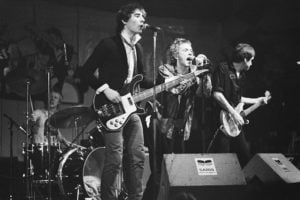
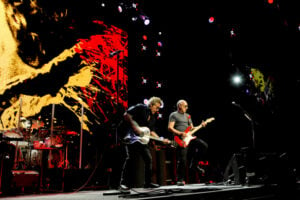
Feature Photo: Peter Fordham, Public domain, via Wikimedia Commons
This is a list of rock songs written by famous musical artists as tributes to people who passed away. In many cases, these songs were written and dedicated to people who were close to these artists. Not all of them are about close friends, but a good majority were written as final tributes to dear friends, colleagues, and musical heroes.
These tracks are more than melodies. They are memorials and reflections shaped by grief, admiration, friendship, and love. Some are direct farewells, while others use the memory of a departed artist as part of a broader story. Together, these 25 songs show how rock musicians have turned loss into music that keeps the memory of others alive.
This list is in RANDOM ORDER, as there is just no need to rank songs like this.
Here Today – Paul McCartney
Paul McCartney’s heartfelt composition “Here Today” was written for his friend and former Beatles bandmate John Lennon. Released in 1982 on McCartney’s Tug of War album, the song takes the form of an imagined conversation between McCartney and Lennon after Lennon’s death in 1980. The lyrics address their complicated relationship with affection while acknowledging the conflicts that existed between them. Produced by George Martin, the song reached number 46 on Billboard’s Mainstream Rock chart despite not being released as a conventional single. It remains one of McCartney’s most personal tributes to Lennon.
The Needle and the Damage Done – Neil Young
Neil Young’s haunting acoustic track “The Needle and the Damage Done” is a stark warning about the destructive power of heroin addiction. Released on Harvest in 1972, the performance used on the album was recorded live at UCLA’s Royce Hall on January 30, 1971. The song was inspired in part by the addiction of Young’s friend and Crazy Horse bandmate Danny Whitten, but it was written and recorded before Whitten died later in 1972. Young’s spare guitar and unguarded vocal make the song feel painfully intimate. Rather than a posthumous memorial, it became an eerily prescient record of Young watching addiction destroy people around him.
Never Without You – Ringo Starr
Ringo Starr’s “Never Without You” is a direct tribute to his former Beatles bandmate George Harrison, who died in 2001. Released in 2003 on Starr’s Ringo Rama album, the song was written by Starr, Mark Hudson, and Gary Nicholson. Eric Clapton, another longtime friend and collaborator of Harrison, contributes guitar to the recording. Starr’s performance reflects the closeness he continued to feel toward Harrison after The Beatles had ended. The song remains one of the most personal tributes recorded by a former Beatle for another member of the group.
American Pie – Don McLean
Don McLean’s epic “American Pie” was inspired in part by the 1959 plane crash that killed Buddy Holly, Ritchie Valens, and J.P. “The Big Bopper” Richardson. Buddy Holly’s death had a particularly powerful effect on McLean, who learned of the crash while working as a newspaper delivery boy. Released in 1971 as the title track of McLean’s breakthrough album, the song uses “the day the music died” as the starting point for a much broader reflection on American music, culture, and the loss of innocence during the 1960s. McLean has repeatedly explained that the song is about far more than one tragedy. Its connection to Holly nevertheless remains at the heart of the record’s emotional origin.
Oh, Thank You Great Spirit – Chicago
“Oh, Thank You Great Spirit” from Chicago’s 1975 album Chicago VIII is Terry Kath’s tribute to Jimi Hendrix. Written and sung by Kath, the song reflects his admiration for Hendrix as both a guitarist and a musical force. Kath’s own reputation as one of rock’s most formidable guitarists makes the tribute especially meaningful. The arrangement moves between reflective passages and heavier rock textures, giving the song a spiritual and dramatic character. It remains one of Chicago’s most unusual and personal album tracks.
Johnny Bye-Bye – Bruce Springsteen
Bruce Springsteen’s “Johnny Bye-Bye” is a somber reflection on Elvis Presley and his death in 1977. Springsteen had long acknowledged Presley’s enormous influence on him, and the song places that admiration inside a darker story about fame, decline, and mortality. It was released in 1985 as the B-side to “I’m on Fire,” although Springsteen had worked on versions of the song earlier. The stripped-down arrangement gives the performance a stark quality that suits its subject. “Johnny Bye-Bye” stands as one of Springsteen’s clearest musical responses to the death of one of rock and roll’s founding icons.
Tomorrow’s Goodbye – Lynyrd Skynyrd
Lynyrd Skynyrd’s “Tomorrow’s Goodbye,” released on the 1999 album Edge of Forever, carries a connection to Ronnie Van Zant but is not primarily a memorial song about him. Written by Gary Burr, Rickey Medlocke, Gary Rossington, Hughie Thomasson, and Johnny Van Zant, the song is centered on environmental damage and what one generation leaves behind for the next. Johnny Van Zant does refer to “my brother,” and the arrangement includes a musical nod that recalls “Free Bird,” giving Ronnie’s memory a clear place inside the performance. That moment adds emotional weight to a song whose larger message is about responsibility, loss, and the future. Its presence on this list comes from that remembrance within the broader lyric.
No-One but You (Only the Good Die Young) – Queen
Queen’s “No-One but You (Only the Good Die Young)” was written by Brian May in the years after Freddie Mercury’s death and became a musical farewell from the surviving members of Queen. Released in 1997 on the Queen Rocks compilation, the recording features May and Roger Taylor sharing lead vocals. John Deacon also played on the track, making it the last original Queen recording to feature all three surviving members from the classic lineup. Although the song reaches beyond Mercury to the larger idea of people taken too soon, his absence is central to its emotional force. The result is one of Queen’s most direct expressions of grief and remembrance.
Muddy, Sam and Otis – Rod Stewart
Rod Stewart’s “Muddy, Sam and Otis” is a tribute to Muddy Waters, Sam Cooke, and Otis Redding, three singers whose music had a profound influence on Stewart. Featured on his 1995 album A Spanner in the Works, the song was written by Stewart and Kevin Savigar and produced by Trevor Horn. Stewart has identified Waters, Cooke, and Redding as three of the artists who shaped him most deeply as a singer. The track mixes admiration with the sadness of realizing that all three of those musical heroes were gone. Its title alone makes clear exactly whose memories Stewart wanted to preserve.
Tribute to Elmore James – Roy Buchanan
Roy Buchanan’s “Tribute to Elmore James” is an instrumental homage to blues guitarist and slide-guitar pioneer Elmore James. The track appeared on Buchanan’s Second Album, released in 1973 by Polydor. Buchanan uses his own distinctive electric-guitar voice rather than simply imitating James, turning the piece into both a salute and a demonstration of how the blues tradition continued through another generation of players. The performance captures the emotional intensity that made Buchanan such a revered guitarist among other musicians. It remains one of the most explicit tributes in his catalog.
Desperado – Alice Cooper
Alice Cooper’s “Desperado,” from the 1971 album Killer, has long been associated with Cooper’s friendship with Jim Morrison, who died the same year the album was released. Cooper has identified Morrison as an inspiration for the song in album-related commentary, although he has also described the character as drawing on Robert Vaughn’s gunslinger in The Magnificent Seven. That combination helps explain the song’s mixture of outlaw imagery and dark rock-star mythology. Produced by Bob Ezrin, “Desperado” became one of the enduring album tracks from the original Alice Cooper band’s classic period. Its connection to Morrison remains part of the song’s history, even though the inspiration was not limited to him alone.
Under a Raging Moon – Roger Daltrey
Roger Daltrey’s “Under a Raging Moon” is a tribute to Keith Moon, The Who’s explosive drummer, who died in 1978. The title track of Daltrey’s 1985 solo album was written by John Parr and Julia Downes and produced by Alan Shacklock. The recording famously uses a large group of drummers, including musicians such as Mark Brzezicki and Stewart Copeland, creating a percussion-heavy salute appropriate to Moon’s legacy. Daltrey’s vocal performance gives the song the sense of celebration and grief that runs throughout the album. It remains one of the most direct musical tributes recorded by a surviving member of The Who for Moon.
Old Red Wine – The Who
The Who’s “Old Red Wine” is a tribute to bassist John Entwistle, who died in 2002. Written by Pete Townshend, the song was recorded during 2003 and 2004 and released on the compilation Then and Now in 2004. Roger Daltrey handles the lead vocal while Townshend’s writing reflects on loss through the image of something treasured that can also become destructive. The track was paired with “Real Good Looking Boy” as new material from The Who during this period. Its direct connection to Entwistle gives the song a special place in the band’s later catalog.
Porcelain Monkey – Warren Zevon
Warren Zevon’s “Porcelain Monkey,” from his 2000 album Life’ll Kill Ya, is a dark meditation on Elvis Presley’s rise, decline, and transformation into an icon of American popular culture. Written by Zevon and Jorge Calderón, the song takes its title from a porcelain monkey figurine associated with Graceland. Zevon approaches Presley with his characteristic mixture of wit, sympathy, and skepticism rather than with straightforward reverence. The song looks at what fame gave Presley and what it ultimately consumed. It is less a conventional memorial than a sharp, reflective portrait of a departed rock and roll legend.
Roll On John – Bob Dylan
Bob Dylan’s “Roll On John” is a direct tribute to John Lennon and closes Dylan’s 2012 album Tempest. Written by Dylan and produced under his Jack Frost pseudonym, the song looks back on Lennon’s life, work, and death through a mixture of personal memory and literary imagery. Dylan had known Lennon during the 1960s and shared with him the experience of becoming a defining songwriter of that generation. The slow, elegiac arrangement gives the performance the feeling of a final meditation rather than a nostalgic celebration. “Roll On John” stands as one of Dylan’s most explicit songs about another major artist.
JJ Cale – Ray Benson
Ray Benson’s “JJ Cale” is a tribute to songwriter and guitarist J.J. Cale, whose understated blend of blues, country, and rock influenced generations of musicians. The song appeared on Benson’s 2014 solo album A Little Piece, released after Cale’s death in 2013. Benson approaches the tribute in a relaxed musical style that suits Cale’s own famously unhurried sound. The performance focuses on respect for Cale’s music and the example he set for other roots-oriented players. It is a fitting salute from one veteran of American roots music to another.
Miss You “C” – Nils Lofgren
Nils Lofgren’s “Miss You C” is a tribute to his E Street Band friend Clarence Clemons, who died in 2011. Lofgren had previously recorded “Miss You Ray,” a song connected to Ray Charles, and after Clemons’ death he began performing an acoustic version with new lyrics as “Miss You C.” He later rerecorded the album version with those revised words specifically to honor Clarence. Lofgren has described the song as an expression of love and appreciation for Clemons’ life, music, and friendship. That personal connection gives the recording a quiet intimacy that separates it from a more formal memorial song.
Of Missing Persons – Jackson Browne
Jackson Browne’s “Of Missing Persons” is a touching tribute to Lowell George, the founder of Little Feat, who died in 1979. Released on Browne’s 1980 album Hold Out, the song was written with George’s young daughter, Inara, in mind. Browne addresses the absence left by her father with tenderness rather than trying to turn the loss into a grand statement. His friendship with George gives the song an especially personal emotional weight. It remains one of Browne’s most intimate songs about grief and the people left behind.
Real Good Looking Boy – The Who
The Who’s “Real Good Looking Boy” reflects on Elvis Presley’s impact while also using that memory as part of Pete Townshend’s own story about growing up and discovering rock and roll. Written by Townshend with material adapted from “Can’t Help Falling in Love,” the song was recorded in 2003 and 2004 and released on Then and Now. Roger Daltrey has introduced the song in concert by recalling how seeing Presley changed his life when he was young. The tribute therefore reaches beyond Presley himself and into the way an entire generation imagined what a rock star could be. It is both an Elvis remembrance and a personal reflection on identity.
My Man – Eagles
The Eagles’ “My Man” is Bernie Leadon’s tender tribute to Gram Parsons, who died in 1973. Leadon had known Parsons through the Southern California country-rock scene, and the song carries the sense of one musician saying goodbye to another whose influence was still spreading. Featured on the Eagles’ 1974 album On the Border, the track uses the band’s country side rather than their harder rock sound. Leadon’s vocal and the gentle arrangement keep the tribute restrained and personal. “My Man” remains one of the clearest links between the Eagles and the generation of country-rock musicians surrounding Parsons.
All Those Years Ago – George Harrison
George Harrison’s “All Those Years Ago” became a tribute to his former Beatles bandmate John Lennon after Lennon’s murder in 1980. Harrison had originally written a different version of the song for Ringo Starr, but he rewrote the words after Lennon’s death and recorded it for the 1981 album Somewhere in England. Ringo Starr plays drums on the track, while Paul and Linda McCartney and Denny Laine contributed backing vocals. The result brought three surviving Beatles together on a recording centered on the loss of the fourth. The single reached number two on the Billboard Hot 100 and became one of Harrison’s best-known post-Beatles recordings.
Fort Worth Blues – Steve Earle
Steve Earle’s “Fort Worth Blues” is a tender tribute to Townes Van Zandt, one of Earle’s most important friends, mentors, and songwriting influences. Van Zandt died on January 1, 1997, and Earle released the song later that year on El Corazón. The subdued arrangement and weary melody suit a lyric built around absence, memory, and the places associated with someone who is gone. Earle’s connection to Van Zandt had shaped his work for years before the song was written. “Fort Worth Blues” remains one of the most moving tributes in Earle’s catalog.
Ghosts – Bruce Springsteen
Bruce Springsteen’s “Ghosts,” from the 2020 album Letter to You, is a song about living with the presence of musicians and friends who are gone. Springsteen has said the song was specifically written from memories of George Theiss, his friend and bandmate from the Castiles, whose death helped inspire the burst of writing that led to the album. The larger record is also deeply marked by the deaths of E Street Band members Clarence Clemons and Danny Federici and other people close to Springsteen. Recorded live in the studio with the E Street Band, “Ghosts” turns grief into a celebration of the shared experience of being in a band. Its power comes from treating the dead not as distant memories but as people whose presence still travels with the living.
Empty Garden – Elton John
Elton John’s “Empty Garden (Hey Hey Johnny)” is a tribute to John Lennon, who had been both a friend and musical collaborator of Elton’s before his death in 1980. Written by Elton John and Bernie Taupin, the song appeared on the 1982 album Jump Up!. Taupin’s garden imagery gives Elton a way to sing about Lennon’s absence without turning the song into a literal biography. Elton’s restrained performance makes the sense of loss more powerful as the arrangement gradually expands. The single reached number 13 on the Billboard Hot 100 and remains one of Elton John’s most enduring memorial songs.
Ain’t Wastin’ Time No More – The Allman Brothers Band
The Allman Brothers Band’s “Ain’t Wastin’ Time No More” became one of the group’s first major statements after Duane Allman’s death in a motorcycle accident in 1971. Gregg Allman had begun developing the song while Duane was still alive, but the finished lyric directly confronts the loss and the realization that life can disappear without warning. Recorded in December 1971 at Criteria Studios in Miami, the track opened the 1972 album Eat a Peach. Rather than surrendering to grief, Gregg turns the song toward determination and the need to keep moving. That tension between mourning and survival made it one of the defining recordings of the band’s post-Duane period.
This list was compiled by Bill Oeffinger, who also came up with the idea for the article. Thanks, Bill.
Check out more articles on ClassicRockHistory.com Just click on any of the links below……
Read More: Artists’ Interviews Directory At ClassicRockHistory.com
Read More: Classic Rock Bands List And Directory
Updated September 19, 2026
25 Rock Songs Written As Tributes To Those Who Have Departed article published on ClassicRockHistory.com © 2026