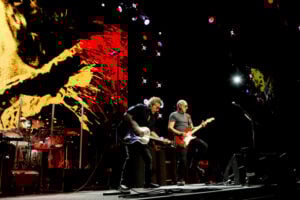
Feature Photo: Derek Russell, CC BY-SA 2.0 <https://creativecommons.org/licenses/by-sa/2.0>, via Wikimedia Commons
Our Top 10 Eagles Songs Sung By Don Henley presents ten remarkable recordings that showcase one of the most recognizable voices in American rock history. Born Donald Hugh Henley on July 22, 1947, in Gilmer, Texas, and raised in nearby Linden, Henley began playing music after a high school football coach suggested that his smaller frame might be better suited to another activity. He joined the school band as a trombone player before moving to percussion, the instrument that would eventually place him behind the Eagles’ drum kit.
Henley performed in a succession of Texas groups that included the Four Speeds, Felicity, and Shiloh. Don Henley wrote and recorded the regional single “Hurtin’” during the Felicity period. After graduating from high school in 1965, he attended Stephen F. Austin State University and North Texas State University before leaving school in 1969 to spend more time with his father, who was suffering from heart disease.
Kenny Rogers took an interest in Henley’s band and helped bring the musicians to Los Angeles. By then, Felicity had become Shiloh, with Don Henley, Richard Bowden, Michael Bowden, Al Perkins, and Jim Ed Norman recording a self-titled album for Amos Records. Henley and Richard Bowden eventually went their separate ways, but the move to California placed Henley directly in the path of the musicians who would soon form the Eagles.
Soaring With the Eagles
While living in Los Angeles, Don Henley met Glenn Frey. Both men were connected with Amos Records, and both became part of the circle surrounding Linda Ronstadt. Henley, Frey, Randy Meisner, and Bernie Leadon played behind Ronstadt before officially forming the Eagles in 1971.
The first chapter of the Eagles’ career ran from 1971 to 1980, with Frey and Don Henley emerging as the band’s principal songwriters and lead vocalists. Henley first sang lead on “Witchy Woman,” while “Desperado” helped establish the songwriting partnership he shared with Frey. Their contrasting voices and shared understanding of melody, harmony, and storytelling became central to the Eagles’ sound, with Don Henley supplying many of the band’s most dramatic lead performances.
Throughout the 1970s, the Eagles released one successful album and single after another. Frey and Don Henley often drew comparisons to the great songwriting teams of earlier eras, but the Eagles developed a musical identity that belonged entirely to them. Country, folk, rhythm and blues, rock, and pop came together in recordings that sounded polished without losing their emotional edge.
The band’s commercial legacy continued to grow long after its original breakup. In January 2026, Their Greatest Hits 1971–1975 became the first album certified Quadruple Diamond by the Recording Industry Association of America for more than forty million units in the United States. Hotel California was recertified at twenty-eight-times platinum, reinforcing the extraordinary reach of the music Henley helped write and sing.
Flying Solo
After the Eagles broke up in 1980, Don Henley began a successful solo career with I Can’t Stand Still in 1982. “Dirty Laundry” became his highest-charting solo hit, while “The Boys of Summer,” “All She Wants to Do Is Dance,” “The Heart of the Matter,” and “The End of the Innocence” established Don Henley as far more than the drummer and co-lead singer of a famous band.
Henley also joined Stevie Nicks on “Leather and Lace,” a duet written by Nicks and released on her 1981 album Bella Donna. The performance became one of the defining male-female vocal pairings of the early 1980s. Henley’s voice carried the same weathered authority heard in the Eagles, but his solo work allowed him to explore sharper social commentary and a more contemporary studio sound.
Henley‘s Building the Perfect Beast followed in 1984 and included “The Boys of Summer,” which earned Henley the Grammy Award for Best Male Rock Vocal Performance. In 1989, The End of the Innocence became another major success, with its title song earning him the same Grammy honor. Don Henley remains one of rock music’s greatest singing drummers, equally commanding behind the kit and at the front of the stage.
Henley‘s disputes with the recording industry also turned him into a prominent advocate for artists’ rights. In 2000, he helped establish the Recording Artists Coalition, an organization created to address contractual, copyright, and legislative issues affecting recording musicians. Don Henley used the influence gained from his career to speak publicly about the treatment of artists by major labels and the changing economics of the music business.
Hell Froze Over
In 1994, the Eagles reunited after fourteen years apart and released Hell Freezes Over, whose title joked about Henley’s old remark that the band would reunite “when hell freezes over.” The album combined live performances with four new studio recordings and launched a reunion tour that introduced the Eagles to another generation.
The band followed with Long Road Out of Eden in 2007 and the History of the Eagles tour in 2013. That tour concluded in 2015, six months before Glenn Frey died on January 18, 2016. His death seemed likely to end the group, but the surviving Eagles eventually returned with Vince Gill and Frey’s son Deacon helping carry the songs onstage.
The Eagles have won six Grammy Awards, scored five number-one singles, and entered the Rock and Roll Hall of Fame in 1998. Their current lineup of Henley, Joe Walsh, and Timothy B. Schmit, joined by Vince Gill and Deacon Frey, continued the Long Goodbye tour and expanded the band’s Sphere residency to seventy-two performances, with additional Las Vegas dates scheduled through January 2027.
The 2026 fiftieth-anniversary deluxe edition of One of These Nights added a previously unreleased sixteen-song concert recorded at Anaheim Stadium on September 28, 1975, capturing the Eagles at a major turning point as Bernie Leadon prepared to leave and Joe Walsh joined the encore. More than five decades after the band’s formation, the recordings remain central to American rock history.
Top 10 Eagles Songs Sung By Don Henley
# 10 – Busy Being Fabulous – Long Road Out of Eden

From 2007’s Long Road Out of Eden, “Busy Being Fabulous” features Don Henley singing about a strained relationship in which social ambition and personal vanity have replaced attention, patience, and love. The song reached number twelve on Billboard’s Adult Contemporary chart and number twenty-eight on the Hot Country Songs chart.
The main appeal of “Busy Being Fabulous” is the uncomfortable reality behind its humor. People can become so consumed with status, appearances, and the next invitation that they stop seeing the person waiting at home. Henley delivers the lyric with a mixture of irritation, heartbreak, and dry amusement, making the song both a warning and a sharp character study.
# 9 – Please Come Home for Christmas
The Eagles generally preferred to record material written by members of the band, but they made a memorable exception for “Please Come Home for Christmas.” Charles Brown first recorded the blues holiday classic in 1960, and it gradually became a seasonal standard.
With Don Henley on lead vocals, the Eagles released their version in 1978. It reached number eighteen on the Billboard Hot 100, becoming the first Christmas recording to enter the chart’s top twenty since Roy Orbison’s “Pretty Paper” in 1963. Henley’s performance balances the sadness in the lyric with the smooth vocal blend that defined the Eagles.
The recording was also the first Eagles single to feature Timothy B. Schmit after he replaced Randy Meisner. The band changed Brown’s opening line from “bells will be ringing the glad, glad news” to “bells will be ringing the sad, sad news,” immediately deepening the loneliness at the center of the song.
# 8 – The Long Run – The Long Run
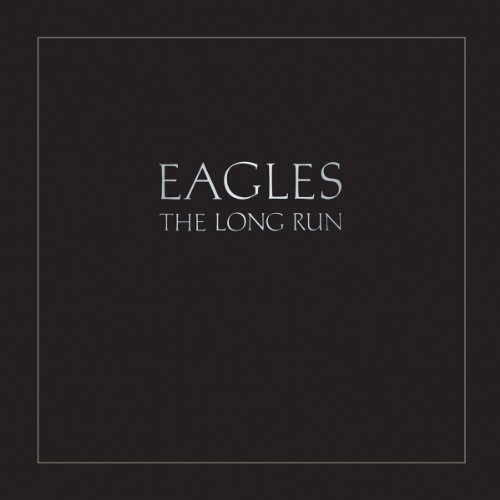
Written by Glenn Frey and Don Henley, “The Long Run” paid tribute to the Stax and Memphis rhythm-and-blues tradition. The title track from the Eagles’ 1979 album reached number eight on the Billboard Hot 100 and number thirty-four on the Adult Contemporary chart.
The lyric responded to critics who questioned whether the Eagles could survive as punk, disco, and new wave reshaped popular music. Henley and Frey turned those doubts into a sly endurance anthem, asking who would still be standing after the fashions had passed.
The irony is that the Eagles separated not long after releasing a song about lasting for the long run. When the band reunited in 1994, the title took on a second meaning. The members had endured solo careers, legal disputes, changing musical trends, and years apart, yet the audience was still there.
# 7 – Life in the Fast Lane – Hotel California

Released on Hotel California, “Life in the Fast Lane” featured Don Henley on lead vocals and reached number eleven on the Billboard Hot 100. The song follows a reckless couple who treat excess as a permanent way of life until the excitement becomes exhaustion and self-destruction.
Glenn Frey found the title while riding on a California freeway with a drug dealer. When Frey asked him to slow down, the driver answered, “What do you mean? It’s life in the fast lane.” That phrase became the foundation for one of the Eagles’ most biting songs.
Joe Walsh supplied the unforgettable opening riff while warming up at rehearsal. Frey and Henley immediately recognized that the idea needed to become a song. Walsh’s guitar gives the track its danger, while Henley’s vocal makes the characters sound glamorous, ridiculous, and doomed at the same time.
# 6 – Best of My Love – On the Border

Glenn Frey, Don Henley, and J.D. Souther wrote “Best of My Love” for the Eagles’ 1974 album On the Border. With Henley singing lead, the country-flavored ballad reached number one on the Billboard Hot 100 in 1975, giving the Eagles their first chart-topping single.
Frey developed the guitar progression after exploring a tuning and chord movement shown to him by Joni Mitchell. Henley and Souther helped shape the lyric into a reflection on a relationship in which love remains even after two people understand that they cannot continue together.
Asylum Records shortened the recording for radio without the band’s approval, creating friction between the Eagles and their label. The dispute did nothing to stop the song. “Best of My Love” became the breakthrough number-one hit that opened the band’s most commercially successful period.
# 5 – One of These Nights – One of These Nights
![Eagles - One of These Nights [Vinyl LP] (1 LP)](https://m.media-amazon.com/images/I/510gHXohY+L._SL500_.jpg)
Following the success of “Best of My Love,” “One of These Nights” gave the Eagles another number-one single on the Billboard Hot 100. Don Henley’s lead vocal moves from a dark, restrained opening into a soaring chorus, with Randy Meisner supplying the high harmony.
Don Felder delivered the song’s fluid guitar solo, combining blues phrasing with the smoother, more atmospheric sound the Eagles were developing. The arrangement deliberately moved the band beyond straightforward country rock and demonstrated how comfortably its harmonies could sit inside rhythm and blues, rock, and pop.
The album received a fiftieth-anniversary deluxe edition in 2026, bringing renewed attention to a period when the Eagles were rapidly expanding their sound. “One of These Nights” remains one of the clearest examples of Henley and Frey turning ambition into an irresistible radio record.
# 4 – Witchy Woman – Eagles

Released in 1972, “Witchy Woman” became the Eagles’ second single and the first to feature Don Henley as the lead vocalist. Henley and Bernie Leadon wrote the song, which reached number nine on the Billboard Hot 100.
Leadon began developing the music while he was a member of the Flying Burrito Brothers. After joining the Eagles, he completed it with Henley. The unusual rhythm, minor-key atmosphere, and ringing guitar figures gave the young band a darker identity than “Take It Easy” had suggested.
Henley was suffering from the flu while working on the lyric and spent part of his recovery reading about Zelda Fitzgerald. He also drew inspiration from Carlos Castaneda’s writing and from a woman he knew who was interested in the occult. Those influences came together in a song that established Henley’s gift for vivid characters and mysterious imagery.
# 3 – Desperado – Desperado
The Eagles released “Desperado” on their second album in 1973. Although it was never issued as a single at the time, Don Henley’s lead vocal helped turn it into one of the band’s signature songs. Linda Ronstadt recorded her own version later that year, giving the composition additional exposure beyond the Eagles’ audience.
Henley had begun developing the melody years earlier in the style of an old Stephen Foster ballad. When he shared the unfinished piece with Glenn Frey, the two reshaped it around the outlaw imagery that defined the Desperado album. The collaboration became one of the first major achievements of the Henley-Frey songwriting partnership.
The song works because its western imagery is really a warning about emotional isolation. Henley does not sing to a gunfighter so much as to anyone who has mistaken independence for freedom and allowed pride to keep love at a distance.
# 2 – Hotel California – Hotel California
“Hotel California” has become far more than a hit song. Released as a single in 1977, it reached number one on the Billboard Hot 100 and won the Grammy Award for Record of the Year. Don Henley’s controlled vocal, the cinematic lyric, and the extended guitar dialogue between Don Felder and Joe Walsh created a recording that has never lost its mystery.
Felder developed the original musical idea, while Henley and Glenn Frey shaped the words around the journey from innocence to experience in Southern California. Listeners have interpreted the hotel as a symbol of fame, wealth, addiction, the music business, American excess, and spiritual imprisonment. The song’s strength lies in its ability to support those readings without being reduced to any one of them.
The final guitar passage became one of rock music’s defining codas. Felder and Walsh trade lines before locking into harmonized figures that lead the song toward its unforgettable conclusion. Generations of guitarists have studied the performance, but its emotional effect belongs to the complete arrangement rather than technical brilliance alone.
In 2026, Hotel California was recertified twenty-eight-times platinum by the RIAA. The number is enormous, but it only confirms what listeners have understood for decades: the song and album occupy a permanent place in popular culture.
# 1 – The Last Resort – Hotel California
For all the love given to “Life in the Fast Lane,” “New Kid in Town,” and the title track, die-hard Eagles fans have long understood that the most ambitious song on Hotel California is “The Last Resort.” It is the band’s “Jungleland,” “The Pretender,” or any other monumental album-closing statement from the 1970s. “The Last Resort” leaves the listener breathless, fueled by one of Don Henley’s most sensational vocal performances.
Henley and Glenn Frey wrote the song as an indictment of the way people move west in search of paradise and then destroy the land they claim to love. The lyric travels through conquest, religion, development, greed, and environmental ruin without losing the emotional force of a personal lament.
The recording features Henley on lead vocals and drums, Frey on piano, Joe Walsh on electric guitar and synthesizer, Don Felder on guitar, and Randy Meisner on bass. Released as the B-side of “Life in the Fast Lane,” it never needed hit-single status to become one of the band’s greatest achievements.
“The Last Resort” closes Hotel California by moving beyond the nightlife and decadence explored elsewhere on the album. Its view is wider, angrier, and more sorrowful. Henley sings not simply about a lost place but about the human tendency to discover beauty, claim ownership of it, and leave it damaged. That performance earns the song the number one position on our list.
More Eagles Articles on ClassicRockHistory.com
Top 10 Eagles Songs
Top 10 Eagles Love Songs
Top 10 Eagles Songs Sung By Don Henley
Top 10 Eagles Songs Sung By Glenn Frey
Complete List Of The Eagles Albums And Discography
The Eagles Albums Ranked
Top 10 Eagles Album Covers
The Eagles Best Song From Each Of Their Studio Albums
Unreleased Classic Rock Photos Vol. 4 Supertramp, Eagles And More
Elton John’s “White Lady White Powder,” Featured The Eagles (Classic Rock Gems Series)
Billy Joel Plays Zep, Eagles, Bruce And More At Last Night’s MSG Show
Updated August 5, 2026.
Top 10 Eagles Songs Sung By Don Henley article published on ClassicRockHistory.com © 2026