Feature Photo: Steve Banks, CC BY-SA 4.0 <https://creativecommons.org/licenses/by-sa/4.0>, via Wikimedia Commons
When going over the top 10 Jimi Hendrix songs, there are a handful of cult classics that come to mind. Among the most popular were the iconic “Foxy Lady” and “Purple Haze,” as well as legendary gems such as “Little Wing” and “Voodoo Chile.” Although Hendrix’s career was cut short by the tragic circumstances that led to his untimely death, the legend continues to live on through the power of his music. From 1962 until 1970, Hendrix carved a name for himself as one of the greatest guitar heroes who ever lived.
Many fans and critics will argue he remains at the very top as the greatest guitar hero, period. As the 1960s plowed forward with a series of events that would shape the counterculture in the United States of America and around the world, Jimi Hendrix carved his way through like a fiery rocket. From 1966 until 1970, Jimi Hendrix was an unstoppable force as a rocker who sparked so much energy that it was impossible to ignore it. Even today, the electrified echoes of Jimi Hendrix continue to rock on in the hearts and ears of every fan who recognizes a legendary rock god when they see one.
Little Jimi
Before becoming one of the most iconic electric guitarists of all time, Jimi Hendrix was born Johnny Allen Hendrix on November 27, 1942, in Seattle, Washington. He was the son of James “Al” Hendrix and Lucille Jeter, who’d changed his name to James Marshall Hendrix in 1946 to honor his father’s brother. The earliest days of Jimi’s childhood were a struggle, as he and his brother were mostly raised by extended family members while their father was stationed away from home with the US military.
Their mother simply couldn’t handle raising her two sons on her own without outside help. At one point, there was an attempt by a family friend to adopt the two boys, but in the end, their father gained custody on December 17, 1951, after he divorced their mother. When she died in 1958, instead of allowing his sons to attend her funeral, Al Hendrix handed them whiskey as a means to cope with the loss. In his own words, he informed them that’s how real men deal with grief and loss.
While in elementary school in Seattle, little Jimi was often seen carrying a broom around as if it were a guitar. It was enough for the school’s social worker to request a funding program for financially disadvantaged children. Unfortunately, her request was denied, and Al Hendrix refused to purchase a guitar for his son. Undeterred, little Jimi found a ukulele in an older woman’s home while he was helping his father out with one of his side jobs.
Even though it only had one string left, Jimi took the instrument home after the woman told him he could have it. As a fan of Elvis Presley, he taught himself how to play by emulating what he learned from his songs. This helped the young Jimi Hendrix cope with a childhood that already exposed him to so much. When he finally got his hands on a guitar at fifteen, he practiced for hours, determined to learn from the best. He was a fan of some of the biggest blues artists in the business, namely B.B. King, Howlin’ Wolf, Robert Johnson, and Muddy Waters.
Strummin’
As Hendrix learned how to play the acoustic guitar, it didn’t take long before he got the attention of more experienced musicians who knew talent when they heard it. When he met Billy Davis for the first time in 1959, it was at a concert where Davis performed as a guitarist for Hank Ballard & the Midnighters. Not only had Davis become a mentor for Hendrix, but he also became a close friend. As Jimi Hendrix honed in on his skills as a guitarist, he realized playing acoustic guitar wasn’t enough. He was often drowned out by the musicians he performed with.
As soon as he got his hands on an electric guitar, the young Jimi Hendrix finally had an outlet where he could be properly heard. Unfortunately for him, the band he played with during a gig didn’t care for his performance, as they felt he was showing off. They promptly fired Hendrix, but all this did was make the man even more heard. As for Hendrix’s father, he finally realized the potential he hadn’t seen before in his son. First, in 1959, he bought Jimi a Supro Ozark, but it was stolen after Jimi left it backstage overnight. Al Hendrix replaced it with a red Silvertone Danelectro.
Before becoming the Jimi Hendrix loved by fans around the world, the young man still had a bit of growing up to do. After getting into trouble with the law, he was given the option to choose between serving time in prison or joining the military. Jimi chose to enlist in the United States Army and was sent to basic training at Ford Ord, California. He was later stationed at Fort Campbell, Kentucky. Without his guitar, Hendrix felt lost, so he asked his father to have it sent to him.
As soon as he received “Betty Jean,” he became the subject of extensive ridicule and abuse by his peers, as he favored spending more time with his guitar than tending to his military duties. While Hendrix was stationed in Kentucky, a fellow serviceman named Billy Cox was there as well. When he heard Hendrix playing the instrument, he borrowed a bass guitar and began jamming with him. Before long, the two began performing at base clubs alongside other musicians.
While in the military, many of his peers and superiors discovered that army life was not for him. This man’s true calling was strumming a guitar. As of June 29, 1962, Jimi Hendrix was honorably discharged. This now opened the door for the man to strum away at his electric guitar at his own leisure without having to worry about disapproving military officers breathing down his neck. As soon as he was discharged, Jimi Hendrix moved to Clarksville, Tennessee, and formed a band known as King Kasuals. It was during this time that Hendrix watched Butch Snipes and Alphonso Young strum their guitars with their teeth. He watched Snipes do this in Seattle, then Young as one of his King Kasuals bandmates. Realizing this was a popular gimmick in Tennessee, Hendrix learned how to play the guitar with his teeth as well.
Jimi Hendrix Songs and The R&B Experience
After Jimi Hendrix and his bandmates moved to Nashville’s Jefferson Street, they were exposed to the boom of the rhythm-and-blues scene. This is where he’d learn to fine-tune his guitar talent even further. In addition to performing with his own band, Hendrix played with some of the top names in the business at the time. Those names include Sam Cooke, Wilson Pickett, Ike Turner, and Jackie Wilson. By 1964, Hendrix realized it was time to move on.
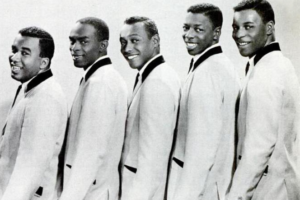
He realized at that time that being in a band was not to his advantage, so he opted to pursue a solo career instead. After moving to Harlem, New York, he became involved with Faye Pridgon. Thanks to her musical connections, Jimi Hendrix was exposed to opportunities, including winning an amateur contest at the iconic Apollo Theater. This was enough for Jimi Hendrix to focus on a full-time career as a musician. When he earned a spot to join the Isley Brothers’ backing band, it was an opportunity Hendrix capitalized on with great enthusiasm.
Jimi Hendrix’s recording career began with the Isley Brothers in March 1964, on “Testify.” However, it wouldn’t be until “Mercy Mercy” that Hendrix’s guitar performance earned the Isley Brothers a spot on the US Billboard Hot 100. It peaked at number thirty-five. Before 1964 was over, a restless Hendrix decided it was time to move on again. After touring with Little Richard’s band in 1965, Jimi Hendrix recorded “I Don’t Know What You Bot (But It’s Got Me),” he moved on again and sang with Rosa Lee Brooks while he was in Hollywood. “My Diary” and “Utee” were two songs written by Arthur Lee that featured Hendrix on guitar.
This marked the beginning of a longstanding friendship between Lee and Hendrix. At the time, Hendrix’s ties with Little Richard hadn’t completely ended just yet. He made his first television appearance on Night Train, a Nashville-based program that featured one of Little Richard’s ensemble bands. After the summer of 1965, Jimi Hendrix was forced to move on due to personality clashes with Richard. This briefly led him back to the Isley Brothers, then to a few different bands and recording artists, before moving to Greenwich Village in 1966.
The Hendrix Experience
Thanks to the diversity of Greenwich Village’s music scene, Jimi Hendrix found himself smack in the middle of a musical movement that would spur him to realize his full potential as a musical genius. What he learned as a resident of Cafe Wha? and as a performer at Manhattan’s Cafe Au Go Go was enough to broaden Jimi Hendrix’s horizons, forever cementing him as one of the greatest guitar legends of all time. Up until this point, Jimi Hendrix struggled just to make ends meet as the R&B music scene wasn’t nearly as profitable for him as he hoped. One of the key turning points in Hendrix’s career was meeting Linda Keith at a popular New York City nightclub.
Linda Keith was the girlfriend of legendary Rolling Stones guitarist, Keith Richards. She was so impressed by him that she attempted to earn him a contract with Andrew Loog Oldham and Seymour Stein. These were the men managing and producing music for the Rolling Stones at the time. Whatever she saw in Jimi Hendrix wasn’t something either Oldham nor Stein could see. They passed up the opportunity to sign him up, but a determined Keith made sure Jimi Hendrix would finally earn his due one way or another. She referred him to Chas Chandler, who was looking to manage new talent. Already familiar and fond of Hendrix’s work, based on what he saw at Cafe What? Chandler brought him to London, England, and had him sign with Michael Jeffery. Fans of Chandler and Jeffery will recognize these two men from the Animals’ fame.
While in England, Jimi Hendrix gave a solo performance at the London-based nightclub, The Scotch of St. James. In the meantime, Chandler was on the hunt for band members who could complement Jimi Hendrix’s talent as they geared up to launch the Jimi Hendrix Experience. When Hendrix met Noel Redding, he was equally impressed with his hair as he was with his bluesy guitar work. Then there was Mitch Mitchell, who had just been released from the lineup belonging to Georgie Fame and the Blue Flames.
The mutual interest of Hendrix, Mitchell, and Redding in R&B music marked the beginning of a beautiful working relationship. It was also during this time that Chandler convinced Hendrix to change the spelling of his first name from Jimmy to Jimi. In the meantime, as the quest to build the perfect crew for the Jimi Hendrix Experience continued, Chandler and Hendrix met with British guitarist Eric Clapton. Already considered a guitar hero by fans, Eric Clapton was so impressed with Hendrix’s guitar performance and humbling personality that it forever changed how he was as an artist and as a person.
The Jimi Hendrix Experience
October 13, 1966, marked the official beginning of The Jimi Hendrix Experience. The crew was sent in as a supporting act in France for Johnny Hallyday. Before the month was over, the Who signed Hendrix and his men to their brand new label, Track Records. “Hey Joe” was the first song that was recorded, then “Stone Free.” “Stone Free was the first song Hendrix wrote after coming to England. When The Jimi Hendrix Experience came to London’s Bag O’Nails nightclub, there were band members from The Beatles, The Rolling Stones, and The Who in attendance.
Kevin Ayers and Jeff Beck were also in the audience as Hendrix and his crew won over the entire crowd in what was yet another stellar performance. Now on a roll, there were a series of Jimi Hendrix songs and singles that were released by Polydor Records that started with “Hey Joe.” From there it was “Stone Free.” These two were out and making chart impressions by the time December 1966 was over. In 1967, it was time for “Purple Haze” and “The Wind Cries Mary” to make their mark as hits for Hendrix.
While The Jimi Hendrix Experience continued to wow the crowd, discussions arose about how to intensify the attention Hendrix and his band were receiving. When the joke came about to set a guitar on fire, it became the closing stunt Hendrix pulled off at the London Astoria on March 31, 1967. The media portrayed Hendrix as “Black Elvis” and the “Wild Man of Borneo.” Less than two months later, Are You Experienced was released as the first album by the Jimi Hendrix Experience. The tracklist featured a collection of songs, including “Fire,” “I Don’t Live Today,” “Red House,” and “Third Stone from the Sun,” which joined “Hey Joe” and “Purple Haze” as cult classics.
When Are You Experienced was released in the UK; it peaked at number two on the album chart. Sitting in the way the entire time was the Beatles’ eighth studio album, Sgt. Pepper’s Lonely Hearts Club Band. When Hendrix performed in concert at the Saville Theatre on June 4, 1967, he opened with the album’s title track. The owner of the London-based club was Brian Epstein, the same man who managed the Beatles. In attendance during this live performance were George Harrison and Paul McCartney. When Hendrix played “Sgt. Pepper’s Lonely Hearts Club Band,” three men greatly appreciated it, knowing they were being honored by a colleague.
What an Experience
When Are You Experienced was released in North America during the summer of 1967, Hendrix fans wasted no time getting their hands on this legendary recording. It was ranked as high as number five on the US Billboard 200 and at number fifteen on the Canada RPM Top 50 Albums chart. Oddly enough, while “Hey Joe” was popular in the UK, it wasn’t popular enough to make an appearance on the US Billboard Hot 100, at least not at first. Strongly feeling American music fans were missing out, Paul McCartney suggested inviting The Jimi Hendrix Experience to perform at the Monterey Pop Festival.
When Hendrix and his crew took to the stage on June 18, 1967, they started with a Howlin’ Wolf classic, “Killing Floor.” What Hendrix did that day was forever change the entire spectrum of how musical performers should be portrayed. Instead of trying to measure up to corporate and social expectations, it was all about letting go and being the best possible version of yourself. This is what made Jimi Hendrix so iconic. As fantastic as his guitar genius was, it was how he carried himself as a performer that made such a huge impact. The culture of American music was irreversibly changed from that day forward.
After wowing the audience with one incredible performance after another, ranging from Hendrix-written material to cover versions such as Bob Dylan’s “Like a Rolling Stone,” Jimi Hendrix ended the show by lighting his guitar on fire and having its charred remains tossed out to the audience. In attendance was a seventeen-year-old named Ed Caraeff. He was next to the stage when he took pics of Hendrix burning up his guitar. Because he was so close to the fire, the camera was often used as a shield to protect his face from the high heat. There was one picture in particular that stood out, which became colorized in 1987 for one of Rolling Stone’s magazine covers.
The image of Hendrix kneeling before his burning guitar, his hands raised, became iconic, further immortalizing Jimi Hendrix as a rock god. After the incredible success at the Monterey Festival, five concerts were lined up at The Fillmore in San Francisco, California. Originally, Jefferson Airplane was supposed to be the headlining act, but The Jimi Hendrix Experience was so intense that the fifth night witnessed Hendrix’s crew perform at the top of the bill. Until performing with The Monkees as a supporting act, The Jimi Hendrix Experience seemed like it could do no wrong. The Monkees loved Jimi Hendrix and his music, but it turned out their fans didn’t care for his style at all.
The Bold and the Electric Jimi Hendrix Songs
Released on December 1, 1967, The Jimi Hendrix Experience released its second studio album, Axis: Bold as Love. There was a great deal of musical experimentation that focused on a growing interest in science fiction and space exploration. As far as many fans of classic rock fans are concerned, some of the best electric guitar solos ever played came from this album. In less than three weeks, Hendrix and his crew began to work on their third studio album, Electric Ladyland.
What should have been yet another great working relationship between Chandler and Hendrix turned into a creative disagreement that prompted Chandler to part ways with Hendrix. Hendrix’s desire to produce the perfect album included working with musicians of different styles to see what would emerge from this production experience. The end result was one of the finest musical masterpieces ever produced by Jimi Hendrix.
The cover of Bob Dylan’s classic, “All Along the Watchtower,” became Hendrix’s only single that would break the top forty mark on the US Billboard Hot 100. It peaked at number 20 when it was released as a single in 1968. As far as the majority of music critics are concerned, Electric Ladyland is regarded as the greatest rock album of all time. The creativity of Jimi Hendrix, combined with his quest to make this recording as perfect as possible, propelled him straight to the top as one of the most energetic and influential artists the world has ever known. Deservedly so, he’s been regarded by the Rock and Roll Hall of Fame as the greatest instrumentalist in the history of rock music.
Going into 1969, Jimi Hendrix moved back to London to spend time with his girlfriend, Kathy Etchingham. Their next-door neighbor was the former home of George Handel, who became famous for his Baroque compositions during the mid 1700’s. At the time, a good-natured Hendrix attempted to perform an instrumental version of Cream’s “Sunshine of Your Love” during a live broadcast of the BBC’s Happening for Lulu. The UK-based group just broke up, and Hendrix intended to pay homage to a band he admired. However, the BBC strongly disapproved to the point where they no longer wished to have anything further to do with Jimi Hendrix.
Just before The Jimi Hendrix Experience broke up, the band toured Europe. Between Hendrix, Mitch Mitchell, and Noel Redding, the combination of a grueling concert schedule and substance abuse at the time led to an increase in personality clashes, culminating in the official breakup of The Jimi Hendrix Experience after performing at the Denver Pop Festival on June 29, 1969. This concert event turned into a riot, giving Noel Redding good reason to leave The Jimi Hendrix Experience.
The Woodstock Experience
Right after Redding opted out, Jimi Hendrix moved into a home near Woodstock, New York, where he’d spend much of his summer. It was arranged by Hendrix’s manager at the time, Michael Jeffrey, for him to stay there and encourage the singer-songwriter to come up with new musical material. Hendrix was on his own as Jeffrey had Mitchell committed to another music-related project at the time. Just before the Woodstock Festival, Jimi Hendrix made his first American television appearance on The Dick Cavett Show. This was followed by The Tonight Show with Johnny Carson.
1969 was a year when Jimi Hendrix was at the top of the world, performing as a money-making machine for the music industry. When it was official, the Woodstock Festival was to take place on Max Yasgur’s dairy farm in Bethel, New York. Hendrix was billed as the headlining act. All eyes and ears were on Jimi Hendrix, and he did not disappoint. For Hendrix, this was huge as he was not a fan of performing before large crowds. It was also nerve-wracking as he no longer had the Jimi Hendrix Experience crew he was so familiar with.
Among all the acts that performed at this legendary music festival, Jimi Hendrix was the highest-paid, even though he agreed to perform at a lower fee than the norm. Originally, Hendrix was supposed to perform at midnight Sunday, but opted for the morning of Monday, August 18th instead. By then, the crowd of four hundred thousand people was now down to thirty thousand. After Hendrix’s group was introduced to appear on stage, they were referred to by MC Chip Monck as “The Jimi Hendrix Experience.” Hendrix announced that “Band of Gypsys” was more like it. In the performance, Hendrix played a distorted instrumental version of “The Star-Spangled Banner.”
Many believed it was his way of speaking out against American involvement in the Vietnam War, but it was simply Jimi Hendrix doing what he did best: entertaining. When the 1970 documentary about Woodstock was aired, Hendrix’s performance of the American anthem was deemed the most electrifying moment of the festival. It was a great way to send a zeitgeist-style farewell to the 1960s as the world braced for what the start of the 1970s would bring. As soon as Hendrix was leaving the stage, he collapsed from exhaustion, as he had already been awake for more than three straight days.
The Gypsy Experience
1970 began with Hendrix’s newly named group, Band of Gypsys, and a debut recording featuring Billy Cox and Buddy Miles. This was a live album featuring the trio fusing blues, funk, jazz, rock, and soul. Its tracklist was designed to win over the people behind the Black Power movement. As the album’s producer, Hendrix faced challenges that carried over from the pressure he experienced as a recording artist in 1969.
There was an expectation that he would release a follow-up album to Electric Ladyland. With Band of Gypsys, Hendrix wrote “Machine Gun,” a song many critics consider another display of his genius as a guitarist. It seemed each time he came up with something new, Hendrix was raising the bar on how an electric guitar should be played. As promising as Band of Gypsys looked at the time, January 28, 1970, marked the third and final time Cox, Hendrix, and Miles would perform together. The concert at a music festival held at Madison Square Garden featured what many witnesses suggested Hendrix was not at his best.
As soon as he, Cox, and Miles took to the stage, it was clear Hendrix was really in no shape to perform before a live audience. It was later discovered that Michael Jeffrey handed LSD to Hendrix prior to the scheduled performance. It was speculated that Hendrix’s manager at the time did so with the hope of sabotaging Band of Gypsys so he could put The Jimi Hendrix Experience back together. Although it ended the Band of Gypsys, it did not bring back the lineup Jeffrey presumably hoped for. As far as Hendrix was concerned, Redding was still out but was okay with Mitch Mitchell. Instead of Redding, he wanted Billy Cox. It wasn’t anything personal, as Hendrix simply had a musical vision in mind that would have made Redding the odd man out.
Now, as the Jimi Hendrix Experience, these three men worked on what should have been Hendrix’s next studio album. The Cry of Love didn’t start off on the right foot, though. An increasingly unstable Hendrix had the album’s production put on hold, as the three men opted to go on tour instead. This was sometimes met with disaster as the dependency Hendrix had on drugs at the time was definitely taking its toll on the man. The final concert Jimi Hendrix held on American soil was on August 1, 1970, when he and his bandmates performed in Honolulu, Hawaii.
End of the Road
When Jimi Hendrix began his European tour to promote Cry of Love, the mix of depression and substance abuse was already taking a heavy toll on the man. After a brief concert performance on September 2, 1970, in Aarhus, Denmark, Hendrix admitted he felt “dead for a long time.” He performed only three songs before deciding he couldn’t continue. On September 5, 1970, he was supposed to perform at the Isle of Fehmarn Festival in West Germany, but the concert had to be canceled due to torrential rain. The concert was rescheduled for the very next day, but the fans were not impressed. Hendrix, Cox, and Mitchell were greeted by an unforgiving audience with a series of boos and jeers. After this, the trio went back to London. Cox abruptly quit the tour and returned to the United States. As for Hendrix, September 16, 1970, was the final concert he would give, as he jammed with Eric Burdon and his band, War. This took place at Ronnie Scott’s Jazz Club in London.
On September 17, 1970, a deeply troubled Jimi Hendrix supposedly spent time with his girlfriend, Monika Danneman. According to her story, it should have been a romantic evening that included a late-night dinner, a bottle of wine, and some personal time together. When the late morning of September 18th came around, Danneman observed that Hendrix seemed unconscious and unresponsive. He was still breathing, but she was concerned enough to call an ambulance. After Hendrix was brought to the hospital, it was announced by the hospital’s medical team that Jimi Hendrix passed away at 12:45 P.M. According to the medical reports, Hendrix choked on his own vomit and was asphyxiated as a result. According to Dannemann’s testimony, Hendrix consumed nine of her prescribed sleeping pills.
To this day, there are mixed viewpoints about the circumstances that led to Jimi Hendrix’s tragic death. Although it was known he was contending with depression and substance abuse, what continues to remain a mystery is how the world’s greatest rock musician of all time truly died. What is agreed upon is the impact his death had on so many people as soon as the news got out about his unfortunate fate. Top-notch recording artists around the world took the news really hard. It gave some a good reason to make certain lifestyle changes so they wouldn’t experience what robbed a young man who had yet to turn thirty of the world.
Hey Jimi
Even long after the tragic death of Jimi Hendrix, the man’s legacy as the world’s greatest rock musician who ever lived continues. There is nothing like music to bring people together, and Hendrix knew it well as a form of art. There never was, and there never will be, another Jimi Hendrix. He was one of a kind as an artist and as a person. As cruel as the world could be at times, he managed to overcome it all by channeling all his energy into the musical material he shared for all to hear.
He used his musical genius to open up the eyes and ears of everyone willing to see and listen to what the man had to say through his electric guitar performances and vocals. Deservedly so, he has received scores of awards and accolades, making him one of the most celebrated musical legends of all time. Even today, as new artists continue to influence the world with their brand of music, it almost always points straight back to Jimi Hendrix. When asking even some of the greatest musical legends of all time what they think about Hendrix, nearly everyone will admit how much they’ve admired him.
In addition to the multitude of some of the best-recognized music awards and a long list of Hall of Fame registries, Jimi Hendrix also has his album Are You Experienced listed as one of 2005’s 50 recordings in the US National Recording Registry at the Library of Congress. Although Jimi Hendrix’s career as a recording artist was too short, his musical legacy seems endless. The Jimi Hendrix Experience’s Are You Experienced and Electric Ladyland were certified multi-platinum by the Recording Industry Association of America. Axis: Bold as Love was no slouch either, as it also became certified platinum.
As for the live albums, Band of Gypsys became certified platinum twice, as did Woodstock: Music from the Original Soundtrack and More. These two were released in 1970, shortly before the release of Historic Performances Recorded at the Monterey International Pop Festival. The third of these live albums featured the 1967 recording of The Jimi Hendrix Experience on one side, while the other had another musical legend, Otis Redding.
Adding to Jimi Hendrix’s legacy is the infamous Hendrix Chord. Also known as the Purple Haze Chord, this was a popular sound often used in rock music. What Hendrix did was merge jazz with rock as a sound he perfected with his electric guitar. This is especially obvious in “Foxy Lady,” “Purple Haze,” and “Voodoo Child (Slight Return).” This approach enabled Hendrix to proudly display his fondness for black music while at the same time rocking out to a mix of raw sounds that deliberately came across as rough and metallic. The influence of the Hendrix Chord can be heard in the musical styles of an impressive roster of big stars, such as Pink Floyd and Stevie Ray Vaughan, to name a few. Just as Hendrix himself, the Hendrix Chord has become immortalized in the music industry as a rock-and-roll landmark.
Top 10 Jimi Hendrix Songs
#10 – Manic Depression
Opening up our top 10 Jimi Hendrix songs list, we present a classic that doesn’t always make other top Jimi Hendrix songs lists. Performed as a man frustrated with life, “Manic Depression’ was a song that described Jimi Hendrix in many ways. Recorded by The Jimi Hendrix Experience in 1967, the lyrics expressed a flustered young man who was contending with the wild roller coaster ride of daily living between clinical depression and a turbulent love life.
The jazzy drumming performance by Mitch Mitchell was, as usual, out of this world, as was the uptempo guitar play by Hendrix and his bassist at the time, Noel Redding. Although not officially released as a single, “Manic Depression” became an inspirational favorite among many fans, including up-and-coming rock stars who couldn’t resist trying to match the Hendrix chord sound that forever cemented Jimi Hendrix’s place in history as a legendary rock god.
#9 – Stone Free
Continuing with our top 10 Jimi Hendrix songs list, we turn to another gem that is often overlooked among his best. As soon as “Stone Free” was recorded and released by The Jimi Hendrix Experience, it was regarded as the ideal counterculture anthem among a fan base who quickly fell in love with Hendrix’s lyrics and furious guitar work. Already living a lifestyle on the edge, Hendrix shared who he was as an artist and as a person in what became one of his best performances as a rock star. The drumming by Mitch Mitchell was not to be outdone, nor was Noel Redding’s performance as Hendrix’s bass player.
“Stone Free” was a single issued on the B-side of the same record that featured “Hey Joe” in 1966. In the lyrics, Hendrix expressed his disdain for the social expectations imposed by a community he felt was too judgmental for its own good. This was inspired by his Greenwich Village experience as he returned to Harlem with a counterculture appearance and attitude that members of his old neighborhood didn’t approve of. “Stone Free” was an ideal jazz-meets-rock song, thanks to Mitchell’s drumming, Redding’s bass, and Hendrix’s expert handling of his guitar.
#8 – Crosstown Traffic
“Crosstown Traffic” was a song about a woman whom Jimi Hendrix had a tough time getting rid of. According to the lyrics, Hendrix expressed that trying to knock sense into her was like trying to get through heavy traffic across town. Performed as a bluesy number, Hendrix made several sexual references through the use of metaphorical expressions. The kazoo riff is what made this song famous, as Hendrix used a comb and cellophane to create the sound of traffic.
Whenever “Traffic” was mentioned in the song, it was Dave Mason, a member of the band Traffic. This was no coincidence as Hendrix deliberately put this song together, along with the production assistance of Chas Chandler. When “Crosstown Traffic” was released as a single, it reached number 37 on the UK Singles Chart and number 52 on the US Billboard Hot 100. This was released in 1968 from The Jimi Hendrix Experience’s third studio album, Electric Ladyland. It was the follow-up single behind another Hendrix classic, “All Along the Watchtower.”
#7 – Spanish Castle Magic
According to the lyrics, “Spanish Castle Magic” was about a club near Seattle, Washington. This was the city Jimi Hendrix mostly grew up in before he became one of the world’s most iconic rock musicians. This song was recorded on the album Axis: Bold as Love, a 1967 release that shared a piece of Hendrix’s past as a young man growing up in the American Northwest. While attending high school, Hendrix often visited a roadhouse that was called “The Spanish Castle.”
The club was built south of Seattle in a community now known as Des Moines. At the time, there were strict nightclub laws that prompted roadhouses outside of Seattle to spring up so they could cater to thirsty crowds without having to comply with whatever the city council deemed legally appropriate. The popularity of the Spanish Magic Castle as a club eventually brought in regionally popular rock groups, as well as a few touring rock stars. The region’s most popular disc jockey at the time was Pat O’Day.
“Spanish Castle Magic” featured bassist Noel Redding using the Octavia effect, while Jimi Hendrix overdubbed a bass-and-jazzy-piano sound. The progression of the song had Hendrix’s lyrical performance lead into the metallic solo ending, which only someone as talented as this man could pull off. While growing up in Seattle, Hendrix lived in a city deeply segregated into communities as different from each other as they could be. Although “Spanish Castle Magic” was a song about an actual nightclub known for hosting popular rock groups, Jimi Hendrix never performed there. By the time his music career launched him into stardom, he was no longer a resident of Seattle, Washington.
#6 – Purple Haze
Released as a single in March 1967, “Purple Haze” quickly became one of Jimi Hendrix’s signature songs, cementing him as an immortal rock god. The infamous “Hendrix chord” is heard here as he mixed the influence of blues and psychedelic music with enough genius to make this one of Hendrix’s most popular classics of all time. In 2000, it was inducted into the Grammy Hall of Fame. When recognizing the greatest guitar-based rock songs of all time, “Purple Haze” consistently receives top mention from fans and critics alike.
When “Purple Haze” was pieced together, Hendrix intended to write original material rather than cover a song first written and performed by someone else. As successful as “Hey Joe” was, Hendrix wanted to present music that was purely a Jimi Hendrix Experience. Whenever asked about the composition of the song, the answers given by the guitar hero varied. The most common account of the song’s origin was Hendrix’s psychedelic experience at the time “Purple Haze” came to him.
According to the opening lyrics, it seemed Hendrix felt like the victim of a voodoo scheme by a woman who put him in a “Purple Haze” state. When this was released as a single, it peaked at number seven in Australia and Norway. It was a number three hit on the UK Singles Chart. In Germany and the Netherlands, it was at least a top twenty hit. When “Purple Haze” was released in the United States, it reached number 65 on the US Billboard Hot 100. Although it wasn’t a big hit on the charts for Hendrix at the time, it didn’t take long for “Purple Haze” to become the iconic cult classic we know and love today.
#5 – Foxy Lady
Blaring as loud as it gets, smack right in the middle of our Jimi Hendrix songs list, is one of the most popular Jimi Hendrix songs of all time. “Foxy Lady” was a song that made its first recorded appearance on Are You Experienced, the 1967 debut album from The Jimi Hendrix Experience. This became one of Hendrix’s signature songs after it was released as a single and has gone down in history as among the greatest guitar rock songs of all time. The lyrics supposedly suggest being inspired by the wife of the Who’s frontman, Roger Daltrey, Heather Daltrey. It was also suspected that Hendrix’s girlfriend at the time, Lithofayne “Faye” Pridgon, had something to do with it as well.
When it was released in the United States as a single in 1967, the title was changed to “Foxey Lady.” On the US Billboard Hot 100, it only peaked at number 67. However, over time, “Foxy Lady” became one of the most popular rock songs of all time. “Foxy Lady” was rhythmic, bluesy rock at its finest, featuring hints of jazz that all played their part in the infamous Hendrix chord that made the man from Washington so famous.
#4 – Hey Joe
“Hey Joe” was a song about a man on the run who intended to travel to Mexico to meet with his unfaithful wife and have her shot. It was recorded for the first time by a garage band known as Leaves in 1965, then again as a single in 1966. 1966 also marked the year Jimi Hendrix did the same, leading The Jimi Hendrix Experience. In a quest to dive into rock music, Hendrix was inspired to cover “Hey Joe” after listening to a single version on a jukebox. When Hendrix was discovered by Chas Chandler, his performance of “Hey Joe” was so impressive that the producer quickly signed him and officially launched his solo career as a recording artist.
When “Hey Joe” was released as a single by Hendrix, he was in England, being molded by Chandler into a star. On the UK Singles Chart, Hendrix’s version of the classic became a number eight hit, and it was certified silver by the British Phonographic Industry. When it was released in the United States, it failed to make an impression on any of its official music charts. However, as more rock music fans began hearing Hendrix’s music, songs like “Hey Joe” became more popular.
When Hendrix performed at the iconic Woodstock Festival in 1969, this was his final song, as well as the official closer to the most popular weekend rock concert of all time. As a song, “Hey Joe” became a rock standard that was covered by several big-name musicians. However, not a single performance has matched the raw energy Jimi Hendrix poured into “Hey Joe” as one of the greatest guitar heroes in music history.
#3 – Third Stone from the Sun
Not all of Jimi Hendrix’s great songs featured vocals. Jimi Hendrix was among the few rock musicians who could take a mostly instrumental rock song and turn it into a cult classic. “Third Stone from the Sun” was a 1967 release from the album Are You Experienced. The fusion of jazz and psychedelic rock in this song reflected Hendrix’s interest in science fiction and space exploration. Described as the “Third Stone from the Sun,” Earth’s story was inspired by two sci-fi publications, Earth Abides and Sun Ra. The bluesy, lyrical performance, along with the reference to a hen, was suspected to be tied to the jump blues music popular in cities like Seattle, Washington.
Jimi Hendrix grew up in the area, so he was a fan of Louis Jordan, a popular R&B performer who had a 1946 hit with “Ain’t Nobody Here but Us Chickens.” The gem of “Third Stone from the Sun” was Hendrix sharing a piece of his past as an R&B fan while also exploring his musical horizons as a rock musician. It was also a song in which all three members of The Jimi Hendrix Experience worked together as a unit to create some of the best and most unique compositions the music industry had ever known.
Together, Jimi Hendrix, Mitch Mitchell, and Noel Redding shaped the music scene, regardless of genre, as the world knew it. “Third Stone from the Sun” was a song performed from an alien’s perspective as he visited Earth and observed a hen he encountered, marveling at its early-morning cackling. This was a jazzy rocker that blended facts, fantasy, and humor into a song that would inspire future recording artists to do their best to emulate The Jimi Hendrix Experience’s legendary performance.
#2 – Voodoo Chile
“Voodoo Chile” was a song recorded by Jimi Hendrix in 1938 that became part of the Electric Ladyland tracklist. This was the third studio album produced by The Jimi Hendrix Experience and was often confused with “Voodoo Child (Slight Return)” after the second of these two songs was released as a single in 1970. “Voodoo Chile” was the result of a late-night jam session between Hendrix, Jack Casady, Mitch Mitchell, and Steve Winwood. This became the basis for the next day’s recording of “Voodoo Child (Slight Return).” Upon the 1970 posthumous release of “Voodoo Chile” as a single in the UK, it became a number-one hit.
While voodoo has been popular as a subject for songs, Hendrix used this form of witchcraft as a metaphor. It was used to describe himself as a man of the blues who honors and respects traditions. Its inspiration came from Muddy Waters and “Catfish Blues” as Hendrix wanted to pay homage to the legend who had such a profound impact on Hendrix’s desire to become a musician himself.
“Voodoo Chile” led to “Voodoo Child,” songs that first had Hendrix pay homage to the greatest blues legends of all time before, in the second of these two songs, admitting he was a proud product of the musical style he loved. In addition to referencing voodooism as a metaphor, Hendrix fused his love of science fiction into a song that rightfully earned its place as a rock classic.
#1 – Little Wing
Recorded in 1967, “Little Wing” was a slower-paced, bluesy ballad that featured a somewhat vulnerable Jimi Hendrix expressing himself as one of the greatest musicians who ever lived. The sound effects included bass, drums, glockenspiel, and guitar. According to the lyrics, “Little Wing” was a song about a feminine guardian angel who profoundly impacted Jimi Hendrix. This was one of many songs in which Hendrix referred to an angelic figure appearing as a woman. Of all the songs Hendrix recorded, “Little Wing” remains at the top as one of the best performances he’s ever done.
The inspiration for “Little Wing” came to Hendrix after performing at the 1967 Monterey Pop Festival in California. This gem became part of the tracklist for Axis: Bold as Love, the second studio album by The Jimi Hendrix Experience. Since its initial release, “Little Wing” has become a rock standard, covered and sampled by a long list of recording artists across genres.
For Hendrix, “Little Wing” brought his experience as an R&B guitarist to the forefront as he explored various musical styles in his quest to become better acquainted with rock and roll. Intended or not, Hendrix’s genius with the guitar and expert songwriting skills reshaped the genre as everyone knew it as he blasted open so many possibilities for musicians to explore.
The beauty of “Little Wing” lay in Hendrix’s collaborations with the Isley Brothers and Little Richard. One of the key influences who molded Hendrix into the greatest guitar god of all time was Curtis Mayfield. Hendrix adopted what he learned from Mayfield as he perfected his craft as an electric guitarist. “Little Wing” began its development as a song while Hendrix was in Greenwich Village. The counterculture he experienced there shaped the man’s career, turning him into one of the most beloved rockers of all time.
Updated January 19, 2026
Top 10 Jimi Hendrix Songs article published on Classic RockHistory.com© 2026
Classicrockhistory.com claims ownership of all its original content and Intellectual property under United States Copyright laws and those of all other foreign countries. No one person, business, or organization is allowed to re-publish any of our original content anywhere on the web or in print without our permission. All photos used are either public domain Creative Commons photos or licensed officially from Shutterstock under license with ClassicRockHistory.com. All photo credits have been placed at the end of the article. Album Cover Photos are affiliate links and the property of Amazon and are stored on the Amazon server. Any theft of our content will be met with swift legal action against the infringing websites.