Feature Photo: Hunter Desportes, CC BY 2.0 <https://creativecommons.org/licenses/by/2.0>, via Wikimedia Commons
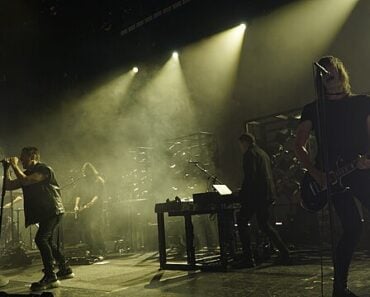
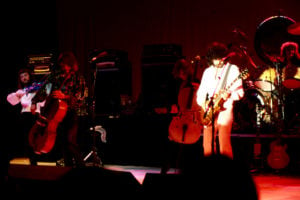
King Crimson was formed in London in 1968. Known for their complex compositions and pioneering use of improvisation, the band has undergone numerous lineup changes throughout its history, with guitarist Robert Fripp being the only constant member. King Crimson has released thirteen studio albums, beginning with their influential debut In the Court of the Crimson King (1969) and ending with The Power to Believe (2003). The band has seen periods of inactivity and reformation, with its most recent performing incarnation touring through 2021. King Crimson played its final concert of that tour in Tokyo on December 8, 2021. Despite their frequent changes in personnel, King Crimson has maintained a reputation for musical innovation and has left a lasting impact on the genre.
Robert Fripp
Robert Fripp is the founding member and guitarist of King Crimson, having formed the band in 1968. He has been the only constant member throughout the band’s various incarnations. Fripp’s innovative guitar work and compositional skills have been central to King Crimson’s sound. He has played on every one of King Crimson’s thirteen studio albums, from In the Court of the Crimson King (1969) through The Power to Believe (2003). Outside of King Crimson, Fripp has worked with a wide range of artists, including David Bowie, Brian Eno, and Peter Gabriel, and has released several solo albums.
Greg Lake
Greg Lake was the original bassist and lead vocalist for King Crimson, joining the band in 1968. He played on their debut album, In the Court of the Crimson King (1969), contributing significantly to its sound with his powerful vocals and bass lines. Lake left the band in 1970 to form Emerson, Lake & Palmer, where he achieved significant success. He is remembered for his contributions to the early sound of King Crimson. Lake passed away in 2016.
Michael Giles
Michael Giles was the original drummer and percussionist for King Crimson, joining in 1968. He played on In the Court of the Crimson King (1969), where his innovative drumming was a key element of the band’s early sound. Giles left the band shortly after the release of their debut album but returned as a session musician for In the Wake of Poseidon (1970). He also continued working with Ian McDonald on the album McDonald and Giles (1970) and pursued a career as a session musician.
Ian McDonald
Ian McDonald was a founding member of King Crimson, playing saxophone, flute, keyboards, and mellotron. He joined the band in 1968 and played on In the Court of the Crimson King (1969). McDonald’s multi-instrumental talents were crucial to the band’s early sound. He left King Crimson in 1969 and later co-founded the rock band Foreigner. McDonald also worked as a session musician and producer. He passed away in 2022.
Peter Sinfield
Peter Sinfield was the lyricist, roadie, lights operator, live sound engineer, and creative collaborator for King Crimson from the band’s formation through the Islands era. He wrote the lyrics for the band’s first four studio albums, including In the Court of the Crimson King (1969). Sinfield’s poetic and often surreal lyrics were a defining feature of King Crimson’s early work. After leaving the band, he pursued a solo career and worked as a lyricist for other artists, including Emerson, Lake & Palmer. Sinfield passed away in 2024.
Mel Collins
Mel Collins first joined King Crimson in 1970, playing saxophones and flute. He played on several albums, including Lizard (1970) and Islands (1971). Collins left the band in 1972 but rejoined the later incarnation announced in 2013, contributing to the band’s tours and recordings through 2021. Outside of King Crimson, Collins has worked with a wide range of artists, including Camel, The Alan Parsons Project, and Dire Straits.
Boz Burrell
Boz Burrell joined King Crimson in 1971 as the bassist and lead vocalist. He played on the studio album Islands (1971) and the live album Earthbound (1972). After leaving King Crimson in 1972, Burrell found significant success as the bassist for Bad Company. He passed away in 2006.
Bill Bruford
Bill Bruford joined King Crimson in 1972 as the drummer and percussionist. He played on several albums, including Larks’ Tongues in Aspic (1973), Starless and Bible Black (1974), and Red (1974). Bruford left the band in 1974 but rejoined for the 1981-1984 and 1994-1997 incarnations. Outside of King Crimson, Bruford was the original drummer for Yes and later led his own jazz band, Earthworks.
John Wetton
John Wetton joined King Crimson in 1972 as the bassist and lead vocalist. He played on Larks’ Tongues in Aspic (1973), Starless and Bible Black (1974), and Red (1974). Wetton’s powerful voice and bass playing were central to the band’s sound during this period. After leaving King Crimson in 1974, he played with several bands, including U.K. and Asia, achieving significant success with the latter. Wetton passed away in 2017.
David Cross
David Cross joined King Crimson in 1972 as the violinist and keyboardist. He played on Larks’ Tongues in Aspic (1973), Starless and Bible Black (1974), and Red (1974). Cross’s violin added a unique dimension to the band’s sound. After leaving King Crimson in 1974, he pursued a solo career and worked with various other musicians and bands.
Peter Giles
Peter Giles returned to work with King Crimson in 1970, contributing bass to the album In the Wake of Poseidon. His precise bass playing added depth to the band’s early sound. Before his work with King Crimson, Giles was a member of Giles, Giles and Fripp, a precursor to King Crimson, which he formed with his brother Michael Giles and Robert Fripp. After his time with King Crimson, Peter Giles continued to work in music, though he did not rejoin the band in later years.
Gordon Haskell
Gordon Haskell was briefly a member of King Crimson in 1970, playing bass and providing lead vocals on the album Lizard. He also contributed vocals to the track “Cadence and Cascade” on In the Wake of Poseidon. Haskell’s smooth vocal style and bass playing were integral to the band’s evolving sound during this period. After leaving King Crimson, Haskell pursued a solo career and achieved success with his album Harry’s Bar in 2002. Haskell passed away in 2020.
Andy McCulloch
Andy McCulloch joined King Crimson as the drummer in 1970, playing on the album Lizard. His dynamic drumming contributed to the band’s progressive and experimental approach on this album. After his tenure with King Crimson, McCulloch went on to play with other bands, including Fields and Greenslade, continuing his career in the progressive rock genre.
Ian Wallace
Ian Wallace was the drummer and percussionist for King Crimson from 1971 to 1972. He played on the studio album Islands (1971) and the live album Earthbound (1972). Wallace’s versatile drumming and backing vocals were key elements of the band’s sound during his time. After leaving King Crimson, Wallace had a prolific career as a session musician, playing with artists such as Bob Dylan and Don Henley. He passed away in 2007.
Jamie Muir
Jamie Muir joined King Crimson in 1972 as a percussionist. He played on the album Larks’ Tongues in Aspic (1973), where his experimental and eclectic percussion techniques added a unique dimension to the band’s music. Muir left the band in early 1973 to pursue a more spiritual path and later focused on visual art.
Adrian Belew
Adrian Belew joined King Crimson in 1981 as the guitarist and lead vocalist. He played on several albums, including Discipline (1981), Beat (1982), and Three of a Perfect Pair (1984), as well as later King Crimson studio albums. Belew’s innovative guitar playing and distinctive voice helped shape the band’s sound during the 1980s and later incarnations. He remained a key member through King Crimson’s 2008 performances and has also had a successful solo career, working with artists like David Bowie and Talking Heads.
Tony Levin
Tony Levin joined King Crimson in 1981 as the bassist and Chapman Stick player. He played on Discipline (1981), Beat (1982), Three of a Perfect Pair (1984), and several later albums. Levin’s use of the Chapman Stick and bass guitar added a new dimension to the band’s sound. He returned for later incarnations and remained part of King Crimson’s final touring lineup in 2021. Outside of King Crimson, Levin has played with Peter Gabriel, Anderson Bruford Wakeman Howe, and his own band, Stick Men.
Pat Mastelotto
Pat Mastelotto joined King Crimson in 1994 as a drummer and percussionist. He played on THRAK (1995), The ConstruKction of Light (2000), and The Power to Believe (2003). Mastelotto’s versatile drumming was a key part of the band’s sound in its later years, and he remained part of King Crimson’s final touring lineup in 2021. He has also worked with XTC, Mr. Mister, and Stick Men.
Trey Gunn
Trey Gunn joined King Crimson in 1994 as a Warr guitarist and Chapman Stick player. He played on THRAK (1995), The ConstruKction of Light (2000), and The Power to Believe (2003). Gunn’s innovative playing added a new dimension to the band’s sound. He left King Crimson in 2003 and has pursued a solo career, as well as collaborating with various other artists.
Gavin Harrison
Gavin Harrison joined King Crimson in 2008 as a drummer. He played on the band’s later live albums and remained part of King Crimson’s final touring lineup in 2021. Harrison is known for his work with Porcupine Tree and has also played with The Pineapple Thief, contributing his precise and intricate drumming style to these projects.
Bill Rieflin
Bill Rieflin was a multi-instrumentalist who joined King Crimson in 2014. He played keyboards, synthesizers, mellotron, drums, percussion, and provided backing vocals. After taking a sabbatical in 2016, Rieflin returned to the band in 2017 and played his final King Crimson performance in December 2018. He contributed to live releases including Live at the Orpheum (2015), Radical Action to Unseat the Hold of Monkey Mind (2016), Live in Chicago (2017), and Meltdown: Live in Mexico City (2018). Outside of King Crimson, Rieflin had a distinguished career playing with bands such as Ministry, R.E.M., and Swans. He passed away in 2020.
Jakko Jakszyk
Jakko Jakszyk joined the re-formed King Crimson as guitarist and lead vocalist in 2014. He also played keyboards and flute. Jakszyk performed throughout the band’s 2014-2021 touring incarnation and appears on numerous live releases documenting that period. His versatility and vocal style helped shape the band’s modern sound. Before joining King Crimson, Jakszyk had a successful solo career and was a member of the band 21st Century Schizoid Band, which featured former King Crimson members.
Jeremy Stacey
Jeremy Stacey joined King Crimson in 2016 as a drummer and keyboardist. He provided backing vocals and appears on numerous live releases from the band’s 2016-2021 period. Stacey’s dynamic drumming and keyboard playing were integral to the band’s later performances. Outside of King Crimson, Stacey has an extensive career as a session musician, working with artists such as Noel Gallagher and Sheryl Crow.
Read More: Top 10 King Crimson Songs
Updated August 24, 2026.
Complete List Of King Crimson Band Members article published on ClassicRockHistory.com © 2026