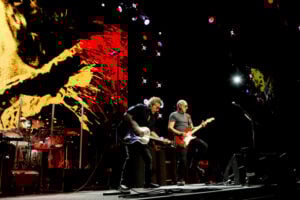
The Grateful Dead transformed live rock music into an open-ended conversation between musicians and audience, building a catalog and concert tradition that still shapes American music decades after the band’s final show. From Jerry Garcia and Bob Weir to the many keyboardists, percussionists, and vocalists who passed through the lineup, each member helped create a sound that could move from folk and blues to country, jazz, psychedelia, and fearless improvisation.
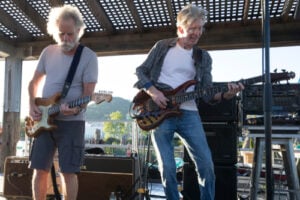
Feature Photo: Sterling Munksgard / Shutterstock.com
The Grateful Dead emerged from the San Francisco Bay Area’s rapidly changing mid-1960s music scene, officially forming in 1965 as the psychedelic movement began taking shape. The band grew out of a local jug band called Mother McCree’s Uptown Jug Champions and briefly performed as the Warlocks before adopting the Grateful Dead name. Jerry Garcia, Bob Weir, Ron “Pigpen” McKernan, Phil Lesh, and Bill Kreutzmann laid the foundation for what would become one of the most enduring and influential bands in rock and roll history. Known for their eclectic style, which fused elements of rock, folk, bluegrass, blues, reggae, country, improvisational jazz, psychedelia, and space rock, the Grateful Dead’s music appealed to a broad audience and created a diverse and devoted community of fans, affectionately known as “Deadheads.”
The Grateful Dead’s early music was part of the soundtrack to the free-spirited, acid-fueled happenings and cultural upheavals of the 1960s. Albums like Anthem of the Sun (1968) and Aoxomoxoa (1969) broke new ground with their experimental approaches to recording and composition, influenced heavily by the band’s use of psychedelic drugs. Live performances became legendary, characterized by their marathon, improvised jam sessions that could last for hours, creating an unprecedented interactive experience between the band and its audience. This improvisational style became a trademark of their concerts, making each show a unique event and building a template for future generations of jam bands.
By the 1970s, the Grateful Dead had solidified their identity, with Mickey Hart joining to form a dual-drummer lineup with Kreutzmann, and with the addition of Keith and Donna Jean Godchaux enhancing their sound. This decade saw the release of some of their most acclaimed studio albums, such as Workingman’s Dead and American Beauty (both 1970), which featured more folk and country influences and included hits like “Uncle John’s Band” and “Truckin’.” The band’s relentless touring schedule and their commitment to live music innovation, including the use of the Wall of Sound—a massive public address system designed specifically for the band—cemented their reputation as musical pioneers.
The 1980s brought change and challenges for the Grateful Dead. The death of Ron “Pigpen” McKernan in 1973 and later Keith Godchaux in 1980 marked the end of an era, but also the beginning of new chapters with Brent Mydland, and later Vince Welnick, contributing to the band’s evolving sound. Despite these changes, the Grateful Dead’s popularity reached new heights, spurred by a younger generation of fans and the commercial success of their 1987 album In the Dark and its hit single “Touch of Grey.” This period was marked by increased media attention and a resurgence in public interest that introduced their music to a wider audience.
The Grateful Dead ceased touring in 1995 following the death of Jerry Garcia, but the band’s influence did not end with its final concert. Members of the band continued to perform and record, both solo and in various configurations like the Other Ones, the Dead, and Dead & Company, ensuring that the spirit of the Grateful Dead continued to thrive. The band’s ethos—its embrace of improvisation, its dedication to live performance, its fostering of a community, and its influence on music, culture, and technology—solidifies its legacy as one of the most iconic and enduring in music history.
Jerry Garcia
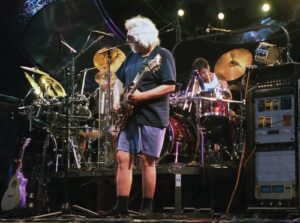
Feature Photo: Northfoto / Shutterstock.com
Jerry Garcia was not only a founding member of the Grateful Dead but also its most iconic figure, serving as the band’s lead guitarist and one of its principal vocalists from 1965 until his death in 1995. His virtuosic guitar skills and distinctive voice helped define the Grateful Dead’s eclectic sound, which melded elements of rock, folk, bluegrass, blues, and jazz. Garcia’s improvisational prowess and willingness to explore musical boundaries made him a pivotal figure in the psychedelic music scene that emerged from San Francisco in the 1960s. Under his leadership, the Grateful Dead became renowned for their live performances, characterized by lengthy instrumental jams that allowed band members to interact musically with unique spontaneity.
Throughout his three-decade career with the Grateful Dead, Garcia contributed to all of their studio albums, from their eponymous debut in 1967 to Built to Last in 1989. His songwriting, in collaboration with lyricists like Robert Hunter, produced timeless tracks such as “Truckin’,” “Casey Jones,” and “Touch of Grey,” each showcasing his ability to blend storytelling with compelling musicality. Garcia’s creative output was not confined to the Grateful Dead; he was involved in numerous side projects including the Jerry Garcia Band, which allowed him to delve into more diverse musical styles, from blues to Motown, further highlighting his versatility as a musician.
In addition to his work with the Jerry Garcia Band, Garcia collaborated with a wide range of musicians, which underscored his broad musical interests and talents. He engaged in bluegrass projects with David Grisman, participated in the supergroup Old and in the Way, and contributed to a variety of albums by other artists, bringing his distinct guitar stylings and vocals to each collaboration. Despite battling personal health issues and the demands of his lifestyle, Garcia’s output remained prolific until his death. His legacy is not only embedded in the vast discography he left behind but also in his approach to music and performance, which emphasized a genuine connection with the audience and a relentless pursuit of artistic expression.
Bob Weir
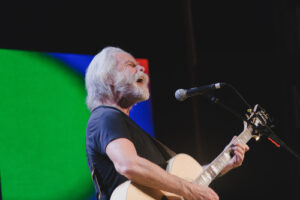
Feature Photo: Stacey Newman / Shutterstock.com
Bob Weir was a founding member of the Grateful Dead, and his role within the band extended far beyond just rhythm guitar. He provided crucial vocal and songwriting contributions from the band’s inception in 1965 until its disbandment in 1995. Weir’s style was marked by his unusual chord voicings and rhythmic complexity, which added depth to the Dead’s music. Unlike many rhythm guitarists who stick to the background, Weir’s approach was often intricate and exploratory, providing a counterpoint to Jerry Garcia’s lead guitar. Over the years, he developed a reputation for his spirited vocals, particularly on rockers like “Sugar Magnolia,” “The Music Never Stopped,” and “Truckin’,” songs that remain staples of the band’s legendary live performances.
In addition to his work with the Grateful Dead, Weir’s solo career and collaborations provided him avenues to explore different musical styles and compositions. In the mid-1970s, he released several solo albums, such as Ace and Heaven Help the Fool, which showcased his ability to blend rock with other genres and featured contributions from fellow Grateful Dead members and other notable musicians. Weir’s ability to adapt and innovate was also evident in his later projects like Bobby and the Midnites, RatDog, and Furthur, each of which allowed him to experiment with new sounds and ensemble formats while keeping the improvisational spirit of the Grateful Dead alive.
Weir’s enduring influence also included his role in forming new groups that celebrated and reinterpreted the Grateful Dead’s music, including Dead & Company with John Mayer and other former Grateful Dead members. Through these ventures, Weir has continued to captivate new generations of fans, embodying the spirit of the Grateful Dead while pushing musical boundaries. His dedication to live performance, his innovative guitar techniques, and his willingness to constantly explore new musical territories have solidified his status as a pivotal figure in rock history. Until his death in 2026, his commitment to communal music-making and continuous evolution helped keep the Grateful Dead’s legacy vibrantly alive.
Ron “Pigpen” McKernan
Ron “Pigpen” McKernan was one of the founding members of the Grateful Dead, and his contributions played a crucial role in shaping the band’s early sound and identity. Serving as the original frontman, Pigpen’s gritty vocals and soulful organ and harmonica playing brought a bluesy, earthy element to the group’s music that stood out during the psychedelic rock era. His style was heavily influenced by African American blues and R&B, which he blended with the more experimental sounds of the other band members. Pigpen’s charisma and rough-edged voice became defining features of early Grateful Dead songs like “Good Lovin’,” “Turn On Your Love Light,” and “Operator,” making him a favorite among Deadheads.
Pigpen’s presence provided a link to the roots of American music, grounding the band’s more psychedelic and experimental excursions in his direct, emotional performance style. This blend of the traditional with the avant-garde helped the Grateful Dead forge a unique musical path. Unfortunately, his career with the band was cut short by health issues related to alcoholism, leading to his early departure from touring in 1972 and his untimely death in 1973 at the age of 27. Despite his relatively short tenure and participation in the band’s first few albums, including classics like Anthem of the Sun and Workingman’s Dead, his influence on the band’s music and identity was profound.
Pigpen’s legacy in the Grateful Dead is remembered for bringing an authentic, raw blues component that complemented the band’s more eclectic, psychedelic aspects. His personal struggles with health, which eventually led to his early death, added a tragic aspect to his story and the history of the band. Yet the spirit and passion he infused into the Grateful Dead’s performances endure in the band’s recordings and are celebrated by fans who recognize his integral role in the group’s foundational years. Pigpen’s contribution to the Grateful Dead exemplifies the authentic expression of American roots music within the 1960s counterculture, making him an unforgettable figure in the band’s illustrious history.
Phil Lesh
Phil Lesh, a founding member of the Grateful Dead, brought a distinctive musical approach to the band, profoundly shaping its sound throughout its career from 1965 until its disbandment in 1995. Unlike many rock bassists of his time, Lesh’s background in classical music and avant-garde genres influenced his playing style, leading to innovative, melodic bass lines that were complex and integral to the band’s music rather than merely keeping rhythm. His approach to the bass as a lead instrument contributed significantly to the Grateful Dead’s characteristic sound, which blended elements of rock, folk, jazz, and more in an improvisational format.
Lesh’s contributions to the Grateful Dead were not limited to his musicianship; he was also an important composer and vocalist for the band. His best-known compositions included “Box of Rain,” “Unbroken Chain,” and “Pride of Cucamonga.” These compositions are celebrated for their intricate melodies and thoughtful lyrics, offering a deeper insight into Lesh’s artistic vision. His role as a vocalist, though less prominent than Garcia’s or Weir’s, added another layer of harmony to the band’s music, enriching their live performances and recordings alike.
After the Grateful Dead disbanded, Phil Lesh remained a vibrant part of the music scene, exploring new musical territories and nurturing emerging musicians until his death in 2024. He formed Phil Lesh & Friends, a band with a rotating cast of members, allowing Lesh to collaborate with a wide range of artists and continue performing the Grateful Dead’s music in new and evolving ways. This project, alongside his participation in various reunions of Grateful Dead members, has helped keep the band’s legacy alive and vibrant. Phil Lesh’s impact on the Grateful Dead and the broader music community underscores his importance as a pioneering musician whose innovative techniques and compositions have left an indelible mark on rock music.
Bill Kreutzmann
Bill Kreutzmann, one of the two drummers of the Grateful Dead from its inception in 1965 until its dissolution in 1995, played a pivotal role in defining the band’s rhythmic foundation. Alongside Mickey Hart, he was part of the “Rhythm Devils,” a nickname that captured their complex, polyrhythmic drumming, which became a hallmark of the Grateful Dead’s sound. Kreutzmann’s style combined traditional rock beats with more experimental, improvisational techniques that drew from a variety of world music traditions, contributing to the band’s unique approach to live performances and recordings.
Kreutzmann’s drumming was integral to the Grateful Dead’s identity, particularly in their live shows where extended drum solos and jams became central to the experience. These segments, often referred to as “Drums/Space,” showcased his and Hart’s ability to transition from structured songs into realms of pure rhythm and noise, exploring the outer limits of sonic landscapes. This aspect of their music allowed the Grateful Dead to connect with their audience in deeply immersive ways, making each concert a unique event.
Beyond the Grateful Dead, Bill Kreutzmann has continued to pursue musical projects that reflect his adventurous spirit and love for rhythmic exploration. He has been involved in several bands, including BK3 and 7 Walkers, which have allowed him to delve into different musical styles while maintaining the improvisational essence he cherished with the Grateful Dead. Kreutzmann’s contributions to music extend beyond just performance; his passion for drumming and his innovative approaches to rhythm have influenced countless musicians, ensuring his legacy as a cornerstone of one of rock’s most enduring bands.
Mickey Hart
Mickey Hart joined the Grateful Dead in 1967, two years after the band formed, and quickly became an indispensable part of their percussive ensemble, remaining with the group until their disbandment in 1995. His collaboration with fellow drummer Bill Kreutzmann, known collectively as the “Rhythm Devils,” added a new dimension to the band’s music, enriching their sound with layers of complex, exploratory percussive textures. Hart’s innovative use of a wide array of percussion instruments, including many from non-Western traditions, broadened the sonic palette of the Grateful Dead and contributed significantly to their signature psychedelic sound.
Hart’s interest in the ethnomusicology of percussion led him to collect and play instruments from around the globe, and his passion for the cultural and spiritual aspects of drumming permeated his work with the Grateful Dead and beyond. This deep engagement with world rhythms was evident in segments of Grateful Dead concerts known as “Drums/Space,” where Hart and Kreutzmann would embark on extensive, improvised percussive explorations that were a staple of the band’s live performances. These interludes allowed audiences to experience a form of musical journey that was both primal and transcendent, showcasing Hart’s skills and his commitment to pushing the boundaries of traditional rock percussion.
Beyond his career with the Grateful Dead, Mickey Hart has been a prolific contributor to the study and appreciation of global percussion. He has written books, collaborated with ethnomusicologists, and produced a series of recordings that explore the music of various cultures. His solo projects and collaborations, such as Planet Drum and the Mickey Hart Band, continue to emphasize his dedication to the art and science of rhythm. Hart’s contributions to music are not only measured by his performances but also by his efforts to educate others about the power and history of drumming, making him a key figure in both the world of rock and the broader field of ethnomusicology.
Tom Constanten
Tom Constanten was the keyboardist for the Grateful Dead from 1968 to 1970, playing primarily on the albums Anthem of the Sun and Aoxomoxoa. His classical music training added a distinctive touch to the band’s psychedelic sound during his brief tenure. After leaving the Grateful Dead, Constanten pursued a music career that included solo projects and collaborations with other artists, exploring a range of musical styles from classical to avant-garde.
Keith Godchaux
Keith Godchaux joined the Grateful Dead as a keyboardist in 1971 while Ron “Pigpen” McKernan was still a member but increasingly limited by poor health, and remained with the band until 1979. During his time, he played on albums such as Wake of the Flood, From the Mars Hotel, and Terrapin Station. His piano playing was crucial during a period of great musical evolution for the band. Following his departure, Godchaux and his wife Donna Jean formed the Heart of Gold Band but his life was tragically cut short by a car accident in 1980.
Donna Jean Godchaux
Donna Jean Godchaux joined the Grateful Dead as a vocalist in 1972, alongside her husband Keith Godchaux. She added backing vocals to several Grateful Dead albums, including Wake of the Flood and Shakedown Street. Her voice added a soulful element to the band’s sound during the 1970s. After leaving the Grateful Dead in 1979, she continued making music and later appeared with former bandmates and Grateful Dead-related projects. Donna Jean Godchaux died in 2025 at the age of 78.
Brent Mydland
Brent Mydland took over as the Grateful Dead’s keyboardist and vocalist from 1979 until his death in 1990. His tenure with the band saw him contribute to albums such as Go to Heaven, In the Dark, and Built to Last, offering a distinctively husky voice and skilled keyboard play. Mydland’s songwriting and vocals brought a new dynamic to the band during a resurgence of popularity in the 1980s. He is remembered for his passionate performances and significant contributions during his time with the group.
Vince Welnick
Vince Welnick joined the Grateful Dead in 1990, following Brent Mydland’s death, and remained the band’s keyboardist until their dissolution in 1995. He joined after the release of the band’s final studio album, Built to Last, and remained part of the touring lineup through 1995. Welnick’s background in bands like The Tubes brought a fresh perspective to the Dead’s music. After the Grateful Dead disbanded, he continued to perform and record, although he faced personal and professional challenges. His career included collaborations with other former Grateful Dead members and participation in various Grateful Dead reunions until his death in 2006.
Touring Members
Ned Lagin
Ned Lagin was a touring member of the Grateful Dead during the early 1970s, particularly known for his contributions on keyboards and synthesizer. He brought a unique element to the band’s sound, incorporating electronic and avant-garde textures into their live performances. His most notable collaboration with the Grateful Dead was on the experimental track “Seastones,” which featured contributions from various band members and was performed during some Grateful Dead concerts as an intermission piece. Lagin’s involvement with the band, though brief, exemplified the Grateful Dead’s openness to experimental music and their willingness to explore the intersections of rock with electronic and classical music forms. Beyond his time with the Grateful Dead, Lagin pursued interests in computer science and continued working in electronic music, exploring the potential of new technologies in sound production.
Bruce Hornsby
Bruce Hornsby joined the Grateful Dead as a touring member from 1990 to 1992, primarily playing piano and accordion. His tenure with the band came during a transitional period following Brent Mydland’s death. Hornsby’s versatile piano playing and familiarity with American roots music helped the band maintain continuity and stability during live performances. His influence extended beyond just filling in; he brought his own flair to the band’s sound, infusing it with elements of jazz, bluegrass, and folk. Hornsby’s involvement with the Grateful Dead deepened his impact on rock music and highlighted his adaptability as a musician. After his time with the band, he continued a successful solo career, known for his hits in the late 1980s and for his ongoing contributions to music with his band, Bruce Hornsby and the Range.
For more on The Grateful Dead, check out our Top 10 Grateful Dead Songs article, or take a closer look at Top 10 Grateful Dead Songs by Bob Weir and 10 Awesome Grateful Dead Songs You May Not Know. On the album side, check out Top 10 Grateful Dead Albums and Top 10 Grateful Dead Album Covers. For complete coverage of the band, don’t miss our Complete List of The Grateful Dead Songs from A to Z, Complete List of Grateful Dead Studio Albums and Discography, and Complete List of Grateful Dead Guitar Players.
We’ve also dug into some of the band’s history, including A Look Back at The Grateful Dead’s Keyboard Players and On This Day in 1972: The Grateful Dead Play Veneta, Oregon.
Complete List Of Grateful Dead Band Members article published on ClassicRockHistory.com© 2026