

Feature Photo: Ana Popović by Filipe B. Varela / Shutterstock.com
The word “woman” has inspired everything from love songs and soul ballads to hard rock classics and some of the biggest singles ever released. These ten songs come from very different artists, but each one uses that single word as the center of something memorable. Some celebrate love, some deal with heartbreak or frustration, and others simply ride one unforgettable riff straight into rock and roll history.
# 10 – Woman Oh Woman – Foreigner

“Woman Oh Woman” is one of the deeper cuts on Foreigner’s self-titled 1977 debut album. Mick Jones wrote the song, which gives Lou Gramm a more vulnerable vocal setting than the harder-driving hits surrounding it. Jones handles lead guitar; Ian McDonald adds guitars, keyboards, and horns; Al Greenwood plays keyboards and synthesizer; Ed Gagliardi plays bass; and Dennis Elliott plays drums. John Sinclair and Gary Lyons produced the album in collaboration with Jones and McDonald. “Woman Oh Woman” never became one of the famous Foreigner singles, but it shows how much range the band already had on its first record. The album has plenty of arena-rock power, yet this track works because it pulls the emotion inward instead of turning everything up.
Read More: Foreigner’s Best Song On Each Of Their Studio Albums
# 9 – (You Make Me Feel Like A) Natural Woman – Carole King
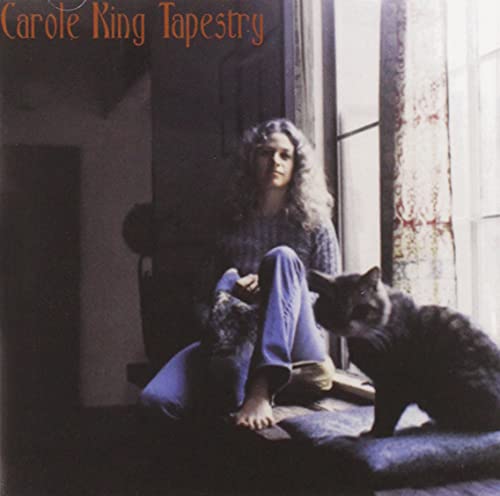
Carole King’s version of “(You Make Me Feel Like A) Natural Woman” closes her 1971 masterpiece Tapestry. King wrote the song with Gerry Goffin and Jerry Wexler, and Aretha Franklin had already turned it into a classic in 1967. King’s own recording is quieter and more intimate, which fits the confessional atmosphere that runs through Tapestry. Lou Adler produced the album at A&M Recording Studios, with King on piano and vocals and musicians including Danny Kortchmar, Charles Larkey, Joel O’Brien, Russ Kunkel, James Taylor, and others contributing across the sessions. Instead of trying to compete with Franklin’s towering performance, King sings the song from the perspective of the songwriter who helped create it. That makes her version feel less like a cover and more like hearing the song return home.
Read More: Top 10 Carole King Songs
# 8 – When A Man Loves A Woman – Percy Sledge
“When a Man Loves a Woman” remains one of the defining soul ballads of the 1960s. Percy Sledge recorded the song in Alabama in 1966, and Atlantic released it as the single that would make him famous. The performance builds slowly around Sledge’s voice, with organ, bass, drums, and guitar creating a sound that feels almost like a church service turning into a love song. The single reached number one on both the Billboard Hot 100 and the R&B chart in the United States. It also became an international hit and returned to the UK charts years later. Few singers have ever sounded as completely overwhelmed by love as Sledge does on this record.
Read More: Top 10 Percy Sledge Songs
# 7 – Oh, Pretty Woman – Roy Orbison
“Oh, Pretty Woman” is built around one of the most recognizable guitar riffs in rock and roll. Roy Orbison wrote the song with Bill Dees and recorded it in Nashville on August 1, 1964, with Fred Foster producing. The single became Orbison’s biggest hit and spent three weeks at number one on the Billboard chart. What makes the record so much fun is the way Orbison moves from swagger to uncertainty and then back again without ever losing the momentum of the riff. His voice can sound operatic on one record and almost conversational on the next, and “Oh, Pretty Woman” lets both sides appear in the same performance. More than sixty years later, that opening still announces the song before Orbison sings a single word.
Read More: Top 10 Roy Orbison Songs
# 6 – Just Like A Woman – Bob Dylan

“Just Like a Woman” is one of Bob Dylan’s most famous songs from the 1966 album Blonde on Blonde. Dylan wrote the song and recorded it in Nashville with producer Bob Johnston during the sessions that gave the album its distinctive blend of folk, rock, country, and blues. Charlie McCoy, Joe South, and Wayne Moss played guitar, Henry Strzelecki handled bass, Kenneth Buttrey played drums, Al Kooper was on organ, and Hargus “Pig” Robbins played piano.
The arrangement sounds gentle on the surface, but the lyric remains complicated, wounded, and open to interpretation. Dylan’s own official archive lists the song as one of the central compositions from Blonde on Blonde. It is the kind of record that can still start an argument about what Dylan meant nearly sixty years after he recorded it.
Read More: Best Bob Dylan Songs Of The 1970s
# 5 – Evil Woman – Electric Light Orchestra

“Evil Woman” gave Electric Light Orchestra one of the biggest breakthroughs of its early career. Jeff Lynne wrote and produced the song for the 1975 album Face the Music, with the band recording at Musicland Studios in Munich. Lynne handles lead vocals and guitar, Kelly Groucutt plays bass and sings backing vocals, Bev Bevan plays drums, and Richard Tandy contributes piano and keyboards.
The strings and layered backing vocals give the track the orchestral character that made ELO instantly recognizable, while the rhythm keeps the record moving like a straight pop single. The song became a major hit on both sides of the Atlantic and helped move the group into a much bigger commercial league. It is polished, bitter, catchy, and still one of Jeff Lynne’s most perfectly constructed singles.
Read More: 10 Most Rocking Electric Light Orchestra Songs
# 4 – Woman – John Lennon

“Woman” is one of the most direct and tender songs John Lennon wrote during the sessions for Double Fantasy. Lennon described the song as for Yoko Ono and, more broadly, for women. He recorded it in New York with the musicians who shaped Double Fantasy, including Earl Slick and Hugh McCracken on guitars, Tony Levin on bass, George Small on keyboards, and Andy Newmark on drums. Lennon, Ono, and Jack Douglas produced the album together. “Woman” was released as Lennon’s first posthumous single in January 1981, only weeks after his death. The simplicity of the song is what makes it so affecting, because Lennon sounds less interested in cleverness than in saying exactly what he feels.
Read More: Complete List Of John Lennon Studio Albums And Songs
# 3 – L.A. Woman – The Doors

“L.A. Woman” is the title track of the Doors’ final studio album with Jim Morrison, released in 1971. The band recorded the album at its own Los Angeles workshop, with Bruce Botnick and the Doors producing. Morrison sings over Ray Manzarek’s keyboards, Robby Krieger’s guitar, John Densmore’s drums, and Jerry Scheff’s bass, giving the track a looser and more physical groove than much of the band’s earlier studio work.
The song stretches past seven minutes without ever feeling slow because it keeps changing shape as Morrison pushes deeper into the performance. The “Mr. Mojo Risin’” section turns his own name into an anagram and gives the second half of the track an almost ritualistic momentum. “L.A. Woman” sounds like the Doors driving through the city one last time with the windows down and everything turned up.
Read More: The Doors Albums Ranked
# 2 – American Woman – The Guess Who

“American Woman” grew out of an onstage jam and became the biggest American hit of the Guess Who’s career. Randy Bachman, Burton Cummings, Jim Kale, and Garry Peterson all received songwriting credit, reflecting the way the song came together as a full-band improvisation. Jack Richardson produced the recording, with Cummings on vocals, Bachman on guitar, Kale on bass, and Peterson on drums.
Released in 1970, the single reached number one on the Billboard Hot 100 and stayed there for three weeks. The record’s heavy riff gave the Canadian group a much tougher sound than many listeners associated with their earlier singles. Whatever interpretation a listener brings to the lyric, there is no mistaking the force of that guitar when the full song kicks in.
Read More: Top 10 Songs Of The Guess Who
# 1 – Honky Tonk Women – The Rolling Stones

“Honky Tonk Women” opens with Jimmy Miller’s cowbell and then drops into one of Keith Richards’ greatest riffs. Mick Jagger and Richards wrote the song, and the Stones recorded the electric single version at Olympic Sound Studios in London in 1969 with Miller producing. Jagger handles lead vocals, Richards plays guitar, Bill Wyman is on bass, Charlie Watts plays drums, Ian Stewart adds piano, and newly arrived Mick Taylor contributes guitar.
Released in July 1969, the single reached number one in both the United States and the United Kingdom. The track has swagger without ever sounding forced, and every instrument seems to leave just enough room for the groove to breathe. If this list is about songs built around the word “woman,” few records have ever announced themselves with more attitude than this one.
Read More: The Rolling Stones 24 Tour Rocks MetLife Stadium Review 5-23-24
Read More: Artists’ Interviews Directory At ClassicRockHistory.com
Read More: Classic Rock Bands List And Directory
Updated September 16, 2026.
10 Best Songs With The Word ‘Woman’ In The Title article published on ClassicRockHistory.com © 2026












great choice for number 1