
Feature Photo: Adam McCullough / Shutterstock.com
We all have them, those magical songs that transport us back to a time when innocence ruled and our biggest concerns were finding a girlfriend or boyfriend and holding on to them before they broke up with us. This is one of the most personal lists we have ever created, and anyone who wants to join in will probably have ten completely different choices. That is the beauty of music; we all have our favorites, and the songs that stay with us usually connect to something much deeper than whether they were the biggest hits of their time.
One of the goals behind these articles is always to introduce people to music they may not know or remind them of great songs they might have forgotten. I hope this one takes you back to a time when you were not thinking about mortgage payments, car payments, student loans, dentist bills, and all the other responsibilities that come with being an adult. These are ten 1970s songs I can still put on today and never feel the urge to skip.
# 10 – Out In The Country – Three Dog Night

Few songs capture the desire to get away from the noise of everyday life as beautifully as “Out in the Country.” Paul Williams and Roger Nichols wrote the song, and Three Dog Night recorded it for their 1970 album It Ain’t Easy. Richard Podolor produced the track, giving the band a warm, open sound that fits the lyric perfectly. Danny Hutton handles the lead vocal while the rest of the group surrounds him with the harmonies and musicianship that made Three Dog Night such a great singles band. Released in 1970, “Out in the Country” reached number 15 on the Billboard Hot 100. More than fifty years later, the song still makes you want to turn off the phone, leave the city behind, and breathe for a while.
Read More: Top 10 Three Dog Night Deep Tracks
# 9 – Drivin’ Wheel – Foghat

“Drivin’ Wheel” is pure Foghat, a hard-charging boogie rocker from the band’s 1976 album Night Shift. Dave Peverett and Rod Price wrote the song, and former Edgar Winter Group bassist Dan Hartman produced the album. By this point Craig MacGregor had taken over on bass, joining Peverett, Price, and drummer Roger Earl in the lineup that recorded Night Shift. The guitar sound is thick, the rhythm section never lets up, and Peverett sings like the whole thing is moving slightly faster than the speed limit. Released as a single, “Drivin’ Wheel” reached number 34 on the Billboard Hot 100. It is exactly the kind of Foghat song that still sounds better the louder you play it.
Read More: Roger Earl of Foghat: The ClassicRockHistory.com Interview
# 8 – Mainstreet – Bob Seger & The Silver Bullet Band

“Mainstreet” is one of those Bob Seger songs that seems to get better as you get older. The track appeared on his 1976 album Night Moves and was recorded at Muscle Shoals Sound Studio with the Muscle Shoals Rhythm Section. Pete Carr’s beautiful guitar line sits beside Barry Beckett’s keyboards, David Hood’s bass, Roger Hawkins’ drums, and Jimmy Johnson’s rhythm guitar while Seger delivers one of his most restrained vocals. Seger produced the recording with the Muscle Shoals Rhythm Section, and the performance has the kind of space that lets every memory in the lyric breathe. Released as a single in 1977, “Mainstreet” reached number 24 on the Billboard Hot 100. I never get tired of the way that opening guitar immediately takes you somewhere else.
Read More: Our Ten Favorite Bob Seger Albums
# 7 – Lose Again – Linda Ronstadt

Linda Ronstadt opens her 1976 album Hasten Down the Wind with Karla Bonoff’s “Lose Again,” and from the first few seconds the song feels hers completely. Peter Asher produced the recording at The Sound Factory in Los Angeles. Andrew Gold contributes piano, acoustic guitar, and backing vocals, Kenny Edwards plays bass and sings backing vocals, Mike Botts handles drums, and Dan Dugmore adds guitar. Ronstadt never has to force the emotion because her voice naturally carries the disappointment and resignation in Bonoff’s song. It is one of those performances where the singer and songwriter seem perfectly matched even though they are two different people. No matter how many times I hear it, Ronstadt’s vocal still stops me in my tracks.
Read More: Linda Ronstadt’s Best Song On Each Of Her 1970s Studio Albums
# 6 – The Pretender – Jackson Browne

“The Pretender” closes Jackson Browne’s 1976 album of the same name with one of his sharpest looks at adulthood, compromise, work, and the quiet routines people accept along the way. Jon Landau produced the track, which was recorded at Sunset Sound in Los Angeles and later mixed at The Sound Factory.
Browne is joined by Bob Glaub on bass, Jeff Porcaro on drums, Craig Doerge on piano, and Fred Tackett on acoustic and electric guitar. David Crosby and Graham Nash add backing vocals, while David Campbell arranged and conducted the strings. The production gradually grows around Browne without losing the loneliness at the song’s center. This is one of those records that meant one thing when you were young and somehow means even more after you have lived a few decades.
Read More: 10 Most Rocking Jackson Browne Songs
# 5 – And You And I – Yes
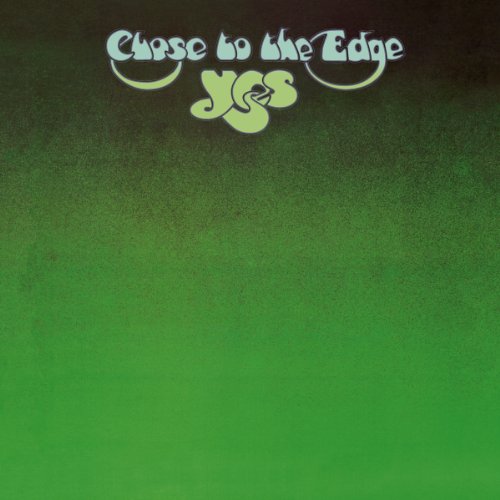
“And You and I” is one of those Yes songs that can still make ten minutes disappear. It appeared on the band’s 1972 album Close to the Edge, recorded at Advision Studios in London with Yes and Eddie Offord shaping the production. Jon Anderson, Steve Howe, Chris Squire, Bill Bruford, and Rick Wakeman build the piece through four movements, moving from Howe’s acoustic guitar into enormous Mellotron, bass, drums, and vocal passages.
Anderson has described starting with a simple song before the band expanded it into something much larger, with Wakeman playing an important role in connecting the musical sections. An edited version even reached number 42 in the United States, which is pretty remarkable for music this ambitious. I can hear this one again and again and still find little details I had forgotten were there.
Read More: Top 10 Yes Songs
# 4 – The Ocean – Led Zeppelin

“The Ocean” has always been one of my favorite Led Zeppelin songs, from one of my favorite Led Zeppelin albums, although just about every Zeppelin album can qualify as one of my favorites. The song closes 1973’s Houses of the Holy, and there has always been something about that massive riff that I have never gotten tired of hearing. Jimmy Page, Robert Plant, John Paul Jones, and John Bonham sound loose and completely in control at the same time, which was one of the things Zeppelin did better than almost anybody. I was thrilled when the live Madison Square Garden version was added to the expanded The Song Remains the Same soundtrack in 2007. That 1973 performance was later included again on the 2018 remastered soundtrack. Studio or live, once that riff starts I am staying until the song is over.
Read More: Complete List Of Led Zeppelin Songs From A to Z
# 3 – Backstreets – Bruce Springsteen

“Backstreets” sits right in the middle of Bruce Springsteen’s 1975 album Born to Run and remains one of the most emotionally overwhelming songs he ever recorded. Springsteen, Jon Landau, and Mike Appel produced the track during the long sessions that shaped the album’s huge cinematic sound. Roy Bittan’s piano opening feels almost classical before the E Street Band comes crashing in behind Springsteen. From there the song becomes a story about friendship, betrayal, memory, and all the promises people make when they are young enough to believe they can keep every one of them. Born to Run reached number three on the Billboard 200, but songs like “Backstreets” are why the album became much more important than a chart position. This one still hurts in exactly the same places every time I hear it.
Read More: Top 10 Bruce Springsteen Hits
# 2 – Captain Fantastic And The Brown Dirt Cowboy – Elton John

“Captain Fantastic and the Brown Dirt Cowboy” opens Elton John’s 1975 autobiographical album with Elton and Bernie Taupin looking back at the years before success arrived. Elton wrote the music to Taupin’s lyrics, and the album was recorded at Caribou Ranch in Colorado with longtime producer Gus Dudgeon. Davey Johnstone, Dee Murray, Nigel Olsson, and Ray Cooper give the title track the sound of Elton’s classic 1970s band operating at full strength.
The record was made after the songs had already been written and rehearsed, which gave the sessions a focused, live-band quality. Captain Fantastic and the Brown Dirt Cowboy became the first album in Billboard chart history to debut at number one. I never get tired of hearing the title track because it feels less like a song about stardom than a song about everything Elton and Bernie had to survive before the world knew their names.
Read More: 20 Best Elton John Songs To Turn Up To Eleven
# 1 – Crazy On You – Heart

“Crazy on You” is one of those songs where I can hear the opening acoustic guitar and already know I am not going anywhere until the record finishes. Ann and Nancy Wilson wrote the song for Heart’s debut album Dreamboat Annie, which was recorded in Vancouver and produced by Mike Flicker. Nancy Wilson’s acoustic guitar opens the track before Roger Fisher and Howard Leese bring in the electric guitars, with Steve Fossen on bass and Kat Hendrikse on drums.
Ann Wilson comes in with vocals that immediately explain why Heart sounded unlike any other band arriving in the mid-1970s. Released as a single in 1976, “Crazy on You” reached number 35 on the Billboard Hot 100 and became one of the songs that established Heart in the United States. I have heard this track more times than I could possibly count, and the thrill has never worn off.
Read More: 10 Most Rocking Heart Songs
Read More: Artists’ Interviews Directory At ClassicRockHistory.com
Read More: Classic Rock Bands List And Directory
Updated September 16, 2026.
Ten 1970s Songs That You Never Get Tired Of article published on ClassicRockHistory.com © 2026










Sign me up!