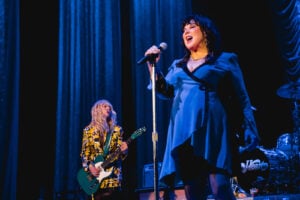
Feature Photo: astrocoz, CC BY-SA 2.0 <https://creativecommons.org/licenses/by-sa/2.0>, via Wikimedia Commons
Emerging from the sun-soaked streets of Los Angeles in 1999, Rooney carved out their place in the early-2000s power-pop revival with a blend of California rock aesthetics and British Invasion influences. The band, initially formed by Robert Schwartzman while he was still attending Windward School in Los Angeles, released their self-titled debut album in 2003 under Geffen Records, which spawned hits like “I’m Shakin'” and “Blueside,” and featured prominently on the popular television show “The O.C.”
Throughout their career, Rooney has released four studio albums: “Rooney” (2003), “Calling the World” (2007), “Eureka” (2010), and “Washed Away” (2016). The band followed “Washed Away” with the six-song “El Cortez” EP in 2017, navigating through various lineup changes while maintaining their distinctive sound.
Since their inception, Rooney has experienced significant membership changes, with Robert Schwartzman remaining the only constant member and creative force behind the band. After achieving moderate commercial success in the mid-2000s, including opening slots for bands like The Strokes and The Vines, Rooney’s original era wound down in the early 2010s, and by the end of 2011 the project had effectively entered a lengthy hiatus while Schwartzman pursued solo projects and film endeavors. Upon returning in 2016, Schwartzman reconfigured Rooney around his own songwriting and recordings with a new group of touring musicians, marking a significant shift from the band’s original five-piece lineup.
Throughout their existence, Rooney has maintained a dedicated fan base despite never achieving mainstream superstardom, with their music featured in numerous films and television shows. Their most successful single, “When Did Your Heart Go Missing?” from their second album “Calling the World,” did not enter the Billboard Hot 100 but reached No. 14 on the Bubbling Under Hot 100 chart in 2007 and also became an international hit, reaching No. 17 in Germany and No. 45 in the United Kingdom.
The band has toured extensively across North America and internationally, performing at festivals like South by Southwest and Lollapalooza, though they have yet to receive major music award nominations. Despite challenges and transformations, Rooney has remained a notable fixture in the indie rock landscape, with Schwartzman continuing to release and perform music under the band’s name.
Robert Schwartzman
Robert Schwartzman founded Rooney in 1999 and has remained the band’s frontman, lead vocalist, and primary songwriter throughout its entire existence. As Rooney’s only consistent member, Schwartzman’s vision and musical direction have defined the band’s sound across all four studio albums and later EP material. He joined forces with his high school friends to form the band originally named “Ed Rooney” after the principal character in “Ferris Bueller’s Day Off,” later shortening it to simply “Rooney.” Schwartzman has played on every Rooney album, contributing lead vocals, rhythm guitar, and keyboard parts while serving as the principal songwriter.
His distinctive vocal style and knack for crafting catchy, retro-influenced power-pop hooks became the band’s signature sound. On the debut self-titled album, Schwartzman wrote hits like “I’m Shakin'” and “Blueside,” while on “Calling the World,” his composition “When Did Your Heart Go Missing?” became the band’s biggest commercial success. For 2010’s “Eureka,” he took on a more prominent production role alongside the songwriting duties.
After Rooney’s original era wound down in the early 2010s, Schwartzman reinvented the band in 2016 as a project centered on his own songwriting and studio work with rotating collaborators. For “Washed Away” (2016), he served as producer and songwriter and performed many of the instrumental parts, demonstrating his evolution as a complete artist. Rooney followed the album with the six-song “El Cortez” EP in 2017. When Rooney returned to touring, Schwartzman assembled new touring lineups while maintaining creative control of the project. Throughout Rooney’s active periods, he has been the band’s spokesperson and public face, guiding its artistic direction through various lineup changes and industry shifts. His commitment to the band’s characteristic sound, even as musical trends changed around them, has provided continuity for fans despite the evolving roster of supporting musicians.
Outside of Rooney, Schwartzman has built a multifaceted career in entertainment. He released solo material under his own name, including “Double Capricorn” (2011), and later worked with Dev Hynes on music for the 2014 film “Palo Alto.” Schwartzman comes from the prominent Coppola family; his mother is Talia Shire, and his uncle is Francis Ford Coppola, which helped him enter filmmaking. He directed several feature films, including “The Unicorn” (2018) and “The Argument” (2020), following his acting debut in “The Princess Diaries” (2001).
In 2018, he co-founded Utopia with Cole Harper, an independent film distribution and sales company that supports filmmakers. Schwartzman also launched his own record label, California Dreamin’ Records, to release Rooney’s later material independently. His musical contributions have extended to film scoring, including several independent productions and his own directorial works. After Rooney opened for Jeff Lynne’s ELO in 2024, Schwartzman said in 2025 that the experience had inspired him to begin writing material for another Rooney album, keeping the project active alongside his film work.
Taylor Locke
Taylor Locke co-founded Rooney in 1999 as a guitarist and became one of the band’s original core members during its major-label period. He remained with the group through the band’s classic era, contributing to three studio albums over more than a decade. Robert Schwartzman recruited Locke when both were teenagers, and he quickly became an essential part of Rooney’s early sound. His guitar work featured prominently on Rooney’s self-titled debut album in 2003, where his melodic leads and power-pop riffs helped define tracks like “Blueside” and “I’m Shakin’.”
On the band’s 2007 follow-up, “Calling the World,” Locke’s guitar playing evolved into more complex arrangements and solos, especially on songs like “When Did Your Heart Go Missing?” and “I Should’ve Been After You.” On their third album, “Eureka” (2010), Locke’s contributions expanded to include backing vocals and co-writing credits, showcasing his growth as a songwriter within the band.
During his years with Rooney, Locke toured extensively across North America, Europe, and Japan, helping to build the band’s reputation as a dynamic live act. His stage presence and guitar skills were integral to Rooney’s performances, including opening slots for major acts like Weezer and The Strokes. Behind the scenes, Locke helped shape the band’s creative decisions during their major-label period at Geffen Records, contributing to their transition to an independent release model for “Eureka.” When Rooney returned in 2016, Locke was not part of the reconfigured touring lineup, as Schwartzman had shifted the project toward his own recordings with a new group of live musicians. Despite not participating in the band’s later release “Washed Away” or the “El Cortez” EP, Locke’s guitar work remains prominently associated with Rooney’s classic sound and their most commercially successful period.
After his years with Rooney, Locke pursued several significant musical projects. He formed Taylor Locke and the Roughs, releasing the albums “Grain & Grape” and “Marathon” in 2010, and continued his solo work with “Time Stands Still” in 2015. He also developed Studio Velveteen in Los Angeles as a recording and production space, expanding his work as a songwriter and producer. Locke’s later guitar credits have included work with Sparks, and he spent several years as lead guitarist for Train. His broader studio and performance career has also included work connected to artists such as Dolly Parton, Don Henley, and Jelly Roll. Throughout these post-Rooney endeavors, Locke has built upon the songwriting, production, and guitar experience that shaped his decade-plus history with the band.
Ned Brower
Ned Brower joined Rooney during the band’s early formation period as the drummer and backing vocalist, replacing original drummer Teddy Briggs and becoming a member of the classic lineup that carried the group through its major label years. He remained with Rooney through the original band’s later period, contributing to three studio albums before the lineup eventually dissolved. Brower’s drumming and vocal harmonies became crucial parts of Rooney’s power-pop sound, especially on their self-titled debut album in 2003. On this first record, his steady backbeat and complementary backing vocals supported hit songs like “I’m Shakin'” and “Blueside,” helping establish the band’s signature sound.
For 2007’s “Calling the World,” Brower’s drumming took on more complex patterns and fills, while his vocal contributions became more prominent, particularly on tracks like “When Did Your Heart Go Missing?” and “I Should’ve Been After You.” On “Eureka” (2010), Brower’s percussion work displayed further versatility as the band explored different stylistic directions.
Throughout his tenure with Rooney, Brower was an energetic live performer whose drumming provided the rhythmic foundation for the band’s concerts. He toured extensively with his bandmates, including supporting slots for major acts like Weezer and The Strokes and festival appearances across North America. Brower’s harmonies were essential to replicating the band’s layered vocal sound in live settings, often singing while maintaining complex drum parts. His photogenic presence made him a fan favorite and contributed to the band’s visual appeal during their Geffen Records period. When Robert Schwartzman revived Rooney in 2016 around a new group of touring musicians, Brower was not part of the reconfigured lineup. Though not involved in later Rooney releases, Brower’s drumming and vocals remain integral to the band’s most commercially successful period.
Beyond his work with Rooney, Brower built an unusual second career that eventually brought music, acting, and medicine together. He had earlier acting credits in projects including “Dawson’s Creek,” “The O.C.,” “Big Fat Liar,” and “Not Another Teen Movie.” After his Rooney years, he trained in emergency medicine, earned a master’s degree in nursing at UCLA, and worked as an emergency department nurse at Children’s Hospital Los Angeles. That real-world experience helped lead to his casting as trauma nurse Jesse Van Horn on the medical drama “The Pitt.” In 2026, Brower also returned to releasing music through the electronic project Bloodwerk, created with longtime friend John E. Low. His path from touring drummer to working nurse and television performer has given his post-Rooney career a direction very different from that of most of his former bandmates.
Matthew Winter
Matthew Winter was Rooney’s founding bassist in 1999, becoming part of the band’s early lineup years before they signed with Geffen Records. He remained with the group through the recording of their first three studio albums, leaving in 2010 shortly before the release of “Eureka.” Winter’s playing provided the foundation for the band’s power-pop sound on tracks like “I’m Shakin'” and “Blueside.” His style, influenced by classic rock and new wave bassists, complemented the band’s retro-leaning aesthetic while maintaining modern production values. On 2007’s “Calling the World,” Winter’s bass work became more prominent in the mix, with more complex patterns supporting singles like “When Did Your Heart Go Missing?” and “I Should’ve Been After You.” His work on “Eureka” continued that evolution as the band explored a more diverse sound palette before his departure.
During his time with Rooney, Winter was an essential component of the band’s live performances, providing not only the low-end foundation but also backing vocals that enhanced their harmonic arrangements. He participated in extensive touring throughout North America, Europe, and Japan, helping build the band’s reputation for energetic live shows. Winter’s stage presence contributed to the visual dynamic of Rooney’s performances during their commercial peak in the mid-2000s. Behind the scenes, he was involved in the band’s promotional activities and music video appearances during their major label period. Brandon Schwartzel took over touring bass duties in 2010 after Winter’s departure. Though Winter did not participate in Rooney’s later “Washed Away” era or the “El Cortez” EP, his bass playing remains an integral part of the band’s most recognized recordings and commercially successful era.
Following his departure from Rooney, Winter has pursued various musical endeavors while maintaining a lower public profile than some of his former bandmates. He has worked as a session bassist in Los Angeles, contributing to recording projects across different genres and establishing himself as a versatile player in the studio environment. Winter briefly played with other bands in the California indie rock scene, showcasing his skills in different musical contexts outside of Rooney’s power-pop framework. He has explored production and engineering work, applying his experience from Rooney’s recording sessions to help develop other artists’ projects. Outside of music performance, Winter has been involved in instrument design, consulting with bass manufacturers on new models tailored to modern playing styles. His technical knowledge has also led to work in music education, occasionally teaching bass techniques and music theory to developing musicians. Throughout these varied pursuits, Winter has maintained ties to the Los Angeles music community while building a career that extends beyond his high-profile years with Rooney.
Louie Stephens
Louie Stephens joined Rooney during the band’s early formation period as the keyboardist and became an integral part of the classic lineup during their major label years. He remained with the group through its original era, contributing to three studio albums. Stephens’ keyboard work, including piano, organ, and synthesizer parts, helped create the lush, melodic backdrop that defined Rooney’s retro-influenced power-pop sound. On the band’s self-titled debut album in 2003, his keyboard textures enhanced hit songs like “I’m Shakin'” and “Blueside,” providing countermelodies and harmonic support that balanced the guitar-driven arrangements.
For their 2007 follow-up “Calling the World,” Stephens’ role expanded with more prominent keyboard parts, particularly on singles like “When Did Your Heart Go Missing?” where his synthesizer lines became a focal element of the song. On “Eureka” (2010), his contributions showcased greater diversity as the band explored different stylistic directions, incorporating vintage keyboard sounds and more experimental textures.
Throughout his tenure with Rooney, Stephens was crucial to translating the band’s layered studio sound to their live performances. His keyboard skills allowed the band to recreate the rich arrangements of their recordings on stage during extensive touring across North America and international dates. In addition to keyboards, Stephens occasionally contributed backing vocals and additional percussion in both studio recordings and live settings, demonstrating his versatility as a musician. He participated in the band’s visual presentation during their peak commercial period, appearing in music videos and promotional materials as part of Rooney’s image during their Geffen Records years. When Robert Schwartzman revived Rooney in 2016 with a new supporting lineup, Stephens was not part of the new configuration. Though not involved in “Washed Away” or the “El Cortez” EP, his keyboard work remains essential to the band’s most commercially successful recordings.
Since his time with Rooney, Stephens has maintained an active career in music while keeping a relatively low public profile. He has worked as a session keyboardist for various artists in the Los Angeles music scene, contributing to recording projects across different genres. His technical abilities and knowledge of vintage keyboard instruments have made him sought after for both studio work and live performances requiring authentic retro sounds. Stephens has collaborated with other former members of prominent bands from the early 2000s scene, participating in various musical projects that reflect his roots in California power-pop.
He has explored composition for film and television, applying his melodic sensibilities to soundtrack work and scoring opportunities. Outside of performance, Stephens has worked in music production, helping develop emerging artists and sharing his experience from Rooney’s recording processes. His expertise with keyboard technology has also led to consulting work with instrument manufacturers and music technology companies. Throughout these diverse activities, Stephens has built upon the foundation established during his years with Rooney while continuing to evolve as a musician.
Brandon Schwartzel
Brandon Schwartzel joined Rooney as a touring bassist in 2010 after Matthew Winter’s departure, stepping into the lineup during the “Eureka” touring period. He has described the job as a hired touring role rather than a creative membership in Rooney’s recording process. Schwartzel knew members of the band through the Los Angeles music scene and took the bass position when Rooney needed someone for the road. His playing let the group keep performing material from the first three albums after Winter left, and his time with Rooney fell during a period when the band’s original long-running lineup was beginning to change.
Schwartzel’s Rooney tenure was considerably earlier and shorter than the post-hiatus touring period that began in 2016. He was not part of the reconfigured lineup that later supported “Washed Away” and the “El Cortez” EP. His role instead belongs to the closing years of Rooney’s original era, when the band promoted “Eureka” and continued touring with changing personnel. Although he did not contribute much to Rooney’s studio recordings, the touring job connected Schwartzel with musicians in the band’s Los Angeles circle and added another chapter to Rooney’s evolving bass role.
Beyond Rooney, Schwartzel is best known as the longtime bassist of the Los Angeles punk and garage rock band FIDLAR, which formed in 2009. With FIDLAR, his aggressive playing style contrasts with the more melodic approach required for Rooney, and he has recorded and toured extensively with the group. His ability to move between different musical styles demonstrates his versatility as a bassist and has made him a familiar figure in the California indie and punk music community. Schwartzel’s brief Rooney period remains one piece of a career more strongly identified with FIDLAR and the Los Angeles underground rock scene.
Boaz Roberts
Boaz Roberts became Rooney’s lead guitarist in the band’s retooled post-hiatus lineup and was firmly established by 2017. He became an integral part of the touring lineup that performed material from “Washed Away,” representing the band’s transition to a different configuration centered on Schwartzman as the primary creative force. Roberts joined Rooney years after original guitarist Taylor Locke’s departure, marking a significant new chapter in the band’s evolution.
While Schwartzman recorded much of “Washed Away” with session collaborators, Roberts took on the crucial role of bringing the material to life in concert settings and reinterpreting the band’s earlier songs. His guitar playing maintained the melodic sensibility that had always characterized Rooney’s sound while adding his own stylistic elements to the band’s live performances. Roberts also toured around the six-song “El Cortez” EP in 2017, establishing himself as a key figure in Rooney’s revitalized live presence.
As lead guitarist in the post-hiatus incarnation of Rooney, Roberts faced the challenge of performing songs from across the band’s catalog, including material originally recorded by Taylor Locke that fans knew well. His technical skills allowed him to faithfully execute the signature guitar parts from Rooney’s hit songs while bringing a fresh energy to their live shows. During touring throughout North America, Roberts helped reestablish Rooney’s reputation as an engaging live act after their years of inactivity. Though primarily known as a touring member rather than a principal studio contributor to “Washed Away,” his interpretations became an important part of how fans experienced Rooney’s music in concert during this era. Roberts’ stage presence contributed to the visual dynamic of the revamped lineup, helping bridge the gap between the band’s earlier configuration and its revival under Schwartzman’s direction. His adaptability proved valuable during a period when Rooney was transitioning from its major label history to independent releases through Schwartzman’s California Dreamin’ Records.
Outside of his work with Rooney, Roberts has maintained an active career as a versatile guitarist across multiple projects. He has performed with various artists in the Los Angeles indie rock scene, establishing himself as a skilled player who can adapt to different musical styles and contexts. Roberts has contributed guitar parts to studio sessions across genres and production styles. His technical abilities and knowledge of various guitar techniques have made him sought after for both live performances and recording sessions requiring diverse playing styles.
Beyond performing, Roberts has explored composition and production, developing his skills beyond his role as a touring guitarist. He has collaborated with other musicians from the California indie scene, participating in various side projects that showcase different aspects of his playing. Through these musical endeavors, Roberts has continued to develop his voice as a guitarist while staying flexible enough to contribute effectively to established projects like Rooney. His career demonstrates the modern reality for many professional musicians, balancing work with multiple bands and recording sessions while building a diverse portfolio of musical experiences.
Max Whipple
Max Whipple joined Rooney briefly as a keyboardist during their post-hiatus touring lineup in 2016, becoming part of the reconfigured band that supported the album “Washed Away.” Robert Schwartzman recruited him as Rooney transitioned into a new chapter with an entirely fresh lineup of supporting musicians. Whipple’s tenure with the band was relatively short compared to other members, primarily contributing to live performances rather than studio recordings. As a touring keyboardist, Whipple faced the challenge of interpreting keyboard parts originally performed by Louie Stephens on earlier Rooney albums, as well as the new material that Schwartzman had largely recorded himself for “Washed Away.”
His keyboard work helped recreate the lush, melodic textures that had always been an important component of Rooney’s power-pop sound in a live setting. Whipple participated in select tours and performances during this period, helping reintroduce the band to audiences after their extended hiatus. Though his association with Rooney was shorter than many other members, Whipple contributed to an important transitional period as the band established its new identity under Schwartzman’s direction.
During his time with the post-hiatus version of Rooney, Whipple’s keyboard skills helped translate the layered studio arrangements of both classic and new Rooney songs to the concert stage. His ability to recreate various keyboard sounds, from piano and organ to synthesizer textures, allowed the live band to capture the full spectrum of Rooney’s recorded material. Whipple’s adaptability proved valuable as he navigated between performing new compositions from “Washed Away” and faithfully reproducing the familiar keyboard parts from the band’s earlier hits.
Though not heavily involved in the studio recording process, his live interpretations became part of how fans experienced Rooney’s music during this period of the band’s history. Whipple’s contributions helped maintain the melodic richness that had always characterized Rooney’s sound, even as the band underwent significant personnel changes. As part of the short-lived 2016 touring configuration, he helped reestablish Rooney’s presence in the independent music scene after years of inactivity.
Beyond his brief association with Rooney, Whipple has pursued a diverse career in music across multiple projects and roles. He has worked as a session keyboardist for various artists in the Los Angeles music scene, lending his talents to recording projects spanning different genres. Whipple has also performed with indie rock bands, showing his versatility across styles. His keyboard skills have made him sought after for studio work and live performances that require a range of piano, organ, and synthesizer sounds. Outside of performing, Whipple has explored composition and production, developing his creative voice beyond his supporting role as a touring musician.
He has collaborated with various artists in the California independent music community, contributing to numerous recording projects while building his reputation as a skilled keyboardist. Throughout these diverse musical endeavors, Whipple has continued to expand his repertoire and technical abilities, establishing himself as a respected professional in the Los Angeles music ecosystem. His career path reflects the reality for many contemporary musicians who move between different projects and roles rather than remaining with a single band for extended periods.
Brian Stead
Brian Stead joined Rooney as a guitarist during a later phase of Robert Schwartzman’s post-hiatus touring operation. He joined after the 2017 “El Cortez” EP, marking another evolution in the musicians supporting Schwartzman’s Rooney material onstage. Unlike the original band members who contributed significantly to the recording process, Stead primarily served as a live performer interpreting material that Schwartzman had largely recorded with other collaborators in the studio.
His guitar work complemented Schwartzman’s vision for Rooney’s contemporary sound while maintaining connections to the band’s power-pop roots. Stead participated in performances that combined newer Rooney material with reworked versions of songs from the band’s classic catalog, requiring him to move between several different eras of guitar arrangements.
As part of Rooney’s touring lineup for the “El Cortez” cycle, Stead contributed guitar work that balanced respect for the established Rooney sound with fresh energy. His stage presence helped define the visual dynamic of this latest configuration, reflecting Rooney’s continued evolution under Schwartzman’s direction. Though not heavily involved in the studio recording process for “El Cortez,” Stead’s live interpretations became an important part of how fans experienced the album in concert settings. His technical abilities allowed him to faithfully execute guitar parts from across Rooney’s extensive catalog, spanning material recorded by different lineups over nearly two decades.
Stead’s participation coincided with Rooney’s continued operation as an independent project through Schwartzman’s California Dreamin’ Records, reflecting the band’s mature business model, far removed from their major-label beginnings. As one of the most recent additions to Rooney’s ever-changing supporting cast, he represents the project’s nature as an evolving vehicle for Schwartzman’s musical vision adapted for live performance by different collaborators over time.
Outside of his work with Rooney, Stead has maintained an active career across various musical projects and roles. He has performed with various artists in the Los Angeles indie music scene, establishing himself as a versatile guitarist who adapts to different stylistic contexts. Stead has contributed to recording sessions as a studio musician, lending his guitar skills to projects across various genres. His technical abilities and familiarity with different playing techniques have made him a valuable collaborator for both live performances and studio work. Beyond performing, Stead has explored composition and production, developing his creative voice alongside his supporting role as a touring musician.
He has participated in various collaborative projects within the California independent music community, building connections with other established and emerging artists. Throughout these diverse musical endeavors, Stead has continued to refine his craft while maintaining the flexibility required of contemporary professional musicians who typically balance multiple projects simultaneously. His career demonstrates the modern reality for many working musicians who contribute to various bands and recording sessions rather than maintaining exclusive long-term affiliations with a single project.
Teddy Briggs
Teddy Briggs was Rooney’s original drummer when the band first formed as Ed Rooney in 1999. He was part of the earliest high school lineup with Robert Schwartzman, Matthew Winter, Matthew Star, and Taylor Locke. Briggs played during the group’s formative Los Angeles period before Ned Brower replaced him on drums. Although his tenure predated Rooney’s Geffen Records albums, his place in the original lineup makes him part of the band’s earliest history.
Matthew Star
Matthew Star, also known as Matthew Srolestar, was one of Rooney’s original guitarists when the group formed in 1999. He played rhythm guitar in the early lineup alongside Robert Schwartzman and Taylor Locke before leaving prior to the band’s major label period. Like Teddy Briggs, Star was gone before the self-titled 2003 debut was recorded, but he was part of the initial version of the band that developed Rooney’s identity in the Los Angeles club scene.
Sean Sobash
Sean Sobash became Rooney’s bassist during the post-hiatus era and was part of the established touring lineup by 2017. He performed alongside Robert Schwartzman, Boaz Roberts, Maxwell Flanders, and Matthew Jordan as Rooney returned to the road behind “Washed Away” and the “El Cortez” EP. Sobash has continued to appear with Rooney in later performances, providing the bass foundation for both the newer material and songs from the band’s original catalog. His tenure has made him one of the most enduring members of Rooney’s second major lineup.
Maxwell Flanders
Maxwell Flanders became Rooney’s drummer during the post-hiatus period and was documented as part of the touring lineup by 2017. His role required him to perform material originally associated with Ned Brower while also supporting songs from Schwartzman’s newer Rooney recordings. Flanders joined Boaz Roberts, Sean Sobash, and Matthew Jordan in the lineup that accompanied Schwartzman as Rooney rebuilt its touring presence after the long break in activity. His drumming helped provide continuity between the band’s classic power-pop catalog and its later live incarnation.
Matthew Jordan
Matthew Jordan became Rooney’s keyboardist during the post-hiatus era and was part of the touring lineup by 2017. A singer-songwriter, keyboard player, musical director, and producer in his own right, Jordan has described himself as a long-time Rooney keyboardist and has toured with the band across the United States. His role requires him to reproduce the keyboard textures associated with Louie Stephens on the earlier records while also supporting material from Rooney’s later period. Jordan continued touring with Rooney into the 2020s, including a 2022 run opening for The Zombies.
Read More: Artists’ Interviews Directory At ClassicRockHistory.com
Read More: Classic Rock Bands List And Directory
Updated October 5, 2026
Complete List Of Rooney Band Members article published on ClassicRockHistory.com © 2026