Feature Photo: Randy Miramontez / Shutterstock.com
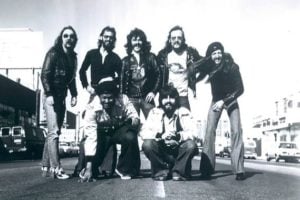
Chicago’s story began in 1967 in Chicago, Illinois, when a group of ambitious musicians originally calling themselves The Big Thing set out to create a new sound that fused rock with a powerful brass section. The founding lineup included Walter Parazaider on woodwinds, Terry Kath on guitar and vocals, Danny Seraphine on drums, James Pankow on trombone, Lee Loughnane on trumpet, Robert Lamm on keyboards and vocals, and Peter Cetera on bass and vocals. Their collective ambition was to break new ground, not simply as another rock band but as a genuine rock and roll band with horns. That idea became the trademark that separated Chicago from nearly every other major American group of the era.
After relocating to Los Angeles in 1968 and signing with Columbia Records, the band changed its name to Chicago Transit Authority. The name was shortened to Chicago after the release of the group’s 1969 debut, The Chicago Transit Authority. That double album introduced songs including “Does Anybody Really Know What Time It Is?,” “Beginnings,” and “Questions 67 and 68,” all of which became important parts of the band’s early identity. The second album, Chicago from 1970, also arrived as a double LP and produced enduring recordings including “25 or 6 to 4,” “Make Me Smile,” and “Colour My World.”
Throughout the 1970s, Chicago maintained an extraordinary release schedule and continually pushed at the boundaries between rock, pop, jazz, soul, and orchestral music. Albums including Chicago III, Chicago V, Chicago VI, and Chicago VII kept the group near the top of the album charts while producing a long series of hit singles. The band’s arrangements depended on the contrast between its three-piece horn section, the rhythm section, Robert Lamm’s keyboards, and Terry Kath’s guitar. That combination gave Chicago a sound that could move from extended experimentation to concise pop songwriting without losing its identity.
The tragic death of Terry Kath in January 1978 shook the band deeply, but Chicago chose to continue. Donnie Dacus joined on guitar for the Hot Streets era, and the lineup would change repeatedly over the decades that followed. The 1980s brought another major commercial resurgence through albums including Chicago 16 and Chicago 17, with producer David Foster helping shape a polished pop sound built around songs such as “Hard to Say I’m Sorry,” “Hard Habit to Break,” and “You’re the Inspiration.” Peter Cetera’s soaring tenor became especially prominent during that period before he left the band in 1985 to pursue his solo career.
Chicago’s catalog eventually grew to 38 official albums and more than 100 million records sold worldwide. The Rock and Roll Hall of Fame notes that the group accumulated 20 Top 10 pop singles and placed major hits on the Billboard charts across five different decades. The band’s ability to survive enormous changes in personnel, production styles, and popular tastes is central to its longevity. Generations of listeners came to Chicago through very different eras, yet the horn arrangements and layered vocal sound remained immediately recognizable.
The group’s honors reflect that long history. Chicago was inducted into the Rock and Roll Hall of Fame in 2016, with Danny Seraphine, James Pankow, Lee Loughnane, Peter Cetera, Robert Lamm, Terry Kath, and Walter Parazaider named as the inducted members. “If You Leave Me Now” earned Chicago the 1977 Grammy Award for Best Pop Vocal Performance by a Duo, Group or Chorus, while producer James William Guercio and arranger Jimmie Haskell also won the Grammy for Best Arrangement Accompanying Vocalists for the recording. The song remains one of the defining commercial achievements in the band’s catalog.
Chicago’s story also continued to evolve after the group’s Hall of Fame induction. Founding members Robert Lamm, Lee Loughnane, and James Pankow remained official members into 2026, although the band’s official site listed Lamm and Pankow as unable to tour while Loughnane continued performing with the road lineup. Founding saxophonist Walter Parazaider, whose original idea for a rock band with horns helped set everything in motion, died on June 17, 2026. Even with those changes, Chicago continued an active touring schedule and remained one of the longest-running major bands in American rock history.
The songs on this list span very different versions of Chicago, from the sprawling experiments of the late 1960s to the massive pop ballads of the 1980s. Some spotlight Robert Lamm’s songwriting, others James Pankow’s arrangements, Peter Cetera’s voice, or Terry Kath’s extraordinary guitar work. Together they show why Chicago’s catalog cannot be reduced to one period or one style. The band’s best recordings combine ambition, musicianship, melody, and an unmistakable sense of arrangement that has kept these songs alive for decades.
Top 20 Chicago Songs Of All Time
# 20 – Alive Again

“Alive Again” marked a major turning point for Chicago as the first single released after Terry Kath’s death and the first Chicago single to feature Donnie Dacus as the new guitarist. Written by James Pankow, the song was recorded in 1978 at Criteria Studios in Miami during the sessions for Hot Streets, with Phil Ramone producing alongside the band. Peter Cetera and Dacus share lead-vocal duties, with Robert Lamm on Fender Rhodes, Danny Seraphine on drums, and the familiar horn section of Pankow, Lee Loughnane, and Walter Parazaider giving the track its bright, driving attack. Released in the fall of 1978, “Alive Again” reached number 14 on the Billboard Hot 100 and introduced a post-Kath Chicago that was determined to keep moving forward.
The song’s energy makes the title feel especially significant in the context of what the band had just endured. Dacus’s guitar work brought a different personality from Kath’s, but the arrangement still sounds unmistakably like Chicago because the horns remain central to the record. The Bee Gees were recording at Criteria during the same period and did contribute backing vocals to another Hot Streets song, “Little Miss Lovin’,” but not to “Alive Again.” That distinction does nothing to diminish the excitement of a single that helped Chicago begin one of the most difficult transitions in its history.
# 19 – If You Leave Me Now
“If You Leave Me Now,” written and sung by Peter Cetera, became Chicago’s first number-one single on the Billboard Hot 100 and one of the most commercially successful recordings in the band’s history. The song was recorded during the Chicago X sessions at Caribou Ranch in Colorado and produced by James William Guercio. Its delicate arrangement placed Cetera’s lead vocal against acoustic textures, strings arranged by Jimmie Haskell, and a softer instrumental setting than many earlier Chicago singles. Released in 1976, the song reached listeners far beyond the band’s established rock audience and became an international hit.
The recording also became one of Chicago’s most important Grammy moments. Chicago won the 1977 Grammy Award for Best Pop Vocal Performance by a Duo, Group or Chorus for “If You Leave Me Now.” Guercio and Haskell separately received the Grammy for Best Arrangement Accompanying Vocalists for their work on the same recording. The song’s success helped establish the ballad side of Chicago that would become even more prominent during the 1980s.
# 18 – Lowdown

“Lowdown” was written by Peter Cetera and Danny Seraphine for Chicago III, the band’s ambitious 1971 double album. Recorded in 1970 and produced by James William Guercio, the track features Cetera on lead vocals and bass, Seraphine on drums, Robert Lamm on organ and keyboards, and Chicago’s horn section driving the arrangement forward.
Terry Kath’s guitar work becomes one of the song’s defining features, particularly his fuzz-and-wah solo, which gives the track a raw edge that cuts directly through the horns and keyboards. Released as a single in 1971, “Lowdown” reached number 35 on the Billboard Hot 100.
# 17 – You’re The Inspiration

“You’re the Inspiration,” from 1984’s Chicago 17, became one of the defining ballads of the band’s hugely successful David Foster era. Written by Peter Cetera and Foster, the song places Cetera’s lead vocal at the center of a polished production built from layered keyboards, synthesizers, guitars, and carefully arranged backing vocals.
Chicago members Bill Champlin, Robert Lamm, Lee Loughnane, James Pankow, Walter Parazaider, Chris Pinnick, and Danny Seraphine were part of the album lineup, while outside session musicians also played important roles on the record. Released as a single in late 1984, “You’re the Inspiration” reached number three on the Billboard Hot 100 and became one of Chicago’s most enduring adult-contemporary standards.
# 16 – Hard To Say I’m Sorry
“Hard to Say I’m Sorry,” released from Chicago 16 in 1982, became the song that restored Chicago to the top of the Billboard Hot 100. Written by Peter Cetera and producer David Foster, the track represented a dramatic move toward the polished pop and power-ballad production that would define the band’s early-1980s comeback. The recording relied heavily on outside session musicians, with Foster on keyboards, Steve Lukather on guitar, David Paich and Steve Porcaro on synthesizers, Cetera on lead vocals and acoustic guitar, and Danny Seraphine on drums. Chicago’s horns are largely absent from the ballad itself before returning prominently in the attached uptempo section “Get Away.”
The song reached number one on the Billboard Hot 100 and gave Chicago its biggest comeback single after several difficult commercial years. Cetera’s vocal performance became one of the signature sounds of the band’s 1980s era, while Foster’s production established a new template for the records that followed. “Hard to Say I’m Sorry” was nominated for the Grammy Award for Best Pop Performance by a Duo or Group with Vocal. Its success proved that Chicago could reinvent itself dramatically and still reach an enormous audience.
# 15 – Call On Me
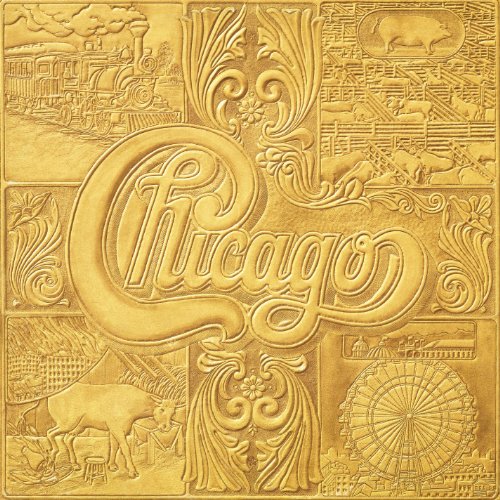
“Call On Me” was written by trumpeter Lee Loughnane and released from Chicago VII in 1974. Recorded at Caribou Ranch in Colorado with James William Guercio producing, the track features Peter Cetera on lead vocals and bass, Robert Lamm on Fender Rhodes, Terry Kath on guitar, Danny Seraphine on drums, and Loughnane, James Pankow, and Walter Parazaider carrying the horn arrangement.
The song’s smooth Latin-influenced rhythm gives it a lighter feel than some of Chicago’s heavier early recordings while still leaving plenty of room for the band’s brass identity. Released as the album’s second single, “Call On Me” reached number six on the Billboard Hot 100 and number one on Billboard’s Easy Listening chart.
# 14 – Old Days
“Old Days,” written by James Pankow, appeared on Chicago’s 1975 album Chicago VIII and turned nostalgia itself into a Top 10 single. The lyrics look back on childhood and popular culture through references to baseball cards, comic books, television, movies, and records, giving the song a distinctly American sense of memory.
Peter Cetera delivers the lead vocal while the band surrounds him with an energetic arrangement that combines keyboards, horns, rhythm section, and the bright melodic style Chicago had perfected by the middle of the decade. Released as a single in 1975, “Old Days” climbed to number five on the Billboard Hot 100.
# 13 – Wishing You Were Here
“Wishing You Were Here” is one of the most atmospheric recordings on Chicago VII, written by Peter Cetera and recorded at Caribou Ranch with James William Guercio producing. Contrary to a common assumption, Terry Kath sings the principal lead vocal, while Cetera handles the bridge and also plays guitar as Kath switches to bass on the track. Robert Lamm plays Fender Rhodes, Danny Seraphine is on drums, and the arrangement includes Chicago’s horns along with guest backing vocals from Beach Boys members Al Jardine, Carl Wilson, and Dennis Wilson. Released as a single in 1974, “Wishing You Were Here” reached number 11 on the Billboard Hot 100 and number one on the Easy Listening chart.
The Beach Boys harmonies give the chorus a floating quality that fits the song’s lonely, reflective mood. Kath’s vocal is unusually tender and provides a striking contrast to the powerful rock singing heard on songs such as “Make Me Smile.” The unusual instrument changes between Kath and Cetera also make the recording an interesting example of how flexible the original Chicago lineup could be in the studio. Few Chicago ballads create as much atmosphere with such restraint.
# 12 – (I’ve Been) Searchin’ So Long
“(I’ve Been) Searchin’ So Long” was written by James Pankow and released as the first single from Chicago VII in 1974. Recorded at Caribou Ranch with James William Guercio producing, the song features Peter Cetera on lead vocals and bass, Robert Lamm on Fender Rhodes, Terry Kath on guitar, Danny Seraphine on drums, and the horn trio of Pankow, Lee Loughnane, and Walter Parazaider. The arrangement begins quietly and gradually increases in intensity, allowing Cetera’s vocal to grow from introspection into a powerful climax. The single reached number nine on the Billboard Hot 100.
What makes the song especially effective is the patience of the arrangement. Strings, horns, rhythm instruments, and backing vocals enter in stages rather than arriving all at once. That slow build gives the final section emotional weight without requiring a drastic change in tempo. “(I’ve Been) Searchin’ So Long” shows Chicago at its best as an ensemble capable of turning a ballad into a carefully constructed dramatic performance.
# 11 – Just You ‘n’ Me

“Just You ‘n’ Me,” written by James Pankow, appeared on Chicago VI and became one of the band’s biggest romantic singles of the early 1970s. Recorded at Caribou Ranch and produced by James William Guercio, the song features Peter Cetera on lead vocals and bass, Terry Kath on guitar, Robert Lamm on keyboards, Danny Seraphine on drums, and the familiar horn section of Pankow, Lee Loughnane, and Walter Parazaider. The arrangement includes a memorable guitar solo from Kath and a striking soprano saxophone feature from Parazaider. Released as a single in 1973, “Just You ‘n’ Me” reached number four on the Billboard Hot 100.
# 10 – Dialogue Part 1 and 2

“Dialogue (Part I & II)” is one of Robert Lamm’s most ambitious socially conscious compositions for Chicago, appearing on the 1972 album Chicago V. The song is structured as a conversation between Terry Kath and Peter Cetera, with Kath voicing the concerned participant and Cetera answering from a more detached and optimistic perspective.
The full band drives the discussion musically, with Lamm on keyboards, Danny Seraphine on drums, Cetera on bass, Kath on guitar, and the horn section continually reshaping the atmosphere around the two singers. The performance gradually moves from argument toward a collective closing section built around the repeated idea that things can be made better.
Part I carries most of the direct exchange, while Part II opens outward into a communal response. That structure allows the song to work as both political commentary and an extended rock arrangement without turning into a simple protest single. Released in edited form, “Dialogue (Part I & II)” reached number 24 on the Billboard Hot 100. More than five decades later, the questions Lamm built into the song have lost very little of their relevance.
# 9 – Feelin’ Stronger Every Day
“Feelin’ Stronger Every Day,” co-written by Peter Cetera and James Pankow, appeared on Chicago VI in 1973 and became another major hit for the group. The track features Cetera on lead vocals and bass, Robert Lamm on keyboards, Terry Kath on guitar, Danny Seraphine on drums, and Pankow, Lee Loughnane, and Walter Parazaider on horns. Its structure grows more energetic as it unfolds, moving from a reflective opening into a driving closing section that sounds almost like a second song. Released as a single in 1973, “Feelin’ Stronger Every Day” reached number 10 on the Billboard Hot 100.
# 8 – Colour My World

“Colour My World,” written by James Pankow, first appeared as part of the “Ballet for a Girl in Buchannon” suite on the 1970 double album Chicago, commonly known as Chicago II. Recorded during the 1969 sessions for the album, the song features Terry Kath’s restrained and deeply expressive lead vocal over Robert Lamm’s piano, with Peter Cetera on bass, Danny Seraphine on drums, and Walter Parazaider delivering the famous flute solo. The arrangement is remarkably sparse by Chicago standards, especially for a band so closely associated with brass and dense ensemble writing. That simplicity helped turn the song into a lasting favorite at weddings, proms, and slow dances.
# 7 – Make Me Smile
“Make Me Smile” emerged from James Pankow’s multipart “Ballet for a Girl in Buchannon” suite on Chicago II and became Chicago’s first Top 10 single. Recorded during the August 1969 sessions and produced by James William Guercio, the track centers on Terry Kath’s powerful lead vocal and guitar, with Robert Lamm on piano, Peter Cetera on bass and backing vocals, Danny Seraphine on drums, and the horn trio of Lee Loughnane, Pankow, and Walter Parazaider. The album sequence was edited into a compact single that retained the most immediate vocal and horn passages while creating a self-contained radio track. “Make Me Smile” reached number nine on the Billboard Hot 100 in 1970.
# 6 – Beginnings

“Beginnings,” written by Robert Lamm, was recorded for Chicago’s 1969 debut album Chicago Transit Authority. Lamm sings lead and plays keyboards, with Terry Kath on guitar, Peter Cetera on bass and harmony vocals, Danny Seraphine on drums, and Lee Loughnane, James Pankow, and Walter Parazaider forming the horn section. The track begins with a bright, open arrangement and gradually develops into an extended percussion-driven ending, showing the band’s ability to make a long album cut feel both spontaneous and carefully organized. Its mix of acoustic guitar, horns, keyboards, and Latin-influenced percussion captures the optimism and experimentation of the group’s earliest recordings.
# 5 – Questions 67 and 68
Robert Lamm wrote “Questions 67 and 68” and recorded it in January 1969 for the debut double album Chicago Transit Authority. Peter Cetera carries the lead vocal, with Lamm also singing, while Terry Kath, Danny Seraphine, and the three-man horn section drive one of the debut’s most sophisticated arrangements. The title refers to 1967 and 1968, when Lamm reflected on a romantic relationship, and the song wraps those personal questions in a dense jazz-rock arrangement. It was also the group’s first single, then still known as Chicago Transit Authority.
Read More: Why Jimi Hendrix Called Chicago’s Terry Kath The Best Guitarist In The Universe
# 4 – Does Anybody Really Know What Time It Is?
Robert Lamm wrote “Does Anybody Really Know What Time It Is?” and recorded it for Chicago Transit Authority during the band’s 1969 debut sessions. Lamm handles lead vocals and keyboards, Terry Kath plays guitar, Peter Cetera provides bass and backing vocals, Danny Seraphine plays drums, and Lee Loughnane, James Pankow, and Walter Parazaider supply brass and woodwind voices.
The album version opens with an extended, free-form piano introduction before settling into the familiar song, immediately signaling that this wasn’t a conventional pop group. Jazz harmony, conversational lyrics, and a memorable horn arrangement combine to make the track one of Chicago’s signature recordings.
# 3 – 25 or 6 to 4
“25 or 6 to 4” was written by Robert Lamm and recorded during the August 1969 sessions for Chicago II, not during the January sessions for the debut album. Peter Cetera delivers the lead vocal and bass line, while Terry Kath unleashes one of Chicago’s most celebrated guitar solos, supported by Danny Seraphine’s drums, Lamm’s keyboards, and the horn section of Lee Loughnane, James Pankow, and Walter Parazaider. The song is built around a descending minor-key riff that gives the record a heavy rock foundation even as the horns continually cut across it. Kath’s extended solo turns that foundation into one of the band’s most aggressive studio performances.
Released as a single in 1970, “25 or 6 to 4” reached number four on the Billboard Hot 100. Lamm has explained that the unusual title simply refers to the time of night, roughly 25 or 26 minutes before four in the morning, when he was trying to write a song. The riff, horn arrangement, and Kath solo made it one of the recordings most closely associated with early Chicago. More than half a century later, it remains central to the band’s live and recorded legacy.
# 2 – Liberation
“Liberation,” the extended closing track on Chicago Transit Authority, captures the original lineup at its most experimental. Written by James Pankow and recorded during the 1969 debut sessions, the piece runs for more than fourteen minutes and is dominated by Terry Kath’s extraordinary improvised guitar work. Robert Lamm, Peter Cetera, Danny Seraphine, Lee Loughnane, Pankow, and Walter Parazaider build and react around him as the track moves through sections that feel closer to a live jazz-rock performance than a conventional studio song. The result remains one of the clearest documents of how adventurous Chicago could be before commercial expectations began shaping shorter singles.
Kath’s playing moves from lyrical phrases to bursts of distortion, feedback, and rapid-fire improvisation without losing the performance’s thread. His reputation among other guitarists, including the admiration associated with Jimi Hendrix, has made “Liberation” a frequent reference point whenever people discuss Kath’s musicianship. The track was never designed as a radio single, yet it became an important live showcase and a favorite among listeners who prefer Chicago’s most experimental side. Few recordings explain why Terry Kath remains such a revered guitarist better.
# 1 – Saturday In The Park
Every time I hear that opening piano comp, it brings me right back to the seventies and hanging out at the Oval Park in the Bronx. It’s just pure nostalgia that just feels good. “Saturday in the Park,” written and sung by Robert Lamm, was recorded at Columbia Studios in New York City during the September 1971 sessions for Chicago V. Lamm sings lead and plays piano, with Peter Cetera on bass and backing vocals, Terry Kath on guitar and backing vocals, Danny Seraphine on drums, and Lee Loughnane, James Pankow, and Walter Parazaider providing Chicago’s signature horn sound. Inspired by Lamm’s impressions of a festive day in Central Park, the lyric turns street performers, families, music, and ordinary city life into a vivid snapshot of community. The bright piano pattern and brass arrangement make the song sound celebratory almost instantly.
Released in 1972, “Saturday in the Park” reached number three on the Billboard Hot 100 and became Chicago’s highest-charting single up to that point. Chicago V also became the band’s first number-one album, kicking off a remarkable run of chart success in the first half of the decade. The song has endured because the scene it describes feels both specific and universal. For all of Chicago’s musical complexity, their greatest song on this list succeeds through melody, atmosphere, musicianship, and the simple joy of a summer day in the city.
Check out similar articles on ClassicRockHistory.com Just click on any of the links below……
An Interview With Chris Pinnick, Formerly Of Chicago
Why Jimi Hendrix Called Chicago’s Terry Kath The Best Guitarist In The Universe
Complete List Of Chicago Band Members
Tony Obrohta of Chicago: 10 Albums That Changed My Life
A Revisit Of Terry Kath’s Killer Guitar Solo On Chicago’s “Liberation”
Complete List Of Chicago Albums And Songs
Top 10 Chicago Songs of the 1970’s
Read More: Artists’ Interviews Directory At ClassicRockHistory.com
Read More: Classic Rock Bands List And Directory
Updated October 7, 2026
Top 20 Chicago Songs Of All Time article published on ClassicRockHistory.com © 2026