Feature Photo: Top 10 Cream Songs With Eric Clapton On Lead Vocals
This article examines the songs of Cream that showcased Eric Clapton’s voice prominently, moments where his singing complemented the searing guitar work that defined the band’s sound. While Jack Bruce carried much of the vocal load and Ginger Baker occasionally stepped forward on lead, Clapton’s turns at the microphone gave Cream a different character, one that blended the vulnerability of the blues with the raw power of late 1960s rock.
# 10 – Four Until Late – (Fresh Cream)

“Four Until Late” was originally written and recorded by blues legend Robert Johnson in 1937 and later reinterpreted by Cream for their 1966 debut album Fresh Cream. The session took place at Ryemuse Studios in London, produced by Robert Stigwood, with Eric Clapton on guitar and lead vocals, Jack Bruce on bass and backing vocals, and Ginger Baker on drums. Cream’s version preserved the acoustic blues roots of Johnson’s original while reshaping it with a British blues-rock sensibility, highlighting Clapton’s smooth phrasing and precise guitar tone. The track stands out on the album as one of the earliest examples of Clapton’s ability to bridge traditional Delta blues with the amplified energy of the modern rock scene. Although never released as a single, “Four Until Late” helped establish Cream’s commitment to honoring the blues masters who inspired them, marking an important step in Clapton’s evolution as both a guitarist and vocalist capable of carrying the emotional depth of American blues into a new generation of rock music.
Read More: Complete List Of Cream Band Members
# 9 – Outside Woman Blues – (Disraeli Gears)

“Outside Woman Blues” was written and first recorded by Blind Joe Reynolds in 1929 before being reinterpreted by Cream for their 1967 album Disraeli Gears. The track was recorded at Atlantic Studios in New York City with producer Felix Pappalardi, who worked closely with the trio to capture their dynamic blend of blues and psychedelic rock. Eric Clapton handled lead vocals and guitar, supported by Jack Bruce on bass and Ginger Baker on drums, creating a tight and fiery arrangement that reimagined Reynolds’ country blues into an electrified, modern sound. Clapton’s guitar work drives the recording with crisp, melodic phrasing and controlled distortion, while his vocal delivery maintains the song’s blues roots with a contemporary edge
Read More: Complete List Of Cream Songs From A to Z
# 8 – Anyone For Tennis
“Anyone for Tennis (The Savage Seven Theme)” was released as a single by the British rock band Cream in April 1968, written by guitarist Eric Clapton with lyrics by Martin Sharp and produced by Felix Pappalardi. The recording dates span 1967 to 1968, made during sessions for their album Wheels of Fire, though the track was issued on the soundtrack album for the film The Savage Seven rather than the main album. Cream’s lineup on the track features Clapton on lead vocals, acoustic guitar and slide guitar, Jack Bruce on bass guitar and recorder, Ginger Baker on drums and percussion, and Pappalardi contributing viola. The single paired “Anyone for Tennis” with the B-side “Pressed Rat and Warthog,” and charted at number 64 on the U.S. Billboard Hot 100 in May 1968 and number 40 on the UK Singles Chart in June 1968.
Read More: Top 10 Cream Songs
# 7 – Dance The Night Away – Shared lead vocal with Jack Bruce (Disraeli Gears)
“Dance the Night Away” was recorded by Cream in May 1967 at Atlantic Studios in New York City for their album Disraeli Gears, produced by Felix Pappalardi and engineered by Tom Dowd. Written by Jack Bruce and Pete Brown, the track features shared vocals between Bruce and Eric Clapton, blending their distinct voices in a shimmering, melodic performance that contrasts with the heavier blues sound found elsewhere on the album. The song incorporates a more ethereal and layered arrangement, with Clapton’s guitar filtered through effects that give it a dreamlike quality, while Ginger Baker’s drumming maintains a steady rhythmic pulse beneath the swirling instrumentation.
Read More: Cream Albums Ranked
# 6 – Badge (Live version)- 2005 Reunion Tour
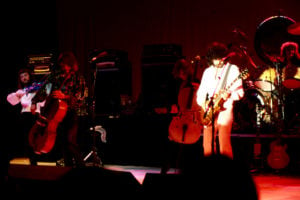
It’s still hard to believe that Cream reunited and toured in 2005. In the 21st century, music fans were able to see Cream once again. I thought this was one of the highlights of the show, and Clapton on lead vocal was just killer. I just had to include this because I’m not sure if many people are aware of this one.
Read More: Top 10 Eric Clapton Songs Of All Time
# 4 – World Of Pain – Shared lead vocal with Jack Bruce
(Disraeli Gears)
I love these shared vocal tracks because they really define the differences and similarities between Clapton’s and Jack’s musical identities and how they blended so well together. It was pure magic. “World of Pain” was recorded by Cream in May 1967 at Atlantic Studios in New York City for their second album Disraeli Gears, produced by Felix Pappalardi with engineering by Tom Dowd. Written by Pappalardi and his wife Gail Collins, the song features shared lead vocals by Jack Bruce and Eric Clapton, showcasing a more melodic and introspective side of the band compared to their heavier blues material. Clapton’s guitar work provides a textured and restrained backdrop that complements Bruce’s bass lines and Ginger Baker’s measured drumming. The track’s arrangement and lyrical tone align with the album’s broader shift toward a more psychedelic sound. While not released as a single, “World of Pain” contributes to the cohesive and experimental nature of Disraeli Gears
Read More: 11 Incredible Eric Clapton Guitar Solos
# 4 – Crossroads – Farewell Concert

“Crossroads,” captured live at the Royal Albert Hall in London on November 26, 1968, stands as one of Cream’s most defining performances. Recorded during their farewell concert, later released in the film Farewell Concert directed by Tony Palmer, the song highlighted Eric Clapton’s extraordinary command of the guitar and his vocal intensity at the close of the band’s brief but groundbreaking career. Performed as part of Cream’s final tour, the version of “Crossroads” featured in this concert distilled the trio’s signature power: Clapton’s sharp guitar phrasing, Jack Bruce’s agile bass work, and Ginger Baker’s dynamic drumming fused into a raw, electrifying display of musicianship. Although the original film received criticism for its uneven sound and visual presentation, the 2005 extended edition restored the full performance with digitally remastered audio and video, allowing “Crossroads” to be heard and seen in its full force.
Read More: Top 10 Covers Of Eric Clapton Songs
# 3 – Strange Brew – (Disraeli Gears)
“Strange Brew” was recorded by Cream in May 1967 at Atlantic Studios in New York City for their second album Disraeli Gears, produced by Felix Pappalardi and engineered by Tom Dowd. The song was written by Eric Clapton, Pappalardi, and Gail Collins and marked a turning point for the band’s sound, moving toward a more structured and psychedelic blues approach. Clapton took the lead vocals on this track, with his singing and guitar work defining its identity, while Jack Bruce played bass and Ginger Baker handled drums. The song evolved from a blues jam called “Lawdy Mama,” which was reworked under Pappalardi’s guidance into the final version. Featuring Clapton’s dynamic guitar tone and a concise arrangement, it stood apart from Cream’s earlier improvisational style. Released as a single in the United Kingdom on June 2, 1967, “Strange Brew” reached number seventeen on the UK Singles Chart, becoming one of the group’s most recognizable songs and a highlight of Disraeli Gears.
Read More: Complete List Of Eric Clapton Albums And Songs
# 2 – Badge

“Badge” was recorded by Cream at IBC Studios in London and issued as a single in the United States on March 17, 1969, and in the United Kingdom on April 3, 1969, before appearing on Goodbye; produced by Felix Pappalardi and credited to Eric Clapton and George Harrison, the track features Clapton on lead vocals and lead guitar, Jack Bruce on bass, Ginger Baker on drums, and Harrison on rhythm guitar under the pseudonym “L’Angelo Misterioso,” with the title reportedly stemming from a misreading of the word “Bridge” on a draft, and it reached number eighteen on the UK Singles Chart and number sixty on the US Billboard Hot 100
Read More: Top 10 Eric Clapton Songs
# 1 – “Sunshine of Your Love” – Shared vocal with Bruce (Disraeli Gears)
“Sunshine of Your Love” was recorded by Cream between May and June 1967 at Atlantic Studios in New York City for their album Disraeli Gears, produced by Felix Pappalardi and engineered by Tom Dowd. Written by Jack Bruce, Eric Clapton, and Pete Brown, the song features shared lead vocals by Bruce and Clapton, combining Bruce’s powerful delivery with Clapton’s distinctive tone. The track’s memorable central riff, developed by Bruce after a Jimi Hendrix concert, became one of the most recognizable guitar figures of the 1960s. Ginger Baker provided the song’s distinctive tom-heavy drumming, complementing the hypnotic groove. Released as a single in the United States in January 1968, it reached number five on the Billboard Hot 100 and remained on the chart for twenty-six weeks, making it Cream’s highest-charting American single. Its success helped Disraeli Gears achieve international acclaim
Read More: Complete List Of Eric Clapton Live Albums
Check out similar articles on ClassicRockHistory.com Just click on any of the links below……
Read More: Artists’ Interviews Directory At ClassicRockHistory.com
Read More: Classic Rock Bands List And Directory
Top 10 Cream Songs With Eric Clapton On Lead Vocals article published on ClassicRockHistory.com© 2025
Classicrockhistory.com claims ownership of all its original content and Intellectual property under United States Copyright laws and those of all other foreign countries. No one person, business, or organization is allowed to re-publish any of our original content anywhere on the web or in print without our permission. All photos used are either public domain Creative Commons photos or licensed officially from Shutterstock under license with ClassicRockHistory.com. All photo credits have been placed at the end of the article. Album Cover Photos are affiliate links and the property of Amazon and are stored on the Amazon server. Any theft of our content will be met with swift legal action against the infringing websites.