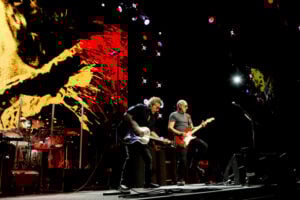
Feature Photo: E.J. Camp; Distributed by Elektra Records, Public domain, via Wikimedia Commons
# 10 – Touch and Go

Recorded in 1980 for the album Panorama and released that August, “Touch and Go” revealed Ric Ocasek’s fascination with rhythmic tension and sleek modern textures. Roy Thomas Baker produced the song. Ocasek described the lyrics as a portrait of people trapped in uncertain relationships, unsure of their problems yet enduring them anyway. The single reached number thirty-seven on the Billboard Hot 100 and became the most successful American release from Panorama, later appearing on multiple Cars compilations.
Read More: Complete List Of The Cars Songs From A to Z
# 9 – Blue Tip

Recorded between 2010 and 2011 and released on May 10, 2011, “Blue Tip” marked The Cars’ return after a twenty-three-year hiatus, serving as a centerpiece of their album Move Like This. Written and sung by Ric Ocasek and produced by Jacknife Lee, the track featured Ocasek on rhythm guitar and vocals, Elliot Easton on lead guitar and background vocals, Greg Hawkes handling keyboards, bass, and harmonies, and David Robinson on drums. The song’s first preview appeared as a seventy-three-second clip on the band’s Facebook page in October 2010, followed by a full video release on February 17, 2011. The video was co-produced by Ocasek’s son Eron, blending a vintage aesthetic with a modern energy that complemented the song’s brisk rhythm and melodic hooks. “Blue Tip” exemplified the band’s signature fusion of rock and new wave, maintaining the sharp, melodic sensibility that had defined their earlier work while introducing a contemporary edge that reconnected them with a new generation of listeners. In the end, it just felt good to have The Cars back for one last ride, even though it was short-lived.
Read More: The Cars’ Best Song On Each Of Their Studio Albums
# 8 – Magic

Recorded at Battery Studios in London and released on May 7, 1984, “Magic” captured The Cars at the height of their commercial power with its sleek blend of rock, new wave, and power pop. Written by Ric Ocasek and produced by Robert John “Mutt” Lange along with the band, the track featured Ocasek on lead vocals and rhythm guitar, Ben Orr on bass and backing vocals, Elliot Easton on lead guitar, Greg Hawkes on keyboards and Fairlight programming, and David Robinson on drums.
The single reached number twelve on the Billboard Hot 100 and topped the Billboard Top Tracks chart, standing among the group’s most successful hits. Its music video became iconic for its surreal imagery, showing Ocasek walking across a swimming pool during a chaotic party filmed at the Hilton family house in Beverly Hills, where a plexiglass platform was hidden beneath the water. The illusion of Ocasek standing effortlessly on the surface reinforced the song’s title and mirrored the effortless cool that defined The Cars during this era.
Read More: Complete List Of The Cars Band Members
# 7 – Shake It Up

“Shake It Up” marked The Cars’ return to pure pop precision, transforming a song that had lingered unfinished for years into one of their biggest commercial triumphs. Recorded in 1981 at Syncro Sound in Boston and produced by Roy Thomas Baker, it showcased the band’s seamless blend of new wave energy, pop accessibility, and art rock sophistication. Ric Ocasek wrote and sang the song, while Elliot Easton’s guitar solo offered a clever contrast in tone, beginning with a twangy Telecaster before shifting to a heavier Gibson sound. The band rebuilt the arrangement from the ground up after several failed attempts, giving it a clean, rhythmic bounce centered on Greg Hawkes’ bright synthesizers and David Robinson’s tight drumming.
Released on November 9, 1981, as the lead single from Shake It Up, it soared to number four on the Billboard Hot 100 and number two on the Billboard Top Tracks chart, with its B-side “Cruiser” helping it reach number fourteen on the Dance chart. Beneath its surface of upbeat fun and dance-floor charm, the song carried a deeper message about self-expression and making a mark in life, even as Ocasek later dismissed the lyrics as among his least favorite.
Read More: Complete List Of The Cars Albums And Songs
# 6 – You Might Think

“You Might Think” launched Heartbeat City in 1984 with a rush of bright synthesizers, layered vocals, and Ric Ocasek’s sharp sense of melody and irony. Recorded at Battery Studios in London and produced by Robert John “Mutt” Lange with the band, the track combined rock, new wave, pop, and synth textures into a concise three-minute burst of precision. Ocasek’s vocal phrasing, Elliot Easton’s crisp guitar, and Greg Hawkes’ Fairlight programming gave the song a futuristic sound that helped define the band’s mid-1980s identity. The single reached number seven on the Billboard Hot 100, number one on the Mainstream Rock chart, and number eight in Canada, confirming its broad appeal. The accompanying video, featuring early computer graphics and surreal imagery of Ocasek appearing in mirrors, bathtubs, and movie scenes with model Susan Gallagher, became a milestone in music video history. Directed by Jeff Stein with Charlex visual effects, it won the first-ever MTV Video Music Award for Video of the Year and multiple industry honors for its groundbreaking use of digital animation.
Read More: 10 Biggest Hits By The Cars
# 5 – Since You’re Gone
Loneliness in “Since You’re Gone” feels like circuitry gone cold, every line perfectly measured yet quietly unraveling. Recorded in 1981 at Syncro Sound in Boston, the song took shape under Ric Ocasek’s pen and Roy Thomas Baker’s production, its mix of detachment and ache wrapped in synthesizers, tight percussion, and Elliot Easton’s soaring guitar that nodded to Robert Fripp. The lyrics showed Ocasek’s sharp wit and emotional restraint, turning heartbreak into something cerebral through phrases such as “you’re so treacherous when it comes to tenderness” and “since you’re gone everything’s in perfect tense.” The song’s cool tone was deepened by its accompanying video, where Ocasek wandered through an empty apartment in quiet isolation, a fitting visual for the song’s subdued despair. Released on March 8, 1982, as the follow-up to “Shake It Up,” it reached number forty-one on the Billboard Hot 100 and number twenty-four on the Mainstream Rock chart, standing as one of the band’s most artfully restrained meditations on loss.
Read More: The Pop Rock Mastery of the Cars’ Debut Album
# 4 – Dangerous Type

Recorded in 1979 at Cherokee Studios in Los Angeles, “Dangerous Type” closed Candy-O with a dark, hypnotic groove that highlighted The Cars’ seamless balance between new wave cool and hard rock edge. Written by Ric Ocasek and produced by Roy Thomas Baker, the track was driven by a riff reminiscent of T. Rex’s “Bang a Gong,” anchored by Benjamin Orr’s pulsing bass and Elliot Easton’s sharp guitar lines. Ocasek’s detached vocal delivery and the band’s layered instrumentation created a sense of cinematic tension as the song built toward its expansive finale. Critics have often noted its similarity in structure to “All Mixed Up” from the band’s debut, both serving as dramatic album closers that gradually filled the sonic space with rich, textured production. Though never released as a single, “Dangerous Type” became a fan favorite and one of Candy-O’s defining moments, later featured on major Cars anthologies.
Read More: Why The Band The Cars Were So Unique
# 3 – Good Times Roll

“Good Times Roll” opened The Cars with a sly grin rather than a celebration, its shimmering production and cool delivery masking Ric Ocasek’s satirical take on the myth of rock and roll excess. Recorded in February 1978 at AIR Studios in London with producer Roy Thomas Baker, the track built its sound from a foundation of electronic drums, layered harmonies, and Greg Hawkes’ sleek synthesizer textures, while Ocasek’s vocal detachment underscored the irony behind lines like “Let them brush your rock ’n’ roll hair.” The lush multi-tracked vocals, made possible by Baker’s 40-track recording setup, gave the song a polished, almost mechanical sheen that contrasted sharply with its cynical lyrics. Released on February 20, 1979, as the third single from The Cars, it reached number forty-one on the Billboard Hot 100 and became a staple of the band’s catalog. Its hypnotic tempo, precision guitar work from Elliot Easton, and driving rhythm section featuring Benjamin Orr and David Robinson defined the group’s modernist blend of new wave, power pop, and rock and roll.
Read More: The Cars Albums Ranked
# 2 – My Best Friend’s Girl

Few moments in late 1970s rock captured effortless cool quite like “My Best Friend’s Girl,” recorded in February 1978 at AIR Studios in London for The Cars’ self-titled debut album. Written by Ric Ocasek and produced by Roy Thomas Baker, the track fused new wave’s precision with rockabilly swagger, carried by Elliot Easton’s sharp guitar licks, Greg Hawkes’ bright Yamaha CP-30 keyboard lines, and David Robinson’s crisp percussion. Ocasek’s deadpan delivery underscored the ironic bite of lyrics about a man watching his ex fall for his best friend, a theme he admitted was imagined rather than autobiographical. The song’s rhythmic charm and melodic pull made it instantly relatable, while its blend of vintage style and modern polish positioned the band at the forefront of the era’s changing sound. Released on October 10, 1978, the single climbed to number thirty-five on the Billboard Hot 100 and number three in the United Kingdom, becoming their biggest British hit and one of the first commercially issued picture discs there, a perfect emblem of The Cars’ sleek combination of art, irony, and accessibility.
Read More: 11 Essential Songs From The Cars
# 1 – You’re All I’ve Got Tonight

This has always been my favorite car song, and it’s why I’m putting it in another spot. It didn’t matter if it was sung by Rick, Benjamin, or Harry Truman; this one will always be my favorite. The song was released on June 6, 1978, on the band’s debut album The Cars. Written and sung by Ric Ocasek and produced by Roy Thomas Baker, the track opened with a flanged tom-tom drum pattern that set the stage for distorted guitar riffs built on a chromatic A–A♯–B progression, anchoring the song in rhythmic tension. The interplay between Ocasek’s vocals and Elliot Easton’s lead guitar created a dynamic call-and-response effect, while Greg Hawkes’ synthesizer layers added a sleek, futuristic texture. The composition balanced power and complexity through its shifting chord structures and vocal harmonies, with Easton’s solos enhancing the song’s emotional drive. Though never released as a single, it was issued as the B-side to “All Mixed Up” in the Netherlands and became a staple of classic rock radio. The track’s seamless segue into “Bye Bye Love” further emphasized the band’s cohesive production approach. I love this one.
Read More: Top 10 Cars Songs Sung By Benjamin Orr
Check out similar articles on ClassicRockHistory.com Just click on any of the links below……
Read More: Artists’ Interviews Directory At ClassicRockHistory.com
Read More: Classic Rock Bands List And Directory
Top 10 Cars Songs With Ric Ocasek On Lead Vocals article published on ClassicRockHistory.com© 2025
Classicrockhistory.com claims ownership of all its original content and Intellectual property under United States Copyright laws and those of all other foreign countries. No one person, business, or organization is allowed to re-publish any of our original content anywhere on the web or in print without our permission. All photos used are either public domain Creative Commons photos or licensed officially from Shutterstock under license with ClassicRockHistory.com. All photo credits have been placed at the end of the article. Album Cover Photos are affiliate links and the property of Amazon and are stored on the Amazon server. Any theft of our content will be met with swift legal action against the infringing websites.