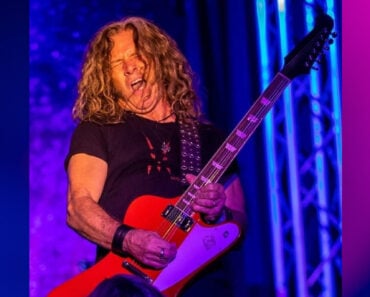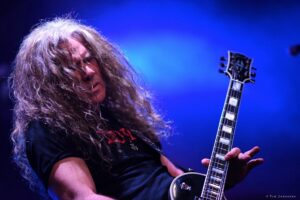
Feature Photo by Tim Janssens
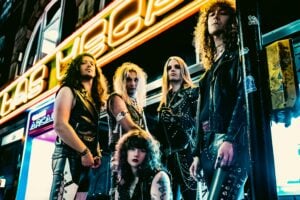
Mick Sweda was a veteran six-stringer by the late ‘80s, having been a part of two popular albums with Carmine Appice’s King Kobra. But Sweda wanted more, leading to the formation of BulletBoys beside vocalist Marq Torien, bassist Lonnie Vincent, and drummer Jimmy D’Anda.
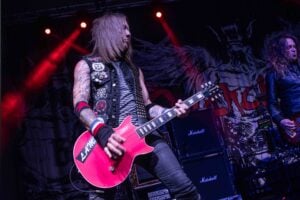
More rooted in ‘70s blues rock than ‘80s glam, the Les Paul-slinging Sweda and his bandmates oozed swagger, leading to 1988’s BulletBoys and a hard-charging follow-up, 1991’s Freakshow. Though BulletBoys would push in through the ‘90s with various lineups, Sweda only lasted one more record, 1992’s Za-Za, before departing.
In the years since, he hooked back up with King Kobra, and has weaved in and out of BulletBoys, though it’s always ended in disappointment. But things are different now, as Torien, Vincent, D’Anda, and Sweda have done what they previously swore they wouldn’t—get back together to give it another go.
“I believe that, musically, we have a connection and a common agreement about how our music should be presented and the energy between us honored,” Sweda tells ClassicRockHistory.com. “That bond makes much of what we do so much easier. After that, it’s really down to execution.”
As for what will make this latest reunion stick, Sweda says, “At this point, we have all played in other situations, but ours is unique in that we all have the freedom to take our tunes and even our shows in any direction and to contribute and feel rewarded by the consequent bombast and spontaneity.”
The reunited rockers are only a few shows into their regrouping, but the early returns are good, and fans are excited. There are whispers of an album, which may well happen, but not before Sweda and his old pals get properly reacquainted with their back catalog of classic cuts.
“We have a ton of abandoned tracks to look back on with fresh ears, so that could be a starting point,” Sweda says. “I want to re-establish our set as the portal to whatever will come next.”
What are your earliest memories of music in your life?
I loved listening to the 8-track in my dad’s car: Tommy James, Beach Boys, Tommy Roe, Bobby Sherman…I remember the catchy songs that grab my ear to this day. I really have a pop heart and a severe sweet tooth for bubblegum. After that, I started hearing my Uncle Rip’s records, and that got me to Steppenwolf, Iron Butterfly, and off I went.
What specifically drew you to the guitar, and when did you decide what sort of player you wanted to be?
I recognized instantly that the sounds that stood out to me were guitars. Whether it was “Crimson and Clover” or “In-A-Gadda-Da-Vida,” I noticed how varied and unnatural they could be. Abrasive and tender, shrieking and singing… it was so captivating even before I understood what was being done and how. I loved how rebellious it could be, so I studied songs and never simply listened to them.
How did the scene you grew up in affect you as a player?
Sadly, there wasn’t a “scene” at all for me. I grew up in a tiny, sheltered rural Western New York town where playing guitar was unheard of. I saw a new kid in town playing on his porch one day, and that started it all for me. It had never occurred to me that you could have a guitar and play it yourself.
I convinced my friends that we needed to start a band and grew from there, but we never had local players we could learn from. It was all records and learning by ear. There was an older cat named Steve who came around later, and he was instrumental in showing me what a vibrato could be, among other things. I always envied cats who had other players to bounce things off of early in their endeavors.
Tell us about one of your earliest gigs, which was with a punk outfit called The Pedestrians?
The Peds were basically our first band 3.0. It was great fun for us as we were totally irreverent and resented the standard set lists of the day. We turned Zep’s “Rock and Roll” into a Devo-esque romp and wrote a tune called “Men,” which pitched a straight local stereotype against a not-so-common gay stereotype, something that was very unexpected at that time in our area.
We played “Freeway Jam” and a lot of power pop tunes from Cheap Trick, Off Broadway, and Paul Collins. A staple was Alex Harvey’s “Midnight Moses,” which seemed to be a very popular tune back there and is such a robust groove. And yes, we did a lot of Ramones and Sex Pistols as well as a medley of TV themes with classical snippets. We often played in what felt like a prohibition-era speakeasy where Natalie from 10,000 Maniacs would come to dance. It was a fun time.
How did things change for you after you made your way out to LA? What did you find?
My friend Gary and I moved out there looking to restart our band, but ended up going in different directions. I found The Recycler, which was the analog version of the internet. You could post ads and read them for the price of the paper, maybe 75 cents. “Loud, rude guitarist wanted. NO GIT STUDENTS!!,” things like that.
I ended up in a few different situations that way. One was a guy from Arthur Brown’s band, so I ended up playing his hit “Fire” quite a bit for a while. After a few failed original efforts, I joined a cover group and played five nights a week all over SoCal for a couple of years while waking up to a photo developing job every morning.
Needless to say, falling asleep in a dark room was easy to do. I eventually quit that band to get back to original work. That wasn’t panning out very well, and I was ready to move back east to join another cover situation.
Tell us about meeting Carmine Appice and being asked to join King Cobra. What was your rig like at that point?
As I was considering leaving LA, I worked at Tower Records on Sunset, and a guy came in asking if I played bass. He mentioned Carmine’s new band, but that was it. I forgot about it until Carmine came in and hit me up about a guitar opening. I auditioned at his studio, and he liked my groove, so I got the gig.
The guys were very cool, and it was clearly a step up, so off we went to pre-production. I had traded my beloved 50-watt Marshall combo, which I put on an old metal-handled Marshall cab, for a 100-watt. I used an Echoplex, an MXR flanger, along with their two-space doubler, and used a Ross compressor for sustain on leads.
But we ended up with different endorsements, and my rig changed quite a bit after that. I moved on to an Effectron delay, a Furman PQ-3, and God knows what after that.
You recorded two records with King Cobra. What was the approach from a guitar perspective? Did you feel pressure to fit into the ’80s shred mold?
Most of the songs were fleshed out for the first record, so I largely doubled the existing parts, which I was pretty good at, thankfully. I usually took the harmony part on the leads, so that was fun and challenging, but I was already into what is now called “shredding,” so I was all good with that. It was after that when I wanted to carve out an identity of my own, and that manifested on the second KK record, where my pop sensibilities made an appearance.
What stories can you tell about touring with KISS and Ted Nugent? Did you run elbows with those guys?
Kiss was very cool, although you couldn’t say we hung out per se. I’m very much an introvert, so I’m not very good with people at first, but they made it easy for us on that tour, and all we had to do was get to the gig and do our show, which wasn’t always a given back then.
I was a great fan of Ted Nugent, and I don’t give him enough credit for the influence he’s had on my playing. I don’t remember much about those dates. He was very funny, and I will always prefer to think of him with that [Gibson] Byrdland and those crushing Fenders. He had the purest feedback of all.
What led to your leaving King Kobra and joining BulletBoys? Was that risky at the time?
I didn’t feel like it was risky because the situation had fully stagnated. Carmine was out with Vanilla Fudge, and I think he expected that we’d wait out whatever he was doing. He was looking for songs from other writers, and the trajectory wasn’t right for me.
I wanted the other guys to get together, but they were feeling like the band still had some miles left, so I started looking for new players. At some point, we finally did get together, and after a few sessions, it was three of us looking for a drummer.
Was the connection with Marq and the rest of the guys in BulletBoys immediate?
There was a connection that kept us going in the same direction for sure. We had many ideas in common, and it was freeing to be on our own and not beholden to Carmine’s musical platitudes and often cliched ideas. It was rough financially, but very rewarding insofar as the writing and the song direction.
How did your rig change once you joined BulletBoys?
By then, my “rig” was simplified and as direct as it could get. I’ve always loved a little grease, but I’m not sure I even used a delay at that point. Once we got signed, I bought a TC2290 and an Eventide Harmonizer and had Bob Bradshaw build what the guys called NASA.
I ran two dry Marshalls in the center cabinets, and the stereo FX were through a Boogie Quad in the two outside cabs. I loved that rig and enjoyed tweaking it quite often.
Can you remember recording the guitars for “Smooth Up in Ya” from the first BulletBoys album?
I do, and it’s come as a surprise to many. Although I used my `77 Pro LP in the video, I tracked the tune with a James Tyler Strat. Ted Templeman had about six of Jim’s guitars rented for the sessions for backups, I guess.
I knew Jim from having taken my guitars to him many times, but certainly couldn’t afford one of his customs, so I was happy to have them as options. I don’t remember why I ended up playing it, but it seemed to work out.
What are your memories of touring with Bon Jovi and Ozzy? That must have been wild…
I think we only did one date with Bon Jovi, but I do remember Cher coming into our dressing room, acting like she owned the place. I’m pretty sure she got a lukewarm, if not cool, reception. I do remember that show being very energetic and fun.
I think we did a couple of Ozzy shows, but the Pay-Per-View in Philly has some notoriety attached to it because we weren’t joyously received by everyone. We played a good set, but it really didn’t matter because, as the people got more enthusiastic about Ozzy coming out, we got more energized.
And although I didn’t notice the reaction till later, it seemed to take on a life of its own after the fact. Suffice it to say that we got on with Ozzy much better than we did with his fans.
What led to the end of BulletBoys in the early ‘90s? Any regrets?
Sorrow is a more fitting word than regret. I had high hopes for the band, and I still refer to it as my baby. I worked long and hard and sacrificed so many things to keep it going, and it just wasn’t meant to be. That was heartbreaking even as I despised what was happening.
The musical landscape was very much flipping, and I saw it as a challenge. I was looking forward to how we would navigate our way through the obvious changes and emerge with something bold and fresh.
Unfortunately, we were fatally fractured, and there wasn’t any way to hold it together, so I left the band once we’d finished our obligations. It was painful, but I was determined to use that energy to find the joy in writing again.
Later in your career, you recorded with King Kobra again. What led to that, and how did you change as a player?
I received a message from Dave Henzerling about playing on a few tracks, and I have always been a fan of his writing, so it didn’t take much to sign on. I had by that point grown more fond of space and the unexpected in my playing. I like to take the path of more resistance and try to make it work for me. It’s often more challenging, but that’s something I seem to relish.
After leaving BulletBoys again a few years ago, you said that you’d never join again. And then, you initially declined to reunite in the fall of 2025. What changed, as you’re back with the original lineup again?
Let’s say that prerequisites that haven’t been on the table for years have been discussed and issues addressed, leading to a completely refreshed and unexpected outcome. We all know anything can happen, but we seem to be in a good place, and we’re looking forward to a great run of shows for the foreseeable future.
People often cite your tone as a hallmark of the band that’s been missing. What can you say about that, and what’s the recipe?
It is interesting to hear that when virtually every rig I play out of is unique. When I’m in LA, I use my Jose and my Friedman, but fly-outs are normally Marshall 2000s, which I surprisingly have grown to like. I am not a techie by any stretch, but I prefer to use the gain of the amp rather than boost the pedals.
I do use a Bogner Wessex occasionally—when the switch isn’t shot—and rarely an MXR script phaser. I use a Strymon Timeline delay for a tight thickening, and I prefer its delays, but I keep kicking it into some other universe, so I’ve been playing with a TC Flashback.
I have yet to find a sweet spot for it, but it’s coming. My presence might be noonish or less, treble around 3, mids around 8, and bass up there, too. Other than that, it’s getting enough volume to make them howl when I face the cabs. ¡Muy importante!
What does the future hold for BulletBoys, and why do you think this reunion will stick?
The future is wide open, to quote a childhood hero. Of course, there’s peripheral chatter about a record, but we really want to find our footing as a band again, and the shows will go a long way to getting there.
One never knows how things will turn out, but the exuberance from our supporters is palpable, and we’re all pulling in the same direction, so there is reason for optimism. And that is the one resolution I plan to keep!! Cheers!
Check out similar articles on ClassicRockHistory.com Just click on any of the links below……
Read More: Artists’ Interviews Directory At ClassicRockHistory.com
Read More: Classic Rock Bands List And Directory
Read More: 1970s’ Saddest Rock And Pop Songs
Read More: 25 Best Classic Rock Live Albums Of All Time
An Interview with Mick Sweda of BulletBoys article published on ClassicRockHistory.com© 2026
Classicrockhistory.com claims ownership of all its original content and Intellectual property under United States Copyright laws and those of all other foreign countries. No one person, business, or organization is allowed to republish any of our original content anywhere on the web or in print without our permission. All photos used are either public domain Creative Commons photos or licensed officially from Shutterstock under license with ClassicRockHistory.com. All photo credits have been placed at the end of the article. Album Cover Photos are affiliate links and the property of Amazon and are stored on the Amazon server. Any theft of our content will be met with swift legal action against the infringing websites.