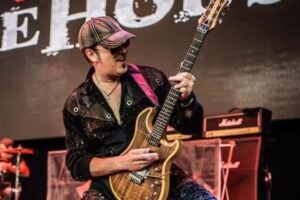
Feature Photo by Christopher Carroll
The year was 1990. Warrant and Cinderella, who had just dropped Cherry Pie and Heartbreak Station, didn’t know it yet, but hair metal was dying. Grunge had begun to creep in, with Nirvana and Alice in Chains nipping at hard rock’s heels. But that didn’t stop FireHouse, who came out of North Carolina, a very un-hair metal place, from throwing their hat in the ring.
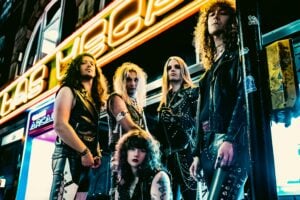
Fronted by C.J. Snare and with guitarist Bill Leverty, FireHouse had balls, songs, and just enough gusto to make it work. What’s more, they had Jon Bon Jovi’s ear, as well as Dana Strum’s, who helped FireHouse land a major label deal, leading to their debut.
But FireHouse, who also featured Perry Richardson on bass and Michael Foster on drums, were about as far off from the Sunset Strip as possible. Their influences were different and a little grittier than, say, Poison and Mötley Crüe. That’s not to say that FireHouse wasn’t oozing with sex appeal. Songs like “Shake & Tumble” and “All She Wrote” showed as much. But it was the ballad “Love of a Lifetime” that became their calling card.
To that end, despite FireHouse’s arrival at the end of an era, they did alright. And now, 36 years after FireHouse’s debut release, the band is still standing. But sadly, vocalist C.J. Snare won’t be around to celebrate as he died suddenly at 64 after being diagnosed with stage IV colon cancer.
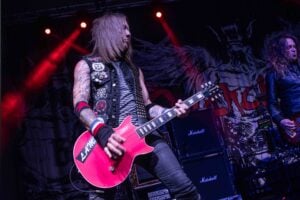
He’ll be tough to replace, but Leverty plans to continue. “FireHouse did over 45 shows last year, and we’re on track to have as many or more next year,” Leverty tells ClassicRockHistory.com. “Nate Peck is our new lead singer, and the fans love him. CJ loved him, too!”
He explains, “CJ wanted us to keep going with Nate, and we want to keep going as long as we can. Nate’s doing an amazing job. We dedicate a song to CJ every night and want to keep his legacy alive with utmost respect.”
But it’s not just shows on the docket, but new music. “We’ve released a new song called ‘Mighty Fine Lady,’ which was very well received,” Leverty beams. “And we’re about to release another song before the spring. We’re having a lot of fun, and we are all truly grateful to our fans for sticking with us over the decades.”
You recorded a demo in your bedroom in North Carolina. Can you tell us about that? How did the songs on the demo differ from what we later heard?
I bought a Tascam 244 in 1981, and maybe a year or two later, I saved up enough to buy a Biamp 1621 mixer. We had a basement in the band house that we used to rehearse in. We ran a 16-channel snake through the AC ductwork into my bedroom, which then became the control room/overdub room.
The main difference between the demo & the final album is the sonic quality. The songs’ melodies, riffs, progressions, etc., are pretty much the same, but the songs did evolve by playing live and working with producers.
Tell us about how FireHouse landed on Epic Records. Once signed, what sort of sound were you searching for?
I got a tape to a guy who worked for Epic. He sent the tape to Michael Caplan, Epic’s VP of A&R. Caplan flew down to see us on December 9, 1989, at a club in North Carolina. There had been a terrible ice storm, and only about 20 people showed up. We apologized for the small crowd, but he said, “Don’t worry about it. I just want to see you guys play live.”
After we finished our set, he said, “You guys are ready for a record deal.” Caplan let us be ourselves. He didn’t try to change anything. He recommended David Prater, an up-and-coming producer whom he had recently worked with.
And how did that differ from what your label wanted, especially considering you came up in the hair metal era, albeit the tail end of it?
We all wanted the same thing: a big rock production that could be played on the radio next to the biggest bands of the era. Caplan wanted us to demo the songs (again!) in Prater’s basement 12-track studio to make sure we could come in under budget. We passed that audition and headed to Bear Tracks studio in Suffern, New York.
Did being from North Carolina impact the overall sound of FireHouse heading into the studio?
I like to think that growing up in the South worked its way into our sound a little bit. You might hear a few Southern herbs and spices thrown into the stew.
By this point, you’d demoed additional songs in hotel rooms and after shows. Tell us about those and exactly what you brought into the studio?
The last songs we demo’d on my 4-track for this album were “All She Wrote” and “Love of a Lifetime”. Caplan and Prater liked them both so much that they were chosen to be demo’d in Prater’s basement studio and eventually made it onto the album. By the time we got into the New York studio, we had hammered out most of the details. There was a bridge in “All She Wrote” that Prater suggested we chop out. At the time, we were reluctant, but in hindsight, he was right.
Is it true that Dana Strum helped FireHouse record a new demo, which helped shape the songs you entered the studio with?
Yes, Dana was a great producer and arranger. He was really good at enhancing our songs. We went into SIR for preproduction for a week or so, and he was always tossing out cool ideas. Dana made us better players in that month that we worked with him. He was the first real producer we ever worked with, and he was amazing.
Did you feel you needed to write additional material to supplement what you already had, or did you have a full album’s worth of material?
After the Dana demos, we were a little short on material. That’s when “Love of a Lifetime” and “All She Wrote” came along.
You and CJ seemed to have a great songwriting partnership. Tell us how that shaped what you entered the studio with?
I saw how hard he worked at writing songs, and he saw the same level of energy in me. We formed a songwriting bond. I think we had a very friendly competition, bringing each other ideas we felt were worth working on. By the time we got to Suffern, New York, to record the album, we had written about 20 songs together, and we knew each other really well. CJ and I roomed together at the Ramada Inn during those months of recording that first album. I’d cut rhythm guitars in the day, and he’d sing lead vocals that night.
Paint a picture of the studio FireHouse chose to record at, and what the scene was like. Did anyone in the band feel nervous or have red light fever?
Beartracks Studio was an 18th-century dairy farm that had been converted into a world-class studio. It was owned by Jay Beckenstein, sax player and founding member of Spyro Gyra. The studio had a new SSL console and all the great outboard gear we’d ever dreamed of.
Michael, Perry, and CJ all breezed through their tracking sessions. I remember struggling a bit on the acoustic intro for “Don’t Treat Me Bad”. The layering of my rhythm and lead tracks took some time, but I came in as prepared as possible.
FireHouse’s debut had a big yet airy sound. Did the studio contribute to that? And who chose David Prater as producer and Doug Oberkircher as engineer? What was their general approach to the sessions?
I’m sure that studio had a lot to do with the end result. The studio had stone walls, and it sounded beautiful in there! Caplan recommended Prater as our producer. Doug was Prater’s engineer. We didn’t actually meet Doug until we showed up at the studio, and we all got along really well.
Their approach was for us to record bass and drums first (to CJ’s and my scratch tracks). After Perry and Michael were done, the schedule was rhythm guitar tracks in the morning and lead vocals at night. By the time we got to solos, it was time for background vocals, and Michael and Perry came back in to sing.
David went on to work with Dream Theater, but he wasn’t really a hot name yet. Were the band, producers, and label on the same page about sound at this point?
Absolutely. Prater would send Caplan rough mixes weekly to let him hear the progress, and Caplan was happy.
What sort of budget did Epic give you? And did they have you on a tight leash, or were you all able to have fun? If so, while not in the studio, what did you all do to blow off steam? The guys in FireHouse seemed pretty clean-cut. Was that the case, meaning was it all business?
We had an $80,000 budget, and we spent every penny. There was no leash put on us. The label knew we weren’t a bunch of screwballs. We still had a lot of fun, though. There were a lot of clubs in New Jersey and in New York that we would go out and party in. It was easy to get up the next morning when we were in our 20s! [laughs]
As far as guitars go, how did David and Doug impact what you did? Did you want to lean toward flash and need to be reined in, or were you restrained? Is it true that David kept you from triple-tracking your solos as he thought you were such a strong player?
The parts were already solidified. I had demo’d them several times already, once with Prater in his studio. Caplan approved. We knew what we had to do when we got to the big studio. As far as tracking guitars, Prater had an outboard Neve mic pre/eq (I think it was a 1073) and dialed in the guitar tone for every amp I played through. He didn’t let me have any pedals between my guitar and amp. I whined a bit but trusted him.
I remember Doug being in the control room operating the tape machine while David kept his ears fresh downstairs in the lounge. We’d call Prater in after we completed a track, and he’d usually approve what Doug & I had recorded and then tell us to move on to the next track.
Regarding solos, Prater originally suggested I record single-track solos, but I talked him into letting me triple-track them because I love that Randy Rhodes sound. As long as I finished each solo on time, Prater was cool with it. He let me heavily layer the solo harmonies on “All She Wrote,” too.
What were your observations of Perry and Michael? Did they seem relaxed? And what about your lead singer, CJ? Sometimes lead singers can be handfuls. What were your observations of him in action and working with the studio team?
Michael and Perry were amazing in the studio. Michael had extra pressure because Prater, a monster drummer who had played with Santana, Patti LaBelle, and many others, had Michael under the microscope, but, as I said, Michael and Perry were done early.
CJ was a total pro, always. He’d show up early and warm up in the other room. After the 30-minute warmup, he’d be silent for 30 minutes, then he’d sing. I didn’t hang around for his sessions much because I had to prepare for the following day back at the hotel, but what I did see was amazing.
Tell us about the first single, “Shake and Tumble.” How did that come together, and what made it single-worthy? And how about “Don’t Treat Me Bad,” which went to the top 20 in the U.S. What were the origins of that song, and how did you put it together?
The label had a guy named Mike Schnapp who worked the metal radio format. He really liked “Shake and Tumble” and thought he could get traction with it. It ended up selling 100,000 copies for us before the label released “Don’t Treat Me Bad”, so he was right! “Don’t Treat Me Bad” was put together in my bedroom studio with the final lyrics written at the kitchen table.
“Love of a Lifetime” became FireHouse’s signature power ballad. By then, that sort of thing was seen as critical, but did hard rockers like yourselves get into that much?
We played in cover bands before we got our deal, so our sets often had slow dance songs in them. After doing that for so long, we felt it was natural to have a slow-tempo song on the album.
Can you remember laying your parts down, and if there were any interesting anecdotes? You and CJ penned “All She Wrote,” right? How did it come together, and what was the recording process like?
Laying down rhythm guitars was a challenge because Prater made me record through his Fender Bassman first. It was a very unforgiving amp, fairly clean, and then I had to double it. I didn’t get to record through my Marshall until after the Bassman tracks were done. I had never played through a Bassman before… different beast than a Marshall!
Anyway, after I finished my Marshall tracks, I recorded through a Soldano and doubled that. Prater pushed up all 6 faders, and only then did I hear what a huge wall of guitars he had created. Each amp had something that the others didn’t. Altogether, it was a huge wall of sound.
“All She Wrote” happened when I gave CJ a tape with that riff on it. He called me and said he had a hook that would go well with it. He sang it to me over the phone, and I said, “Get over here now and record this before you forget it!” He lived a block away and came over. The whole song was written right then and took maybe an hour.
Of note—and not often brought up—is that “Home is Where the Heart Is” went to number one in your local area of Charlotte. Was that expected?
Not at all. We all really liked that one, but who knows if people who hear it for the first time will? The radio station’s program director picked that song from our demo tape that Dana produced. People kept calling the radio station and requesting to hear it.
As you were putting the record together, what was the overall feeling in the studio? Were there any bumps along the way? Was Epic pleased with your progress? At what point did you know you were on the right track?
The feeling was great. We never had any complaints from Caplan, which made everyone able to relax and enjoy the ride. By the time we had the basic tracks and lead vocals done, we could hear how it was shaping up, and we loved what we were hearing.
As you wrapped things up, did you find the songs had gotten far away from those original bedroom demos and tapes Dana had helped you make? What was the progression like?
The arrangements were pretty much the same. At this point, these songs had been through multiple demo stages. We had made a lot of the decisions of what felt best. The production, however, was enormous! I hadn’t heard drums sound like that before. Michael Foster played his ass off.
I assume Epic was happy. What was the company line they fed you as far as how they planned to promote Firehouse and the album? Who chose the cover art, and do you remember anything about the shoot or the actress on the cover?
Our art director came up with the idea for the cover art. We picked the girl out of a Polaroid lineup of several models. We thought she had a very interesting and atypical look. We met with our product manager, and we thought he was great. He had a plan to break us first at metal radio, then see how it went from there. The label was cautious in dropping marketing money into us until we proved ourselves.
I’ve heard Dave say he had no idea the record would be so well received. But I’ve also heard that Derek Oliver called Dave up and said he felt he was onto something. Did anyone imagine they were sitting on a soon-to-be platinum record?
No, we all dreamed of that, but we all knew the odds of getting to platinum were very slim. All we wanted was to sell enough records so that Epic would let us do a second album.
“Love of a Lifetime” went to the top five while surrounded by contemporary R&B artists on the charts. That must have been bizarre. Do you feel that impacted the band’s image negatively?
It might’ve made some of the hardcore metal fans think negatively of us, but that made us want to work harder to win them back. It was a bit of a double-edged sword, alienating some people. Having said that, the tradeoff was that we got our songs heard by many more people, which is what we needed at the time.
Is it true Jon Bon Jovi told the band not to publish “Love of a Lifetime” because it would ruin your career?
Jon didn’t care for that song when he first heard an unfinished demo of the song idea. I don’t blame him. It wasn’t ready to be heard yet. Jon and Richie Sambora were always really cool and gave us great advice. They even took CJ out on the road with them for about a week.
“Don’t Treat Me Bad” had a music video. But there were two versions. Can you shed some light on how that all went down?
The first version cost ten grand. It was shot in a club called The Floodzone in Richmond, Virgina. The song broke into the top 40, and the label wanted us to shoot a more produced version that they could maybe get more mileage out of on MTV. We flew to L.A. and shot it one night, and then we shot “Love of a Lifetime” the following night with the same director, Mark Rezyka.
Did anything else or not crop up while on the promotional trail, or once you hopped on tour to support the record? How do you remember the press receiving the record?
We’d generally do an 8 am radio morning show interview playing “Don’t Treat Me Bad” acoustically. We’d have a lot of fun with those interviews and made long-lasting friends with the DJs. Then, we’d do phone interviews all day, all over the world. I don’t remember any negative interviews/reviews. I’m sure there were, but I’ve blocked them out! Ha! Most interviews mentioned the Bon Jovi connection that we had made. To me, that was a positive.
What was it like touring with Trixter and Warrant—another two latter era bands—in support of the record?
Instant cool brotherhood amongst all the bands and crews. Everyone got along (and we still do!). The shows were great. It was our first tour playing to sold-out crowds in really big venues.
FireHouse won an American Music Award in 1992, but the decline happened from there. Take me through the end of that era. Looking back, do you wish you’d had more time? Grunge sort of swept the rug out from under you rather quickly.
I do wish we had come out five years earlier, but honestly, we weren’t ready yet. We needed a little more experience and more songs. Do I wish that grunge had waited a few more years before it was born? Absolutely!
We’re lucky to have been able to squeeze through when we did at the very end of a great era. As the music business changed, we found it harder to get airplay for our new music. MTV was no longer interested in bands of our ilk. We just kept working, though. We went overseas to play. It was tough, but we were able to sustain.
Is there anything about FireHouse’s debut album that you’d change or do differently given the chance?
No, I’m actually really happy with the way that album turned out. I think we all were. I wish the label had released “Home Is Where the Heart Is” after “Shake and Tumble”, but that was the label’s business, not ours.
It’s sort of the last of an era… a true snapshot in time as one came to an end and another began.
I hadn’t thought of it that way, but looking back, that rings true. We didn’t see the change in the industry.
Overarching, especially now that we’ve lost CJ—what does that album mean to you? I’d say it stacks up against any of that era.
Thank you! Our debut means the world to me. That album was the culmination of a lot of hard work. We also had a lot of fun. I have great memories of the steps it took in the writing and recording of it. I’m so thankful that the fans still want to hear it.
How do you look back on FireHouse and the band’s overall trajectory?
It was a long trajectory. We worked really hard in the clubs for well over ten years before we got a record deal. Then, we recorded an album with a great team of people who believed in us. We also believed in each other. Each one of us brought something unique. When the debut album came out, we had no idea it would take off like it did.
And how do you hope to be remembered as a guitarist?
As a guitarist, I’d like to be remembered as a guy who enjoyed every minute of it, and I hope that people feel something good from what I’ve played.
Check out similar articles on ClassicRockHistory.com Just click on any of the links below……
Read More: Bill Leverty of FireHouse Interview: 10 Albums That Changed My Life
Read More: Artists’ Interviews Directory At ClassicRockHistory.com
Read More: Classic Rock Bands List And Directory
Bill Leverty Of FireHouse: The ClassicRockHistory.com Interview article published on ClassicRockHistory.com© 2026
Classicrockhistory.com claims ownership of all its original content and Intellectual property under United States Copyright laws and those of all other foreign countries. No one person, business, or organization is allowed to re-publish any of our original content anywhere on the web or in print without our permission. All photos used are either public domain Creative Commons photos or licensed officially from Shutterstock under license with ClassicRockHistory.com. All photo credits have been placed at the end of the article. Album Cover Photos are affiliate links and the property of Amazon and are stored on the Amazon server. Any theft of our content will be met with swift legal action against the infringing websites.