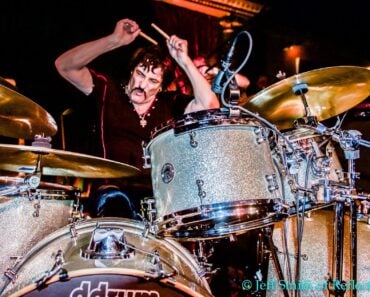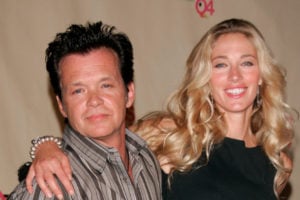
Feature Photo courtesy of Dirk Verbeuren
You’d be hard-pressed to find a more respected and talented drummer than Megadeth’s Dirk Verbeuren, who cut his teeth with Scarve and Soilwork before joining Megadeth in 2016.
Since then, Verbeuren has become a trusted confidante to Megadeth’s Commander-in-Chief, Dave Mustaine. The 51-year-old drummer has appeared on the band’s last two records, 2022’s The Sick, the Dying… and the Dead!, and 2026’s Megadeth.
Like most of the world, Verbeuren was a bit bummed to hear that Megadeth would be hanging it up after this coming touring cycle—which will be a long one—but he’s come to terms with it. “At first, I was a bit surprised,” Verbeuren tells ClassicRockHistory.com.
Adding, “But I quickly understood it, and I’m on board with it. You know, we’re gonna go everywhere we can go over the next few years, and it’s gonna be great.”
As for what backing up Mustaine, who some say is hard to work with, has been like, Verbeuren has nothing but good things to say. “It’s really been a good experience for me, and it continues to be,” Verbeuren says. “The level of professionalism is just very high, and I love that.”
That is to say, while Verbeuren and Mustaine are different people, they share a mindset. “I’ve always been quite ambitious with music, not in the sense of wanting to be famous, but just if I’m gonna do something, I’m gonna give it 100%,” Verbeuren says. “Dave is definitely like that. He cares about all the small and big stuff and everything in between.”
What are your earliest memories of music in your life, and what drew you to the drums?
Well, my earliest memories were listening to the radio. My dad and my mom both loved listening to the radio and also to a lot of records of classical music. I mean, they didn’t have a whole ton of records, but they had some. And, of course, I was born in ’75, so ‘70s and ‘80s pop music and rock music, things like that.
I picked up the violin at age six, so that’s what I started with, but then I moved on to the drums when I was about 14 or 15. At that time, I had started listening to a lot of metal. My dad, mom, and I had moved to France from Belgium, where I was born, and we lived in Paris.
I was going to school there, had some friends who were really into metal, and started tape-trading and getting into that whole scene. And so, hearing bands like Slayer, Napalm Death, and everything else coming out in the mid to late ‘80s eventually made me want to play the drums.
How did the scene you grew up in impact your outlook on life and as a musician?
Well, I would definitely say that being in Paris at the International School, where I was around different cultures, and getting to know this cool underground scene that was metal at the time, you know, nothing was really big yet, as far as thrash and everything harder than that. So, we had this small clique of skateboarders and just kind of outcasts from different countries.
What led you to become a professional musician?
My parents could tell it was really just my passion, and I kind of had it in mind that I would study science, but they knew better. They said, “Don’t you really want to do music?” And I said, “Actually, yeah…” And so, they sent me to this music school, and that was pretty much it. I was just so passionate about it.
What challenges did you face while you were coming up?
There were many. It’s not an easy career. There’s no set path, so you kind of have to figure it out as you go. And again, without the help of my parents, I don’t think I would have made it. But starting a band early on was very helpful. It really got me to try to understand how that business works.
And even though I was naive for many years, eventually, it led to my having a career. And so, I think the biggest quality that I had in those days was just perseverance. I was very passionate about it, and I just would not quit. Like, I always kept working really hard to be a better drummer, a better band member, and to write better music.
I always wanted to make our music more professional, and eventually, I started doing session work for more and more people. So, I learned a lot about being in the studio and working in different settings with different people and different expectations, and learned the different angles and aspects of this business.
How did you end up with Soilwork?
I got a call from our label manager, who just called me up out of the blue in late 2003, I believe. He said, “Peter from Soilwork would like to talk to you. Is it okay if I give him your number?” And so, Peter calls me and basically tells me that Soilwork is without a drummer, and if I could fill in with them on a European tour in early 2004.
So, I went to Sweden and met up with the guys we did a European tour with, and they pretty much offered me a spot in the band after a week or so. But I was so enamored with what I’d been doing with Scarve, and we were gaining some traction at that point, so I kind of held it off, which is why I stayed a session member for about a year and a half.
And then, in the summer of 2005, they said, “You really need to let us know if you’re going to be in this band or not. Can we count on you being here?” So, that’s when I finally joined full-time. And by that time, we had put out Stabbing the Drama, and the band was really doing well, notably in the States. So, that’s how that all happened.
What led you to leave Soilwork to join Megadeth?
So, now we’re into 2016, and I’m on the road with Soilwork. We’re opening for Fear Factory in the US, and suddenly I get a call from Megadeth’s manager at the time, who says, “Hey, would you have time to talk to Dave Mustaine on the phone?” And I’m like, “Excuse me?” [laughs]
So, a few days later, Dave calls me, we talk, and he explains they need someone to help out for a few shows because their drummer isn’t available. So, I come home from this tour with Soilwork, have about 10 days to learn the set, which I do, and then I fly to Columbus, Ohio, where the band’s scheduled to play Rock on the Range.
We do one rehearsal, and next thing you know, I’m on stage with Megadeth. It was a pretty surreal experience, but that quickly turned from being a fill-in guy to Dave telling me, “So, when are you telling the Soilwork guys that you’re my drummer?” [laughs]
Now, you know, it was in typical Dave fashion, which is very funny, but also very much him. And my wife told me right away, once I spoke to Dave, that they were going to ask me to join them. And I was like, “Nah, they have a drummer…” But she knew, so she was right, of course.
Was it a tough decision to leave Soilwork?
That wasn’t too difficult to decide, even though it felt really bad to leave Soilwork behind, because I’m close with the guys, and I was very proud and invested in everything we were doing. But, but yeah, they said, “Man, you have to do this. You have to go with Megadeth.” So they were very supportive and, here I am 10 years later, just having released my second album with Megadeth. That’s pretty crazy.
Why do you think Dave liked you as a player?
He saw some of my videos online, and I think he just thought I had what it takes. It’s as simple as that. I can’t really say much more about it, because at the end of the day, it’s always a bit of a gamble, I guess. But I know a lot of people around him recommended me, and I think that helped him decide.
And when we spoke, it was a good conversation. So, I think he felt confident about me, and he has a good nose for those kinds of things, as the history of the band has shown you. He’s always had a lot of great musicians in his band. I’m proud to have been chosen by Dave, that’s for sure.
Were you very influenced by drummers who were in Megadeth before you?
I wouldn’t say that I was very influenced by any of those drummers. I like all the band’s old albums. I grew up with them, and I saw the band live in 1990 with Nick Menza on drums, which was one of the first concerts I ever went to. I was like 15 at the time and was very impressed by that.
But by the time I really started focusing full-time on drums, I was really into more extreme stuff, a lot of death metal and grindcore, and some thrash, too. But I never really played in a thrash band; it was always kind of heavier stuff. I was trying to push the envelope, like many bands were at the time.
So, I wouldn’t say any of the Megadeth drummers were particularly big influences on me. But now, in hindsight, of course, and having been in the band for 10 years now, and having learned all their parts in great detail, I have even more respect for them than I did before, specifically, Gar Samuelson. He would be the hardest to copy, for sure.
Why is that?
Because his playing was very unique, very inventive, and loose. But not loose in a way that it wasn’t tight, but loose in a way that it was very expressive. It feels quite improvised, especially on Killing Is My Business. It feels like there was a lot of stuff where he kind of knew where he was going, but also came up with stuff in the moment.
That’s very inspiring to me. I’m very intrigued and enamored with the idea of improvisation. It’s something I work on a lot. I try to be good at just sitting down at the drums and playing stuff that works in any situation. That’s one of the things I’ve spent a lot of time on in the last few years, especially. So, so yeah… Gar Samuelson is definitely tough to do justice, but I give it my all.
What’s your recording and touring relationship with Dave like?
It’s been a great relationship. It took me some time, of course, to find my place truly in the band, and so in the beginning, I just shut my mouth a lot and listened a lot. I think that’s the right way to approach a band with such a huge history and legacy and so many fans across the planet, and with a leader who obviously knows what he’s doing.
Because he wouldn’t be here after all this time if he didn’t, and I have a lot of respect for Dave, and I’ve learned a lot from him. I still learn a lot from him, and we’ve become good friends over the years. I think we’re tighter now than we’ve ever been, and we trust each other. I know what he expects from me. I know what to expect from him, and it’s just a great relationship.
Whether it’s in the studio, where I’ve contributed to both albums I was on with riffs and drums, or whether it’s on the road, which we’re now preparing. We’re actually currently rehearsing for our upcoming Canadian Tour, and we just have a good system going. We come, and we know our stuff, and we can just focus on the small details, and I’m putting down the best show we can.
What were your thoughts when Dave revealed to you that you were recording Megadeth’s final record and then embarking on its tour?
Well, I was not completely shocked because I thought from the very beginning, when I started playing with the band, that one day, this would probably come to an end. I didn’t think it was gonna happen now, but when he told us, I was like, “Well, now it is. Maybe it’s the right time. If he feels that it’s the right time, then it probably is.” I have to respect that it doesn’t really matter what I think.
He’s done this for so many years, and if he feels now is a good time to put a period at the end of the sentence, then I think that’s good. I would rather the band played at full capacity these next three years that we’re supposed to be on the road—and maybe more—rather than things kind of unraveling and not living up to what people expect, pay money for, and travel to see us, you know?
A lot of this is out of respect for the fans, and that Dave has had a lot to deal with health-wise over the years. He still does, even though he’s cancer-free; he still has some issues. And, I mean, he’s lived a hard life, you know, he’s lived a very hard-working life. I’m proud of him for knowing when it’s the right time. So that’s kind of my thoughts about it.
Dave is notorious for being hard to work with, but he really seems to have mellowed out in recent years.
Well, that’s something I think about a lot, because I get asked that question a lot, you know, how is it to work with Dave? And here’s the thing: Dave is a band leader. He has his way of doing stuff, and that’s something you have to respect from the get-go. I think for me, that was clear.
Once I figured out—which took maybe a few years to really figure out all the fine lines around how he works and how he operates—it became easier and easier. It takes a lot of listening and just being prepared to have conversations that maybe aren’t always easy.
And sometimes, you know, changing things that maybe you didn’t think you had to change, but then later on, understanding, “Oh yeah, I understand now why we did it this way instead of that way.” So, for me, it’s very easy these days to work with Dave. He has mellowed out a bit, but I think he’s still himself.
I have respect for him. We’re different as people, but we’re good friends. I think we were business partners first, and then became friends, and it’s just been good to work with him. And I have to say that I think maybe some of the people who were in the band previously, who have issues with Dave, and who like to talk about all their problems with Dave and stuff, maybe they’re just not that great at being bandmates.
That’s what I have to say about that, because I know I can have my own problems, but when it comes to being in this band, I’ve always sought to just fill my spot and not have too much ego and pride attached to anything, and it’s worked really well. I think Dave fully trusts me, and like I said, I trust him, and it works.
We’re a good team together, and we work together, I think, very well. And that’s why both albums I’ve been a part of, I think, turned out good. Fans like them. We like them. We’re proud of them. You have to be able to be a bandmate when you’re working with someone like Dave, especially since he’s had this vision from the beginning. This is his project, I respect that, and I found my place in there.
Where does your rig stand today? And why do those choices work perfectly for Megadeth?
I’ve had pretty much the same setup since early on in the band. I do have a new kit now, and I have a new setup coming that’s going to be really exciting, and that will debut as soon as it’s ready. But I basically adapted my kit a little bit to fit Megadeth’s sound.
For example, I used to play splash symbols, which are small effect symbols in the past, and I still do in my studio, but with Megadeth, those don’t really have a place. So, I replaced those with more crashes and an extra tom. I was already playing two separate kick drums a few years before, with Soilwork, and that worked out perfectly for Megadeth.
I think the biggest difference and the biggest choice that I made is to really up my stage game and my stage presence, which is something that I hadn’t put much focus on before joining Megadeth. We play very big stages a lot of times, so I want to be part of the show. I want to give people enthusiasm and energy, and exchange that with them.
There are people who are sometimes very far away from where I sit, so if I don’t interact with them and make extra effort, I’m not going to bring the show that I want. So, that’s something I’ve really stepped up to, and I still work on every day. It takes a lot of being fit because it’s physically demanding, but I love it. I love having those exchanges, and I love being part of what makes Megadeth a fun band to watch live.
Is it ever frustrating to you when fans demand classic lineup reformations, or are you unaccepting of how things are now?
No, I totally understand as a fan. Of course, sometimes you just want to see the band as you first heard it. That’s normal. It happens. It’s only a sentimental thing, because we all look back to the days when we first heard this or that, whatever it is. And so, I completely understand that.
In my case, unfortunately, both Gar and Nick, who were like the classic-era drummers for Megadeth, are no longer with us. I totally understand why people are nostalgic about those times, and I have similar feelings myself about bands that I know and love. But sometimes that’s just not possible.
And I understand why Dave has chosen to move on from some of those things. In every case, he’s had his reasons, and many times those reasons have made sense. And a lot of times, people left the band… not many people got fired from Megadeth. It’s people who decided not to be in the band. That’s their call, but I’m happy to be here. And it’s obviously a big priority for me.
Do you have any regrets, and on the flipside, what are you proudest of?
Of course, I have some regrets. Mostly, I would say my personal life, because I haven’t always done things the way I know how to do now. I’m a person who works hard to get better every day and grow as a person. I think that’s really important. My wife and I have been together for nearly 20 years, and I respect her a lot. It takes a lot to be with someone for that many years and to keep things good.
I’ve learned over those years that things evolve, relationships evolve. You have to work hard. And so that’s a priority in my life, to really pay attention to that, to listen, not get stuck in my ways, but to be open to evolving. And I think that is so key, you know, if everybody did that, I think the world would be a better place.
I know a lot of people who do, but some people are very stubborn and don’t want to accept change or be open to new approaches or different views. And I think that’s too bad, you know, because things don’t stay the same. We all change as we evolve and grow older, and I’ve accepted that. It’s a very important thing to be able to look in the mirror and recognize your faults.
You have to have the capacity to work on those things and just become a better person. We can all do that to some degree, at least most of us. So yeah… some regrets at that level, but at the same time, I’m very proud of the career I’ve had so far. I never thought I would be here at this level, and now with the number one album on the Billboard, it’s just surreal.
It’s not something I could have ever dreamed of or would have dreamed of happening. It’s been a lot of hard work, perseverance, patience, and good support from the people around me. All of that put together brought me where I am now, you know? So, I’m very proud of that. I intend to continue this way. I still very much love playing music and making music, and that’s what I’m going to be doing.
Have you thought about what life will be like once Megadeth plays its final show?
Well, what’s next for Megadeth is a lot of touring. This year is fully booked. We have Canada, Latin America, Europe, and the US. More stuff after that, and next year is already partly booked. Nothing has been announced yet, so I can’t really talk about it, but we have a lot coming.
It’s going to be a busy couple of years, you know, for at least two or three years, we’ll be on the road. By the end of that, we will probably play the farewell shows proper and the ones where we say goodbye to people in countries that have supported us for all these years. And yeah… that’s going to be interesting, for sure.
I haven’t really put too much thought into what life’s going to be like afterwards, because it’s a while away. But of course, the thought has crossed my mind, and I’m keeping my options open at this moment. I have some ideas, some things that I want to do. I’d like to be home a little bit more and depend a little bit less on touring, if that’s possible, but maybe it won’t be. We’ll see.
What’s something about you as a person and musician that you’d like fans to understand?
Well, I talked a little bit about that in the question about regrets, but I’ve learned that being humble can be good. It doesn’t make for the greatest rock star stories, but I always say I’m a terrible rock star, but because I’m kind of a “normal person.” [laughs]
But at the same time, I’m also fully dedicated and fully passionate about what I do. Just because I’m not somebody who has destroyed many hotel rooms and lived the crazy rock ‘n’ roll lifestyle that other people have, doesn’t mean I’m any less legit in what I do, you know? And as a matter of fact, I feel a lot of support from fellow musicians, and from fans, of course.
People seem to really respect me, and I think it’s important for me to use my platform to do good, which is why I’m dedicated to preserving biodiversity through reforestation, education, and more. We have a lot of cool things that we’re working on. I also support animals and animal causes a lot through my social media.
Those are things that matter to me. It’s important that we’re thankful for the world we have, and that we try to take care of it. A lot of big corporations don’t really care about the planet. They just want to make money. Not all of them, but a lot of them just go and do what they need to do, whether it destroys nature or not. That is very sad.
People should realize that, as consumers, we have the power to change those things. Small choices and small changes can make a big impact, especially if a lot of us are doing them. So that’s something I’d like people to know I care about, and the message I want to carry out.
I don’t want to tell anybody what to do, and everybody can do what they want. But for those who do care about that stuff, do some research, do some reading, support some good causes, and make some small changes in your life. They can make a big difference. And you know, just whatever situation you’re in, there’s probably stuff you can do on a small or big level. So, that’s what I’d like to share, too.
Check out similar articles on ClassicRockHistory.com Just click on any of the links below……
Read More: Artists’ Interviews Directory At ClassicRockHistory.com
Read More: Classic Rock Bands List And Directory
Read More: 100 Essential Albums From The 1960s That Everyone Should Own
Dirk Verbeuren Of Megadeth: The ClassicRockHistory.com Interview article published on ClassicRockHistory.com© 2026
Classicrockhistory.com claims ownership of all its original content and Intellectual property under United States Copyright laws and those of all other foreign countries. No one person, business, or organization is allowed to republish any of our original content anywhere on the web or in print without our permission. All photos used are either public domain Creative Commons photos or licensed officially from Shutterstock under license with ClassicRockHistory.com. All photo credits have been placed at the end of the article. Album Cover Photos are affiliate links and the property of Amazon and are stored on the Amazon server. Any theft of our content will be met with swift legal action against the infringing websites.