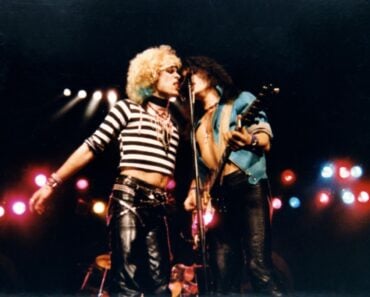
Feature Photo by Marty Rickard
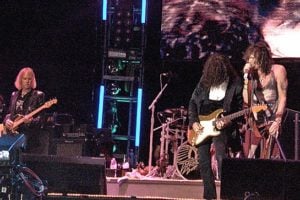
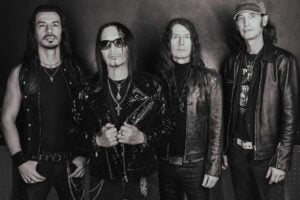
Mark Chatfield has recorded cult records with The Godz and Rosie and spent years on the road with Bob Seger. Lately, he’s taken over for Bruce Kulick in Grand Funk Railroad, yet he remains underappreciated. “I’m one of those guys who’s been around, but faceless and nameless to the masses,” Chatfield tells ClassicRockHistory.com.
“I was never very good at self-promotion and tooting my own horn,” he explains. “In my hometown, I didn’t need to. Medium fish in a small pond.”
As far as his playing and songwriting go, Chatfield is and always has been a natural. Though he admits that drinking and substance abuse held him back along the way, but not anymore. I’ve been clean and sober for 23 years,” he smiles. “Had I not, no idea what would have happened.”
He continues, “I was in such a fog and denial, I’m sure my career would have stalled, and disintegrated as well as my relationships. Not to mention, probably dead.”
In some ways, this meant that Chatfield had to relearn pieces of his trade. “I’m a fairly extroverted performer,” he says. “After getting sober, it took quite a while to relearn how to do it without the crutch.”
As for what’s kept him in demand, Chatfield shrugs, “I work hard and do my homework. A lot of my gigs have come from the ability to conform and get along. Sometimes that’s as important as the playing part.”
With all that said, Mark Chatfield has a lot to be proud of. Grand Funk Railroad will keep on chugging along, and there’s a live album from The Godz on the way, too. All that is to say that Chatfield has no plans to stop. “I’m nearly 70,” he says. “I’ll probably keep playing in some capacity, as long as I’m able.”
What are your earliest memories of music in your life, and what drew you to the guitar?
My mom and grandmother both played piano, and we had records. One Elvis, if I remember correctly. But, like a gazillion other boomers, February 9, 1964, The Beatles on Ed Sullivan was the defining moment. I drew pictures of them and picked up anything guitar-ish (a tennis racket, a pool cue) to emulate guitar playing. I actually had some kind of plastic ukulele with one of the push-button chord finders before I got my own guitar when I was 11, an acoustic Silvertone with F holes from the Sears catalog.
How did the scene you grew up in impact your outlook on life and as a musician?
Grove City, Ohio, was a small suburb of Columbus. But lots of musicians. I was always in the band programs at school, and I played trumpet and tuba, so I was around music a lot. In sixth grade, I met a guy with a drum set and two other guitar players. We formed The Bottled Snowstorm.
I was the singer. The only gig I remember playing was a school talent show. We played Little Black Egg. Columbus—and most of Ohio in the 60s and early 70s—had a really active local band scene. We would go to roller rink sock hops, Valleydale Ballroom, school dances, and fairs in the summer to see live bands, as they were all-ages shows.
The biggest local band at the time was JD Blackfoot. I went wherever they played… if I could get a ride. I knew—or hoped—that I was meant to be in a rock ‘n’ roll band. Columbus, Ohio, had—and still has—an amazing amount of great players.
What led you to pursue a life in music, and what challenges did you face?
Out of high school, I was lucky enough to get a job at Whitey Lunzar Music in Columbus. I have always been, and still am, a gearhead… not so much a techhead. So, I was in my element. I was also going to Ohio State at the same time. But I found myself missing a lot of classes, as I would go out every night and see live bands with the obligatory beer drinking and drugs.
I really had no doubt that I wanted to be a musician for a living. The biggest challenges I faced were largely my own: substance abuse and having an inferiority complex/imposter syndrome. That was the symptom that I “cured” with alcohol and drugs. I also had a penchant for sabotaging myself if I got too comfortable.
How did The Godz form and lead to signing a major-label record deal?
I met Eric Moore and Glen Cataline when they came into the music store where I worked and went to see their band, Sky King, at the Sugar Shack. They heard me play guitar at the shop one day and asked me if I was interested in a “new” project called The Godz.
We jammed a couple of times in the Lunzars basement, and it really clicked. We added a second drummer. Yes, we originally had two drummers. His name was Hayward Law, and we added keyboard/guitarist Mike Adams from the band Kingsley Fink out of Parkersburg, West Virgina. Eric had been booking them in Columbus.
So, I quit my job and college the same day, which went over really well with my parents. [laughs] I sold several guitars that I had accumulated, keeping only a 1956 Les Paul Jr. and a ‘67 Flying V. I used the money to secure a deposit on The Godz band house, just North of OSU Campus. That house is a story in itself. [laughs]
What were the early days like for The Godz?
We became a cover band to start, so we could work, and started writing songs that we would slyly integrate into the sets. This is early 1976. Unfortunately, Mike and Hayward were killed in a car accident on their way to West Virgina to pick up our promo packs.
Enter Bob Hill, who Glen and Eric had played with in Sky King and Eric had played with in The Capital City Rockets, who had an album released on Elektra. So, we remained a bar band, playing all over the Midwest—a combination of covers and originals.
We had been playing The Agora in Columbus about once a month. We went from 20-30 people to selling out in a matter of months, just by hype and word of mouth. Local radio station WCOL FM started to really take notice, as did Creem Magazine.
We got so big at The Agora that British national act Budgie actually opened for us for two nights before we were even signed. Record labels were flying in to see us, mostly from calls from the radio station and an article in Creem. A few passed, but Jimmy Ienner from his newly formed Millennium Records, a Casablanca subsidiary, had a big interest.
He came a few weeks later, brought his brother Donny Ienner, and Grand Funk drummer Don Brewer. Grand Funk Railroad had broken up, and Don wanted to be a producer. Jimmy Ienner had produced the last Grand Funk Railroad record, so there was a connection.
So, after the show, they came back to the dressing room and offered us a record deal with Don Brewer producing. We had never done a demo or been in a studio with that band; we got signed on a live performance.
What can you tell us about the recording of The Godz’ self-titled debut, which has become a cult favorite?
Late summer of ‘77, we loaded up the van and drove to Grand Funk’s studio, The Swamp in Fenton, Michigan. I think we were there for two weeks or so. I had never been in a studio before, so it was all new to me. We basically set up our live gear, used some partitions, and played live, with no vocals. Not even a scratch track.
That meant our timing for things like the speaking part in “Gotta Keep a Runnin’” had to be spot on. Somehow, we managed the overdubbed vocals and most solos. I think we recorded 10 songs. But at the time, our live show closer was “Candy’s Going Bad,” a Golden Earring cover, and it didn’t occur to us to record it because it was a cover. [laughs]
We got home, the label was furious, so a couple of days later, we loaded up the van again and drove back to Michigan to record “Candy’s Going Bad.” We were pissed. That’s why that track has a ton of energy. It was one take, a couple of vocal overdubs, and it was done.
What was it like touring in support of that record?
We played live the rest of ’77 and toured with Angel and Blue Öyster Cult in ‘78. Judas Priest, Head East, The Babys, and others were on some of the bills. The album was huge in Cleveland, thanks to Kid Leo at WMMS, so when we played there, we headlined, with Cheap Trick opening, in June 1978.
How did that lead to the second album, Nothing is Sacred?
We went to Bearsville in Woodstock, NY, for the second album in late summer of ‘78. We weren’t really prepared and were still writing in the studio. Don Brewer was slated to produce, but after a few days, he bowed out due to the stress of internal band and record-label problems.
They couldn’t find anyone on short notice who was available or wanted to produce, so Eric produced the record. Some of the songs are okay, but the album is sonically and performance-wise pretty terrible. It couldn’t hold a candle to the first record. We were all knee deep in Quaaludes, alcohol, and cocaine by then, and it shows.
What led to The Godz breaking up?
We did a winter ‘78 tour with Triumph, mostly in Texas. The band was imploding. The first album has been in print and selling since 1978. We’ve not seen a dime, other than an occasional BMI check for a dollar or two. We signed a terrible deal and sold our publishing for $5000. We thought it was music books, and our manager at the time was high and clueless. Seems like that happened a lot.
The second album bombed. Glen and Bob quit. Eric and I hired two other guys from Columbus. We played live a bit, did a demo, and sent it to Casablanca, since we became a Casablanca act on the second album. They passed. That was it.
What led to you getting a shot with Bob Seger?
I formed Rosie with the two new Godz guys and a new bass player. Eventually, all those guys were replaced with members of an Atlanta band called Smokin, and they played a combination of covers and new originals. Quickly became the biggest draw in Columbus. We were roped into being in a national battle of the bands sponsored by RJ Reynolds in venues all over the USA.
We won the Columbus battle. We went to Ft Lauderdale, Florida, a couple of months later to compete in the national battle with the winners of 45 other states. We won. One of the prizes was recording a 45, which we negotiated into an EP that we recorded at WEB IV in Atlanta.
The next year, 1981, we recorded a full album in Columbus, Precious Metal. We were getting a lot of local airplay and shopping the project. We spent our time playing around the Midwest and doing the Florida bar circuit for months at a time.
Then, in December of ‘82, I got a call from Don Brewer asking if I wanted to audition for Bob Seger. Craig Frost from Grand Funk Railroad had joined in 1980, and Don replaced David Teegarden in late 1982. Both suggested me for the job.
After three auditions, Bob hired me to play rhythm guitar behind Dawayne Bailey, who had also just been hired. I decided to pursue the Seger gig, as I still had a bad taste in my mouth from the failed Godz, and this was a chance at the big leagues, making real money.
Why do you think Bob liked you as a player, and what led you to stick with him for so long?
Bob was the original lead and rhythm guitarist for his bands. After he hired Drew Abbott, Bob mainly became the rhythm guitarist. So, when I came in, I basically took his job. In ’83, he still played quite a bit of guitar, but he couldn’t get used to not playing as much, so I wasn’t on stage all the time.
He is extremely particular about the way things sound and tempos. He can hear intricacies that I swear no one else can hear—but they’re his songs, and he knows what he wants. He has kind of an unorthodox way of playing chords, and strumming sometimes, and I think I was the only person to be able to cop that feel. He’s great at showing you exactly what he wants.
It helps that I got along really well with the band members, too. We all hit it off at my first audition. It wasn’t really my choice to stay. Craig Frost, Chris Campbell, and Alto Reed (RIP) are the only actual Silver Bullet Band members; the rest of us are side people. So, I just made myself available if/when they would call—loved the gig and the people.
What led to the end of your time with Bob, and eventually reboot The Godz?
I toured with Seger in ‘83, ‘96, played with him at the Rock and Roll Hall Fame induction in 2004, but there were no tours between ’96 and ‘05, as Bob wanted to be home to raise his kids. Then I toured with Bob again in ’05 and ‘06, and in 2011.
I played rhythm guitar in ’96 with Tim Mitchell playing lead, then I switched to lead in 2005, 2006, and 2011. I was always a lead guitarist by trade, but I consider myself a stronger rhythm guitarist who can solo if needed. I really enjoy playing in the pocket with bass and drums.
I have collected/accumulated/ bought/sold guitars since I was 17. Along with playing locally during the “off” time, I opened a vintage guitar store called Cowtown Guitars in Columbus in 1992, which I moved to Vegas in 1997 & sold in 2011.
I left Seger mid-tour in 2011. I hadn’t been happy, and Bob hadn’t been happy with me. I didn’t really play much for five years after that. Then, the Seger organization called and asked me to come back in 2017, joining some of Nashville’s finest, Rob McNelly, Jim Moose Brown, and Greg Morrow. So, I was there from 2017 through 2019 when he retired.
My wife Doreen and I have been living in Las Vegas since 1997. We moved back to Columbus in late 2021. That’s when I decided to reboot The Godz. Glen Cataline and Eric Moore have both passed away, and Bob Hill lives in Texas and has no interest. So, I carried the torch, and I own the trademark on the name.
You’re with Grand Funk now. How did you end up replacing Bruce Kulick?
Destiny? [laughs] I’ve known Bruce since 1983, when Michael Bolton was Bob Seger’s opening act. I ended up playing with Bruce in Michael Bolton’s band from June to December of ‘83 after the Seger tour ended. We became good friends, always stayed in touch, and saw each other occasionally after that.
I have a musical relationship and friendship with all the Grand Funk Railroad guys except Max Carl. Though I’ve known him for nearly 15 years. Played with Tim Cashion on the ‘96 Seger tour and recorded with Mel and Don on the 1978 post-Grand Funk Railroad Flint album.
And Don and I did several Seger tours together. I always told him, half-jokingly, that if anything ever happened to Bruce… [laughs] So, I got the call when Bruce gave notice in 2022. The transition was easy. No honeymoon period. It fit like a glove.
What’s the toughest part about coping Mark Farner’s parts?
As far as Farners parts go, I was and still am a huge Grand Funk Railroad fan. They were the soundtrack to my high school years, and I played many Grand Funk Railroad covers in earlier bands. So, I’m as much a fanboy as the guitar player. [laughs]
Mark Farner is a great rhythm guitarist and an equally great lead guitarist. He was a huge influence on me early on. So, I actually knew how to play a lot of the stuff before getting the gig. My goal is to represent the songs/solos as they were originally written/recorded, with a bit of embellishment here and there, as they have evolved over time through live performance.
I actually played my first show with them without a proper rehearsal. Sound check run through, no do-overs. Throw me to the wolves! [laughs] I gave myself a grade of C because of nerves. But Brewer gave me a B+, so there were no trainwrecks. [laughs]
Do you have any regrets?
I don’t have a lot of regrets, other than selling some guitars that I wish I hadn’t, because there’s nothing I can really change. But I do wish I had gotten sober sooner. It was hard to do, as I was a functioning alcoholic. Everything is really good right now—knocking on wood—and everything had to happen the way it did, for me to have landed here.
What are you proudest of, and what’s next?
My proudest moment would probably be seeing The Godz’ first album in record stores and hearing a song that I actually wrote on the radio, as far as what’s next… hard to tell. Grand Funk Railroad is still playing 40 to 50 dates every year, and The Godz are mixing a live album with hopefully a couple of new originals. We did release a new EP in 2023 called Resurrected.
Check out similar articles on ClassicRockHistory.com Just click on any of the links below……
Read More: Artists’ Interviews Directory At ClassicRockHistory.com
Read More: Classic Rock Bands List And Directory
Read More: 100 Essential Albums From The 1960s That Everyone Should Own
An Interview With Mark Chatfield Of The Godz And Grand Funk article published on ClassicRockHistory.com© 2026
Classicrockhistory.com claims ownership of all its original content and Intellectual property under United States Copyright laws and those of all other foreign countries. No one person, business, or organization is allowed to re-publish any of our original content anywhere on the web or in print without our permission. All photos used are either public domain Creative Commons photos or licensed officially from Shutterstock under license with ClassicRockHistory.com. All photo credits have been placed at the end of the article. Album Cover Photos are affiliate links and the property of Amazon and are stored on the Amazon server. Any theft of our content will be met with swift legal action against the infringing websites.