Feature Photo Courtesy of Betsy Weiss
Rock and metal have long been perceived as a boys’ club, but Betsy Weiss never cared. Legends like Suzi Quatro, Doro Pesch, and Lita Ford get a ton of credit for paving the way, but leaving Betsy out of that conversation would be a mistake.
With her band Bitch, Weiss is, and always will be, a fire-breathing demon. It’s why Brian Slagel made Bitch Metal Blade Records’ flagship band, and why Weiss endures in 2026. It’s with this in mind that Weiss beamed in with ClassicRockHistory.com to look back on one hell of a career.
What are your earliest recollections of music in your life?
I came from a very musical family and was brought up with music being very prevalent in my life. My dad was a professional jazz musician, and my mother was very active in the theatre and acted and directed many musicals. As I grew older, I began to love rock ‘n’ roll and groups like The Beatles, The Rolling Stones, and Herman’s Hermits! I was into a lot of the ‘60s rock music.
What set you on a path toward heavy music?
Discovering and falling in love with Alice Cooper and his music at about 13 years old was monumental; he’s my biggest influence and inspiration to this day. Beyond that, I started getting into groups like Deep Purple, Aerosmith, Kiss, Loverboy, Judas Priest, Cheap Trick, etc.
Growing up in California, what sort of scene were you exposed to?
The ‘70s were great in SoCal. I enjoyed that decade immensely. At that point, I was into the glam/glitter scene out here in L.A., and loved bands like T. Rex, the Sweet, New York Dolls, David Bowie & the Spiders from Mars, etc.
At that time, I was about 15-16 years old, and hanging out at a club called Rodney Bingenheimer’s English Disco in my hot pants, tube top, and platform shoes. That was before I started singing, but I was heavily involved in a music-fueled environment.
How did Bitch form?
Bitch was formed by original guitarist David Carruth and drummer Robby Settle, who moved to Los Angeles from Texas. Originally, they had the idea for Bitch to be an all-male band, but when they listened to my vocals on a recording by a band called the Boxboys, they knew my vocals would be a perfect fit.
They liked my identifiable voice and reconsidered that a band called bitch would make more sense with a female vocalist rather than a male. Our first gig was at the Troubadour in 1981; a band called Dante Fox opened for us, soon to become Great White. I remember the show went really well, and I knew in my heart that we had something special in the works.
Bitch was the first band to sign with Metal Blade Records. How did that happen?
Original bitch guitarist, David Carruth, was an avid collector of vinyl, such as international releases, picture discs, NWOBHM, etc. Brian Slagel was the proprietor of an establishment called Oz Records, and David happened upon it in his search for collectibles.
He and Brian became very good friends; that was right about the time Brian was starting up Metal Blade, and it was also when Bitch was starting to come together as a band, so the timing was excellent. At that point, Brian was running Metal Blade out of the garage of a house he shared with his mom.
We were all mutually enthusiastic about the record deal. It was great recording our very first bitch song ever written, “Live for the Whip.” The recording went smoothly, and we were very pleased with the outcome.
Of course, Metal Blade was extremely beneficial in getting our music out to the masses, as they had national and international distribution. We never would have made our mark on the heavy metal map just being local and without that massive saturation.
Bitch’s debut Be My Slave is a classic. Do you remember recording it?
I don’t have a really clear recollection of the actual sessions, but I do remember we had to record the tracks quickly due to label budgetary reasons. Brian oversaw just about every session. I do wish there were a few things we could’ve taken a little more time on to perfect, but it is what it is, and I’m very happy that metal fans acknowledge its significance.
Bitch became known for its wild shows, which audiences seemed to love.
In the early ‘80s, we didn’t really go on the road. We played some out-of-town gigs, which went well in Queens, New York, San Francisco, Arizona, etc. Slayer opened up for us in Pismo Beach, California, and Metallica opened for us in San Francisco, where the crowds were much more enthusiastic and demonstrative than the Los Angeles audiences.
How did you develop your stage image?
Alice Cooper is my inspiration. I always say that if there were no Alice Cooper, there would’ve never been a Betsy Bitch. He’s the ultimate rock performer, and my goal is always to be as entertaining, charismatic, and captivating as he is onstage. I channel him often during my performances.
The Betsy Bitch image developed after we started writing songs such as “Live for the Whip,” “Be My Slave,” and “Leatherbound.” It just kind of evolved into a character as we fine-tuned the theme of our music and our image as a band. As far as vocal inspirations, Robin Zander of Cheap Trick has always been my number one. He’s the best rock ‘n’ roll vocalist ever.
As the ‘80s rolled on, Bitch faced adversity. What was that like?
To me, it wasn’t necessarily “adversity”; it gave us some of the best press we ever got. When the PMRC slapped warning stickers on albums such as Be My Slave, that only made fans more eager to obtain them.
The Bitch is Back was a great follow-up to Be My Slave, but it took four years to release. Why was that?
We got hooked up with some questionable management who advised us to go on hiatus while they re-tooled our music and image. They were nice guys and meant well, but it definitely hung us up unnecessarily until we decided to break things off with them. I don’t think it made much difference in terms of our success in the long run.
Bitch’s third record, Betsy, was released in 1989 and saw the band continue to move toward a harder rock approach. What prompted that?
We were getting advice that the name “Bitch” wasn’t commercially viable and may have been holding us back, so the Betsy release was sort of experimental in terms of the band name to see if it would help us reach a wider audience. There was also quite a bit of outside songwriting on that release.
The name change didn’t really make a difference, so we went back to the original—and better—name, of Bitch. The Betsy release is one of my favorite albums of ours, though. The producer, Chris Minto, thought I sounded like Pat Benatar, whom he had recently worked with as a producer, and that attracted him to the project; I think he did a great job.
Why has Bitch avoided recording since?
[laughs] “Avoiding” isn’t the case at all. We’re writing material here and there, we have a few new songs, it’s just that we play a lot of throwback-type festivals where the fans want to hear the old-school songs, so that’s been kind of facilitating us dragging our heels in the songwriting department.
Will Bitch ever release a new record?
One of our new songs is called “Powerbomb Baby”; it’s about pro-wrestling. It’s gotten a really good response in our live set. Our intention is to put out a release of new material in the near future, possibly an EP.
In retrospect, Bitch seemed to find itself in between genres, and your aesthetic was always different. How do you view the band’s accomplishments in hindsight?
Whatever we were doing, and are currently doing, has put us on the metal map and has afforded us notoriety, and for that I am super grateful. It’s amazing to me that, even though we haven’t released anything in a while, the fans are still with us.
It’s overwhelming how much support we have when we play live, and that journalists such as yourself remain interested in what’s going on with us currently, in addition to appreciating and reveling in our rich history.
Also of note, you were a woman leading the charge in a male-dominated scene.
I never felt like being a woman in heavy metal held me back. As a matter of fact, it was in the plus column. I was one of the first, and I always had that recognition, acknowledgment, and support from my fans and my peers. I was fully accepted into “The Heavy Metal Boys Club,” and I loved the fact that my gender set me apart from the rest.
Every decade has its musical heroes, and you were—and are—definitely a hero for many women. These days, there’s a strong push to do away with terms like “female-fronted heavy metal.” What are your thoughts on that?
I’m sort of indifferent on that subject. These days, there’s so many women fronting metal bands that it doesn’t even make sense to label it “female-fronted,” but if that’s the difference-maker for a band, then more power to them.
I have a lot of young female fans approaching me these days, letting me know what an inspiration I am and that I paved the way for other women to step forward in the genre. It used to be that we had a majority of male fans.
Nowadays, the women are most supportive and complimentary. Women 20 or 30 years younger than I am tell me how much they admire me. I treasure that sentiment and will never take it for granted.
What’s next for you in all lanes?
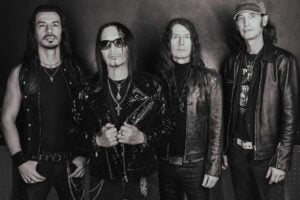
Bitch has some gigs coming up, and we hope to have some out-of-state gigs this summer. My current line-up kicks ass. It’s Chris Cardenas on guitar, Curt Remington on bass, and Scandal West on drums. Bitch is still rocking hard and still going strong!
Check out similar articles on ClassicRockHistory.com Just click on any of the links below……
Read More: Artists’ Interviews Directory At ClassicRockHistory.com
Read More: Classic Rock Bands List And Directory
Read More: 100 Essential Albums From The 1960s That Everyone Should Own
Betsy Weiss: The ClassicRockHistory.com Interview article published on ClassicRockHistory.com© 2026
Classicrockhistory.com claims ownership of all its original content and Intellectual property under United States Copyright laws and those of all other foreign countries. No one person, business, or organization is allowed to republish any of our original content anywhere on the web or in print without our permission. All photos used are either public domain Creative Commons photos or licensed officially from Shutterstock under license with ClassicRockHistory.com. All photo credits have been placed at the end of the article. Album Cover Photos are affiliate links and the property of Amazon and are stored on the Amazon server. Any theft of our content will be met with swift legal action against the infringing websites.