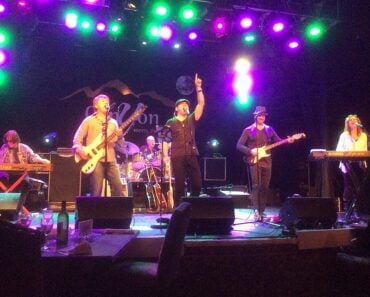
Feature Photo: Rs3, CC BY-SA 3.0 <http://creativecommons.org/licenses/by-sa/3.0/>, via Wikimedia Commons
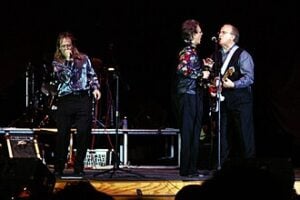
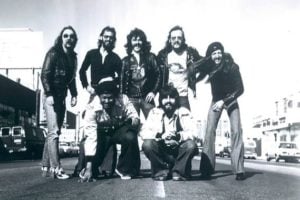
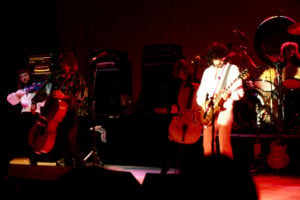
Supertramp, formed in 1969 in London, England, became one of the most successful progressive and pop-rock bands of the 1970s and 1980s. Over the years, the group released 11 studio albums, with Breakfast in America (1979) becoming their biggest commercial success, selling more than 18 million copies worldwide and winning two Grammy Awards. Supertramp achieved critical and commercial success with songs such as “The Logical Song,” “Take the Long Way Home,” “Dreamer,” “Goodbye Stranger,” and “Give a Little Bit.” The band’s dynamic sound was shaped by a changing lineup built around the contrasting songwriting and vocals of Rick Davies and Roger Hodgson. Supertramp’s final official performance took place in Madrid in 2012, and a planned 2015 European tour was canceled after Davies was diagnosed with multiple myeloma. Davies died on September 6, 2025, but the band’s legacy continues through a catalog that has sold more than 60 million albums worldwide.
Rick Davies
Rick Davies was the founding member of Supertramp and the only musician to appear on all of the band’s releases. Beginning in 1969 as a vocalist, keyboardist, pianist, and harmonica player, he became one of the driving forces behind the band’s sound. Davies played a pivotal role in albums such as Crime of the Century (1974), Breakfast in America (1979), and …Famous Last Words… (1982), contributing songs such as “Goodbye Stranger” and “Bloody Well Right.” His blues-influenced piano style, distinctive Wurlitzer work, and rich baritone vocals defined much of Supertramp’s musical identity.
Davies led Supertramp’s 1996 reformation for the album Some Things Never Change and subsequent tours, and he revived the band again in 2010. Supertramp played its final official concert in Madrid in 2012. A planned 2015 European tour was canceled after Davies was diagnosed with multiple myeloma, although he later continued playing locally with Ricky and the Rockets. Davies died on September 6, 2025, at the age of 81 after living with the disease for more than a decade.
Roger Hodgson
Roger Hodgson joined Supertramp in 1969, co-founding the band with Rick Davies. As a vocalist, guitarist, keyboardist, bassist, and multi-instrumentalist, Hodgson contributed significantly to the band’s early and most iconic works, including Crime of the Century, Even in the Quietest Moments… (1977), and Breakfast in America. His distinctive high tenor and introspective songwriting gave life to classics such as “Give a Little Bit,” “The Logical Song,” “Breakfast in America,” and “Take the Long Way Home.” Hodgson’s work often contrasted with Davies’, providing the creative duality that helped define the band’s success.
Hodgson left Supertramp in 1983 after the …Famous Last Words… album and tour to focus on his family and solo career. He released albums including In the Eye of the Storm (1984) and Open the Door (2000). He continued performing the Supertramp songs he wrote in his solo concerts, carrying that part of the band’s catalog into his later career.
Richard Palmer
Richard Palmer, later known professionally by his full surname Richard Palmer-James, was Supertramp’s original guitarist and lyricist, joining the band in 1969. His tenure was brief but important, and he contributed guitar, vocals, and lyrics to the debut album Supertramp (1970). Palmer-James wrote the lyrics for the album and helped define the band’s earliest progressive sound before leaving in 1971.
After Supertramp, Palmer-James became the principal lyricist for King Crimson during the John Wetton era. He wrote lyrics for Larks’ Tongues in Aspic (1973), Starless and Bible Black (1974), and Red (1974). His work with King Crimson became one of the major achievements of his post-Supertramp career.
Keith Baker
Keith Baker served as Supertramp’s drummer in its earliest formation from 1969 to 1970, when the group was still developing from the band initially known as Daddy. He left before Supertramp entered the studio to record its self-titled debut album and therefore does not appear on the band’s recordings.
After leaving Supertramp, Baker joined Uriah Heep and played on their second album, Salisbury (1971). His work there connected him with another important British progressive and hard rock band of the era.
Robert Millar
Robert Millar was an early member of Supertramp who replaced Keith Baker on drums in 1970. Millar played drums and percussion on the band’s debut album, Supertramp (1970), and was also associated with harmonica during the group’s formative period. He left in 1971 before Supertramp found commercial success. Millar died in 2024, leaving his place in the band’s history tied to its earliest recorded lineup.
Dave Winthrop
Dave Winthrop joined Supertramp in 1970 as a saxophonist and woodwind player, also contributing occasional vocals. Winthrop appeared on the band’s second album, Indelibly Stamped (1971), which moved the group toward a more direct rock sound. He remained with Supertramp until 1973, leaving shortly before the classic lineup behind Crime of the Century came together.
Kevin Currie
Kevin Currie became Supertramp’s drummer and percussionist in 1971 after Robert Millar’s departure. He played on Indelibly Stamped (1971), contributing to the album’s harder and more straightforward rock approach. Currie remained with the band until 1973, when Supertramp rebuilt the rhythm section that would carry them into their breakthrough period.
Frank Farrell
Frank Farrell joined Supertramp in 1971 on bass, backing vocals, and occasional piano and accordion. He appeared on Indelibly Stamped and co-wrote “Rosie Had Everything Planned” with Roger Hodgson. Farrell left Supertramp in 1972 and later worked with artists including Leo Sayer, Tim Buckley, and Renaissance. He died in 1997.
Dougie Thomson
Dougie Thomson joined Supertramp in 1972 as the band’s bassist and remained through its most successful years. His bass playing formed a crucial part of the rhythm section on every Supertramp release from Crime of the Century (1974) through Live ’88 (1988), including Breakfast in America. Thomson also appears on the archival live album Is Everybody Listening?, released in 2001 from a 1975 concert recording. After leaving Supertramp in 1988, Thomson largely stepped away from performing and worked in the music business.
Bob Siebenberg
Bob Siebenberg became Supertramp’s drummer in 1973 as the band’s classic lineup was taking shape. His powerful and precise drumming appears on every Supertramp studio album from Crime of the Century (1974) onward. Siebenberg remained through the band’s 1988 breakup, returned for the 1996 reunion through 2002, and came back again for the 2010 reunion period. He was part of the later touring era that led to Supertramp’s final official performance in 2012.
John Helliwell
John Helliwell joined Supertramp in 1973 as saxophonist and woodwind player, also contributing clarinet, keyboards, brass, backing vocals, and occasional percussion. Helliwell’s distinctive saxophone playing became one of the band’s signature sounds, especially on recordings such as “The Logical Song.” He was part of the classic lineup beginning with Crime of the Century and remained through the 1988 breakup. Helliwell returned for the 1996 reunion and again for the 2010 era, remaining part of Supertramp through its final performances.
Carl Verheyen
Carl Verheyen first worked with Supertramp as a touring guitarist during the 1985 and 1986 Brother Where You Bound tour. He became a formal member when Rick Davies reformed Supertramp in 1996. Verheyen contributed to Some Things Never Change (1997), the live release It Was the Best of Times (1999), and Slow Motion (2002), and returned for the 2010 reunion period. His versatile guitar work became an important part of Supertramp’s later live and studio sound.
Lee Thornburg
Lee Thornburg became a formal Supertramp member in 1996, bringing trumpet, trombone, and backing vocals to the expanded lineup. Before that, he had contributed trumpet and brass as an additional musician on Free as a Bird (1987). Thornburg appears on Some Things Never Change (1997), It Was the Best of Times (1999), and Slow Motion (2002), and later returned for the 2010 reunion period. His horn work added another layer to Supertramp’s later arrangements.
Cliff Hugo
Cliff Hugo served as Supertramp’s bassist from 1996 to 2002 and returned for the 2010 reunion period. He contributed to Some Things Never Change (1997), It Was the Best of Times (1999), and Slow Motion (2002). Hugo’s playing anchored the later rhythm section in both the studio and on tour, including the 70-10 Tour.
Tom Walsh
Tom Walsh joined Supertramp in 1996 as a percussionist and backing vocalist. He contributed to Some Things Never Change (1997), adding percussion to the band’s first studio album after its long hiatus. Walsh’s tenure ended in 1997, when Jesse Siebenberg took over the expanded multi-instrumentalist role in the touring lineup.
Mark Hart
Mark Hart became a formal member of Supertramp in 1996 after touring with the band from 1985 through 1988. A vocalist and multi-instrumentalist on keyboards and guitar, Hart appears on releases beginning with Free as a Bird (1987) and became central to the reunited band’s sound on Some Things Never Change and Slow Motion. Hart did not take part in the 2010 70-10 Tour, when Gabe Dixon handled the additional keyboard and vocal role. He was expected to return for the planned 2015 tour before it was canceled.
Jesse Siebenberg
Jesse Siebenberg joined Supertramp in 1997, following in the footsteps of his father, drummer Bob Siebenberg. He played percussion, keyboards, guitars, and provided vocals, with his contributions documented on It Was the Best of Times (1999), Slow Motion (2002), and the 70-10 Tour release. Jesse returned for the band’s 2010 reunion era and became one of the most versatile musicians in the later touring lineup.
Gabe Dixon
Gabe Dixon joined Supertramp for the 2010 reunion, playing keyboards and percussion and providing vocals. He filled the additional keyboard and vocal role during the 70-10 Tour and subsequent performances. Though his time with Supertramp was brief, Dixon became part of the band’s final touring lineup.
Cassie Miller
Cassie Miller joined Supertramp’s later touring lineup as a backing vocalist during the 2010 reunion era. Her harmonies expanded the vocal arrangements used in the 70-10 Tour and subsequent performances. Miller was part of the enlarged ensemble that accompanied the band’s final period on the road.
Scott Page
Scott Page joined Supertramp’s touring lineup in 1983 for the …Famous Last Words… tour, playing saxophone, woodwinds, guitar, and backing vocals. He later recorded with the group on Brother Where You Bound (1985) and also contributed to Free as a Bird (1987). Page remained involved with Supertramp through the 1985 and 1986 touring period before moving on to work with artists including Pink Floyd. His saxophone, guitar, and vocal contributions made him an important additional musician during the band’s transition after Roger Hodgson’s departure.
Fred Mandel
Fred Mandel joined Supertramp’s expanded touring lineup in 1983, contributing keyboards, guitar, synthesizers, and backing vocals during the …Famous Last Words… tour. His Supertramp involvement is documented in material connected with The Story So Far…, and he later received a credit associated with Some Things Never Change. Mandel’s wider career also includes major work with Queen, Alice Cooper, Elton John, and other artists.
Marty Walsh
Marty Walsh joined Supertramp’s recording and touring lineup in the mid-1980s as a guitarist and backing vocalist. He played on Brother Where You Bound (1985), toured with the group in 1985 and 1986, returned for the 1988 tour, and also performed on Free as a Bird and Live ’88. Walsh later became a music educator at Berklee while continuing his work as a session guitarist.
Brad Cole
Brad Cole first filled in during the 1985 Brother Where You Bound tour and returned for the 1987 and 1988 period, playing saxophone and keyboards. His work is documented on Live ’88 (1988). Cole’s versatility helped cover both keyboard and horn roles in Supertramp’s expanded live lineup.
Steve Reid
Steve Reid joined Supertramp as a percussionist during the Free as a Bird era. His work appears on Free as a Bird (1987) and Live ’88 (1988). Reid’s additional percussion expanded the rhythmic palette of the band’s late-1980s studio and concert sound.
Check out our additional articles on the band Supertramp
Complete List Of Supertramp Albums And Discography
Complete List Of Supertramp Songs From A to Z
Unreleased Classic Rock Photos Vol. 4 Supertramp, Eagles And More
Marty Walsh – The ClassicRockHistory.com Interview
Updated September 18, 2026
Complete List Of Supertramp Band Members article published on ClassicRockHistory.com © 2026