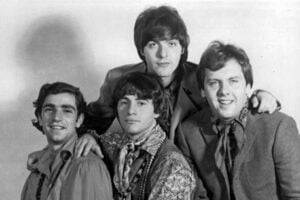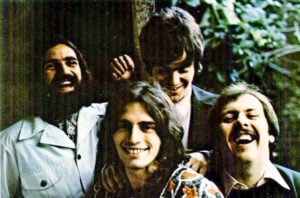
Atlantic Records, Public domain, via Wikimedia Commons
Our Complete List Of The Rascals Band Members takes a look at the musicians who made up one of the greatest American rock and soul bands of the 1960s. Originally known as The Young Rascals, this wonderful group came out of the New Jersey and New York music scene during a period when British bands were dominating the American charts. While the Beatles, Rolling Stones, Animals, and other British groups were enjoying enormous success, The Young Rascals were creating a sound of their own. It was a fantastic combination of rock and roll, rhythm and blues, gospel, and soul music.
I’ve always thought The Rascals were one of the most interesting groups of the 1960s because they didn’t sound quite like anybody else. They had the energy of a great rock and roll band, but their records were filled with the kind of soulful singing that you usually associated with artists coming out of Motown and Atlantic Records. Their vocal harmonies were magnificent, and Felix Cavaliere’s Hammond organ gave the band a sound that was immediately recognizable. Add Gene Cornish’s guitar playing, Eddie Brigati’s beautiful vocals, and Dino Danelli’s extraordinary drumming, and you had one incredible musical group.
The Rascals formed in 1965 with four original members: Felix Cavaliere, Eddie Brigati, Gene Cornish, and Dino Danelli. Several of the musicians had previously worked with Joey Dee and the Starliters, the group famous for “Peppermint Twist.” The Young Rascals eventually signed with Atlantic Records and released their self-titled debut album in 1966. They scored their first number-one hit that year with “Good Lovin’,” and followed it with a remarkable string of classic recordings, including “Groovin’,” “How Can I Be Sure,” “A Girl Like You,” “A Beautiful Morning,” and “People Got to Be Free.”
As the 1960s came to a close, the group began moving in a different musical direction. Their arrangements became more adventurous, incorporating elements of jazz, Latin music, and gospel. They also experienced several personnel changes, with Eddie Brigati leaving in 1970 and Gene Cornish departing in 1971. Felix Cavaliere and Dino Danelli continued recording under The Rascals name, bringing in additional musicians and singers for the group’s final albums, Peaceful World and The Island of Real. The original run of the band ended in 1972, although various reunions and later performances would keep the music alive.
The Rascals were inducted into the Rock and Roll Hall of Fame in 1997, recognition that was certainly well deserved. The original four members later reunited for special performances, most notably the theatrical concert production Once Upon a Dream, which began in 2012. That show reminded audiences how much tremendous music these four musicians had created together. For this complete band members article, we’re covering the original lineup first, followed by the musicians who joined the group during its later recording years and those who participated in important reunion and touring lineups.
The Original Rascals Band Members
Felix Cavaliere – Lead Vocals, Hammond Organ, Keyboards
Felix Cavaliere was one of the founding members of The Rascals and one of the most important creative forces behind the band’s music. Born on November 29, 1942, in Pelham, New York, Cavaliere developed his musical abilities studying piano and exploring classical music before becoming involved in rock and roll and rhythm and blues. He attended Syracuse University before eventually joining Joey Dee and the Starliters. That experience brought him into the New York-area music scene and helped lead to the formation of The Young Rascals in 1965.
Cavaliere’s Hammond organ was one of the defining sounds of the group. There weren’t many American rock bands during the mid-1960s that built so much of their musical personality around an organ, but The Rascals did exactly that. Felix also possessed a fantastic soulful voice, which made him an ideal lead singer for songs such as “Good Lovin’,” “Groovin’,” “I’ve Been Lonely Too Long,” and “People Got to Be Free.” His playing and singing combined the excitement of rock and roll with the warmth and emotion of traditional rhythm and blues.
Along with Eddie Brigati, Cavaliere composed many of The Rascals’ biggest hits. The songwriting partnership was responsible for recordings such as “Groovin’,” “How Can I Be Sure,” and “People Got to Be Free.” Cavaliere eventually became increasingly involved in the group’s production and musical arrangements. After Brigati and Cornish departed, he continued leading The Rascals through their final two studio albums. Those records featured longer compositions and more prominent jazz and gospel influences, reflecting his interest in expanding the band’s musical possibilities.
Following the group’s original breakup, Cavaliere pursued a solo career, releasing albums including Felix Cavaliere in 1974 and Destiny in 1975. He enjoyed a later Top 40 hit with “Only a Lonely Heart Sees” in 1980 and continued recording and performing for decades. Cavaliere also participated in various Rascals reunions, including the 2012–2013 Once Upon a Dream production. He remained active as a performer in 2026, continuing to bring the group’s classic songs to audiences.
Eddie Brigati – Lead Vocals, Backing Vocals, Percussion, Songwriting
Eddie Brigati was one of The Rascals’ original members and one of the most important voices in the group’s extraordinary collection of hit records. Born on October 22, 1945, in Garfield, New Jersey, Brigati grew up in a musical environment. His older brother David was already performing professionally with Joey Dee and the Starliters, and Eddie eventually became part of that musical circle. When The Young Rascals came together in 1965, Eddie joined Felix Cavaliere, Gene Cornish, and Dino Danelli as one of the four founding members.
Brigati brought a beautiful vocal quality to the group, and his contributions were especially important on the band’s more emotional recordings. His lead vocal performance on “How Can I Be Sure” remains one of the most magnificent recordings of the entire 1960s. I have always thought that song was a perfect example of what made The Rascals so special. The melody is beautiful, the arrangement is sophisticated, and Eddie delivers the lyrics with an incredible amount of sincerity. He also sang on many other recordings and added percussion and backing vocals to the group’s performances.
Perhaps Brigati’s most important contribution was his songwriting partnership with Felix Cavaliere. Eddie frequently contributed lyrics to songs that became some of the biggest hits in the band’s catalog. Together, they wrote “Groovin’,” “How Can I Be Sure,” “A Beautiful Morning,” and “People Got to Be Free,” among other recordings. Their ability to combine soulful melodies with meaningful lyrics helped distinguish The Rascals from many other American pop groups of the period.
Brigati departed The Rascals in 1970, although his work still appeared on recordings released afterward, including the 1971 album Search and Nearness. He later worked with his brother David, and the two released the album Lost in the Wilderness in 1976 under the name Brigati. Eddie rejoined the original Rascals for special reunion performances, including the 1997 Rock and Roll Hall of Fame induction and the Once Upon a Dream concerts in 2012 and 2013. In 2009, he and Felix Cavaliere were inducted into the Songwriters Hall of Fame.
Gene Cornish – Guitar, Harmonica, Lead and Backing Vocals
Gene Cornish was another essential member of the original Rascals lineup. Born on May 14, 1944, in Ottawa, Canada, Cornish grew up in the United States and became involved in the New Jersey and New York rock and roll scene. Like Cavaliere and Brigati, he had performed with Joey Dee and the Starliters before helping form The Young Rascals. Gene brought the guitar sound that helped balance Felix Cavaliere’s Hammond organ, giving the group’s early recordings a wonderful combination of rock and rhythm and blues.
Cornish’s guitar playing was especially important to the band’s energetic early hits. Listen to “Good Lovin’,” “You Better Run,” or “Come On Up,” and you’ll hear how much his guitar contributed to the excitement of those recordings. He also played harmonica and sang both lead and backing vocals. One of the great things about The Rascals was that the musicians understood how to work together without getting in each other’s way. Cornish knew when a song needed a strong guitar riff and when the instrument should simply support the vocals and organ.
Gene also contributed as a songwriter. He shared writing credit with Felix Cavaliere on “Love Is a Beautiful Thing” and wrote other material recorded by the group. His versatility helped The Rascals move between different musical styles during the late 1960s. The band could perform an energetic rock song one minute and then turn around and deliver a sophisticated soul ballad or a recording filled with unusual instrumental arrangements.
Cornish left the original group in 1971. He subsequently joined forces with Dino Danelli in the band Bulldog, which released two studio albums during the 1970s. The two musicians also became involved in Fotomaker, a rock band that included Wally Bryson of the Raspberries. Cornish returned for several Rascals reunions, including the 1988 performances and the Once Upon a Dream production. He also continued performing The Rascals’ music with Felix Cavaliere in later years, helping keep the band’s original sound in front of audiences.
Dino Danelli – Drums and Percussion
Dino Danelli was one of the greatest rock drummers of the 1960s. That’s a pretty big statement when you consider how many extraordinary drummers emerged during that decade, but I’ve always thought Danelli belonged among the finest. Born on July 23, 1944, in Jersey City, New Jersey, he developed his playing through jazz before becoming involved in rock and rhythm and blues. His musical background gave him a tremendous sense of timing and an ability to play complicated rhythms without making them sound complicated.
Danelli joined Felix Cavaliere, Eddie Brigati, and Gene Cornish when The Young Rascals formed in 1965. His drumming was a major part of the band’s early success. Listen closely to “Good Lovin’,” and you’ll hear how much excitement he brings to the recording. His playing had an energy that made the song almost impossible to sit still through. He was also a remarkable live performer, known for his dramatic stick twirling and an incredible sense of showmanship. But those visual tricks never got in the way of his musicianship. The man could really play.
As The Rascals’ music became more sophisticated, Danelli demonstrated his ability to move beyond straightforward rock and roll rhythms. He could handle jazz-influenced arrangements, Latin percussion patterns, and the more adventurous compositions that appeared on albums such as Freedom Suite and Peaceful World. He remained with Felix Cavaliere during the group’s final recording years, making him one of only two founding members to participate in the band’s entire original studio-album run.
Following The Rascals’ breakup, Danelli worked with Gene Cornish in Bulldog and Fotomaker. He also became involved with Little Steven and the Disciples of Soul, contributing his drumming to Steve Van Zandt’s early solo projects. Danelli participated in several Rascals reunions, including the memorable Once Upon a Dream concerts. Sadly, Dino Danelli passed away on December 15, 2022, at the age of seventy-eight. He left behind an extraordinary body of work and a reputation as one of the most exciting drummers of his generation.
Later Rascals Members and Important Recording Contributors
David Brigati – Background Vocals and Vocal Arrangements
David Brigati deserves a special place in any complete history of The Rascals. Although he was never one of the four officially recognized founding members, his contributions to the group’s recordings were enormously important. Born on October 29, 1940, David was the older brother of Eddie Brigati and had established himself as a professional singer before The Young Rascals were formed. He had performed with the Hi-Fives and Joey Dee and the Starliters, developing a reputation as a talented vocalist and harmony arranger.
David became a major contributor to The Rascals’ sound, providing background vocals and helping arrange the magnificent vocal harmonies heard on many of the group’s biggest hits. His work can be heard on recordings including “Good Lovin’,” “Groovin’,” “How Can I Be Sure,” “A Beautiful Morning,” and “People Got to Be Free.” He also contributed lead vocals to the song “Once Upon a Dream.” His involvement was so important that he became known among musicians and longtime fans as the fifth Rascal.
After his work with The Rascals, David continued singing and collaborating with his brother Eddie. The two released Lost in the Wilderness in 1976 and remained involved in music for decades. David also contributed vocal arrangements and background singing to other recordings, including King Harvest’s “Dancing in the Moonlight.” He passed away on March 7, 2026, at the age of eighty-five. Although he wasn’t an official member of the classic quartet, his musical contributions were far too important to leave out of this article.
Howard “Buzzy” Feiten – Guitar, Bass, Vocals
Howard “Buzzy” Feiten joined The Rascals during the group’s later recording years, helping Felix Cavaliere and Dino Danelli develop a different musical sound after the departure of Eddie Brigati and Gene Cornish. Feiten was already an accomplished guitarist, having performed with the Paul Butterfield Blues Band. His playing combined blues, jazz, and rock influences, making him an excellent fit for the increasingly adventurous direction Cavaliere wanted to explore.
Feiten contributed guitar, bass, and vocals to the group’s final Columbia Records albums, Peaceful World in 1971 and The Island of Real in 1972. He also contributed songwriting to Peaceful World, including “In and Out of Love” and “Icy Water.” These recordings sounded quite different from the group’s early hits, with longer instrumental passages and more elaborate arrangements. Feiten’s musical background helped bring those ideas to life.
After his time with The Rascals, Feiten became a respected guitarist and recording musician. He worked with a variety of artists and later became associated with the Larsen-Feiten Band. His contributions to the final Rascals recordings are an important part of the group’s history, particularly for fans who appreciate its more experimental work.
Robert “Pops” Popwell – Bass Guitar
Robert Popwell was a talented bassist who contributed to The Rascals during their final recording years. Known professionally as Pops Popwell, he was an accomplished rhythm and blues and jazz musician whose playing was perfectly suited to the direction the band was exploring in the early 1970s. The Rascals had always relied on strong bass parts, even during the original quartet’s recording years, but the later albums made the rhythm section an increasingly important part of the arrangements.
Popwell contributed bass guitar to the Columbia-era recordings, including Peaceful World and The Island of Real. His involvement was part of a broader expansion of the group’s personnel, which included additional guitarists, percussionists, and vocalists. The records featured longer compositions and stronger jazz and soul influences than many of the band’s earlier releases. Popwell’s experience with those styles helped support the arrangements.
Outside The Rascals, Popwell became known for his work with the Crusaders and other prominent jazz, funk, and soul musicians. His career demonstrated the kind of musical versatility that made him valuable in both recording studios and concert settings. He passed away in 2017, leaving behind an impressive catalog of performances that extended far beyond his time with The Rascals.
Danny Weis – Guitar
Danny Weis was one of the guitarists who became involved with The Rascals during the group’s changing lineup around 1970 and 1971. He was already known for his work with Iron Butterfly and Rhinoceros, two bands associated with the psychedelic and hard-rock sounds of the late 1960s. Weis brought a background in blues-influenced electric guitar, which gave the group’s later arrangements another musical dimension.
His time with The Rascals was relatively brief, taking place during the transition between the band’s Atlantic Records period and its final Columbia-era lineup. He was associated with the group during the period when Buzzy Feiten was also moving in and out of the guitar position. Although Weis did not become as closely identified with the band as the original members, he was part of an important period when The Rascals were rebuilding their sound and experimenting with different instrumental combinations.
Weis continued working as a guitarist after his involvement with The Rascals. His career included several significant rock projects, but his contribution to the band’s changing lineup deserves recognition. The early 1970s represented a very different chapter in The Rascals’ history, and musicians like Weis helped the group continue performing and recording through that transition.
Annie Sutton – Lead and Background Vocals
Annie Sutton became associated with The Rascals during the group’s final period, when Felix Cavaliere began exploring increasingly sophisticated vocal and instrumental arrangements. Following Eddie Brigati’s departure, the band expanded its use of additional singers, allowing Cavaliere to develop compositions that drew more heavily from gospel, jazz, and soul music. Sutton was one of the vocalists who contributed to that new sound.
Sutton appeared on the 1971 album Peaceful World, contributing to its vocal arrangements and singing lead on “Mother Nature Land.” Her involvement helped give the album a broader vocal character than the original four-piece lineup had used on most of its earlier recordings. She was part of the personnel associated with the later Rascals period, when the band was developing longer compositions and arrangements that often extended beyond traditional pop-song structures.
Although Sutton wasn’t part of the original hit-making lineup, she deserves recognition for her work during the Columbia Records years. Her contributions helped distinguish the final Rascals recordings from the group’s earlier Atlantic albums. For listeners interested in hearing how far the band moved musically, Peaceful World is an important album to explore.
Molly Holt – Lead and Background Vocals
Molly Holt was another important vocalist who became involved with The Rascals during the early 1970s. Like Annie Sutton, she contributed to the group’s expanded arrangements after the departure of Eddie Brigati. The band was moving away from the compact rock and soul sound that had produced its biggest singles, and singers such as Holt helped Felix Cavaliere explore more elaborate harmonies and a stronger gospel influence.
Holt contributed vocals to the 1971 album Peaceful World, including a featured performance on “Love Me.” The recording was part of a project that brought together numerous experienced musicians from the jazz and soul worlds. That expanded musical approach was quite different from the sound of “Good Lovin'” or “Groovin’,” demonstrating how much The Rascals had changed since the mid-1960s.
Molly Holt’s work represents a relatively brief but important chapter in the group’s history. She wasn’t involved in the band’s original string of hit singles, but her singing contributed to the later material that showed a different side of The Rascals. Including her alongside the other later personnel helps provide a more complete picture of how the band developed before its original breakup in 1972.
Rascals Reunion and Touring Band Members
The original Rascals lineup reunited for various performances after the band’s 1972 breakup. Some appearances featured all four founding members, while others used an expanded lineup with additional instrumentalists and singers. It’s important to distinguish these later touring musicians from the members who recorded the original albums. The following musicians participated in documented reunion or Rascals-related touring lineups.
Mel Owens – Vocals and Percussion
Mel Owens joined the expanded lineup assembled for the 1988 Rascals reunion tour. Eddie Brigati did not participate in that reunion, so Owens helped provide the additional vocals and percussion that were needed to perform the group’s classic songs. He appeared alongside Felix Cavaliere, Gene Cornish, and Dino Danelli during this period. His involvement helped the band recreate the layered vocal arrangements that had been such an important part of its original recordings.
Steve Mackey – Bass Guitar
Steve Mackey was among the musicians associated with the expanded 1988 reunion lineup. His bass playing helped support the arrangements as The Rascals returned to performing material from their original hit-making years. The reunion band included additional instrumentalists so the original members could perform songs that had featured more elaborate studio arrangements.
Ed Mattey – Guitar
Guitarist Ed Mattey was another musician associated with the 1988 reunion performances. With Gene Cornish returning as one of the group’s founding guitarists, the additional guitar position allowed the band to recreate some of the layered instrumental parts from its recordings. Mattey’s involvement was part of the larger ensemble assembled for the reunion rather than the original Rascals lineup.
Dena Iverson – Background Vocals
Dena Iverson contributed background vocals during the 1988 reunion period. The Rascals’ recordings had always relied heavily on vocal harmonies, and the expanded touring group included additional singers to help reproduce those arrangements. Iverson’s role was particularly important because Eddie Brigati, one of the original group’s defining voices, was not participating in the reunion tour.
Cindy McCabe – Background Vocals
Cindy McCabe is also listed among the vocalists associated with the expanded 1988 Rascals touring ensemble. The additional singers helped support the group’s soul-influenced arrangements and allowed the founding musicians to perform their famous recordings with a fuller stage sound. These touring contributions should be distinguished from membership in the original recording quartet.
Bill Pascali – Vocals and Keyboards
Bill Pascali became involved in a later touring version of the group known as the New Rascals. He had previously been associated with Vanilla Fudge and brought his keyboard playing and vocals to the project. During the 2000s, he performed alongside Gene Cornish and Dino Danelli, helping present The Rascals’ classic songs to audiences who may never have had an opportunity to see the original group.
Charlie Souza – Bass Guitar and Vocals
Charlie Souza was another musician associated with the New Rascals lineup during the 2000s. He performed bass guitar and vocals alongside Gene Cornish, Dino Danelli, and Bill Pascali. The project was one of several later efforts by members of the original group to keep the music alive through live performances. Although it was not the classic quartet, it represented an important continuation of The Rascals’ concert history.
The Rascals Reunion Years
The original Rascals reunited on several important occasions after their 1972 breakup. Three founding members, Felix Cavaliere, Gene Cornish, and Dino Danelli, performed together during the 1988 Atlantic Records anniversary celebration and subsequent reunion activities. Eddie Brigati was not part of that particular touring lineup, but he reunited with his former bandmates for special events in later years.
All four original members appeared together when The Rascals were inducted into the Rock and Roll Hall of Fame in 1997. They reunited again in 2010 for a benefit performance at Tribeca Grill in New York City, an evening that included appearances by Bruce Springsteen and Steven Van Zandt. The connection with Van Zandt would become particularly important to the band’s next major reunion project.
In December 2012, the original Rascals lineup returned for Once Upon a Dream, a theatrical concert production developed by Steven and Maureen Van Zandt. The show combined live performances with archival footage, filmed interviews, and dramatic presentations about the group’s history. It opened at the Capitol Theatre in Port Chester, New York, before moving to Broadway in 2013 and touring to other locations. Seeing Felix Cavaliere, Eddie Brigati, Gene Cornish, and Dino Danelli performing together again was a remarkable experience for longtime fans of the band.
Later concert appearances continued to celebrate the music of The Rascals, particularly through performances involving Felix Cavaliere and Gene Cornish. With Dino Danelli’s passing in 2022, the possibility of another reunion featuring all four founding members came to an end. However, the band’s recordings remain an extraordinary part of American rock and soul history. Those songs have never lost their beauty, energy, or ability to bring back memories of one of the most exciting decades in popular music.
Read More: Top 10 Young Rascals Songs
For a complete look at the various types of articles we have on the site, make sure to check out our Classic Rock Bands List and Directory.
Don’t miss our in-depth article on the Top 500 Classic Rock Songs Of All Time.
If you love interviews with legendary rock stars, you’ll find them in our Rock Star Interviews Directory.
Complete List Of The Rascals Band Members article published on ClassicRockHistory.com © 2026