Feature Photo: Dina Regine, CC BY-SA 2.0 <https://creativecommons.org/licenses/by-sa/2.0>, via Wikimedia Commons
Ask any classic rock fan to put together a list of favorite bands, and there is a good chance Traffic will be included. Traffic was formed in Birmingham, England, in 1967 by Steve Winwood, Jim Capaldi, Chris Wood, and Dave Mason. Fans loved the way the group blended rock, jazz, folk, blues, and psychedelia into a sound that stood apart from its contemporaries.
Traffic released its first single, “Paper Sun,” in 1967, followed later that year by the debut album Mr. Fantasy. The band issued eight principal studio albums, including the hybrid studio-and-live release Last Exit, before its final studio reunion album, Far from Home, appeared in 1994.
The group experienced several breakups, reunions, and lineup changes. Dave Mason left and returned more than once, while Steve Winwood, Jim Capaldi, and Chris Wood formed the core of the band’s most exploratory period. Traffic’s willingness to move between concise songwriting and extended improvisation made the group an important bridge between psychedelic rock, progressive rock, folk rock, and jazz-influenced album music.
Traffic was inducted into the Rock and Roll Hall of Fame in 2004. The chronological discography below presents the band’s eight principal studio albums and three major official live releases.
Traffic Studio Albums
Mr. Fantasy (1967)

Released: December 1967
Mr. Fantasy was the groundbreaking debut album by Traffic. It showcased the talents of Jim Capaldi, Steve Winwood, Chris Wood, and Dave Mason. The album reached number 16 on the UK Albums Chart and number 88 in the United States.
Recorded at Olympic Studios in London, the album was produced by Jimmy Miller and engineered by Phill Brown. The group combined Winwood’s R&B background with folk, jazz, psychedelia, and the unusual instrumental colors supplied by Wood and Mason.
The original British edition did not include Traffic’s hit singles “Paper Sun” and “Hole in My Shoe,” following the common 1960s practice of keeping singles separate from albums. The United States edition was initially titled Heaven Is in Your Mind and used a modified sequence that added singles while removing some of Mason’s material.
Songs such as “Dear Mr. Fantasy,” “Coloured Rain,” “No Face, No Name, No Number,” and “Heaven Is in Your Mind” established Traffic as one of the most adventurous new British groups of the period.
Original UK Track Listing:
- “Heaven Is in Your Mind” – 4:16
- “Berkshire Poppies” – 2:55
- “House for Everyone” – 2:04
- “No Face, No Name, No Number” – 3:30
- “Dear Mr. Fantasy” – 5:40
- “Dealer” – 3:11
- “Utterly Simple” – 3:16
- “Coloured Rain” – 2:41
- “Hope I Never Find Me There” – 2:09
- “Giving to You” – 4:16
Traffic (1968)
![Traffic[LP]](https://m.media-amazon.com/images/I/51occZ36XEL._SL500_.jpg)
Released: October 1968
Traffic, the band’s second studio album, represented a pivotal moment in the group’s history. It was the final studio album completed by the original lineup before Traffic’s first breakup and reached number nine in the United Kingdom and number 17 in the United States.
Following Dave Mason’s departure after Mr. Fantasy, the guitarist returned during the making of this record. His concise pop and folk compositions existed beside the increasingly jazz-oriented work of Winwood, Capaldi, and Wood. Those different instincts gave the album much of its variety while also revealing the creative tensions inside the band.
Dave Mason contributed “You Can All Join In,” “Don’t Be Sad,” “Vagabond Virgin,” “Cryin’ to Be Heard,” and the enduring “Feelin’ Alright?” The Winwood and Capaldi material included “Pearly Queen,” “No Time to Live,” and “40,000 Headmen.”
The result was a rich mixture of rock, folk, blues, soul, and jazz that demonstrated how quickly Traffic had developed beyond the psychedelic character of its debut.
CD Track Listing:
- “You Can All Join In” – 3:34
- “Pearly Queen” – 4:20
- “Don’t Be Sad” – 3:24
- “Who Knows What Tomorrow May Bring” – 3:12
- “Feelin’ Alright?” – 4:16
- “Vagabond Virgin” – 5:21
- “(Roamin’ Thro’ the Gloamin’ with) 40,000 Headmen” – 3:15
- “Cryin’ to Be Heard” – 5:14
- “No Time to Live” – 5:10
- “Means to an End” – 2:39
Last Exit (1969)

Released: May 1969
Last Exit was assembled after Traffic’s initial breakup and is generally treated as the band’s third album. The first side collects studio singles, B-sides, and outtakes, while the second side contains two extended live performances recorded at the Fillmore Auditorium in San Francisco in March 1968.
The studio material includes “Just for You,” a Dave Mason solo single backed by Traffic musicians, and “Shanghai Noodle Factory,” written by Steve Winwood, Jim Capaldi, Chris Wood, producer Jimmy Miller, and arranger Larry Fallon. “Medicated Goo” became an enduring live favorite after Traffic reunited.
The album cover featured the original lineup of Traffic, including Steve Winwood, Jim Capaldi, Chris Wood, and Dave Mason. The release remains an unusual bridge between the studio and live sides of Traffic. Mason appears only on selected studio tracks.
The live side demonstrates the group’s ability to stretch material into long, cohesive performances. “Feelin’ Good” and “Blind Man” provided an early glimpse of the improvisational direction Traffic would explore after reuniting.
Track Listing:
- “Just for You” – 2:18
- “Shanghai Noodle Factory” – 5:06
- “Something’s Got a Hold of My Toe” – 2:14
- “Withering Tree” – 3:04
- “Medicated Goo” – 3:36
- “Feelin’ Good” – 10:40
- “Blind Man” – 7:06
John Barleycorn Must Die (1970)

Released: July 1970
John Barleycorn Must Die marked Traffic’s return after its first breakup. Steve Winwood initially entered the studio intending to make a solo album, but the project became a Traffic reunion when Jim Capaldi and Chris Wood joined him.
The album moved away from the shorter psychedelic pop songs of Traffic’s early period. Jazz, blues, progressive rock, and traditional English folk music became central to the arrangements, while the trio format gave Winwood, Capaldi, and Wood room for extended instrumental interplay.
The album reached number five in the United States, making it Traffic’s highest-charting American studio album. It also reached number 11 in the United Kingdom. “Empty Pages” entered the Billboard Hot 100, while “Glad,” “Freedom Rider,” and the traditional title song became lasting parts of the band’s repertoire.
Dave Mason did not participate in the album, leaving Steve Winwood, Jim Capaldi, and Chris Wood to define the new version of Traffic.
Original Album Track Listing:
- “Glad” – 7:01
- “Freedom Rider” – 5:27
- “Empty Pages” – 4:47
- “Stranger to Himself” – 3:52
- “John Barleycorn” – 6:22
- “Every Mother’s Son” – 7:05
The Low Spark of High Heeled Boys (1971)
![The Low Spark Of High Heeled Boys[LP]](https://m.media-amazon.com/images/I/51wAZSUyvPL._SL500_.jpg)
Released: November 1971
The Low Spark of High Heeled Boys became one of Traffic’s most successful and enduring albums. The record reached number seven in the United States and was eventually certified Platinum.
The album introduced percussionist Rebop Kwaku Baah and included the only Traffic studio appearances by drummer Jim Gordon and bassist Ric Grech. The expanded lineup allowed the group to create long, spacious arrangements built from jazz, folk, blues, rock, and classical influences.
The eleven-minute title track became the center of the album. Its restrained groove, Steve Winwood’s electric piano, Chris Wood’s saxophone, and Jim Capaldi’s lyric created one of Traffic’s defining recordings. Capaldi sang lead on “Light Up or Leave Me Alone” and “Rock & Roll Stew,” bringing another voice into the band’s studio work.
The original LP jacket used clipped corners to create the illusion of a three-dimensional cube, making the physical package almost as distinctive as the music.
CD Track Listing:
- “Hidden Treasure” – 4:16
- “The Low Spark of High Heeled Boys” – 11:35
- “Light Up or Leave Me Alone” – 4:55
- “Rock & Roll Stew” – 4:29
- “Many a Mile to Freedom” – 7:18
- “Rainmaker” – 7:39
Shoot Out at the Fantasy Factory (1973)
![Shoot Out At The Fantasy Factory[LP]](https://m.media-amazon.com/images/I/51bf1yCTd8L._SL500_.jpg)
Released: January 1973
Shoot Out at the Fantasy Factory followed The Low Spark of High Heeled Boys and continued Traffic’s move toward extended jazz-rock arrangements. The album reached number six on the Billboard chart and received a Gold certification in the United States.
The sessions featured members of the Muscle Shoals Rhythm Section. David Hood played bass and Roger Hawkins played drums throughout the album, while Barry Beckett and Jimmy Johnson contributed to Chris Wood’s instrumental “Tragic Magic.”
Steve Winwood and Jim Capaldi wrote the remaining four tracks. “Roll Right Stones” and “(Sometimes I Feel So) Uninspired” extended beyond seven minutes, giving the musicians room to develop slow-building grooves and improvisational passages.
The full-length original mixes were not consistently used on later editions. The 2003 remaster restored the longer versions of “Roll Right Stones” and “(Sometimes I Feel So) Uninspired.”
CD Track Listing:
- “Shoot Out at the Fantasy Factory” – 6:05
- “Roll Right Stones” – 13:40
- “Evening Blue” – 5:19
- “Tragic Magic” – 6:39
- “(Sometimes I Feel So) Uninspired” – 7:31
When the Eagle Flies (1974)

Released: September 1974
When the Eagle Flies was Traffic’s seventh studio album and the band’s final studio release before a twenty-year break. The principal lineup consisted of Steve Winwood, Jim Capaldi, Chris Wood, and bassist Rosko Gee. Rebop Kwaku Baah contributed percussion to two tracks before leaving during the album’s production.
Winwood expanded the group’s sound with a wider range of keyboards, including synthesizers. The album continued Traffic’s American success, becoming the band’s fourth consecutive studio record to reach the Top 10 in the United States.
“Dream Gerrard,” co-written with Vivian Stanshall, stretches beyond eleven minutes, while “Walking in the Wind,” “Graveyard People,” and the title track balance extended arrangements with a darker and more reflective atmosphere.
Traffic began touring behind the album but disbanded before completing the tour. Winwood and Capaldi would not revive the name again until 1994.
CD Track Listing:
- “Something New” – 3:15
- “Dream Gerrard” – 11:03
- “Graveyard People” – 6:05
- “Walking in the Wind” – 6:48
- “Memories of a Rock N’ Rolla” – 4:50
- “Love” – 3:20
- “When the Eagle Flies” – 4:24
Far from Home (1994)

Released: May 9, 1994
Far from Home was Traffic’s eighth and final studio album. The record reunited Steve Winwood and Jim Capaldi twenty years after When the Eagle Flies.
The album was recorded near Dublin, Ireland, and mixed at Château Miraval in southern France. Winwood performed most of the instruments and lead vocals, while Capaldi contributed drums, percussion, backing vocals, and lyrics.
Davy Spillane played uilleann pipes on “Holy Ground,” while Mick Dolan contributed rhythm guitar and programming to “Nowhere Is Their Freedom.” The album combined Traffic’s familiar jazz, folk, and progressive-rock elements with polished 1990s production.
Far from Home reached number 29 on the UK Albums Chart and number 33 in the United States. The reunion also led to Traffic’s first tour since the 1970s.
CD Track Listing:
- “Riding High” – 5:18
- “Here Comes a Man” – 5:10
- “Far from Home” – 8:38
- “Nowhere Is Their Freedom” – 7:00
- “Holy Ground” – 7:49
- “Some Kinda Woman” – 5:42
- “Every Night, Every Day” – 5:41
- “This Train Won’t Stop” – 5:58
- “State of Grace” – 7:18
- “Mozambique” – 4:26
Traffic Live Albums
Welcome to the Canteen (1971)

Released: September 1971
Welcome to the Canteen was Traffic’s first live album. The original cover credited Steve Winwood, Jim Capaldi, Chris Wood, Dave Mason, Ric Grech, Jim Gordon, and Rebop Kwaku Baah individually rather than using the Traffic name, although later editions have generally treated it as part of the band’s catalog.
The performances were recorded during Dave Mason’s brief 1971 return. The set combines Traffic material, songs from Mason’s solo album Alone Together, and “Gimme Some Lovin’,” which Winwood had originally recorded with the Spencer Davis Group.
Track Listing:
- “Medicated Goo” – 3:34
- “Sad and Deep as You” – 3:48
- “40,000 Headmen” – 6:21
- “Shouldn’t Have Took More Than You Gave” – 5:36
- “Dear Mr. Fantasy” – 10:53
- “Gimme Some Lovin’” – 9:02
On the Road (1973)
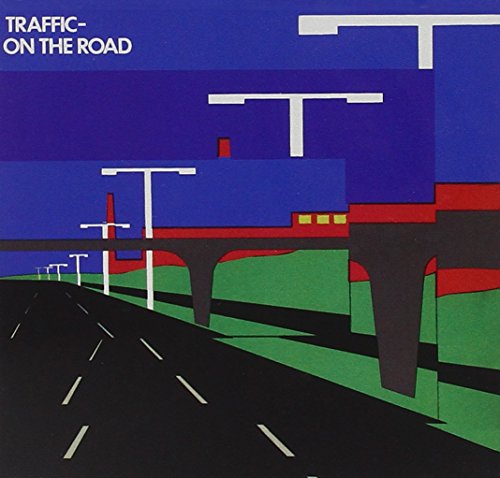
Released: October 1973
On the Road captures Traffic during its 1973 European tour following Shoot Out at the Fantasy Factory. The expanded touring lineup included Steve Winwood, Jim Capaldi, Chris Wood, Rebop Kwaku Baah, David Hood, Roger Hawkins, and Barry Beckett.
The album emphasizes extended improvisation. Familiar studio recordings are stretched into long live performances shaped by two drummers, multiple percussionists, saxophone, flute, organ, electric piano, and the deep groove of the Muscle Shoals musicians.
Track Listing:
- “Glad” / “Freedom Rider” – 20:35
- “Tragic Magic” – 8:39
- “(Sometimes I Feel So) Uninspired” – 10:31
- “Shoot Out at the Fantasy Factory” – 6:51
- “Light Up or Leave Me Alone” – 10:56
- “The Low Spark of High Heeled Boys” – 17:47
The Last Great Traffic Jam (2005)

Released: November 2005
The Last Great Traffic Jam was released as a concert DVD with an accompanying live CD. The performances were recorded during Traffic’s 1994 reunion tour supporting Far from Home.
The release captures Steve Winwood and Jim Capaldi revisiting material from across Traffic’s history. The set moves from early songs such as “Pearly Queen” and “40,000 Headmen” through the extended title track from The Low Spark of High Heeled Boys and selections from Far from Home.
The collection took on additional significance because Jim Capaldi died in January 2005, several months before its release.
Bonus CD Track Listing:
- “Pearly Queen” – 5:35
- “Medicated Goo” – 5:38
- “Mozambique” – 5:30
- “40,000 Headmen” – 5:14
- “Glad” – 6:55
- “Walking in the Wind” – 7:12
- “The Low Spark of High Heeled Boys” – 14:36
- “Light Up or Leave Me Alone” – 16:26
- “Dear Mr. Fantasy” – 7:44
- “John Barleycorn (Must Die)” – 6:57
- “Gimme Some Lovin’” – 7:25
More Traffic, Steve Winwood, and Dave Mason Articles
For more on the band and its principal members, explore our Top 10 Traffic Songs, Top 10 Steve Winwood Songs, and Top 10 Dave Mason Songs.
Updated August 4, 2026.
Complete List of Traffic Albums and Discography article published on ClassicRockHistory.com © 2026