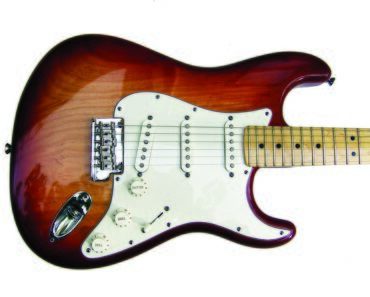
The 2025 Fender Player II Stratocaster in Metallic Oxblood is a limited-edition variation that takes the familiar Player II platform in a louder and more specialized direction. Its contoured alder body, Modern C neck profile, 9.5-inch-radius rosewood fingerboard, two-point tremolo, and ClassicGear tuners retain the practical foundation of Fender’s standard Player II Stratocaster.
The important changes are the roasted maple neck, the deep Oxblood finish, and a complete set of Seymour Duncan Hot Chicken Strat Stack pickups. Those additions make this model more than a cosmetic special edition. It is aimed at players who want recognizable Stratocaster response with greater output and far less noise than traditional single-coil pickups produce.
This is still a straightforward SSS Stratocaster rather than a feature-heavy modern redesign. There is no coil split, boost circuit, locking tremolo, or expanded switching system. The appeal comes from combining a comfortable contemporary Fender neck with hotter noiseless pickups and a finish unavailable in the regular Player II range.
Construction and Materials
The guitar uses a solid alder body with the traditional Stratocaster contours. Alder remains a sensible choice for this design because it keeps the instrument visually and structurally close to Fender’s long-established formula while providing a balanced foundation for the upgraded pickups.
The gloss polyester body finish should withstand regular rehearsals, recording sessions, and live use better than a delicate vintage-style finish. The Oxblood color is a dark metallic red that can look nearly burgundy under subdued lighting and brighter when the metallic element catches the light.
Roasted Maple Neck and Rosewood Fingerboard
The roasted maple neck is one of the strongest reasons to choose this limited edition over a standard Player II Stratocaster. Roasting removes moisture from the wood and improves its resistance to environmental changes. It also gives the maple a darker appearance that works especially well with the Oxblood body.
Fender uses its Modern C profile, a satin urethane finish on the back, and a 25.5-inch scale length. The profile is substantial enough for chord work without becoming bulky, while the satin finish avoids the sticky sensation that some gloss-finished necks develop under warm stage lights.
The rosewood fingerboard has a 9.5-inch radius, rolled edges, 22 medium-jumbo frets, and a 1.65-inch synthetic-bone nut. This combination offers a more relaxed feel than a sharply edged new neck while retaining enough curvature for comfortable chords and enough fret size for controlled bends and vibrato.
Seymour Duncan Hot Chicken Strat Pickups
The defining feature is the SSS set of Seymour Duncan Hot Chicken Strat pickups. These are noiseless stacked-coil pickups built with Alnico 5 rod magnets. Seymour Duncan designed them to preserve Stratocaster clarity and attack while delivering more output than a traditional vintage-spec single coil.
The stacked construction cancels the 60-cycle hum normally associated with a Stratocaster. That is particularly useful with overdrive, compression, distortion, and high-volume stage rigs, where conventional single coils can become difficult to control.
The neck pickup provides the rounded response expected from that position but with a stronger push into an amplifier. The middle pickup supplies the central Strat voice and combines with the neck or bridge through the five-way switch. The bridge model has additional output and bite, giving lead lines and rock rhythm parts more authority than a low-output vintage bridge pickup.
These pickups are not intended to recreate an untouched 1950s Stratocaster. Their stronger output, natural compression, and hum-canceling construction produce a more modern response. Players who value complete silence, gain compatibility, and consistent definition should appreciate the change. Players whose priority is the most delicate vintage sparkle may prefer lower-output conventional single coils.
Controls and Switching
The control layout remains familiar: one master volume, a tone control for the neck and middle pickups, a separate tone control for the bridge pickup, and a five-position blade switch. Giving the bridge pickup its own tone control is especially useful because the Hot Chicken bridge model has enough output and upper-mid presence to benefit from small adjustments.
The five positions cover the bridge pickup, bridge and middle together, middle alone, middle and neck together, and neck alone. The two combination settings retain the phase relationships players expect from a Stratocaster, although the hotter stacked pickups emphasize output and smoothness more than an extremely low-output vintage set would.
Bridge, Tuners, and Hardware
The two-point synchronized tremolo uses bent-steel saddles. This design gives the bridge a smoother operating feel than a traditional six-screw system while retaining the familiar Stratocaster vibrato response. It is suitable for chord shimmer, light pitch dips, and expressive lead work when the guitar is properly set up.
ClassicGear tuners combine a vintage-looking housing with an 18:1 gear ratio. They provide accurate adjustments without changing the traditional appearance of the headstock. A synthetic-bone nut supports dependable tuning, although tremolo stability will always depend on correct string installation, nut-slot condition, and setup.
The hardware is practical rather than luxurious. Players should also note that the guitar does not include a case or gig bag, so safe transport adds another expense.
Playability
The Modern C profile, satin neck finish, rolled fingerboard edges, and medium-jumbo frets make this a broadly accessible instrument. It should suit players who move between open chords, barre chords, blues bends, country-style double-stops, and modern rock lead work.
The 9.5-inch radius is a sensible middle ground. It feels more forgiving for contemporary bending than a vintage 7.25-inch board without becoming as flat as a dedicated shred guitar. The 22nd fret also provides the extended range expected from a modern Stratocaster.
Tone and Musical Range
The Oxblood Player II should work especially well for contemporary country, blues rock, classic rock, pop, alternative music, and heavier styles that still benefit from single-coil articulation. The Hot Chicken pickups can push an amplifier harder while retaining the quick attack and note separation associated with a Stratocaster.
Clean sounds should have more body and compression than a vintage-output set, making the guitar useful for polished rhythm parts and direct recording. With overdrive, the additional output helps sustain notes and keeps the bridge position from sounding thin. Under heavier gain, the noiseless design becomes one of the instrument’s greatest advantages.
The primary tradeoff is that the guitar will not deliver the exact softness, air, and delicate high-end response of a low-output vintage Strat. Its personality is hotter, tighter, and more controlled. That difference is the point of the model rather than a flaw, but it should guide the buying decision.
Value
This limited edition costs more than a standard Player II Stratocaster, but the premium pays for meaningful upgrades rather than a finish alone. A roasted maple neck and a full Seymour Duncan noiseless pickup set would be expensive modifications if purchased separately.
The absence of an included case reduces the overall value, and traditionalists may not need the hotter electronics. For a player already considering those upgrades, however, this factory-built configuration is more convenient than buying a standard Stratocaster and replacing major components immediately.
Pros
- Roasted maple Modern C neck with a smooth satin finish
- Rosewood fingerboard with rolled edges
- Three noiseless Seymour Duncan Hot Chicken Strat Stack pickups
- Higher output without abandoning Stratocaster clarity
- Separate tone control for the bridge pickup
- Two-point tremolo with bent-steel saddles
- Distinctive limited-edition Metallic Oxblood finish
- Strong fit for clean, overdriven, and high-gain applications
Cons
- More expensive than the standard Player II Stratocaster
- No case or gig bag included
- Hot stacked pickups are less vintage-correct than traditional single coils
- Limited availability may make replacement or comparison shopping difficult
- No locking tuners or expanded switching
Final Verdict
The 2025 Fender Player II Stratocaster Metallic Oxblood Limited Edition is a focused and well-conceived upgrade to the standard Player II design. Its roasted maple neck and rolled rosewood fingerboard address feel and stability, while the Seymour Duncan Hot Chicken pickups give the guitar a clear purpose: stronger output, reduced noise, and dependable performance with modern gain levels.
This is not the best choice for a player seeking an exact vintage Stratocaster experience. It is a better match for someone who wants the familiar shape, scale, control layout, and articulation of a Strat while avoiding single-coil hum and gaining a more forceful bridge sound.
Rating: 4.5 out of 5 stars
The strongest audience includes intermediate, advanced, and professional players who need a versatile stage or studio Stratocaster and were already considering a roasted neck or noiseless pickup upgrade.

You can view the exact Metallic Oxblood limited-edition model at Guitar Center.
Updated August 1, 2026.
2025 Fender Player II Stratocaster Metallic Oxblood Limited Edition Review article published on ClassicRockHistory.com © 2026
ClassicRockHistory.com claims ownership of all its original content and intellectual property under United States copyright laws and those of all other countries. No person, business, or organization is allowed to republish any of our original content on the web or in print without permission. All photos used are either public-domain Creative Commons images or officially licensed from Shutterstock for ClassicRockHistory.com. Photo credits appear in the article. Album-cover images used in affiliate links are the property of their respective owners and are stored on third-party servers. Unauthorized reproduction of this content may result in legal action against the infringing website.