Photo: Cecil / CC BY-SA 3.0 (https://creativecommons.org/licenses/by-sa/3.0)
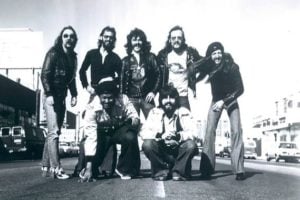
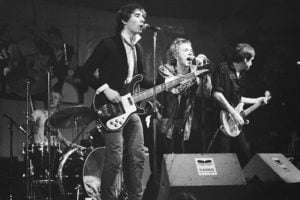
Bad Religion is one of the longest-running and most influential American punk rock bands. Formed in the Los Angeles area in 1980, the group built a distinctive sound from rapid tempos, melodic guitar lines, dense vocal harmonies, and lyrics that question political, religious, and social authority.
Greg Graffin has remained the band’s only constant member, serving as its lead vocalist and one of its principal songwriters. His academic background and interest in evolution, history, ethics, and public institutions helped give Bad Religion a lyrical identity that stood apart from many of its punk contemporaries.
The band’s earliest releases appeared through guitarist Brett Gurewitz’s Epitaph Records. The label later became central to the punk revival of the 1990s, releasing major records by bands such as the Offspring, NOFX, and Rancid. Gurewitz left Bad Religion in 1994 as Epitaph’s success demanded more of his attention, then rejoined the group for The Process of Belief in 2002.
Bad Religion released seventeen studio albums between How Could Hell Be Any Worse? in 1982 and Age of Unreason in 2019. The band later issued the singles “What Are We Standing For” and “Emancipation of the Mind” while continuing to tour internationally. These ten songs trace the group’s development from raw early hardcore to melodic punk and alternative-rock success.
# 10 – Punk Rock Song
“Punk Rock Song” appeared on The Gray Race, released in 1996. The album belonged to Bad Religion’s Atlantic Records period and was the first studio record made after Brett Gurewitz’s departure.
It was also the first Bad Religion album to feature guitarist Brian Baker, formerly of Minor Threat and Dag Nasty. Baker brought a strong melodic-hardcore background to the lineup and remained an essential member for the decades that followed.
Greg Graffin wrote “Punk Rock Song” as a compact statement about suffering, inequality, environmental damage, and the limitations of protest music. The title sounds self-deprecating, but the recording demonstrates exactly why Bad Religion’s direct and melodic approach reached listeners far beyond the American underground.
The song became one of the group’s strongest European singles, reaching number five in Finland and charting in several other countries.
# 9 – The Devil in Stitches
“The Devil in Stitches” appeared on the 2010 album The Dissent of Man. Brett Gurewitz wrote the song, which presents one of the band’s most accessible combinations of punk energy, alternative rock, and pop melody.
The arrangement begins with a restrained guitar pattern before expanding into a large chorus supported by the layered vocal harmonies that Bad Religion often calls its “oozin’ aahs.” The polished sound never removes the tension beneath the lyric.
Rather than delivering a simple political statement, “The Devil in Stitches” examines a destructive relationship and the temptation to romanticize pain. The song reached number thirty-eight on Billboard’s Rock Songs chart and introduced the album to a broader rock-radio audience.
# 8 – Los Angeles Is Burning
“Los Angeles Is Burning” appeared on Bad Religion’s 2004 album The Empire Strikes First.
The song was inspired by the wildfires that burned through Southern California and by the television coverage surrounding them. Graffin and Gurewitz use the disaster to criticize a media culture that packages catastrophe as spectacle while encouraging viewers to remain safely detached.
The album also responded to the Iraq War, political polarization, and the climate of fear that shaped the early 2000s. By this period, Gurewitz had returned, and Bad Religion was once again recording for Epitaph.
“Los Angeles Is Burning” reached number forty on Billboard’s Modern Rock Tracks chart. Its combination of vivid imagery, melodic urgency, and social criticism makes it one of the band’s defining twenty-first-century songs.
# 7 – Watch It Die
“Watch It Die” appeared on Bad Religion’s 1993 album Recipe for Hate.
The album was initially released through Epitaph and was later picked up and reissued by Atlantic Records. It became the band’s breakthrough into a larger rock audience, while the following album, Stranger Than Fiction, served as its first newly recorded major-label release.
“Watch It Die” features Eddie Vedder of Pearl Jam, who sings the second verse and contributes additional vocals. His presence reflects the connection between the punk bands that influenced the Seattle scene and the grunge artists who brought alternative rock into the mainstream.
The lyric confronts environmental destruction, economic power, and humanity’s willingness to damage the planet while assuming it will somehow survive. Vedder’s recognizable voice adds another perspective without interrupting Bad Religion’s identity.
# 6 – Into the Night
“Into the Night” comes from Bad Religion’s 1982 debut album, How Could Hell Be Any Worse? The recording captures the group before the highly polished harmonies and precise melodic structures of its later work became fully established.
The track is fast, raw, and rooted in the early Los Angeles hardcore scene. Graffin’s vocal is more abrasive than it would become on later albums, while the guitars and drums push forward with very little studio decoration.
No commercial singles were released from the independently issued album, but How Could Hell Be Any Worse? established the political intelligence, urgency, and questioning spirit that would guide the band for decades.
# 5 – Faith Alone
“Faith Alone” appeared on Bad Religion’s 1990 album Against the Grain. By this period, the band had developed the sound that would become its signature: rapid but controlled rhythms, melodic guitar movement, and large backing-vocal arrangements supporting Graffin’s baritone lead.
The song questions the idea that belief by itself can solve human problems. Its argument is not simply against religion; it is against replacing evidence, responsibility, and action with comforting certainty.
“Faith Alone” demonstrates how far Bad Religion had progressed since its early hardcore recordings without abandoning punk’s speed or confrontation. The harmonies make the song accessible, while the lyric remains intellectually demanding.
# 4 – Stranger Than Fiction
“Stranger Than Fiction” is the title track from Bad Religion’s 1994 album and one of the group’s most celebrated songs. The record was the band’s first newly recorded album for Atlantic Records and became its first gold-certified release in the United States.
The song compresses an enormous amount of energy into little more than two minutes. Its central idea is that reality repeatedly produces events more irrational, violent, and unbelievable than anything an artist might invent.
Released as a single, “Stranger Than Fiction” reached number twenty-eight on Billboard’s Modern Rock Tracks chart. Its short running time, immediate chorus, and relentless pace have also made it a dependable concert favorite.
# 3 – Infected
“Infected” also appeared on Stranger Than Fiction. Brett Gurewitz wrote the song, which became one of Bad Religion’s most recognizable alternative-rock recordings.
The tempo is slower and heavier than the band’s fastest punk songs, leaving more space for the guitar riff and the lyric’s imagery of love as contamination, dependence, and mutual destruction.
“Infected” reached number twenty-seven on Billboard’s Modern Rock Tracks chart and received substantial radio and video exposure. Its success showed that Bad Religion could expand beyond traditional hardcore without losing the intelligence or tension at the center of its music.
# 2 – 21st Century (Digital Boy)
Bad Religion first recorded “21st Century (Digital Boy)” for the 1990 album Against the Grain. The band created a new version for Stranger Than Fiction in 1994, and that later recording became one of its most successful singles.
The song portrays a young person surrounded by technology, consumer goods, media, and information but unable to develop purpose or emotional connection. The lyric became even more relevant as digital devices and online culture moved into nearly every part of daily life.
The re-recording has a larger guitar sound and a more polished chorus than the original. Atlantic saw the song’s commercial potential, but its popularity came from more than production. The satire was immediate, memorable, and increasingly prophetic.
# 1 – American Jesus
“American Jesus” was the first single from Bad Religion’s 1993 album Recipe for Hate. Like “Watch It Die,” it includes backing vocals from Eddie Vedder.
The song criticizes American exceptionalism and the belief that national power carries divine approval. Graffin has connected its central idea to religious language used during the Gulf War and the suggestion that God favored one country over the rest of the world.
The guitar riff is one of the most recognizable in Bad Religion’s catalog. Its simplicity gives the verses room to develop the argument, while the chorus transforms political criticism into a chant that works powerfully in concert.
Although “American Jesus” did not become a major Billboard hit, its video received MTV exposure and the song grew into one of the band’s signature recordings. Its subject remains relevant whenever religion, nationalism, and political authority are presented as a single unquestionable force.
Bad Religion Studio Albums
How Could Hell Be Any Worse? (1982)
Into the Unknown (1983)
Suffer (1988)
No Control (1989)
Against the Grain (1990)
Generator (1992)
Recipe for Hate (1993)
Stranger Than Fiction (1994)
The Gray Race (1996)
No Substance (1998)
The New America (2000)
The Process of Belief (2002)
The Empire Strikes First (2004)
New Maps of Hell (2007)
The Dissent of Man (2010)
True North (2013)
Age of Unreason (2019)
Updated August 3, 2026.
Top 10 Bad Religion Songs article published on ClassicRockHistory.com © 2026
ClassicRockHistory.com claims ownership of all its original content and intellectual property under United States copyright laws and those of all other countries. No person, business, or organization is allowed to republish any of our original content anywhere on the web or in print without our permission. All photos used are either supplied by the artists, public-domain Creative Commons images, or photographs officially licensed from Shutterstock for ClassicRockHistory.com. Photo credits appear with their respective images. Album-cover images used in affiliate links remain the property of their respective rights holders and are stored on retailer servers.