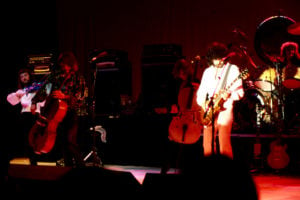
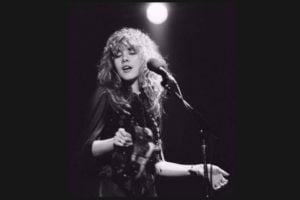
Oh man, do we love this band? Curved Air was never really well known in the United States, but they were, and still are, widely celebrated in Europe. It’s a shame many great European Progressive Rock Bands never made it big in the United States. If you are unfamiliar with the band and hear a song or two, you may judge them as more of a psychedelic band than a progressive group. However, the deeper you go into their albums, the more transparent their progressiveness becomes. Listen to a track like “Piece of Mind” and try to argue that Curved Air was not progressive.
Curved Air grew out of a band called Sisyphus. Members of Sisyphus had seen actress and folk singer Sonja Kristina performing in the original London production of Hair. Kristina joined the musicians in 1970, and the group became Curved Air, combining her striking stage presence and vocals with the classical, electronic, and progressive ideas already developing among the instrumentalists.
Curved Air released their first album, Air Conditioning, in 1970, followed by Second Album in 1971 and Phantasmagoria in 1972. The band continued with Air Cut in 1973, Midnight Wire in 1975, and Airborne in 1976. Decades later, Curved Air returned to the studio with North Star in 2014, their first album of newly recorded studio material in 38 years.
Rock critics in the United States have long mentioned Led Zeppelin’s influence on Heart. However, when you listen to Curved Air, you can’t help but notice how it seems Curved Air was the band that Heart may have been listening to just as much as they listened to Led Zeppelin.
Our 11 Essential Curved Air Songs examine some of the most exciting songs this great band released throughout its career. The videos define the star power of lead singer Sonja Kristina and her mesmerizing performances with Curved Air.
# 11 – “The Purple Speed Queen”
Opening our list is “The Purple Speed Queen,” the first track on Curved Air’s 1973 album Air Cut. Written by guitarist Kirby Gregory with Sonja Kristina, the song tells the tragic story of Emlee Jane while the new lineup pushes Curved Air toward a tougher rock sound. Recorded at Advision Studios in London and produced by Martin Rushent, the track features Kristina’s commanding vocal, Gregory’s guitar, Mike Wedgwood on bass, Jim Russell on drums, and the soon-to-be legendary Eddie Jobson on keyboards and electric violin, making it one of the strongest showcases of the dramatically reshaped Air Cut lineup.
# 10 – “Stay Human”
We love the opening guitar riff on the great track “Stay Human.” It sounds like 1974 all over again, even though the song arrived on Curved Air’s 2014 comeback album North Star. Not many bands can return with new studio material after 38 years and still sound so connected to what made them special in the first place. With Sonja Kristina joined by original drummer Florian Pilkington-Miksa, returning Air Cut guitarist Kirby Gregory, bassist Chris Harris, keyboardist Robert Norton, and violinist Paul Sax, “Stay Human” combines the band’s progressive identity with a direct plea for empathy and human connection. It was good to have them back.
# 9 – “Woman on a One Night Stand”
“Woman on a One Night Stand” opens Curved Air’s 1975 album Midnight Wire and captures the harder, more direct rock sound of another dramatically changed lineup. Written by Sonja Kristina and Norma Tager, the song places Kristina’s vocal at the center while Darryl Way’s violin, Mick Jacques’ guitar, Stewart Copeland’s drumming, and guest musicians John G. Perry on bass and Peter Wood on keyboards give the track a muscular but still unmistakably Curved Air arrangement. The song’s independent, unsentimental character makes it one of the strongest introductions to the band’s mid-1970s period.
# 8 – “Young Mother”
One of our favorite Curved Air songs opens the band’s 1971 Second Album. “Young Mother” began life in the pre-Curved Air group Sisyphus and evolved substantially before the album version emerged, with Sonja Kristina adding lyrics to music rooted in Darryl Way’s earlier composition. The finished track combines Way’s electric violin, Francis Monkman’s guitar and keyboards, Ian Eyre’s bass, Florian Pilkington-Miksa’s drums, and Kristina’s vocals in exactly the kind of classical-meets-rock arrangement that made Curved Air so distinctive. Second Album reached No. 11 on the UK Albums Chart.
# 7 – “Kids to Blame”
“Kids to Blame” was released on Curved Air’s 1976 album Airborne and was written by drummer Stewart Copeland, who played with Curved Air during 1975 and 1976 before forming The Police. The song’s sharp, driving rhythm and direct criticism of the way younger people are blamed for society’s problems already hint at the leaner musical instincts Copeland would soon carry into punk and new wave. In fact, Copeland later recalled that The Police performed “Kids to Blame” in their earliest days, playing the Curved Air song faster and harder. Airborne was Curved Air’s final album of newly recorded studio material until North Star arrived in 2014.
# 6 – “Melinda, More or Less”
The great Curved Air song “Melinda, More or Less” appeared on the band’s 1972 album Phantasmagoria. Written by Sonja Kristina, the track shows how tender Curved Air could sound before exploding elsewhere into a raging rock and roll storm of progressiveness. Its acoustic, folk-leaning arrangement gives Kristina’s delicate vocal plenty of space while Darryl Way’s violin adds a melancholy classical color, creating a beautiful contrast with the more heavily electronic experiments found elsewhere on the album. Phantasmagoria reached No. 20 on the UK Albums Chart.
# 5 – “It Happened Today”
As we continue our look at some of the great Curved Air songs, take a listen to “It Happened Today,” the opening track from the band’s 1970 debut album Air Conditioning. This was the first song listeners heard when they put on Curved Air’s first LP, an album that went on to reach No. 8 in the UK. Sonja Kristina’s vocal sits inside the original lineup’s remarkable blend of rock, violin, keyboards, electronics, and classical influence, but what always gets us is that great piano break and rhythm change toward the end of the song. Totally unexpected. That’s progressive rock.
# 4 – “Phantasmagoria”
“Phantasmagoria,” the title track from Curved Air’s 1972 album, captures the strange, theatrical side of the band at one of its creative peaks. Written by Francis Monkman, the song surrounds Sonja Kristina’s vocal with shifting rhythms and electronic textures that create an eerie sense of something just out of sight, perfectly matching the meaning of the title itself. Phantasmagoria was produced by Curved Air with Colin Caldwell, and the album’s adventurous use of synthesizers and processed sound helped make it one of the band’s most distinctive records while reaching No. 20 on the UK Albums Chart.
# 3 – “Back Street Luv”
“Back Street Luv” is Curved Air’s biggest hit and one of the clearest examples of the band balancing progressive ideas with a memorable pop-rock hook. Written by Darryl Way, Sonja Kristina, and bassist Ian Eyre, the song appeared on Second Album and reached No. 4 on the UK Singles Chart in September 1971. Interestingly, although Way was one of the song’s principal writers, he did not play on the original studio recording; the track features Kristina on vocals, Francis Monkman on guitar and keyboards, Eyre on bass, and Florian Pilkington-Miksa on drums. Its combination of electronic texture, urgent rhythm, and Kristina’s unmistakable vocal made “Back Street Luv” the band’s defining commercial breakthrough.
# 2 – “Marie Antoinette”
“Marie Antoinette” opens Curved Air’s 1972 album Phantasmagoria with a sweeping historical drama built around the doomed French queen. Written by Darryl Way with lyrics by Sonja Kristina, the song uses Way’s violin, Francis Monkman’s keyboards and guitar, Mike Wedgwood’s bass, Florian Pilkington-Miksa’s drums, and Kristina’s theatrical vocal to move from royal elegance toward revolution and catastrophe. The lyric is a dramatic rock interpretation rather than a literal history lesson, but that is part of what makes the track work: Curved Air turns the fall of Marie Antoinette into six minutes of progressive rock storytelling.
# 1 – “Piece of Mind”
“Piece of Mind” stands as a monumental track within Curved Air’s discography, closing Second Album with an expansive journey of nearly 13 minutes. Written by Francis Monkman, the song anchors the album’s second side and demonstrates exactly why we have always argued that Curved Air belongs among the great progressive rock bands: Monkman’s intricate guitar, keyboards, and synthesizer work combines with Sonja Kristina’s haunting vocal, Darryl Way’s violin, Ian Eyre’s bass, and Florian Pilkington-Miksa’s drums as the music continually shifts in mood, texture, and structure. If anyone still hears Curved Air as merely psychedelic, put on “Piece of Mind.” This is progressive rock.

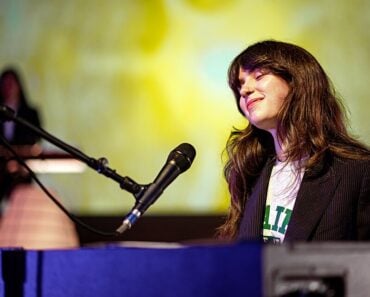
Feature Photo: Danny Mamby, CC BY-SA 4.0 <https://creativecommons.org/licenses/by-sa/4.0>, via Wikimedia Commons
For more progressive-rock features, read our Top 10 Progressive Rock Bands In Classic Rock History 1965–1985, 10 Essential Songs & Performances From The Band U.K., Top 10 Police Songs, and our Classic Rock Bands List And Directory.
11 Essential Curved Air Songs article published on ClassicRockHistory.com © 2026

Updated September 7, 2026.