Photo: Steve Proctor, CC BY-SA 4.0 <https://creativecommons.org/licenses/by-sa/4.0>, via Wikimedia Commons
With our Top 10 Ry Cooder Songs list, we celebrate one of the most talented and versatile guitarists in American music. Throughout his career, Cooder has worked as a recording artist, session musician, record producer, and film composer. His remarkable command of slide guitar has earned him widespread recognition, but his musical interests extend far beyond traditional rock and blues. He has spent much of his career exploring American roots music, gospel, country, folk, Tex-Mex, and musical traditions from around the world. Few guitarists have demonstrated such a deep appreciation for the history of the music they perform.
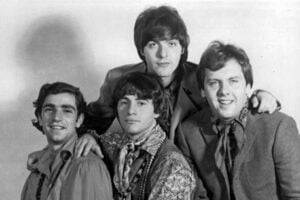
Born in Los Angeles in 1947, Ry Cooder developed an interest in traditional music at an early age. During the 1960s, he performed in a short-lived trio with Bill Monroe and Doc Watson and became a member of the Rising Sons alongside Taj Mahal. His first major recording opportunity came through his work with Captain Beefheart on the 1967 album Safe as Milk. Cooder subsequently became a respected session guitarist, recording with artists including the Rolling Stones and Randy Newman.
Cooder released his self-titled debut album in 1970 and followed it with a series of outstanding recordings, including Into the Purple Valley (1972), Boomer’s Story (1972), Paradise and Lunch (1974), and Chicken Skin Music (1976). These albums established his reputation for finding overlooked songs and introducing them to new audiences. During this period, he also worked with musicians such as Van Morrison, David Lindley, and accordionist Flaco Jiménez. His recordings frequently brought together musicians from different traditions, creating combinations that sounded natural despite their very different musical backgrounds.
The 1980s brought another important chapter in Cooder’s career as he became increasingly involved in film music. His soundtracks included The Long Riders (1980), Southern Comfort (1981), Streets of Fire (1984), Paris, Texas (1984), and Crossroads (1986). He continued exploring international music during the 1990s, collaborating with Indian musician Vishwa Mohan Bhatt on A Meeting by the River and Malian guitarist Ali Farka Touré on Talking Timbuktu. His involvement with the enormously successful Buena Vista Social Club project helped introduce Cuban musicians to audiences around the world.
Cooder has continued recording well into the twenty-first century. His later work includes The Prodigal Son (2018) and Get On Board: The Songs of Sonny Terry & Brownie McGhee (2022), a collaboration that reunited him with his old friend Taj Mahal. Selecting only ten recordings from such an extraordinary career is certainly a challenge, particularly for a website with as many dedicated roots-rock fans as ClassicRockHistory.com. Nevertheless, these selections provide an excellent introduction to Cooder’s remarkable musicianship and his contributions to American popular music.
#10 – Tamp ‘Em Up Solid
Opening our Top 10 Ry Cooder Songs list is “Tamp ‘Em Up Solid,” the first track from his fourth studio album, Paradise and Lunch, released in 1974. The song comes from the tradition of American railroad work songs, which helped workers coordinate the physical labor involved in constructing and maintaining railway tracks. Cooder takes this traditional material and transforms it into a wonderfully lively performance without losing its historical character. His guitar playing captures the rhythm of the original work song, while the supporting vocals give the recording an almost gospel-like quality.
Paradise and Lunch remains one of Cooder’s finest albums, bringing together blues, gospel, rhythm and blues, and traditional American music. The record features an impressive collection of musicians, including drummer Jim Keltner and several outstanding backing singers. “Tamp ‘Em Up Solid” is an excellent introduction to the album because it demonstrates how Cooder approached older material. Rather than simply copying the original performances, he found ways to make these songs sound fresh while respecting the traditions from which they emerged.
#9 – How Can a Poor Man Stand Such Times and Live?
“How Can a Poor Man Stand Such Times and Live?” appeared on Ry Cooder’s self-titled debut album in 1970. The song was originally written and recorded by Blind Alfred Reed in 1929, during a period of severe economic uncertainty in the United States. Reed’s composition examines the difficulties faced by ordinary working people as prices rise and financial security becomes increasingly difficult to maintain. Its mixture of social commentary and traditional folk music made it an ideal selection for Cooder, whose early albums frequently explored songs that reflected the experiences of working-class Americans.
Cooder’s interpretation brings a strong blues influence to Reed’s original composition, with his distinctive guitar work giving the recording a character of its own. The song’s subject has remained relevant across generations, which helps explain why other artists have continued performing it. The New Lost City Ramblers recorded a version in the late 1950s, while Bruce Springsteen revisited the composition for his 2006 album We Shall Overcome: The Seeger Sessions, adding verses addressing contemporary problems. Cooder’s version remains one of the finest examples of his ability to make traditional music speak to modern audiences.
#8 – Boomer’s Story
“Boomer’s Story” is the title track from Ry Cooder’s third studio album, released in 1972. The song originated as “The Railroad Boomer,” recorded in 1929 by Bud Billings, the recording name used by Frank Luther, and Carson Robison. It tells the story of a wandering railroad worker, drawing on the experiences of men who traveled across the country looking for employment and adventure. These characters became an important part of American folk music, particularly during the years surrounding the Great Depression. Cooder’s interest in the song reflects his fascination with the lives and musical traditions of ordinary Americans.
The recording is built around Cooder’s expressive guitar work and an understated vocal performance that suits the song’s wandering narrator. Rather than dramatically altering the material, he allows its simple melody and storytelling to remain central to the arrangement. The album Boomer’s Story also features interpretations of blues compositions associated with artists such as Sleepy John Estes and Blind Willie McTell. It was another important step in Cooder’s development as a solo artist, demonstrating that he could build an entire album around traditional material without making the results sound like a historical exercise.
#7 – Viva Seguin / Do Re Mi
“Viva Seguin / Do Re Mi” is a fascinating live performance from Ry Cooder’s 1977 album Show Time, recorded during concerts at the Great American Music Hall in San Francisco in December 1976. The medley combines “Viva Seguin,” a traditional-style Tex-Mex accordion composition associated with Santiago Jiménez Sr., with Woody Guthrie’s “Do Re Mi.” Cooder had previously recorded “Do Re Mi” for his 1970 debut album, but the live version takes the composition in an entirely different direction. Accordionist Flaco Jiménez plays an essential role in the arrangement, bringing the lively rhythms of South Texas conjunto music into the performance.
Guthrie’s “Do Re Mi” addresses the struggles of migrants who traveled to California during the Depression, only to discover that finding work and surviving there could be extremely difficult without money. Combining that subject with the celebratory sound of Tex-Mex music might seem unusual, but the arrangement works beautifully. Cooder’s enthusiasm for the different traditions is evident throughout the recording, and the musicians move effortlessly between the two compositions. This performance captures one of the most appealing qualities of his career: his ability to bring different musical cultures together without losing what makes each one distinctive.
#6 – Seneca Square Dance
“Seneca Square Dance” comes from Ry Cooder’s soundtrack to The Long Riders, the 1980 Western directed by Walter Hill. The film tells the story of the James-Younger gang and features members of several real-life acting families portraying brothers on screen. Cooder’s soundtrack combines original compositions with traditional American folk music to create an authentic atmosphere for the nineteenth-century setting. “Seneca Square Dance” is a traditional instrumental associated with American fiddle music, and Cooder’s arrangement is one of the most beautiful performances on the album.
The recording features the kind of delicate acoustic instrumentation that Cooder handled particularly well. David Lindley’s fiddle playing and Curt Bouterse’s dulcimer contribute to an arrangement that feels rooted in traditional American dance music. There is a wonderful sense of movement in the melody, yet the performance remains relaxed and graceful. Cooder’s work on The Long Riders received the Los Angeles Film Critics Association Award for Best Music, helping establish his reputation as an important film composer. Although the soundtrack contains several outstanding recordings, “Seneca Square Dance” stands out for its understated beauty.
https://www.youtube.com/watch?v=XLuOVE5DRUQ
#5 – Mama Told Me Not to Come
“Mama Told Me Not to Come” is one of Randy Newman’s best-known compositions, and Ry Cooder played slide guitar on Newman’s recording for the 1970 album 12 Songs. Newman originally wrote the song for Eric Burdon, whose version appeared on the 1967 album Eric Is Here, credited to Eric Burdon and the Animals. Cooder’s guitar work belongs to Newman’s later interpretation rather than the original Burdon recording. The song became a major commercial success when Three Dog Night released its version in 1970, taking it to number one on the Billboard Hot 100.
Newman’s original recording has a bluesier and more restrained atmosphere than the famous Three Dog Night version. Cooder’s slide guitar adds a distinctive character to the arrangement, complementing Newman’s piano playing and sardonic vocal delivery. The lyrics describe someone overwhelmed by the unfamiliar atmosphere of a wild party, with Newman’s humor turning the experience into a memorable piece of social observation. It is an excellent example of how Cooder could make an important musical contribution without being the featured artist. His work with Randy Newman remains among the highlights of his extensive session career.
#4 – Paris, Texas
“Paris, Texas” is one of Ry Cooder’s most celebrated instrumental recordings and the title theme from the 1984 film directed by Wim Wenders. The movie won the Palme d’Or at the Cannes Film Festival and became widely admired for its powerful performances and striking images of the American Southwest. Cooder’s soundtrack, released as an album in 1985, played an essential role in establishing the film’s lonely atmosphere. His slide guitar seems perfectly suited to the wide desert landscapes and emotional isolation experienced by the characters.
The music was strongly influenced by Blind Willie Johnson’s 1927 recording “Dark Was the Night, Cold Was the Ground.” Wenders had used Johnson’s performance while developing the film and encouraged Cooder to create music that captured a similar feeling. The result is a remarkable example of musical restraint, with individual guitar notes allowed to linger in the silence. There is no need for elaborate orchestration because the instrument communicates so much on its own. “Paris, Texas” remains one of the finest achievements of Cooder’s film career and a beautiful demonstration of why his slide guitar playing has earned such widespread admiration.
#3 – Crossroads
“Crossroads” comes from the soundtrack to the 1986 film of the same name, another collaboration between Ry Cooder and director Walter Hill. The movie stars Ralph Macchio as a young guitarist who becomes fascinated with the blues and the legend of Robert Johnson. Cooder served as the film’s musical director, contributing performances that helped make the fictional story feel connected to the traditions of Delta blues. The soundtrack’s version of “Crossroads” draws on Johnson’s famous composition, with Cooder performing alongside singer Terry Evans.
The soundtrack also features harmonica legend Sonny Terry, whose playing contributes to several performances, while guitarist Steve Vai appears in the film’s famous guitar-duel sequence. Cooder’s understanding of traditional blues was particularly valuable because the movie depended on the music sounding convincing. Rather than treating Johnson’s legacy as an excuse for flashy guitar playing, he approached the material with respect for its original character. “Crossroads” remains an important recording in his catalog and helped introduce a new generation of listeners to the music and mythology surrounding Robert Johnson.
#2 – The Chieftains – Dunmore Lassies
One of Ry Cooder’s most rewarding collaborations came in 1995 when he recorded with the Irish traditional music group The Chieftains for their album The Long Black Veil. The recording “Dunmore Lassies” brings together Cooder’s guitar playing with the distinctive instrumental sound of the Irish ensemble. The Chieftains had already established an international reputation for preserving and popularizing traditional Irish music, and the album featured appearances by several major artists from rock, pop, and folk. Cooder’s participation was particularly appropriate given his lifelong interest in exploring musical traditions outside his own background.
“Dunmore Lassies” is an instrumental performance in which Cooder’s acoustic baritone guitar blends with the Chieftains’ traditional arrangements. Flutist Matt Molloy plays an important role, while the group’s fiddles and other acoustic instruments give the recording its unmistakable Irish character. Cooder does not attempt to dominate the performance with an elaborate solo. Instead, his guitar adds another musical voice to an arrangement that depends on the interaction between the musicians. It is a beautiful example of cross-cultural collaboration and one of the most overlooked highlights of his extensive recording career.
#1 – Across the Borderline
Taking the number one position on our Top 10 Ry Cooder Songs list is “Across the Borderline,” a beautiful composition written by Cooder, John Hiatt, and Jim Dickinson. Cooder recorded an early version that was released as a Japanese single in 1981 and associated with a television advertisement. The song subsequently appeared in the 1982 film The Border, starring Jack Nicholson, with Freddy Fender providing the lead vocal. That recording was later included on the 1995 compilation Music by Ry Cooder. Cooder also revisited the composition for his 1987 album Get Rhythm, which featured a vocal contribution from actor Harry Dean Stanton.
The song tells a moving story about the hopes and disappointments of people searching for a better life across the United States-Mexico border. Its gentle melody and understated arrangement give the lyrics an emotional weight that never feels exaggerated. Cooder’s guitar playing is particularly effective because it supports the story without overwhelming it. Willie Nelson has also recorded the song, while Bob Dylan and Bruce Springsteen have performed interpretations of it. “Across the Borderline” represents so much of what makes Ry Cooder an extraordinary musician: his respect for traditional American music, his concern for the lives of ordinary people, and his ability to create something deeply moving with a relatively simple arrangement. It earns the number one position on our list.
Updated November 23, 2026
Top 10 Ry Cooder Songs article published on ClassicRockHistory.com © 2026