

Feature Photo: Jack Fordyce / Shutterstock.com
Unlike standard albums built primarily as collections of individual songs, concept albums use a shared story, character, setting, or theme to create a larger work. Rock artists have used the format for everything from autobiography and political satire to psychological drama, science fiction, nostalgia, and full-scale rock opera. Some albums on this list tell a clear story from beginning to end, while others are connected more loosely by a central idea or atmosphere.
From The Kinks and The Beatles to The Who, Pink Floyd, Frank Zappa, Genesis, Queensrÿche, Green Day, and David Bowie, these records demonstrate how flexible the concept-album format can be. Our ranking includes both strict narrative works and influential thematic albums whose songs combine to create something greater than a conventional collection of tracks.
# 15 – The Kinks Are the Village Green Preservation Society – The Kinks

Released in November 1968 and produced by Ray Davies, The Kinks Are the Village Green Preservation Society is a loosely thematic concept album built around memory, English identity, changing communities, and the desire to preserve people and places threatened by modern life. Songs such as “The Village Green Preservation Society,” “Do You Remember Walter?,” “Picture Book,” and “Johnny Thunder” create a world of disappearing traditions and eccentric characters rather than a single continuous plot. The album was not a major commercial success when first released, but its reputation grew enormously over time, and it is now widely regarded as one of The Kinks’ defining achievements and one of rock’s great meditations on nostalgia and cultural change.
Read More: Dave Davies of The Kinks: The ClassicRockHistory.com Interview
# 14 – Welcome to My Nightmare – Alice Cooper

Released in March 1975, Welcome to My Nightmare was Alice Cooper’s first solo album after the original Alice Cooper group era and one of rock’s most theatrical concept records. Produced by Bob Ezrin, the album follows the nightmares of the character Steven through a sequence of frightening, surreal, and sometimes darkly comic scenes, blending hard rock with cabaret, jazz, vaudeville, and horror imagery. Steve Hunter, Dick Wagner, Prakash John, and other musicians helped build the album’s cinematic sound, while Vincent Price’s spoken appearance on “The Black Widow” became one of its most memorable moments. Songs including “Only Women Bleed,” “Cold Ethyl,” and the title track helped make the nightmare concept central to Cooper’s stage identity.
Read More: Complete List Of Alice Cooper Albums And Songs
# 13 – The Lamb Lies Down on Broadway – Genesis

Released in November 1974, Genesis’s double album The Lamb Lies Down on Broadway follows Rael, a Puerto Rican young man in New York City, through a surreal journey filled with strange creatures, shifting identities, psychological trials, and dreamlike transformations. Peter Gabriel wrote the story and most of the lyrics, while the music was developed by Genesis, with Tony Banks, Mike Rutherford, Steve Hackett, Phil Collins, and Gabriel creating one of progressive rock’s most elaborate narrative works. “In the Cage,” “The Carpet Crawlers,” and the title track became enduring highlights. The album reached No. 10 in the UK and became the final Genesis studio album with Gabriel before he left the band for his solo career.
Read More: Steve Hackett: The ClassicRockHistory.com Interview
# 12 – Operation: Mindcrime – Queensrÿche
![Operation: Mindcrime [Explicit] (Remastered / Expanded Edition)](https://m.media-amazon.com/images/I/61vhrnB1g0L._SL500_.jpg)
Released in 1988, Queensrÿche’s Operation: Mindcrime is one of progressive metal’s defining concept albums. Its story follows Nikki, a disillusioned addict manipulated by the revolutionary Dr. X into becoming an assassin, only to become trapped between political fanaticism, dependency, guilt, and his relationship with Sister Mary. Geoff Tate, Chris DeGarmo, Michael Wilton, Eddie Jackson, and Scott Rockenfield combine heavy metal with recurring musical themes, spoken passages, and dramatic character development to make the record unfold like a rock opera. Songs such as “Revolution Calling,” “I Don’t Believe in Love,” and “Eyes of a Stranger” work individually, but their greatest impact comes from the way they drive the larger narrative forward.
Read More: Michael Wilton of Queensrÿche: The ClassicRockHistory.com Interview
# 11 – American Idiot – Green Day
![American Idiot [Vinyl]](https://m.media-amazon.com/images/I/4197J8xaIXL._SL500_.jpg)
Released in September 2004, Green Day’s American Idiot transformed the band’s punk-rock attack into a full-scale rock opera built around alienation, media saturation, political anger, and young people searching for identity in post-9/11 America. Billie Joe Armstrong, Mike Dirnt, and Tré Cool moved between compact singles such as “American Idiot,” “Holiday,” and “Boulevard of Broken Dreams” and the multi-part suites “Jesus of Suburbia” and “Homecoming,” creating a record that felt both immediate and ambitious. The album reached No. 1 on the Billboard 200 and won the 2005 Grammy Award for Best Rock Album. Its story was later expanded for the stage, with American Idiot opening on Broadway in April 2010.
Read More: Complete List Of Green Day Albums And Discography
# 10 – Joe’s Garage – Frank Zappa
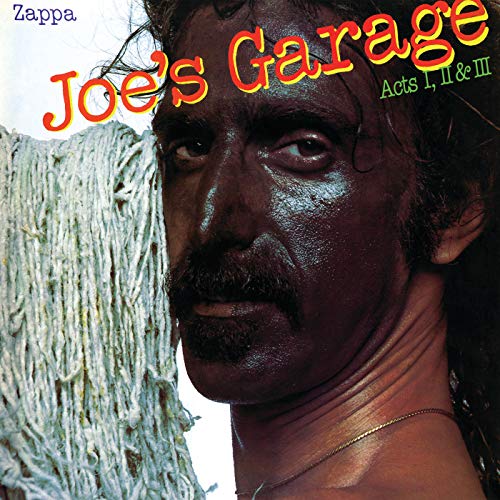
Frank Zappa’s Joe’s Garage was originally issued in two stages during 1979: Act I followed by the double album Acts II & III. Narrated by Zappa’s authoritarian Central Scrutinizer, the story follows Joe, played vocally by Ike Willis, from an ordinary garage-band musician into a bizarre world of censorship, sexual absurdity, government control, criminalized music, and eventual isolation. Zappa uses rock, funk, jazz, comedy, studio manipulation, and some of his most celebrated guitar work to turn the narrative into a satirical attack on conformity and institutional power. “Joe’s Garage,” “Catholic Girls,” “Packard Goose,” and “Watermelon in Easter Hay” are among the best-known pieces from this sprawling and deliberately outrageous rock opera.
Read More: Frank Zappa’s Greatest Studio Guitar Solos
# 9 – Captain Fantastic and the Brown Dirt Cowboy – Elton John
![Captain Fantastic & Brown Dirt Cowboy [CD]](https://m.media-amazon.com/images/I/612rPVuFN1L._SL500_.jpg)
Released in May 1975, Captain Fantastic and the Brown Dirt Cowboy is Elton John and Bernie Taupin’s autobiographical concept album about their difficult early years as an unknown songwriting team before success changed their lives. “Captain Fantastic” represents John and the “Brown Dirt Cowboy” represents Taupin, while songs such as “Bitter Fingers,” “Writing,” and “Someone Saved My Life Tonight” explore ambition, financial struggle, creative frustration, friendship, and personal crisis. Recorded at Caribou Ranch and produced by Gus Dudgeon, the album features Davey Johnstone, Dee Murray, Nigel Olsson, and Ray Cooper alongside John. It entered the Billboard album chart at No. 1, an extraordinary achievement that reflected just how enormous Elton John’s popularity had become by 1975.
Read More: Complete List Of Elton John Articles
# 8 – Tommy – The Who
![Tommy [Remastered]](https://m.media-amazon.com/images/I/51QiwoLWQ+L._SL500_.jpg)
Released in May 1969, The Who’s Tommy became one of the records that established the rock opera as a major form. Pete Townshend’s story follows Tommy Walker through childhood trauma, isolation, his extraordinary ability at pinball, spiritual celebrity, and the eventual collapse of the movement built around him. Roger Daltrey, John Entwistle, Keith Moon, and Townshend carry the story through recurring themes and songs including “Pinball Wizard,” “The Acid Queen,” “I’m Free,” and “We’re Not Gonna Take It.” Produced by Kit Lambert, the double album reached No. 2 in the UK and No. 4 in the United States, and its narrative later expanded into orchestral presentations, a 1975 film, and major stage productions.
Read More: Jon Button (Touring Bassist For The Who): 11 Albums That Changed My Life
# 7 – Thick as a Brick – Jethro Tull

Released on March 3, 1972, Jethro Tull’s Thick as a Brick turns the concept-album idea into both a serious musical achievement and a joke about the pretensions surrounding progressive rock. Ian Anderson presented the album as an epic poem supposedly written by fictional child prodigy Gerald Bostock, packaging the original LP inside an elaborate mock newspaper. Musically, the record is essentially one continuous composition divided across the two sides of the vinyl, moving through folk, hard rock, classical, and jazz-influenced sections with constant changes in tempo and arrangement. Anderson created it partly in response to critics who had incorrectly treated Aqualung as a concept album, making Thick as a Brick both a genuine concept record and a satire of the form itself.
Read More: Complete List Of Jethro Tull Albums And Discography
# 6 – The Rise and Fall of Ziggy Stardust and the Spiders from Mars – David Bowie

Released in June 1972, David Bowie’s The Rise and Fall of Ziggy Stardust and the Spiders from Mars built a dazzling world around the fictional rock-star persona Ziggy Stardust and helped make Bowie one of the defining artists of the decade. Rather than following a perfectly linear plot, songs including “Five Years,” “Moonage Daydream,” “Starman,” “Ziggy Stardust,” and “Rock ‘n’ Roll Suicide” create an impressionistic story about fame, apocalypse, performance, identity, and self-destruction. Bowie recorded the album with Mick Ronson, Trevor Bolder, and Mick Woodmansey, with Bowie and Ken Scott producing. The record reached No. 5 in the UK and blurred the boundary between album concept and stage persona so effectively that Ziggy became inseparable from Bowie’s own public transformation.
Read More: Complete List Of David Bowie Albums And Discography
# 5 – Quadrophenia – The Who

Released in 1973, The Who’s Quadrophenia follows Jimmy, a young mod struggling with identity, alienation, class, friendship, family, and disillusionment against the backdrop of 1960s British youth culture. Pete Townshend structured the double album around four recurring musical themes tied to different aspects of Jimmy’s personality and associated with the four members of The Who. “The Real Me,” “I’m One,” “5:15,” “Bell Boy,” and the climactic “Love, Reign O’er Me” give the record both narrative momentum and enormous emotional power. Produced by The Who and recorded at their Ramport Studios, Quadrophenia reached No. 2 in both the UK and the United States and was later adapted into the influential 1979 film of the same name.
Read More: Complete List Of The Who Studio Albums And Songs
# 4 – The Wall – Pink Floyd

Released in late 1979, Pink Floyd’s The Wall follows the fictional rock star Pink as childhood trauma, the death of his father, abusive schooling, failed relationships, fame, and paranoia become metaphorical bricks in a wall separating him from the world. Roger Waters conceived the story, while David Gilmour, Richard Wright, Nick Mason, Bob Ezrin, and James Guthrie helped shape its huge musical and production scale. “Another Brick in the Wall, Part 2,” “Hey You,” “Comfortably Numb,” and “The Trial” trace Pink’s descent into isolation and authoritarian fantasy before the wall is finally confronted. The double album reached No. 1 in the United States and No. 3 in the UK, and its imagery later expanded into the famous stage production and Alan Parker’s 1982 film.
Read More: Top 10 Pink Floyd Deep Tracks
# 3 – Sgt. Pepper’s Lonely Hearts Club Band – The Beatles

Released in 1967, The Beatles’ Sgt. Pepper’s Lonely Hearts Club Band is not a strict narrative concept album in the manner of Tommy or The Wall, but its framing device, studio experimentation, sequencing, and unified visual identity helped change how rock audiences understood the album as an art form. The fictional Sgt. Pepper band introduces the record and returns near its conclusion, giving The Beatles room to move through psychedelia, music hall, Indian music, orchestration, and studio-created sounds on tracks such as “With a Little Help from My Friends,” “Lucy in the Sky with Diamonds,” and “A Day in the Life.” Produced by George Martin, the album reached No. 1 in the UK and United States and won the 1968 Grammy Award for Album of the Year.
Read More: Complete List Of Fan’s Favorite Beatles Songs
# 2 – Freak Out! – Frank Zappa and The Mothers of Invention

Released on June 27, 1966, Freak Out! was the debut album by Frank Zappa and The Mothers of Invention and one of rock’s earliest major concept records. Produced by Tom Wilson and recorded at TTG Studios in Hollywood, the double album uses doo-wop, rhythm and blues, rock, orchestration, musique concrète, and avant-garde experimentation to attack conformity, consumer culture, political complacency, and the artificial values Zappa saw in American life. “Hungry Freaks, Daddy,” “Who Are the Brain Police?,” “Trouble Every Day,” and the sprawling “The Return of the Son of Monster Magnet” reveal just how little interest Zappa had in treating a debut LP as a conventional collection of songs. Its satirical unity and two-record format made it an unusually ambitious statement for 1966.
Read More: A Method in Exploring the Frank Zappa Album’s Catalog
# 1 – The Dark Side of the Moon – Pink Floyd

Released in March 1973, Pink Floyd’s The Dark Side of the Moon is a thematic rather than narrative concept album, using a continuous musical flow to explore pressures shared across human life: time, work, money, conflict, fear, mental strain, aging, and death. Roger Waters, David Gilmour, Richard Wright, and Nick Mason developed much of the material in concert before recording the finished album at EMI Studios with engineer Alan Parsons. “Time,” “Money,” “Us and Them,” “Brain Damage,” and “Eclipse” work as individual songs while also contributing to the album’s larger emotional arc. The record gave Pink Floyd their first No. 1 album in the United States, reached No. 2 in the UK, and has sold more than 50 million copies worldwide, securing its place among rock’s most enduring albums.
Read More: Ultimate Pink Floyd Page: Complete History, Songs, Albums & More
Check out similar articles on ClassicRockHistory.com. Just click on any of the links below…… Read More: Artists’ Interviews Directory At ClassicRockHistory.com Read More: Classic Rock Bands List And Directory
15 Best Concept Albums In Rock Music History article published on ClassicRockHistory.com © 2026

Updated September 6, 2026.
















if we expanded the list to 18…i’d add A Night At the Opera, Disintegration, and An Innocent Man. idk was Born In the USA concept album?
I think the Mothers Of Invention’s 1967 album “Absolutely Free” is a much more concise concept album than the “Freak Out” record. Musically it’s more sophisticated than “Freak Out” and it’s themes are all centered around the disposable, plastic American culture. Certainly a warm up to Zappa’s most vicious
commentary on American culture – the concept album “We’re Only In It For The Money”. All of Zappa’s work can be considered one big concept. A reflective, journalistic critique of the last part of the 20th century in the USA.