

Feature Photo: Sterling Munksgard / Shutterstock.com
There’s no exact chord progression for defiance, but over the decades, rock and roll has found countless ways to channel it through distortion, sneer, subtle protest, or outright confrontation. Whether it’s railing against political institutions, social hypocrisy, personal betrayal, or just the weight of expectation, defiant songs have long served as cultural litmus tests, moments when an artist chooses not to flinch, even if it means standing alone.
These aren’t just anthems of resistance; they’re declarations of identity, conviction, and unshakable will, often made in the face of criticism, censorship, or commercial risk.
Bob Dylan laced “Positively 4th Street” with icy contempt and laser-focused disdain, using folk-rock as a weapon of personal retaliation. Jimi Hendrix turned “Hear My Train A Comin’” into a slow-burning spiritual revolt, a blues-soaked promise that he would rise no matter the odds. The Beatles, with Lennon at the helm, used “Revolution” to draw a stark line between real change and performative rage.
Bruce Springsteen’s “No Surrender” looked past cynicism and clung stubbornly to youthful belief and camaraderie. Richie Havens, forced to improvise under pressure, transformed “Freedom” into a transcendent cry of liberation that would come to define the spirit of Woodstock. Sly & The Family Stone used “Stand!” to call for pride, resilience, and collective empowerment with funk’s full force behind them.
Tom Petty’s “I Won’t Back Down” delivered quiet defiance in the form of a crisp, melodic challenge to anyone who’d try to knock him off course. The Beastie Boys, in their own subversive way, masked satire with swagger on “(You Gotta) Fight for Your Right (To Party!),” and ended up writing the accidental battle hymn of disaffected youth.
Twisted Sister weaponized glam theatrics to shout down authority with “We’re Not Gonna Take It,” proving defiance could be loud, fun, and unmistakably loud again. And Bob Marley & The Wailers’ “Get Up, Stand Up” remains one of the most urgent global calls to resistance ever set to a rhythm.
What ties these songs together isn’t genre, era, or even ideology; it’s the refusal to yield. From stadium stages to protest marches, these anthems have endured because their creators chose confrontation over comfort, honesty over appeasement. Defiance in music isn’t about shouting the loudest; it’s about saying something that can’t be ignored. These ten songs did exactly that, and they still do.
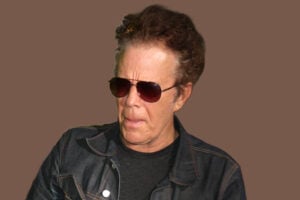
# 10 – I Won’t Back Down – Tom Petty
In the wake of a devastating house fire in 1987 that destroyed nearly all his possessions, Tom Petty emerged with a steely resolve captured succinctly in the defiant anthem “I Won’t Back Down.” Featured on his critically acclaimed debut solo album, Full Moon Fever, released in 1989, the song was recorded during the sessions for the album and co-produced by Petty, Jeff Lynne, and Mike Campbell.
The lineup was nothing short of exceptional: Petty on lead vocals and guitar, Lynne on bass and backing vocals, Campbell on lead guitar, Phil Jones on drums, and George Harrison on acoustic guitar and harmony vocals. Commercially, “I Won’t Back Down” proved immensely successful, peaking at number 12 on the Billboard Hot 100 and reaching number one on Billboard’s Album Rock Tracks chart.
# 9 – No Surrender – Bruce Springsteen
When Bruce Springsteen began crafting songs for his 1984 album, Born in the U.S.A., America was navigating an era of economic uncertainty and cultural upheaval. Among these compositions was “No Surrender,” a song that embodies the defiant spirit of youth, friendship, and unwavering optimism.
The song was recorded between October 25 and 27, 1983, at The Hit Factory in New York City, with the album master recorded on October 27. It was produced by Bruce Springsteen, Jon Landau, Chuck Plotkin, and Steven Van Zandt.
The recording features Springsteen on vocals and guitar, Roy Bittan on piano, Danny Federici on organ, Garry Tallent on bass, Max Weinberg on drums, Steven Van Zandt on acoustic guitar and harmony vocals, Clarence Clemons on percussion and backing vocals, and Richie Rosenberg on additional backing vocals.
# 8 – (You Gotta) Fight for Your Right (To Party!) – Beastie Boys
In 1986, as hip-hop was still establishing its place in mainstream culture, the Beastie Boys exploded onto the music scene with “(You Gotta) Fight for Your Right (To Party!).” Featured on their breakthrough debut album, Licensed to Ill, the track quickly became an anthem for teenage rebellion, though it was crafted as a parody of the very party culture it appeared to celebrate.
The song was recorded during the Licensed to Ill sessions in New York City and produced by Rick Rubin. Its collision of hard-rock guitar, shouted vocals, and hip-hop attitude helped push the Beastie Boys into the mainstream while also creating an anthem whose ironic intent was often lost on the audience embracing it.
# 7 – Get Up, Stand Up (1973) – Bob Marley & The Wailers
Few songs embody the spirit of resistance and activism as powerfully as Bob Marley & The Wailers’ 1973 classic, “Get Up, Stand Up.” Released on their landmark album, Burnin’, in 1973, the song quickly became a rallying cry for oppressed and marginalized communities around the world.
Written by Bob Marley and Peter Tosh, the song came from the final studio album made by the classic Wailers lineup before Tosh and Bunny Wailer departed. The recording features Marley on vocals and guitar, Tosh on vocals and guitar, Bunny Wailer on vocals and percussion, Aston “Family Man” Barrett on bass, Carlton Barrett on drums, and Earl “Wya” Lindo on keyboards.
# 6 – Revolution – The Beatles
Few songs in The Beatles’ catalog confront political ideology as directly as “Revolution.” Released in August 1968 as the B-side to “Hey Jude,” the track marked one of the band’s boldest forays into overt social commentary.
Written by John Lennon during the Beatles’ stay in India, the faster single version was recorded at EMI Studios in London from July 9 through July 12, 1968, with George Martin producing. It was a separate recording from the slower “Revolution 1” that later appeared on The Beatles, commonly known as the White Album.
The single version is loud, distorted, and aggressive, driven by Lennon’s desire to engage directly with the political turbulence of 1968. “Revolution” reached number 12 on the Billboard Hot 100.
# 5 – Hear My Train A Comin’ – Jimi Hendrix
Among Jimi Hendrix’s most emotionally revealing works, “Hear My Train A Comin’” stands as a defiant spiritual reckoning. An early solo acoustic performance was filmed in London in December 1967, and the song continued to evolve through numerous studio and live versions during the final years of Hendrix’s life.
Though it never appeared on a studio album during Hendrix’s lifetime, several versions survive, each capturing a different facet of his artistic vision. The version released on People, Hell and Angels in 2013 came from Hendrix’s May 21, 1969 session at Record Plant Studios in New York with Billy Cox on bass and Buddy Miles on drums.
The session represented the first studio collaboration by the Hendrix, Cox, and Miles rhythm section that would later become central to the Band of Gypsys period. Hendrix’s menacing lead guitar gives the performance its sense of tension, ambition, and release.
# 4 – Positively 4th Street – Bob Dylan
Released in 1965 as a standalone single during one of the most transformative years of Bob Dylan’s career, “Positively 4th Street” is a masterclass in lyrical venom wrapped in folk-rock elegance. The song was recorded on July 29, 1965, at Columbia Studio A in New York City during the Highway 61 Revisited sessions.
Produced by Bob Johnston, the recording featured Al Kooper on organ, Russ Savakus on bass, Mike Bloomfield on guitar, Frank Owens on piano, and Bobby Gregg on drums. The absence of the song from any of Dylan’s studio albums at the time did little to blunt its impact.
“Positively 4th Street” peaked at number seven on the Billboard Hot 100 and number eight on the UK Singles Chart.
# 3 – Stand! – Sly & The Family Stone
Released in 1969, “Stand!” by Sly & The Family Stone remains one of the most urgent declarations of social empowerment ever captured on tape. The title track of the band’s fourth studio album, Stand!, was written and produced by Sly Stone.
The core recording features Sly Stone on vocals and keyboards, Freddie Stone on guitar and vocals, Larry Graham on bass and vocals, Cynthia Robinson on trumpet and vocals, Greg Errico on drums, Jerry Martini on saxophone, and Rose Stone on keyboards and vocals.
After an early acetate received a lukewarm response, Sly Stone reworked the song’s final section. With most of the Family Stone unavailable, he used studio musicians to create the gospel-funk coda that became one of the recording’s defining moments.
# 2 – We’re Not Gonna Take It – Twisted Sister
In 1984, Twisted Sister carved their place into rock history with “We’re Not Gonna Take It,” a song that distilled adolescent frustration into a sharp, anthemic battle cry. Released as the lead single from their third studio album, Stay Hungry, the track was produced by Tom Werman.
The song was recorded during the February and March 1984 sessions that used Record Plant in New York, Westlake Audio in Los Angeles, and Cherokee Studios in Los Angeles. It features the band’s classic lineup: Dee Snider on lead vocals, Jay Jay French and Eddie “Fingers” Ojeda on guitars, Mark “The Animal” Mendoza on bass, and A.J. Pero on drums.
The recording captured the raw theatricality and no-compromise attitude that the band had long cultivated on the New York and New Jersey club circuit.
# 1 – Freedom – Richie Havens
When Richie Havens stepped onto the stage at Max Yasgur’s farm on August 15, 1969, he didn’t yet know he was about to deliver one of the most enduring moments in American music history. “Freedom,” an improvised piece based on the traditional spiritual “Motherless Child,” was born onstage at Woodstock in front of an anxious crowd and a festival still struggling with logistical chaos.
Originally scheduled to go on later, Havens opened the festival after other performers were delayed in traffic. He held the crowd for nearly three hours and was repeatedly called back to the stage. Having run out of rehearsed material, he improvised “Freedom” from “Motherless Child.”
The performance was recorded live that day in Bethel, New York, and later became one of the defining musical moments associated with the Woodstock film and soundtrack.
Check out similar articles on ClassicRockHistory.com Just click on any of the links below……
Read More: Artists’ Interviews Directory At ClassicRockHistory.com
Read More: Classic Rock Bands List And Directory
Updated September 30, 2026
10 Most Defiant Songs Of All Time article published on ClassicRockHistory.com © 2026








What a list!
Since we are talking about history, let us not miss the true history. Richie Havens was not alone with just. His guitar for Freedom. Actually, he was joined on guitar by Paul “Deano” Williams, on Percussion was Daniel “Natoga” Ben Zebulon