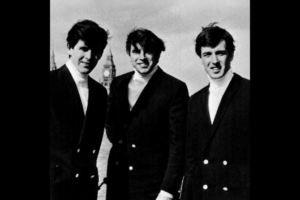
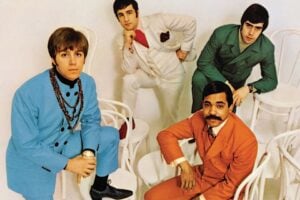
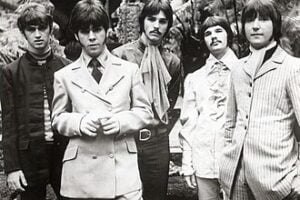
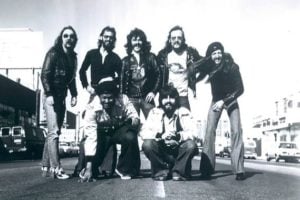
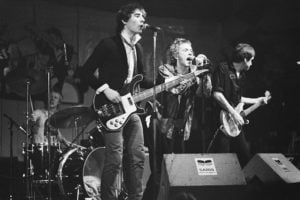
Feature Photo: A.PAES / Shutterstock.com
From Chicago’s windy streets emerged one of the most successful and influential funk bands of the 1970s, a group whose innovative sound and powerhouse vocals reshaped the landscape of soul and R&B for generations. Rufus was an American funk band from Chicago, Illinois, best known for launching the career of lead singer Chaka Khan and serving as both a launchpad for one of music’s greatest vocalists and a formidable musical force in their own right.
They had several hits during their career, including “Tell Me Something Good”, “Sweet Thing”, “Do You Love What You Feel”, and “Ain’t Nobody”, establishing themselves as masters of groove-driven funk that seamlessly blended elements of rock, soul, jazz, and pop. Rufus and Chaka Khan were among the most popular and influential funk bands of the 1970s; they had four consecutive number-one R&B albums, ten top 40 pop hits, and five number-one R&B singles, among other accolades, demonstrating their remarkable ability to achieve both critical acclaim and massive commercial success.
The band’s origins trace back to the remnants of The American Breed, a Chicago group that achieved success in 1968 with their hit “Bend Me, Shape Me.” In 1968, the American Breed (Gary Loizzo, guitar/vocals; Al Ciner, guitar; Charles “Chuck” Colbert, bass; and Lee Graziano, drums) had a top-ten hit with the classic-rock single “Bend Me, Shape Me.” After their success, Colbert and Graziano (without Loizzo, who pursued a successful production career) created a new group adding later-day American Breed members Kevin Murphy (keyboards) and Paulette McWilliams (vocals) as well as James Stella (vocals), and Vern Pilder (guitar) from the bar band Circus.
The group’s name evolved through several iterations, starting as Smoke, then becoming Ask Rufus, and finally settling on simply Rufus. This evolution reflected the band’s search for musical identity, a quest that would ultimately be fulfilled when a young Chicago singer, Chaka Khan, joined their ranks.
Rufus’s transformation from a struggling Chicago club band to international superstars coincided with Khan’s arrival and the development of their signature sound. From 1974 to 1979, Rufus released a remarkable run of commercially successful albums including Rags to Rufus, Rufusized, Rufus Featuring Chaka Khan, Ask Rufus, Street Player and Masterjam.
The run included multiple gold-certified albums, while Ask Rufus achieved platinum certification in the United States. The band’s legacy extends far beyond chart success, as they helped define 1970s funk while bridging the classic soul of the 1960s and the sophisticated R&B that would dominate the following decades.
Their influence echoes in countless artists who followed, and new generations of musicians continue to sample, cover, and celebrate their songs for the timeless power of their groove-based approach to popular music.
Chaka Khan
Yvette Marie Stevens, better known by her stage name Chaka Khan, was born on March 23, 1953, and became the most recognizable and successful member of Rufus, transforming both her career and the band’s trajectory when she joined in 1972. Known as the “Queen of Funk,” she has built a career spanning more than five decades, beginning in the early 1970s as the lead vocalist of the funk band Rufus and establishing her as one of the most powerful and influential vocalists in popular music history.
In 1972, Andre Fischer replaced Graziano, and Chaka Khan (born Yvette Marie Stevens) replaced McWilliams. McWilliams, who had become friends with Khan in Chicago, recommended Khan as her replacement and remained long enough to help her learn the group’s material before leaving.
Khan’s impact on Rufus was immediate and transformative, her dynamic stage presence and powerhouse vocals becoming the centerpiece of the band’s identity. With the band, she recorded hits like “Tell Me Something Good,” “Sweet Thing,” “Do You Love What You Feel,” and the platinum-certified “Ain’t Nobody,” setting up a string of successes that would define funk music for the decade.
The band gained a reputation as a live performing act, with Khan becoming the star attraction, thanks to her powerful vocals and stage attire, which sometimes included Native American garb and showed her midriff. Her presence was so commanding that the band’s billing evolved from simply “Rufus” to “Rufus featuring Chaka Khan” and eventually “Rufus and Chaka Khan,” reflecting her growing prominence and star power.
Khan’s contributions to Rufus extended beyond her vocal performances to include songwriting and instrumental work. Khan was also noted as an instrumentalist, playing drums and bass, and she provided percussion during her tenure with Rufus, demonstrating her versatility as a musician.
She collaborated on most of her compositions with guitarist Tony Maiden, including their signature song “Sweet Thing,” which became one of the band’s most enduring and covered tracks. Despite her sometimes acrimonious relationship with some bandmates, Khan and Maiden have maintained a friendship over the years, and their creative partnership produced some of Rufus’s most memorable material.
The tension between Khan’s solo aspirations and her commitment to Rufus became a defining characteristic of the band’s later years. After initially dismissing it as a rumor, Khan confirmed to the media in 1978 that she was going solo and signing a deal with Warner Bros. Records, beginning a complex period in which she would pursue solo success while occasionally reuniting with Rufus for albums and tours. Her debut solo album featured the number-one R&B hit “I’m Every Woman” (which became a pop hit for Whitney Houston), demonstrating her ability to achieve success independently.
In 2001, Rufus (Kevin Murphy, Tony Maiden, Bobby Watson, Dave Wolinski, John “JR” Robinson) and Khan reunited for a brief tour, which Khan described in her 2003 autobiography, Chaka! Through the Fire. With Rufus, she shared a long run of gold- and platinum-certified singles and albums, as well as the group’s Grammy-winning recordings, while her solo career produced additional gold- and platinum-certified releases.
Khan was inducted into the Rock and Roll Hall of Fame in the Musical Excellence category in 2023, recognizing her extraordinary contributions to popular music both as a solo artist and as the driving force behind Rufus. In 2026, she also received the Grammy Lifetime Achievement Award.
Kevin Murphy
Kevin Murphy stands as the founding member and musical architect of Rufus, serving as the band’s primary keyboardist from its inception through its most successful period and beyond. Rufus began in Chicago with Kevin Murphy – the founding member and keyboardist from Minneapolis as an evolution of a renegade band of rock-n-soul musicians, positioning him as the creative catalyst who transformed the remnants of The American Breed into one of funk music’s most important groups.
Born in Minneapolis, Murphy brought a diverse musical background to the group, which proved essential in developing their signature sound, blending funk, rock, soul, and jazz into a cohesive, commercially viable style.
Murphy’s role in Rufus extended far beyond playing keyboards; he served as one of the band’s primary arrangers, producers, and musical directors throughout their career. His keyboard work provided the harmonic foundation for many of Rufus’s biggest hits, and his understanding of both traditional R&B and contemporary funk helped the band navigate the changing musical landscape of the 1970s.
Songwriters, arrangers, and performers all, the members of Rufus co-produced their next album, Rufusized (1974 – ABC), with the late Bob Monaco before taking the reins completely for Rufus Featuring Chaka Khan (1975 – ABC), Ask Rufus (1977 – ABC), and Street Player (1978 – ABC), demonstrating Murphy’s crucial role in the band’s creative process and his ability to help guide their artistic development.
Throughout Rufus’s most successful period, Murphy remained a constant presence, adapting to the various lineup changes while maintaining the musical continuity that kept the band’s sound recognizable and cohesive. Keyboardist David “Hawk” Wolinski joined the band after a stint with Madura, complementing founding member Kevin Murphy’s playing and allowing Murphy to expand his arrangements and explore more complex musical territories.
His collaborative approach to music-making showed in the band’s spontaneous creative process, as these albums capture the essence of Rufus’ sound through songs composed in rehearsals, with Murphy often serving as the musical glue that held these impromptu sessions together.
Even after Chaka Khan began her solo career and Rufus experienced various lineup changes, Murphy remained committed to the band and its legacy. In 2001, Rufus (Kevin Murphy, Tony Maiden, Bobby Watson, Dave Wolinski, John “JR” Robinson) and Khan reunited for a brief tour, demonstrating his continued dedication to the music and relationships that had defined his career.
Legendary band Rufus label “funk band” does not begin to describe the multi-faceted musical legacy of Rufus, the ever-changing interracial group formed in the seventies that launched vocal superstar Chaka Khan, with Murphy’s foundational role making possible the creative environment that allowed such musical excellence to flourish. Today, Murphy is recognized as one of the founding architects of 1970s funk, with his keyboard work and musical vision serving as a blueprint for countless musicians who followed in Rufus’s wake.
Tony Maiden
Tony Maiden emerged as one of Rufus’s most important creative forces, joining the band in 1974 as a guitarist and becoming a crucial songwriting partner with Chaka Khan during their most successful period. Los Angeles-born Tony Maiden, a former member of the band High Voltage and an international touring musician with the great Billy Preston, brought considerable experience and musical sophistication when the group recruited him to replace original guitarist Al Ciner. After seeing the original Rufus performing at the Los Angeles nightclub Maverick’s Flat, (where a young Maiden started his career) the group asked him to replace guitarist Al Ciner, based on his reputation as a fiery and seasoned player, positioning him to become an integral part of the band’s classic lineup.
Maiden’s impact on Rufus was immediate and profound, as his guitar work helped define the band’s sound during their most commercially successful period. Additionally, drummer Andre Fischer recruited Tony Maiden and bassist Bobby Watson, who was also from Los Angeles. The trio’s addition to Rufus gave the group a unique sound, bringing stronger funk and jazz influences to complement Khan’s now-emerging powerful lead vocals. His playing style perfectly complemented the band’s rhythm section while providing the melodic counterpoint to Khan’s powerful vocals.
The chemistry between Maiden and Khan extended beyond their musical partnership into a prolific songwriting collaboration that produced some of Rufus’s most enduring material.
Maiden and Khan’s creative partnership yielded some of the band’s most memorable and successful songs. Tony and Chaka’s signature song “Sweet Thing” – an often-covered million-seller that netted writers Tony Maiden and Chaka Khan an ASCAP Award in 1993 for its enduring popularity and airplay, demonstrating the lasting impact of their collaborative efforts.
Most of her compositions were collaborations with guitarist Tony Maiden, and their songwriting partnership became a defining element of Rufus’s sound in the mid-1970s. The success of “Sweet Thing” and other Maiden-Khan compositions helped establish Rufus as more than a vehicle for Khan’s vocals, showcasing their ability to craft sophisticated, memorable songs that resonated with critics and the public.
Through Rufus’s lineup changes and Khan’s parallel solo career, Maiden remained one of the band’s most consistent and dedicated members. Despite her sometimes-acrimonious relationship with some of her bandmates, Khan and Maiden have maintained a friendship over the years, and their creative partnership continued even after the band’s initial run ended. Khan and Maiden reunited on the modernized Rufus medley “Pack’d My Bags”/ “You Got the Love,” on Khan’s double Grammy Award-winning 2007 album, Funk This, proving that their musical chemistry remained intact decades after their original collaboration. When discussing another potential reunion with Rufus in a 2008 Billboard interview, Khan said touring with Tony Maiden, one of the few Rufus bandmates with whom Khan kept a close friendship, was the closest to another Rufus reunion, highlighting the special bond between these two key members.
Reflecting on this incarnation of Rufus, Tony Maiden promises, “Even though Chaka Khan will not be present for this show, the music will remain absolutely organic. We have made every attempt to keep the music as close to what we played on the original recordings,” demonstrating his continued commitment to preserving and presenting the authentic Rufus sound for new audiences.
Andre Fischer
Andre Fischer served as Rufus’s drummer during the band’s most crucial developmental period, joining in 1972 and playing a vital role in establishing the rhythmic foundation that would define their sound. Lee Graziano was replaced by Andre Fischer, a former American Breed drummer, marking an important transition as the band evolved from their earlier incarnation into the funk powerhouse they would become. Fischer’s drumming brought a more sophisticated, groove-oriented approach that complemented the band’s increasingly funk-influenced direction, providing the rhythmic backbone that let Chaka Khan’s vocals and the band’s instrumental interplay flourish.
Fischer’s tenure with Rufus coincided with their greatest creative and commercial success, and his drumming appears on many of their most important recordings. Additionally, drummer Andre Fischer recruited Tony Maiden and bassist Bobby Watson, also from Los Angeles, demonstrating his role not only as a musician but also as a talent scout who helped assemble the classic Rufus lineup that defined their sound.
His drumming was essential to hits like “Tell Me Something Good,” “Sweet Thing,” and other tracks that established Rufus as one of the era’s premier funk bands. Fischer’s ability to blend rhythmic styles and his understanding of rock and R&B sensibilities made him an ideal drummer for a band that constantly evolved and experimented with new musical approaches.
However, Fischer’s time with Rufus was marked by rising tensions, particularly with Chaka Khan, that eventually led to his departure. Despite the album’s success and the second successful major tour that followed, tensions within the group didn’t stop growing, particularly between Khan and longtime Rufus drummer Andre Fischer. The conflict reached a boiling point while recording “Ask Rufus,” when personal relationships intersected with professional dynamics. Khan married Richard Holland during the recording sessions for Ask Rufus, and Holland’s presence only worsened tensions between Khan and Fischer. During one Ask Rufus session, Fischer fought with Holland, and Khan helped Holland, who then counterattacked.
Fischer’s departure marked the end of an era for Rufus, as he helped establish their classic sound. After a tour promoting Ask Rufus, Fischer left the group, and Nate Morgan also departed. Richard “Moon” Calhoun and David “Hawk” Wolinski replaced them, respectively, ushering in a new phase for the band with different personnel and a somewhat different musical approach. Despite the circumstances of his departure, Fischer’s contributions to Rufus during their peak period remain essential to the band’s legacy.
When discussing another potential reunion with Rufus during a 2008 interview with Billboard, Khan said the band’s classic lineup, which includes Andre Fischer and Nate Morgan, had no plans to reunite, acknowledging the importance of Fischer’s role in the band’s definitive era while recognizing that the personal conflicts that led to his departure made such reunions unlikely.
Bobby Watson
Bobby Watson joined Rufus as a bassist in 1974 and became an integral part of the band’s classic lineup during its most successful commercial period. Additionally, drummer Andre Fischer recruited Tony Maiden and bassist Bobby Watson, who was also from Los Angeles. The trio’s addition to Rufus added a unique sound, bringing stronger funk and jazz influences to complement Khan’s now-emerging powerful lead vocals. Watson’s bass work provided the deep, groovy foundation that anchored many of Rufus’s biggest hits, and his understanding of both funk and jazz idioms helped the band develop a more sophisticated musical approach that set them apart from their contemporaries.
Watson’s bass playing was featured on many of Rufus’s most important albums, including “Rags to Rufus” (1974), “Rufusized” (1974), “Rufus Featuring Chaka Khan” (1975), and subsequent releases through the band’s peak period. His rhythmic partnership with the drummers who played with Rufus created a solid foundation that let the band’s melodic and harmonic elements shine. The chemistry between Watson and the rest of the rhythm section was especially evident on tracks like “Sweet Thing,” “Tell Me Something Good,” and other classics, where his bass lines provided the groove and harmonic support that made these songs so memorable and enduring.
Through Rufus’s lineup changes and key members’ eventual pursuit of solo careers, Watson remained a dedicated and consistent presence in the band. His commitment to the group extended well beyond their initial run of success, as he continued to participate in reunion tours and special projects. In 2001, Rufus (Kevin Murphy, Tony Maiden, Bobby Watson, Dave Wolinski, John “JR” Robinson) and Khan reunited for a brief tour, demonstrating his continued loyalty to the band and its musical legacy. The reunion let longtime fans experience the classic Rufus sound, with many of the original members still participating.
Even as other founding members stepped back from active touring, Watson continued to represent the Rufus legacy in various contexts. A Rufus lineup featuring Bobby Watson and JR began a short tour in 2008. Neither founding member Kevin Murphy, mainstay Tony Maiden, nor Dave Wolinski participated in the tour, but Watson’s participation helped maintain some continuity with the band’s classic period.
His dedication to preserving and presenting Rufus’s music shows his understanding of the band’s importance in funk and R&B history, and musicians who recognize the rhythm section’s crucial role in creating the Rufus sound that influenced generations of performers continue to study and appreciate his bass work.
Dave “Hawk” Wolinski
David “Hawk” Wolinski joined Rufus in 1977 as a keyboardist, vocalist, and arranger, bringing fresh creative energy during a period of transition and helping craft some of their most memorable later material. Keyboardist David “Hawk” Wolinski joined the band after a stint with Madura, complementing founding member Kevin Murphy’s playing and creating a powerful dual-keyboard setup that expanded the band’s harmonic possibilities and enabled more complex arrangements. He joined at a crucial time, as the band navigated lineup changes and sought to maintain its creative momentum in an evolving musical landscape.
Wolinski’s most significant contribution to Rufus was his songwriting, particularly “Ain’t Nobody,” which became one of the band’s most enduring and successful songs. The album included four Khan-led studio songs, including the Dave Wolinski composition “Ain’t Nobody”, which got attention when a producer for the film Breakin’ heard it while screening songs for the movie’s soundtrack.
WB eventually released the song (billed to Rufus and Chaka Khan), and it became a top-30 Billboard Hot 100 hit, reaching number one on the R&B chart and peaking at number eight on the UK Singles Chart. The track’s success earned the band its second Grammy Award for Best R&B Performance by a Duo or Group with Vocals, establishing Wolinski as a crucial creative force in the band.
Beyond “Ain’t Nobody,” Wolinski contributed to other key Rufus tracks and helped shape their sound in the late 1970s and early 1980s. He’s the pen behind “Do You Love What You Feel” and “Ain’t Nobody”, demonstrating his ability to craft both dance-oriented funk tracks and more sophisticated R&B material that showcased the band’s versatility.
As an arranger and additional keyboardist, Kevin Murphy explored different aspects of his playing, while Wolinski handled much of the harmonic complexity that characterized Rufus’s later material. Former member Dennis Belfield also returned to co-write “Everlasting Love” with Wolinski and Murphy, showing his collaborative approach to songwriting and his ability to work effectively with both new and former band members.
Wolinski stayed connected to Rufus through various reunion projects and remained recognized as an important contributor to their legacy. In 2001, Rufus (Kevin Murphy, Tony Maiden, Bobby Watson, Dave Wolinski, John “JR” Robinson) and Khan reunited for a brief tour, and Wolinski’s participation helped ensure the band’s later material was properly represented in their live performances.
By 2008, neither founding member Kevin Murphy nor mainstay Tony Maiden, nor Dave Wolinski, participated in a subsequent tour, as various members began stepping back from active performing. Despite his relatively shorter tenure with the band compared to some other members, Wolinski’s contributions, particularly “Ain’t Nobody,” have become central to Rufus’s legacy and continue to influence contemporary artists who sample and cover this enduring classic.
John “JR” Robinson
John “JR” Robinson joined Rufus in the late 1970s, replacing Richard “Moon” Calhoun and bringing his considerable skills as one of the music industry’s most respected session musicians to the band. By the band’s next major phase, John “JR” Robinson replaced Calhoun as drummer, marking another significant change in the rhythm section as Rufus continued to evolve its sound and adapt to the changing musical landscape of the late 1970s. Robinson arrived as Rufus explored more sophisticated production techniques and incorporated elements of disco and contemporary R&B into its established funk foundation.
Robinson’s drumming brought a more polished, studio-oriented approach to Rufus that complemented their increasingly sophisticated arrangements and production values. His extensive experience as a session musician let him adapt to different styles and work effectively with various artists, skills that proved invaluable as Rufus navigated the complexities of maintaining their identity while pursuing commercial success. Robinson’s technical proficiency and musical versatility let the band explore new rhythmic territories while keeping the groove-based foundation that had always been central to their appeal.
Throughout his tenure with Rufus, Robinson played on several important recordings and became an integral part of their live performances. His drumming can be heard on albums like “Masterjam” (1979) and other later Rufus releases, where his playing helped support both Chaka Khan’s continuing involvement with the band and their attempts to maintain relevance as musical tastes shifted toward disco and contemporary R&B. Robinson’s ability to blend traditional funk drumming with more modern production techniques made him an ideal drummer for a band that was constantly seeking to balance their established sound with contemporary trends.
Robinson’s commitment to Rufus extended well into the reunion era, as he continued to participate in various projects and tours featuring the band’s classic material. In 2001, Rufus (Kevin Murphy, Tony Maiden, Bobby Watson, Dave Wolinski, John “JR” Robinson) and Khan reunited for a brief tour, with Robinson’s participation helping to ensure that the band’s later material was properly represented alongside their classic hits.
A Rufus lineup including Bobby Watson and JR began a short tour in 2008, showing his continued dedication to the band’s legacy even as other founding members stepped back from active performing. Robinson’s contributions to Rufus, though during their later period, helped maintain their musical standards and provided the rhythmic foundation for some of their final classic recordings, ensuring the band’s evolution continued even as their classic era drew to a close.
Willie Weeks
Willie Weeks played bass during the Ask Rufus period after Chuck Colbert left the early lineup. He joined before Rufus signed with ABC Records and before Chaka Khan became its lead vocalist. Weeks helped the band continue its transition away from its American Breed roots toward the sound it would establish in the early 1970s.
Dennis Belfield later replaced him before the recording of Rufus’s 1973 debut album. Weeks went on to become one of the most respected bassists in popular music, building an extensive session and touring career with numerous major artists.
Ivan Neville
Ivan Neville contributed vocals to Rufus’s 1983 studio album Seal in Red, the final full studio album released under the Rufus name. He appeared during a Khan-less phase, as the remaining band members continued recording while Chaka Khan’s solo career had become firmly established. Neville was credited as a principal vocal performer on the album.
Seal in Red also featured guest contributions from producer George Duke, Patti Austin, Ernie Watts, and other prominent musicians. Rufus reunited with Khan later in 1983 for Stompin’ at the Savoy, after which the group’s original recording era came to an end.
Later Members and Alumni
As Rufus evolved from remnants of The American Breed to one of funk’s most important groups, numerous musicians contributed to their sound and helped shape their legacy. The early incarnation featured several musicians who laid the groundwork for Rufus’s classic sound. Before founding a new band, originally called Smoke, with vocalists Paulette McWilliams and James Stella, guitarist Al Ciner, bassist Chuck Colbert, drummer Lee Graziano, and keyboardist Kevin Murphy had all been in the band at one point or another, with these early members helping to establish the musical foundation that would support Chaka Khan’s eventual arrival and the band’s transformation into a funk powerhouse.
During the early 1970s transition, several important musicians passed through the Rufus lineup, each contributing to the band’s developing sound. Ron Stockert served as a keyboardist/vocalist and was particularly influential during the band’s early years, providing much of the artistic direction before Khan’s role expanded. Ron Stockert remained the guiding force when the band signed with ABC in 1973, and he lent a more pop-rock flavor to the group’s self-titled debut, released later that year. However, shortly after the album’s release, and as the group struggled to climb the charts, Stockert left during sessions for the next album, Rags to Rufus, as the focus shifted more definitively toward Khan’s talents.
Dennis Belfield served as bassist during the early period, contributing to the band’s development before being replaced by Bobby Watson as the band moved toward their classic funk sound.
The band also featured keyboardist Nate Morgan, who joined around the time of their breakthrough and played an important role in several key recordings. Ciner, Belfield, and Stockert departed during the personnel changes around the band’s breakthrough period, with Morgan joining the expanding keyboard lineup and bringing additional West Coast musical influences.
Morgan’s tenure with Rufus included some of the group’s most successful years, but he eventually departed during the late-1970s personnel changes. Richard “Moon” Calhoun and David “Hawk” Wolinski succeeded Andre Fischer and Nate Morgan, respectively, ushering in a new phase of the classic Rufus era.
The band’s later period saw various configurations as members pursued solo careers and reunion projects. Richard “Moon” Calhoun served as drummer briefly in the late 1970s before being replaced by John “JR” Robinson, while various other musicians contributed to recordings and tours during the 1980s and beyond. Rufus recorded Numbers in 1979 without Khan, followed by the Khan-less albums Party ‘Til You’re Broke in 1981 and Seal in Red in 1983. Numbers reached number 15 on the R&B albums chart, Party ‘Til You’re Broke reached number 24, and Seal in Red reached number 49, demonstrating that the band continued recording even without its most famous member.
These later incarnations, while not achieving the commercial success of the classic lineup, helped preserve Rufus’ legacy and gave the remaining members opportunities to keep exploring their musical vision while honoring the foundation that made them one of funk’s most important and influential groups.
Check out more Rufus articles on ClassicRockHistory.com Just click on any of the links below……
Top 10 Rufus Songs
Read More: Artists’ Interviews Directory At ClassicRockHistory.com
Read More: Classic Rock Bands List And Directory
Updated October 9, 2026
Complete List Of Rufus Band Members article published on ClassicRockHistory.com © 2026