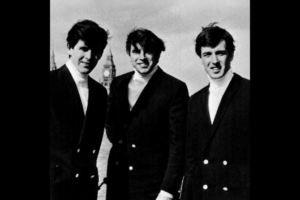
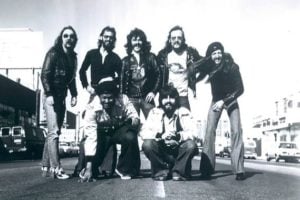
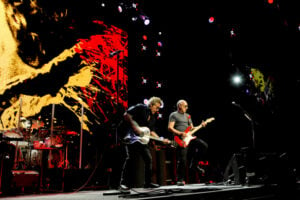
Feature Photo: CSNY CMA-Creative Management Associates/Atlantic Records, Public domain, via Wikimedia Commons/ Tom Jones London Records, Public domain, via Wikimedia Commons
I don’t know about you, but I always enjoy seeing artists from different sides of the musical spectrum getting together on stage and performing. It seems like something we actually need more of today in many ways. The spirit of the 60s was all about harmony, and, of course, there was the other side, with protests, counterprotests, and war. It was just a mess.
But in 1969, a year when I was watching Lost in Space on TV as a young kid, there was some pretty spectacular music happening on television. At times, there were creative and original pairings of artists that people might have thought wouldn’t work together, but actually did.
Tom Jones had already become one of the most recognizable voices in popular music when he invited Crosby, Stills, Nash and Young to appear on his television series This Is Tom Jones in 1969. The series aired on ABC in the United States and ITV in the United Kingdom. Known for his explosive stage presence and soulful delivery, Jones was a household name through hits like “It’s Not Unusual” and “Delilah.”
On the other hand, Crosby, Stills, Nash and Young had just emerged from the countercultural wave of Woodstock and represented a new kind of rock idealism. The pairing seemed unlikely at first, yet it produced one of the most memorable television performances of the decade.
The episode aired on October 16, 1969, about two months after Crosby, Stills, Nash and Young performed at Woodstock. For the broadcast, the supergroup joined Tom Jones onstage to perform “Long Time Gone,” a song written by David Crosby and released earlier that year on the debut Crosby, Stills & Nash album. Crosby wrote the song in response to the assassination of Robert F. Kennedy in 1968.
At first glance, it looked like two musical worlds colliding. Jones was the polished pop star in a tailored suit, while the four members of CSNY brought the look and energy of the late-sixties rock revolution. What happened next was something special. Jones launched into the opening lines with full-throated conviction, while Stephen Stills, Graham Nash, David Crosby, and Neil Young provided the harmonies and driving instrumentation behind him.
The mix of Tom’s powerhouse soul and the group’s rich musical sound made the song soar in unexpected ways.
Although the collaboration might have seemed strange to some viewers, the chemistry onstage told another story. The performance captured an artist with deep roots in rhythm and blues stepping directly into the heart of the rock movement, matching the intensity of one of the era’s most revered vocal groups. Nash’s organ playing and Stills’s guitar lines blended effortlessly with Jones’s energy, creating a performance that was raw and thrilling to watch.
Graham Nash later recalled that the unlikely collaboration felt surreal but worked remarkably well, praising Jones as a great singer who held his own with the band. Despite the contrasting styles, there was mutual respect between them, and the televised performance showed how music could bridge very different artistic sensibilities.
For Tom Jones, the performance was another example of his fearlessness as an entertainer. He had built a reputation for welcoming artists of all backgrounds onto his show, from Janis Joplin to Stevie Wonder, and letting their sounds intersect with his.
Crosby, Stills and Nash had already released their debut album, and the addition of Neil Young brought another dimension to the group’s music. Their appearance on Jones’s program introduced them to a mainstream television audience that might never have seen them outside the rock circuit. The moment was both unexpected and historic, a cultural snapshot of late-sixties television when variety shows could still take bold creative risks.
The performance of “Long Time Gone” has since been rediscovered by new generations of fans online. Clips of the show continue to circulate on music sites and social media, often drawing astonishment at how seamlessly the collaboration worked. It remains a reminder of how two musical worlds that seemed incompatible could come together and create something unforgettable.
The raw energy of Jones’s vocals and the harmonic brilliance of Crosby, Stills, Nash and Young merged into a singular moment that still fascinates rock historians more than fifty years later.
What makes the story so enduring is that it captured more than just a song. It symbolized the connection between the structured world of televised pop and the rebellious spirit of late-sixties rock. Neither Jones nor the band had to compromise their sound to make it work. For Tom Jones, it confirmed that his range and instincts as a performer transcended genres.
For Crosby, Stills, Nash and Young, it proved that their music and harmonies could thrive beyond the festival stage.
Over the years, I have gotten a lot of flak for putting artists on this site that people don’t always necessarily believe belong on a classic rock site. I do it for two reasons. The first is simple: I like all music, so I’m going to write about all music. It’s my site. I can do whatever the heck I want.
But the second reason is the more important one. As a historian, I’ve always been trained to make connections. That’s what we do here. We make connections between all types of music: music that came before the classic rock era, music that came after it, and music that was happening during the classic rock era.
All of it was both inspired by, and helped inspire, the sounds of 60s, 70s, 80s, and 90s rock and beyond. That’s what this site is all about, and what it will always be about.
If you have never seen this before, I highly recommend that you check it out.
Updated October 13, 2026.
Check out similar articles on ClassicRockHistory.com Just click on any of the links below……
10 Most Rocking Crosby, Stills, Nash & Young Songs
Complete List Of Crosby, Stills & Nash Albums And Songs
Top 10 Crosby, Stills & Nash Songs
Top 10 Crosby, Stills, Nash & Young Songs
Complete List Of Crosby, Stills, Nash & Young Albums
10 Essential Stephen Stills Songs In Chronological Order
10 Essential David Crosby Songs
Top 10 Graham Nash Songs
Complete List Of Stephen Stills Albums And Songs
Complete List Of Crosby & Nash Albums And Discography
Complete List Of Neil Young Albums And Discography
Top 10 Neil Young Songs
Top 10 Tom Jones Songs
Read More: Artists’ Interviews Directory At ClassicRockHistory.com
Read More: Classic Rock Bands List And Directory
When Worlds Collided: Tom Jones and CSNY’s Unforgettable 1969 Performance article published on ClassicRockHistory.com © 2026