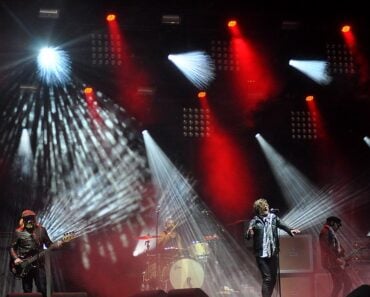
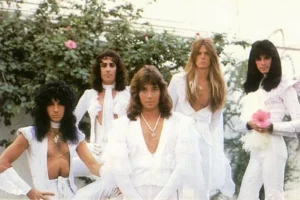
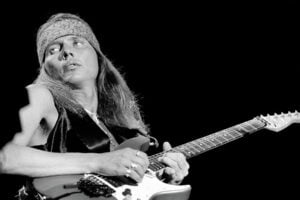
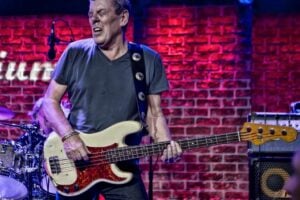
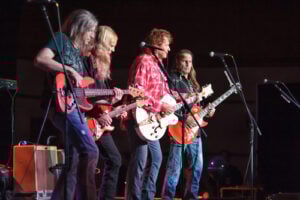
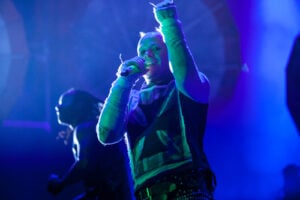
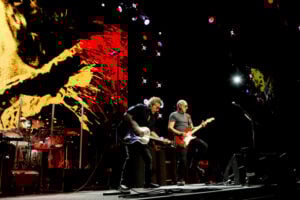
Feature Photo: Tilly antoine, CC BY-SA 4.0 <https://creativecommons.org/licenses/by-sa/4.0>, via Wikimedia Commons
Coming out of Oakland, California, during the challenging early 1990s metal landscape, Machine Head carved out their distinctive space in heavy music when most metal bands were being overshadowed by grunge and alternative rock. Founded on October 12, 1991, by vocalist/guitarist Robb Flynn after departing from Bay Area thrash band Vio-lence, Machine Head quickly established themselves as pioneers in what would later be termed the New Wave of American Heavy Metal. The band has released eleven studio albums throughout their career, from their explosive 1994 debut Burn My Eyes to 2025’s Unatoned, demonstrating remarkable resilience through multiple lineup changes, shifting music industry trends, and evolving their sound while maintaining their core identity.
Machine Head’s career trajectory has been marked by both significant triumphs and challenging periods. Their debut album Burn My Eyes became Roadrunner Records’ best-selling debut album at the time, shipping nearly 400,000 copies worldwide despite being released during the height of grunge’s dominance. While the band enjoyed considerable European success from the beginning, mainstream recognition in their native United States came later in their career. Albums like 2007’s The Blackening, which earned them a Grammy nomination for the track “Aesthetics of Hate” and was named Album of the Decade by Metal Hammer magazine, helped cement their status as metal heavyweights. Throughout their journey, Machine Head has weathered controversy, near-disbandment, label disputes, and numerous personnel changes, with Flynn remaining the sole constant member.
The band’s sonic identity has evolved significantly over their three-decade existence, yet always maintained a connection to their foundational elements. Beginning with a combination of groove and thrash metal on early releases, Machine Head ventured into nu metal territory with albums like 1999’s The Burning Red and 2001’s Supercharger, before returning to a more traditional thrash approach with longer, more complex compositions on later records like The Blackening and Unto the Locust. Their 2022 release Of Kingdom and Crown marked their first concept album, while 2025’s Unatoned continued their return to their groove and thrash metal roots. This willingness to evolve while honoring their core sound has allowed Machine Head to remain relevant across multiple decades of metal, selling over three million records worldwide and maintaining their status as an influential force in heavy music.
Robb Flynn
Robb Flynn, born Robert Conrad Flynn (originally Lawrence Matthew Cardine) on July 19, 1967, in Oakland, California, serves as the backbone and sole constant member of Machine Head since its formation in 1991. Prior to establishing Machine Head, Flynn cut his teeth in the thriving Bay Area thrash metal scene, playing with Forbidden (originally Forbidden Evil) from 1985 to 1987, where he contributed songwriting to their debut album. He then joined Vio-lence, performing on their first two albums before creative differences and a physical altercation with local gang members precipitated his departure to form his own project.
Flynn’s vision for Machine Head crystallized when he recruited bassist Adam Duce, guitarist Logan Mader, and drummer Tony Costanza to form the initial lineup. Taking full creative control from the beginning, Flynn wrote much of the material for their debut album Burn My Eyes, which established the band’s aggressive, groove-oriented thrash sound. As the band’s frontman, lead songwriter, and producer on many of their releases, Flynn’s musical direction has guided Machine Head through multiple stylistic evolutions over their eleven studio albums. From the raw intensity of early albums to the nu-metal experimentation of The Burning Red and Supercharger, through to the progressive thrash approach of The Blackening and the concept-driven narrative of Of Kingdom and Crown, Flynn’s artistic vision has consistently pushed the band forward.
Beyond his work with Machine Head, Flynn has become known for his outspoken nature and candid commentary on the metal scene through his blog and social media presence. He has collaborated with numerous artists across the metal spectrum and has been credited for his influence on the development of modern metal. Flynn’s technical ability as both a guitarist and vocalist, combined with his songwriting prowess and business acumen, has allowed Machine Head to weather multiple industry challenges and lineup changes while maintaining their artistic integrity. As the band entered its fourth decade with the release of Unatoned in 2025, Flynn remained the driving creative force behind Machine Head’s continued evolution and relevance in the metal landscape.
Adam Duce
Adam Duce, born on April 14, 1972, was a founding member and bassist for Machine Head from their formation in 1991 until his departure in 2013. As one of the two original cornerstones of the band alongside Robb Flynn, Duce provided the rhythmic foundation for Machine Head across seven studio albums spanning two decades. His partnership with Flynn predated the band, as Duce was a longtime Vio-lence fan and friend of Flynn before joining forces to create Machine Head after Flynn left his previous band.
Duce’s bass playing and backing vocals were integral components of Machine Head’s sound throughout their early evolution and rise to prominence. He performed on all of the band’s albums from their 1994 debut Burn My Eyes through 2011’s Unto the Locust, contributing not only his musical talents but also helping to fund the band’s early demos through various means. His distinctive bass tone and aggressive playing style complemented Flynn’s guitar work, particularly on breakthrough albums like Burn My Eyes and The Blackening, the latter of which earned the band their first Grammy nomination.
After nearly 22 years with Machine Head, Duce’s tenure ended controversially in February 2013 when he was fired from the band. Flynn later revealed this decision came after ongoing differences between the members. Following his exit, Duce filed a lawsuit against the band for trademark infringement, breach of partnership, and other claims, though the case was eventually settled out of court. His departure marked the end of an era for Machine Head, leaving Flynn as the sole remaining original member. Despite the circumstances of his exit, Duce’s contributions to Machine Head’s foundational sound and his presence during their formative years and rise to prominence remain significant parts of the band’s history and legacy in the metal world.
Logan Mader
Logan Mader, born on November 16, 1970, was Machine Head’s original lead guitarist, helping to establish the band’s twin-guitar attack alongside Robb Flynn from their formation in 1991 until his departure in 1998. Mader brought technical proficiency and aggressive playing style to Machine Head’s early sound, making significant contributions to their first two albums, which laid the foundation for the band’s career. His childhood friendship with bassist Adam Duce predated Machine Head, creating a natural chemistry in the band’s rhythm section.
Mader’s guitar work on Machine Head’s 1994 debut Burn My Eyes helped define the album’s raw, aggressive sound that would become a landmark in modern metal. The record’s commercial success, becoming Roadrunner Records’ top-selling debut album at the time, was due in part to Mader’s searing leads and heavy riffs complementing Flynn’s songwriting. He continued with the band for their sophomore effort, 1997’s The More Things Change…, before departing Machine Head in 1998 under difficult circumstances reportedly related to substance abuse issues, as the band was preparing to head in a new musical direction.
After leaving Machine Head, Mader briefly joined Soulfly for their 1998 world tour before forming his own project, Medication, with former Ugly Kid Joe vocalist Whitfield Crane. When that band disbanded in 2003, Mader gradually transitioned into production and engineering, establishing himself as a respected producer in the metal community through his work with bands including Five Finger Death Punch, Gojira, and Fear Factory. In 2019, over two decades after his departure, Mader temporarily reunited with Machine Head alongside original drummer Chris Kontos for the 25th-anniversary tour of Burn My Eyes, performing the album in its entirety. Although not rejoining as a permanent member, this reunion highlighted the lasting importance of his contributions to Machine Head’s early sound and legacy.
Chris Kontos
Chris Kontos joined Machine Head during the recording of their debut album Burn My Eyes in 1994, replacing original drummer Tony Costanza. His powerful and dynamic drumming style became an essential element of the album’s sound, helping to establish Machine Head’s aggressive musical identity that blended thrash metal intensity with groove metal rhythms. Kontos brought experience from his previous work with hardcore and thrash bands, contributing to the raw energy that made Burn My Eyes a standout release during a period when metal was struggling against the dominance of grunge and alternative rock.
Despite his crucial role in Machine Head’s breakthrough debut album, Kontos’s tenure with the band was relatively brief. Following the success of Burn My Eyes and the subsequent European tour, Kontos began missing tour dates, notably during the summer festival season of 1995, where Walter Ryan temporarily filled in. Upon the band’s return to the United States, Kontos was dismissed due to issues with touring commitments. His departure came before Machine Head recorded their second album, The More Things Change…, and he was replaced by Dave McClain, who would go on to have a much longer tenure with the band.
After leaving Machine Head, Kontos continued his career in music, playing with various bands including a stint with Testament. His impact on Machine Head’s history remained significant enough that in 2019, 25 years after the release of Burn My Eyes, Kontos returned to the band alongside fellow original member Logan Mader for a special anniversary tour. This tour featured Kontos performing the entire Burn My Eyes album, underscoring the importance of his contributions to Machine Head’s early sound and confirming his place in the band’s legacy despite his relatively short time as an official member.
Dave McClain
Dave McClain, born in Wiesbaden, Germany, became Machine Head’s drummer in 1995 following Chris Kontos’s departure, bringing stability to the position with his technical precision and versatile playing style. Prior to joining Machine Head, McClain had established himself with thrash metal band Sacred Reich, giving him valuable experience that would serve him well in his new role. His arrival coincided with a pivotal time for the band as they prepared to record their sophomore album The More Things Change…, released in 1997.
McClain’s impressive 23-year tenure with Machine Head saw him perform on eight studio albums, from The More Things Change… through 2018’s Catharsis. His drumming adaptability allowed him to navigate Machine Head’s evolving sound through various phases, including their nu-metal experimentation on The Burning Red and Supercharger, their return to a more thrash-oriented approach with Through the Ashes of Empires, and their creative peak with the Grammy-nominated The Blackening. McClain’s technical abilities particularly shone on albums like Unto the Locust, where the band members took additional lessons on their respective instruments to push their musical boundaries even further.
In late 2018, McClain announced his departure from Machine Head alongside guitarist Phil Demmel following the completion of the band’s “Catharsis” touring cycle. In subsequent interviews, McClain indicated he no longer believed in the band’s musical direction during his final years with the group. After leaving Machine Head, McClain rejoined his former band Sacred Reich in 2019, coming full circle in his career. Despite his exit, McClain’s contributions to Machine Head over more than two decades remain fundamental to their sound across multiple eras, cementing his legacy as one of the band’s longest-serving and most influential members.
Ahrue Luster
Ahrue Luster joined Machine Head in 1998 as the replacement for original guitarist Logan Mader, arriving at a transitional period in the band’s history. His entry coincided with Machine Head’s controversial stylistic shift toward nu metal elements with their 1999 album The Burning Red. While this direction attracted criticism from some longtime fans, the album became Machine Head’s second best-selling record and debuted at number 88 on the Billboard 200, indicating a growing presence in the American market despite the mixed reception.
Luster’s guitar work featured prominently on both The Burning Red and the band’s follow-up album, 2001’s Supercharger. The latter release faced significant challenges when it arrived just three weeks after the September 11 attacks. The album’s single “Crashing Around You” and its accompanying music video, which featured imagery of burning buildings, were pulled from media outlets due to sensitivity concerns, severely hampering the album’s promotional campaign. This controversy, along with declining label support, created tension that nearly led to Machine Head’s dissolution in 2002.
In 2002, amid what was described as “creative differences,” Luster departed Machine Head, eventually joining the band Ill Niño. His exit marked the end of Machine Head’s nu metal period, as the band would subsequently return to a more traditional thrash-oriented sound. Following Luster’s departure, Machine Head initially functioned as a three-piece band before eventually bringing in Phil Demmel, who had previously played with Flynn in Vio-lence. Though Luster’s time with Machine Head was relatively brief and coincided with one of their most divisive periods stylistically, his contributions remain an important part of the band’s experimental evolution and commercial development during the late 1990s and early 2000s.
Phil Demmel
Phil Demmel, born on April 1, 1967, joined Machine Head in 2002, initially as a temporary replacement following Ahrue Luster’s departure. Demmel’s connection with Robb Flynn dated back to their time together in the thrash metal band Vio-lence, creating a natural chemistry that would help revitalize Machine Head during a crucial period. After playing several festival shows with the band, including a headlining slot at Germany’s With Full Force festival, Demmel briefly parted ways with Machine Head as they continued writing as a three-piece. However, he eventually returned as a permanent member, marking the beginning of what many consider Machine Head’s strongest and most successful lineup.
Demmel’s 16-year tenure with Machine Head spanned five studio albums, beginning with 2003’s Through the Ashes of Empires, which represented a return to the band’s thrash metal roots after their nu metal experimentation. His contributions were particularly significant on 2007’s The Blackening, widely regarded as Machine Head’s masterpiece and chosen as Metal Hammer’s Album of the Decade. Demmel’s technical prowess and songwriting input continued through subsequent acclaimed albums including Unto the Locust (2011) and Bloodstone & Diamonds (2014), helping to establish this period as Machine Head’s creative and commercial peak.
In late 2018, Demmel announced his departure from Machine Head alongside longtime drummer Dave McClain. He later explained his decision by stating that he “didn’t like [his] job anymore” and disagreed with the musical direction Flynn had been taking the band over the previous three years, particularly on their divisive 2018 album Catharsis. Following his exit, Demmel briefly filled in for Gary Holt in Slayer during their farewell tour and focused on other projects, including the reunited Vio-lence. Despite the circumstances of his departure, Demmel’s lengthy contributions to Machine Head during their most acclaimed period remain an integral part of the band’s legacy and success.
Jared MacEachern
Jared MacEachern joined Machine Head as their bassist in June 2013, following the controversial departure of founding member Adam Duce earlier that year. Prior to joining Machine Head, MacEachern had established himself as both a guitarist and vocalist for the metal band Sanctity. His introduction to Machine Head came through a recommendation from Nuclear Blast Records’ Monte Conner, as MacEachern was already touring on the same circuit as Machine Head. After an audition process that examined dozens of candidates, MacEachern stood out not only for his bass playing abilities but also for his vocal capabilities, particularly his ability to sing high harmonies, which the band considered a crucial criterion for the position.
Since joining the band, MacEachern has performed on four studio albums: Bloodstone & Diamonds (2014), Catharsis (2018), Of Kingdom and Crown (2022), and Unatoned (2025). His contributions extend beyond bass playing to include backing vocals, songwriting, and occasional lyrical input. On Of Kingdom and Crown, MacEachern played a more significant creative role, with Flynn noting that they were “bouncing” ideas off each other during the writing process. This increased creative involvement has helped MacEachern become fully integrated into Machine Head’s sound and direction in the post-Duce era.
MacEachern’s tenure has coincided with a period of significant transition for Machine Head, including the departures of longtime members Phil Demmel and Dave McClain in 2018 and subsequent lineup changes. Throughout these shifts, MacEachern has remained a stable presence alongside Flynn, helping to maintain continuity as the band evolved into its current incarnation. As the second-longest-serving current member of Machine Head, MacEachern has become an essential component of the band’s modern identity, bridging their established legacy with their continuing evolution.
Matt Alston
Matt Alston, a British-born drummer formerly with bands Devilment and Eastern Front, joined Machine Head in September 2019 as part of the significant lineup refresh following the departures of Phil Demmel and Dave McClain. Alston’s recruitment coincided with the announcement of Polish guitarist Wacław “Vogg” Kiełtyka as new additions to Machine Head, marking the beginning of a new chapter for the band. His first major appearance with the group came during the 25th anniversary tour for Machine Head’s debut album Burn My Eyes, which featured a unique format where Alston performed with Flynn and MacEachern for the first part of each show, while original members Chris Kontos and Logan Mader joined for the second part to perform the entire Burn My Eyes album.
Despite being involved with Machine Head during the recording of their 2022 album Of Kingdom and Crown, logistical issues related to the COVID-19 pandemic prevented Alston from recording drums for the album. Instead, he contributed to the album’s demo tracks while session drummer Navene Koperweis handled the final drum recordings. Nevertheless, Alston has been a consistent presence in Machine Head’s live performances since joining, helping to deliver the band’s intense stage show across global tours supporting both Of Kingdom and Crown and 2025’s Unatoned.
Alston’s technical drumming style and ability to handle Machine Head’s diverse catalog, from their early thrash-oriented material to their more complex later works, has made him a valuable addition to the band’s lineup. As part of Machine Head’s current incarnation alongside Flynn, MacEachern, and guitarist Reece Scruggs, Alston has helped the band maintain their powerful live reputation while contributing to their continued musical evolution. His tenure represents the latest chapter in Machine Head’s rhythm section, following in the footsteps of notable predecessors including Dave McClain, Chris Kontos, and Tony Costanza.
Wacław “Vogg” Kiełtyka
Wacław “Vogg” Kiełtyka, a Polish guitarist best known as the founder of death metal band Decapitated, joined Machine Head in September 2019 alongside drummer Matt Alston. His recruitment came following the departures of longtime members Phil Demmel and Dave McClain, as Machine Head entered a new phase in their career. Kiełtyka brought his technical prowess and death metal credentials to Machine Head, contributing a fresh perspective to the band’s evolving sound.
Kiełtyka’s most significant recorded contribution to Machine Head came with the 2022 album Of Kingdom and Crown, the band’s first concept album. While Kiełtyka participated in the creative process and is credited with contributions to both music and lyrics alongside Flynn and MacEachern, the logistics of the COVID-19 pandemic created challenges for the album’s recording. Similar to drummer Matt Alston’s situation, Kiełtyka remained an official band member despite not physically recording all parts for the album. The record marked a return to Machine Head’s groove and thrash metal roots after their more divisive previous release, Catharsis, with Kiełtyka’s influence helping to shape this renewed direction.
In February 2024, Kiełtyka announced his departure from Machine Head, citing the scheduling conflicts between his commitments to Decapitated, which he described as his “absolute No. 1 band,” and Machine Head’s touring schedule. The split was amicable, with Kiełtyka having already been temporarily replaced by Reece Scruggs from Havok during some Machine Head tours in 2022 due to similar scheduling issues. Though Kiełtyka’s tenure with Machine Head was relatively brief, spanning roughly four and a half years, his contributions to Of Kingdom and Crown and the band’s live performances during this period represent an important transitional chapter in Machine Head’s continuing evolution.
Reece Scruggs
Reece Alan Scruggs, formerly of thrash metal band Havok, joined Machine Head as their lead guitarist in 2024, following Wacław “Vogg” Kiełtyka’s departure. Scruggs’ relationship with Machine Head began in November 2022 when he first filled in for Kiełtyka during the band’s “Electric Happy Hour (Live)” tour, as Kiełtyka had conflicting commitments with his primary band Decapitated. This initial temporary role eventually led to Scruggs becoming a permanent member after Kiełtyka officially left Machine Head in February 2024, citing the ongoing scheduling conflicts between the two bands.
Scruggs’ first studio appearance with Machine Head came on their eleventh album, Unatoned, released on April 25, 2025. As the newest addition to the band’s lineup, Scruggs brought his technical thrash metal background to Machine Head’s sound, complementing frontman Robb Flynn’s vision for the album. Unatoned, at 41 minutes the band’s shortest album to date, continued Machine Head’s return to their groove and thrash metal roots that had begun with their previous release, Of Kingdom and Crown.
As part of Machine Head’s current lineup alongside Flynn, bassist Jared MacEachern, and drummer Matt Alston, Scruggs participated in the band’s North American tour in support of Unatoned in spring 2025. This tour featured Machine Head headlining with support from In Flames, Lacuna Coil, and Unearth, including a notable collaborative single, “These Scars Won’t Define Us,” which featured vocals from all four bands. As the newest chapter in Machine Head’s guitar lineage, Scruggs represents the continuation of the band’s evolution while helping maintain their characteristic twin-guitar attack that has been a hallmark of their sound since their formation.
Check out similar articles on ClassicRockHistory.com Just click on any of the links below……
Complete List Of Machine Head Albums And Discography
Top 10 Machine Head Songs
Read More: Artists’ Interviews Directory At ClassicRockHistory.com
Read More: Classic Rock Bands List And Directory
Complete List Of Machine Head Band Members article published on ClassicRockHistory.com© 2025
Classicrockhistory.com claims ownership of all its original content and Intellectual property under United States Copyright laws and those of all other foreign countries. No one person, business, or organization is allowed to re-publish any of our original content anywhere on the web or in print without our permission. All photos used are either public domain Creative Commons photos or licensed officially from Shutterstock under license with ClassicRockHistory.com. All photo credits have been placed at the end of the article. Album Cover Photos are affiliate links and the property of Amazon and are stored on the Amazon server. Any theft of our content will be met with swift legal action against the infringing websites.