Feature Photo: Oleg Anisimov / Shutterstock.com
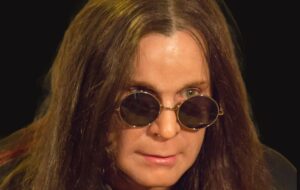
Few careers in rock music have been resurrected with the explosive force of Ozzy Osbourne’s solo venture, which began not as a singular vision but as a collaborative tempest. After his dismissal from Black Sabbath in 1979, Osbourne, with the crucial guidance of manager Sharon Arden (later Osbourne), initiated plans for a new musical entity.
This project was originally conceived and named The Blizzard of Ozz, intended to be a democratic band, not merely a backing group for a famous singer. The foundational lineup, featuring guitarist Randy Rhoads, bassist Bob Daisley, and drummer Lee Kerslake, was a potent creative force that immediately redefined Osbourne’s musical identity and set the stage for a monumental comeback.
The band’s commercial dominance was immediate and enduring. Beginning with the 1980 debut Blizzard of Ozz, Osbourne released 13 studio albums, a discography marked by immense success and stylistic evolution. The first seven of these solo albums achieved multi-platinum certification in the United States, including landmark releases like Diary of a Madman (1981), Bark at the Moon (1983), and the quadruple-platinum No More Tears (1991).
This sustained success contributed to a staggering career sales total exceeding 100 million albums worldwide, combining both his solo work and his releases with Black Sabbath.
This commercial success has been mirrored by critical acclaim and numerous industry accolades. Osbourne’s solo work earned him multiple Grammy Awards, including a 1994 win for “I Don’t Want to Change the World” and, nearly three decades later, two 2023 Grammys: Best Rock Album for Patient Number 9 and Best Metal Performance for “Degradation Rules,” his collaboration with Tony Iommi.
His monumental impact was further cemented by a rare double induction into the Rock and Roll Hall of Fame: first as a member of Black Sabbath in 2006 and again as a solo artist in 2024.
Central to this legacy is the band’s notoriously fluid lineup, a revolving door of prodigious talent that included over 30 different musicians, making the Ozzy Osbourne band one of the most dynamic and talent-rich ensembles in the history of rock music. Osbourne died on July 22, 2025, at age 76, just 17 days after his final performance at the Back to the Beginning concert in Birmingham, England.
That farewell show included a solo set backed by Zakk Wylde, Mike Inez, Adam Wakeman, and Tommy Clufetos, followed by a reunion with Black Sabbath.
The Guitarists
The history of the Ozzy Osbourne band is best understood as a series of distinct musical eras, each defined and architected by its lead guitarist. While Osbourne’s vocals provided a constant, iconic presence, the guitarist’s role was that of a primary co-writer and sonic visionary, fundamentally reshaping the band’s sound with each new arrival.
From the neoclassical revolution of Randy Rhoads to the pinch-harmonic-heavy groove of Zakk Wylde, the guitarist was never just a hired hand but a co-star whose style dictated the direction of the albums they helped create.
Randy Rhoads
Randy Rhoads joined Ozzy Osbourne in 1979, a move that would irrevocably alter the landscape of heavy metal guitar. Recruited from the Hollywood band Quiet Riot, with whom he had recorded two albums released only in Japan, Rhoads brought a revolutionary fusion of European classical theory and aggressive rock technique. His tenure, lasting from 1979 until his tragic death in a plane crash on March 19, 1982, was brief but monumental.
As a primary co-writer and performer on the seminal albums Blizzard of Ozz (1980) and Diary of a Madman (1981), Rhoads was the principal architect of Osbourne’s comeback sound. His work on tracks like “Crazy Train,” “Mr. Crowley,” and “Over the Mountain” introduced a new vocabulary to metal guitar, popularizing techniques like two-handed tapping and complex scale patterns that defined the emerging subgenre of neoclassical metal.
Beyond the pyrotechnics, he showcased his compositional depth with the delicate nylon-string instrumental “Dee,” a tribute to his mother. His electrifying live performances are immortalized on the posthumous releases Tribute (1987) and Ozzy Live (2012).
Outside of his work with Osbourne, Rhoads co-founded Quiet Riot and is considered one of the most influential guitarists in music history, a legacy recognized with a “Musical Excellence Award” from the Rock and Roll Hall of Fame in 2021.
Bernie Tormé
In the immediate aftermath of Randy Rhoads’s death, Irish guitarist Bernie Tormé was faced with the unenviable task of stepping into the vacant role in March 1982. Tormé, who had been recommended by Jet Records head Don Arden, was flown in to help the band fulfill its tour commitments with only a week’s notice.
His blues-oriented style was a significant departure from Rhoads’s neoclassical precision, and the circumstances were emotionally fraught for both the band and the audience. His tenure was exceptionally brief, lasting for only a handful of shows before he departed in April 1982 to resume work on his own solo projects, feeling the role was not a good fit. Consequently, Tormé has no official recording credits with Ozzy Osbourne.
Before and after his short time with Osbourne, Tormé had a distinguished career, most notably as the guitarist for Ian Gillan’s solo band, where he played on three Top Ten UK albums. He also toured with Atomic Rooster and later formed the band Desperado with Twisted Sister frontman Dee Snider, maintaining a prolific solo career until his death in 2019.
Brad Gillis
Following Bernie Tormé’s swift departure, Brad Gillis of the band Night Ranger was recruited in April 1982 to finish the Diary of a Madman tour. Gillis shadowed Tormé for a few shows before taking over full-time, remaining with the band through September 1982.
His only official recorded release with Osbourne is the 1982 live album Speak of the Devil, a collection comprised entirely of Black Sabbath covers recorded at The Ritz in New York City. The album was conceived partly as a business move and partly to beat Black Sabbath’s own live album to the market.
On the record, Gillis was widely praised for putting his own stamp on the classic material, utilizing his whammy bar technique and distinct tone rather than simply imitating Tony Iommi. After the tour concluded, Gillis returned to his primary focus, Night Ranger.
He is a founding member of the highly successful AOR band, known for massive 1980s hits like “Sister Christian” and “(You Can Still) Rock in America,” and remained active in the band for decades thereafter.
Jake E. Lee
Jake E. Lee became Ozzy Osbourne’s first long-term guitarist after Randy Rhoads, holding the position from late 1982 until his unexpected dismissal by Sharon Osbourne in 1987. Lee’s flashy, blues-infused, and technically proficient style defined Osbourne’s mid-80s sound, bridging the gap between neoclassical metal and the emerging glam metal scene.
He performed on and was a major musical contributor to two multi-platinum albums: Bark at the Moon (1983) and The Ultimate Sin (1986). His tenure, however, is marked by a significant controversy over songwriting credits. Lee and bassist Bob Daisley have long maintained that they wrote the majority of the music for Bark at the Moon but were denied credit and publishing rights in the final contract.
Lee ensured he received proper credit for his contributions to The Ultimate Sin, which included the hit single “Shot in the Dark,” credited to Osbourne and bassist Phil Soussan. After his time with Osbourne, Lee formed the critically acclaimed blues-hard rock band Badlands with vocalist Ray Gillen and future KISS drummer Eric Singer, releasing two official studio albums, Badlands (1989) and Voodoo Highway (1991).
He later re-emerged in 2013 with his band Red Dragon Cartel.
Zakk Wylde
As Ozzy Osbourne’s longest-serving and most definitive guitarist, Zakk Wylde was an intermittent but foundational pillar of the band for over three decades. His tenures have spanned from 1987 to the mid-1990s, 2001 to 2009, and again from 2017 until Osbourne’s death in 2025.
Hired at just 19 years old after submitting a demo tape, Wylde introduced a heavier, more aggressive, and groove-oriented sound characterized by his signature use of pinch harmonics and a powerful, “biker metal” aesthetic.
His playing and co-writing are featured on a significant portion of Osbourne’s discography, including No Rest for the Wicked (1988), the multi-platinum No More Tears (1991), Ozzmosis (1995), Down to Earth (2001), Black Rain (2007), and most recently, Patient Number 9 (2022).
Outside of his work with Osbourne, Wylde has built a formidable career as the founder, frontman, and lead guitarist of the heavy metal band Black Label Society, which he formed in 1998 and has released numerous studio albums with. He also fronted the southern rock project Pride & Glory and, in a poignant tribute to his late friend Dimebag Darrell, joined the reunited Pantera as their touring guitarist in 2022.
Joe Holmes
Joe Holmes served as Osbourne’s guitarist from 1995 to 2001, bridging the period between Zakk Wylde’s first departure and his return. A former student of Randy Rhoads, Holmes’s connection to Osbourne’s original guitarist was not lost on the singer, who once remarked that it was “spooky” how closely Holmes could replicate Rhoads’s playing style. Despite his six-year tenure, which included multiple world tours like Ozzfest, Holmes’s recorded contributions are minimal.
He did not perform on a full studio album but played guitar on the track “Walk on Water,” which was released on the 1996 soundtrack for Beavis and Butt-Head Do America. His creative input, however, can be heard on the 2001 album Down to Earth, where he holds co-writing credits for three songs: “That I Never Had,” “Junkie,” and “Can You Hear Them?”.
Before joining Osbourne, Holmes had a notable career playing with the band Lizzy Borden and, in 1991, stepping in to replace the ailing Jason Becker in David Lee Roth’s solo band. After his time with Ozzy, he formed his own project, Farmikos.
Gus G.
Greek guitar virtuoso Konstantinos Karamitroudis, professionally known as Gus G., held the lead guitar spot in Ozzy Osbourne’s band from 2009 to 2017. He was brought in to replace Zakk Wylde and was reportedly hired on the spot after a successful audition. His tenure is documented on one studio album, Scream, released in 2010.
A notable aspect of his involvement is that he did not contribute to the songwriting for the album; the material was primarily written by Osbourne and producer Kevin Churko before Gus G. officially joined the band.
Nevertheless, his modern, technical, and melodic power metal style is showcased throughout the record, particularly on the lead single “Let Me Hear You Scream,” for which Sharon Osbourne specifically asked him to re-record a more impactful solo. Gus G. is internationally recognized as the founder and leader of the Greek power metal band Firewind.
His extensive career also includes work with bands such as Mystic Prophecy, Nightrage, Arch Enemy, and Dream Evil, in addition to a successful solo career.
Andrew Watt
Producer, guitarist, and songwriter Andrew Watt became one of the central creative partners of Ozzy Osbourne’s final studio years. Watt produced Ordinary Man (2020) and Patient Number 9 (2022), contributing guitar and songwriting while bringing together musicians from several generations of rock. His approach placed Osbourne’s familiar vocal presence within a contemporary studio sound without abandoning the heavy guitar arrangements associated with his earlier work.
Watt helped assemble the recording lineup for Ordinary Man, which featured Duff McKagan on bass and Chad Smith on drums. For Patient Number 9, he again worked with Osbourne and an extensive guest roster that included Zakk Wylde, Tony Iommi, Jeff Beck, Eric Clapton, Robert Trujillo, and Taylor Hawkins. Watt was a recording collaborator and producer, not a longtime member of the touring band.
The Rhythm Section
The foundation of Ozzy Osbourne’s early solo success was built not just on spectacular guitar work but on a rhythm section that was integral to the songwriting process. Bassist Bob Daisley and drummer Lee Kerslake were far more than accompanists; they were co-writers, co-producers, and the lyrical voice behind many of the band’s most iconic songs.
Their abrupt dismissal and the subsequent, systematic erasure of their contributions from album credits and even the recordings themselves represent a pivotal and controversial chapter in the band’s history. This conflict, born from a struggle over creative control and financial compensation, underscores the often-brutal business realities that shadowed the band’s artistic triumphs.
The story of the rhythm section is one of profound musical creation intertwined with decades of legal battles, revealing that the classic Ozzy sound was as much a product of their foundational input as any other element.
Bob Daisley
Australian bassist and lyricist Bob Daisley was a founding member of The Blizzard of Ozz in 1979 and one of its most crucial, albeit intermittent, creative forces. His involvement spanned multiple periods, including a core role from 1979 to 1981, followed by returns for writing and recording sessions between 1983-1985, 1987-1988, and 1990-1991.
Daisley’s most significant contribution was as the primary lyricist for the band’s formative albums, penning the words to nearly all the songs on Blizzard of Ozz (1980) and Diary of a Madman (1981). His bass playing and songwriting are featured on those albums as well as Bark at the Moon (1983), No Rest for the Wicked (1988), and No More Tears (1991).
He also co-wrote the majority of The Ultimate Sin (1986) but did not perform on the final recording. His legacy with the band is inextricably linked to his long-running legal disputes over unpaid royalties and songwriting credits. Before his time with Osbourne, Daisley was a member of Rainbow, Chicken Shack, and Widowmaker, and he later joined Uriah Heep with Lee Kerslake, playing on the albums Abominog and Head First.
He also enjoyed a fruitful, long-term collaboration with guitarist Gary Moore.
Lee Kerslake
Lee Kerslake was the original drummer for The Blizzard of Ozz, joining in 1980 and providing the powerful, driving beat that anchored the band’s first two albums. His tenure ended in 1981 when he and Bob Daisley were fired from the band. Kerslake performed drums and contributed to the songwriting on both Blizzard of Ozz (1980) and Diary of a Madman (1981).
However, upon the release of Diary of a Madman, he discovered that he and Daisley had been displaced from the album photographs and band presentation by Tommy Aldridge and Rudy Sarzo, despite having played on the recording. This led to a decades-long legal battle over royalties.
In a poignant moment near the end of his life, after being diagnosed with terminal cancer, Kerslake’s wish to be recognized was fulfilled when the Osbournes sent him the platinum album plaques for his work on those records in 2019.
Kerslake, who passed away in 2020, is also celebrated for his long and distinguished career as the drummer for the British rock band Uriah Heep, a role he held from 1971 until 2007, playing on classic albums such as Demons and Wizards and The Magician’s Birthday.
Rudy Sarzo
Bassist Rudy Sarzo, a close friend of Randy Rhoads from their time in Quiet Riot, served as the touring bassist for Ozzy Osbourne from March 1981 to September 1982. Although he did not perform on the studio recording of Diary of a Madman, he is pictured and credited on the album’s sleeve, having joined in time for the supporting tour.
His live performances from this era are captured on two official releases: the 1982 Black Sabbath covers album Speak of the Devil and the 1987 live tribute to Randy Rhoads, Tribute. After leaving Osbourne’s band following the death of Rhoads, Sarzo embarked on a prolific and varied career. He immediately rejoined Quiet Riot, playing on their breakthrough multi-platinum album Metal Health (1983).
From 1987 to 1994, he was a member of Whitesnake, performing on the Slip of the Tongue album and its subsequent world tour. His extensive resume also includes stints with Dio, Blue Öyster Cult, and The Guess Who, and he has since rejoined Quiet Riot. He documented his time with Osbourne and Rhoads in his 2006 book, Off the Rails.
Tommy Aldridge
A pioneering drummer known for his powerful showmanship and innovative use of double bass drums, Tommy Aldridge had two stints with Ozzy Osbourne’s band, from 1981 to 1983 and again from 1984 to 1985. Similar to his bandmate Rudy Sarzo, Aldridge joined in time for the Diary of a Madman tour and is credited on the album, but the drum parts were performed by Lee Kerslake.
Aldridge’s formidable drumming can be heard on the live album Speak of the Devil (1982), the studio album Bark at the Moon (1983), and the live portions of Tribute (1987). His career outside of Ozzy is extensive and distinguished. Before joining Osbourne, he made his name with the southern rock band Black Oak Arkansas and later with the Pat Travers Band.
He is perhaps most famous for his long association with Whitesnake, playing on the Slip of the Tongue album and touring with the band across several decades. He has also recorded and toured with a host of other legendary acts, including Thin Lizzy, Ted Nugent, and Gary Moore.
Carmine Appice
Legendary rock drummer Carmine Appice had a brief and notoriously contentious run with the band from late 1983 to early 1984, during the tour for Bark at the Moon. His time in the band was cut short when he was fired by Sharon Osbourne, with reports citing conflicts over his powerful stage presence, which some felt upstaged Ozzy, and disagreements regarding his compensation.
Due to his short tenure, Appice has no official recording credits with Ozzy Osbourne. Appice is an icon in the world of rock drumming, having influenced generations of players. He was a founding member of the groundbreaking late-1960s psychedelic rock band Vanilla Fudge and later co-founded the hard rock outfit Cactus and the supergroup Beck, Bogert & Appice with guitarist Jeff Beck.
He also enjoyed a long and successful period as Rod Stewart’s drummer and later formed the bands King Kobra and Blue Murder.
Phil Soussan
English bassist Phil Soussan was a member of Ozzy Osbourne’s band from 1985 to 1987, brought in to replace Bob Daisley for the recording and touring cycle of The Ultimate Sin album. He performed all the bass parts on the 1986 album and made a crucial songwriting contribution by co-writing the record’s biggest hit single, “Shot in the Dark”.
Before joining Ozzy, Soussan was on the verge of joining Jimmy Page’s post-Led Zeppelin project, The Firm, but ultimately chose the gig with Osbourne. After his time in the band, Soussan joined Billy Idol’s band, performing on the 1990 album Charmed Life. His diverse career has also included work with Vince Neil of Mötley Crüe, guitarist Steve Lukather of Toto, and French rock superstar Johnny Hallyday.
He is currently a member of Last in Line, a band composed of original Dio members Vivian Campbell and Vinny Appice, and has also released his own solo albums.
Randy Castillo
Randy Castillo provided a long and stable presence on the drum throne for Ozzy Osbourne, serving as his drummer from 1985 to 1993, with additional touring appearances in 1995 and 1998. His powerful and steady drumming anchored a string of commercially successful albums, including The Ultimate Sin (1986), No Rest for the Wicked (1988), and No More Tears (1991), as well as the double live album Live & Loud (1993).
He also contributed to the songwriting on No More Tears, earning credits on tracks like the title song and “I Don’t Want to Change the World”. After his primary tenure with Osbourne, Castillo joined Mötley Crüe in 1999 as a replacement for Tommy Lee. He recorded one studio album with the band, New Tattoo (2000), which was seen as a return to their classic sound.
His time with Mötley Crüe was cut short by illness, and he passed away from cancer in 2002.
Deen Castronovo
Deen Castronovo recorded the drums for Osbourne’s 1995 album Ozzmosis, adding his powerful, technically precise playing to the record alongside guitarist Zakk Wylde and bassist Geezer Butler. The sessions came during Osbourne’s return from his early-1990s retirement announcement, when a new recording lineup helped him reestablish his solo career.
Castronovo also worked with artists such as Bad English and Journey, where he became widely known for his drumming and lead vocals. His place in the Osbourne story is primarily associated with the Ozzmosis recording sessions, rather than with a long-running role in the touring band.
Mike Inez
Mike Inez was Ozzy Osbourne’s touring bassist from 1989 to 1993, also returning for touring duties in 1996 and 1998. While he was associated with the landmark 1991 album No More Tears and appeared in its music videos, the bass parts on the record were actually performed by the returning Bob Daisley.
However, Inez made a monumental and lasting contribution by writing the iconic, looping bass riff that opens the album’s title track, “No More Tears,” for which he is credited as a co-writer. His live playing with the band is documented on the 1993 album Live & Loud. Inez is most widely recognized as the long-term bassist for the seminal Seattle rock band Alice in Chains, which he joined in 1993.
He has performed on all of their albums since the 1994 EP Jar of Flies and remains a core member of the band. His career also includes collaborations with Slash’s Snakepit, Zakk Wylde’s Black Label Society, and Heart.
Geezer Butler
Geezer Butler, Osbourne’s former bandmate in Black Sabbath, played bass in his solo touring band during the late 1980s and appeared on the 1990 live release Just Say Ozzy. Their continued musical partnership also brought Butler into the studio for Ozzmosis (1995), where his bass playing and songwriting helped shape the album.
Butler was central to the original Black Sabbath sound as its bassist and primary lyricist. His participation in Osbourne’s solo group reunited two musicians whose shared history helped establish heavy metal in the early 1970s. Butler also appeared alongside Osbourne at Black Sabbath’s final concert in July 2025.
Mike Bordin
Mike Bordin, known for his distinctive and powerful drumming style, was a member of Ozzy Osbourne’s band from 1996 to 2010. During his long tenure, he recorded the studio albums Down to Earth (2001), the covers collection Under Cover (2005), and Black Rain (2007). His playing can also be heard on the live album Live at Budokan (2002).
Bordin was part of a major controversy in 2002 when he and bassist Robert Trujillo were brought in to re-record the original drum and bass parts on the reissues of Blizzard of Ozz and Diary of a Madman.
This move, widely seen as a response to legal disputes with original members Lee Kerslake and Bob Daisley, was met with significant backlash from fans, and Bordin himself later expressed that the situation was “f—ed up” and not what he expected to be doing.
Bordin is a founding member and the celebrated drummer of the highly influential alternative metal band Faith No More, with whom he has recorded numerous acclaimed albums, including The Real Thing and Angel Dust.
Robert Trujillo
Robert Trujillo’s tenure as Ozzy Osbourne’s bassist spanned from 1996 to 2003, with a notable return for session work on the 2022 album Patient Number 9. His studio contributions include the albums Down to Earth (2001) and Patient Number 9 (2022), and he also performed on the Live at Budokan (2002) live release. Trujillo co-wrote several songs on Down to Earth, including “Junkie” and “That I Never Had”.
Along with drummer Mike Bordin, he participated in the controversial 2002 re-recordings of Bob Daisley’s bass parts for the reissues of Blizzard of Ozz and Diary of a Madman. Trujillo first gained prominence as the bassist for the pioneering crossover thrash band Suicidal Tendencies and their funk metal offshoot, Infectious Grooves.
Since 2003, he has held one of the most high-profile positions in rock music as the bassist for Metallica, with whom he has recorded multiple albums and toured the world, making him the band’s longest-serving bassist.
Jason Newsted
Jason Newsted joined Ozzy Osbourne’s touring band in 2003 after leaving Metallica, taking over bass duties following Robert Trujillo’s departure to join Metallica. Newsted brought the experience of more than a decade with one of the world’s biggest heavy metal groups to Osbourne’s live lineup.
His stint was relatively brief and did not produce a new Ozzy studio album, but it remains one of the more unusual personnel exchanges in heavy metal history.
Newsted later pursued several projects beyond Metallica, including his own band Newsted. In Osbourne’s group, he served principally as a live bassist during the 2003 concert period, before Rob Nicholson assumed the role.
Rob “Blasko” Nicholson
Rob “Blasko” Nicholson became Ozzy Osbourne’s touring bassist in 2003, succeeding Jason Newsted and providing a steady low-end presence through many of the singer’s later live performances. His long association with Osbourne covered the Black Rain and Scream periods as well as subsequent tours with Zakk Wylde and Gus G. on guitar. His stage playing helped maintain the heavy foundation of songs originating with several different bassists and songwriters.
Before his years with Osbourne, Nicholson performed with Rob Zombie and also worked with acts including Cryptic Slaughter and Danzig. He returned to Rob Zombie’s touring lineup in 2024. Mike Inez, rather than Nicholson, played bass during Osbourne’s final solo performance in July 2025.
Tommy Clufetos
Drummer Tommy Clufetos joined Ozzy Osbourne’s live band in 2010 and remained an essential member through the singer’s final performance in July 2025. His hard-hitting style gave the later touring lineup a powerful rhythmic center and helped him handle songs originally recorded by Lee Kerslake, Tommy Aldridge, Randy Castillo, and Mike Bordin.
Clufetos had previously played with musicians including Ted Nugent, Alice Cooper, and Rob Zombie. He also performed drums on Black Sabbath’s farewell tours, although Bill Ward returned for the original quartet’s final appearance in Birmingham in July 2025. At the Back to the Beginning event, Clufetos played in Osbourne’s solo set alongside Zakk Wylde, Mike Inez, and Adam Wakeman.
The Keyboardists:
While the guitar has always been the lead melodic voice in Ozzy Osbourne’s music, keyboards have played a crucial and often-understated role in shaping the band’s sonic identity. The keyboardists, often highly respected session or touring musicians rather than full-time promotional members, have been responsible for adding essential layers of gothic atmosphere, symphonic grandeur, and memorable hooks.
From Don Airey’s haunting church organ on “Mr. Crowley” to Adam Wakeman’s decade-plus of service as a writer and performer, their contributions have been integral to the sonic palette of many of Osbourne’s most famous works.
Don Airey
The legendary and immensely prolific keyboardist Don Airey was a key session and touring musician for Ozzy Osbourne’s first three studio albums. He performed on Blizzard of Ozz (1980), Diary of a Madman (1981), and Bark at the Moon (1983).
His most iconic contribution to Osbourne’s entire catalog is the haunting, Bach-inspired church organ introduction to the song “Mr. Crowley,” a piece that has become one of the most recognizable keyboard parts in heavy metal history. Airey was also a member of the touring band during the tumultuous Diary of a Madman tour and was a witness to the plane crash that took Randy Rhoads’s life.
His staggering career includes membership in Rainbow, Colosseum II, and the Gary Moore band. He has also recorded with Whitesnake, Judas Priest, and Black Sabbath. Beginning in 2002, he served as the keyboardist for Deep Purple, stepping in to fill the role of the late, great Jon Lord.
John Sinclair
British keyboardist John Sinclair played in Ozzy Osbourne’s touring group for years, contributing to the live sound through the 1980s, 1990s, and early 2000s. His keyboard work supplied the atmospheric parts and melodic arrangements needed to translate Ozzy’s elaborate studio recordings to the concert stage. He was an important presence during lineup changes that affected the guitar, bass, and drum positions.
Sinclair also had a substantial career with Uriah Heep and worked with bands such as The Babys and The Cult. His long association with the Osbourne touring band helped maintain musical continuity across many years and albums.
Rick Wakeman
Rick Wakeman contributed keyboards to Osbourne’s 1995 studio album Ozzmosis, adding his distinctive touch to music recorded with Zakk Wylde, Geezer Butler, and Deen Castronovo. His participation was a studio collaboration rather than a touring membership, but it brought an unmistakable link to progressive rock into Osbourne’s catalog.
Wakeman was already internationally known for his extensive solo career and his work with Yes. His playing on Ozzmosis demonstrated how Osbourne’s recordings could draw on musicians from outside traditional heavy metal while maintaining the force of the underlying songs.
Adam Wakeman
Adam Wakeman, son of legendary Yes keyboardist Rick Wakeman, is the longest-serving keyboard player in the history of Ozzy Osbourne’s band, having joined in 2004 and remained a fixture in the touring lineup until Osbourne’s final performance in 2025. His keyboard and rhythm guitar work can be heard on the studio albums Black Rain (2007) and Scream (2010).
He was also a key creative partner on Scream, earning co-writing credits on five of the album’s songs, including “Let It Die” and “I Want It More”. In addition to his extensive work with Osbourne’s solo band, Wakeman served as the off-stage keyboardist and rhythm guitarist for Black Sabbath’s reunion tours from 2004 to their final show in 2017, providing crucial sonic layers to their live performances.
Beyond the Osbourne universe, he has collaborated extensively with his father, leads the progressive rock band Headspace, and created the critically acclaimed and comedic project Jazz Sabbath, which re-imagines Black Sabbath’s classic songs as if they were written by a 1960s jazz trio.
Check out more Ozzy Osbourne articles on ClassicRockHistory.com Just click on any of the links below……
10 Most Underrated Black Sabbath Songs
Top 10 Ozzy Osbourne Black Sabbath Songs
Top 10 Ronnie James Dio Black Sabbath Songs
Complete List Of Black Sabbath Albums And Songs
Top 10 Black Sabbath Album Covers
History Of The Ozzy Osbourne Black Sabbath Years
Black Sabbath Debut Album Review
Black Sabbath Sabotage: Album Review
Black Sabbath Paranoid a Metal Masterpiece
Metallica’s Sensational Iron Man Cover of Black Sabbath’s Masterpiece
Black Sabbath’s Lollapalooza Performance in 2012 Was One for the Ages
Read More: Artists’ Interviews Directory At ClassicRockHistory.com
Read More: Classic Rock Bands List And Directory
Updated October 10, 2026
Complete List Of Ozzy Osbourne Band Members article published on ClassicRockHistory.com © 2026