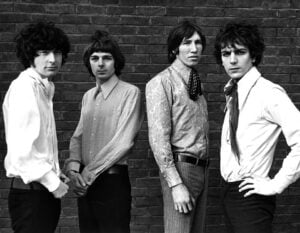
Public domain, via Wikimedia Commons
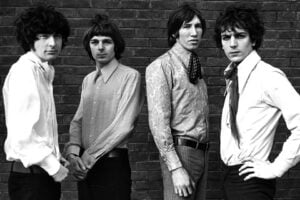
London is where Pink Floyd took shape, but the roots go back to a student circle that began forming in 1962, when Roger Waters and Nick Mason met while studying architecture at Regent Street Polytechnic. Richard Wright joined that same year, and the group moved through several names before settling into the lineup that would become Pink Floyd. By 1965, the band had formed in London with Syd Barrett on guitar and vocals, Mason on drums, Waters on bass and vocals, and Wright on keyboards and vocals. David Gilmour joined at the end of 1967, just as Barrett’s time in the band was coming to an end. That early shift proved decisive, because it pushed the group from the psychedelic underground into a broader, more expansive sound that would define the rest of its career.
Pink Floyd released 15 studio albums, beginning with The Piper at the Gates of Dawn in 1967 and ending with The Endless River in 2014. The catalog runs through A Saucerful of Secrets, More, Ummagumma, Atom Heart Mother, Meddle, Obscured by Clouds, The Dark Side of the Moon, Wish You Were Here, Animals, The Wall, The Final Cut, A Momentary Lapse of Reason, and The Division Bell. That output shows the full arc of the band’s development, from the Barrett era through the long central period driven more heavily by Waters as lyricist and thematic architect, and then into the Gilmour led years after Waters left in 1985. It is a catalog built over decades, but the crucial run came in the 1970s, when the band released the records that established its global stature.
The biggest hit singles tell their own story. Early on, “Arnold Layne” and “See Emily Play” gave the band chart traction in 1967. “Money” became a major hit in 1973. “Another Brick in the Wall, Part 2” became their biggest single, topping the charts in both the United States and the United Kingdom in 1979. Later hits included “Not Now John” in 1983, “On the Turning Away” in 1987, and “High Hopes” in 1994. Even so, Pink Floyd was always more album-driven than single-driven, and that is one reason records like The Dark Side of the Moon and The Wall loom so large. The Dark Side of the Moon hit number one in the United States, stayed on the Billboard chart for more than 14 years, and sold more than 45 million copies worldwide. The Wall topped the Billboard chart for 15 weeks, and *Another Brick in the Wall, Part 2” gave the band its signature chart-topping single.
The awards and honors reflect both commercial success and long-term cultural weight. Pink Floyd was inducted into the Rock and Roll Hall of Fame in 1996, the UK Music Hall of Fame in 2005, and the Hit Parade Hall of Fame in 2010. In 1995, the band won the Grammy Award for Best Rock Instrumental Performance for “Marooned.” In 2008, Pink Floyd received the Polar Music Prize. The film Pink Floyd, The Wall won two BAFTAs, adding another level of recognition to the group’s work beyond the studio albums. Four Pink Floyd albums reached number one on the Billboard 200, and five topped the UK Albums Chart. The sales numbers are just as massive, more than 250 million records sold worldwide, including 75 million certified units in the United States.
What made Pink Floyd so loved in this business was never just sales. The group built its reputation on extended compositions, sonic experiments, philosophical lyrics, and elaborate live performances. The music reached people because it was ambitious without losing emotional force. The Dark Side of the Moon, Wish You Were Here, Animals, and The Wall were not simply successful albums, they were immersive works with clear themes and identities. That combination of scale, mood, and musical detail gave the band a place few others ever reached. Listeners could come in through the atmosphere, the concepts, the guitar work, the keyboards, or the lyrics, and find something that stayed with them.
Outside of music, Pink Floyd’s work carried into film and into specific public causes. The band composed several film scores, and The Wall became a full musical film, extending the life of the album into another medium. In 2005, Waters, Gilmour, Mason, and Wright reunited for Live 8 in Hyde Park, a benefit concert raising awareness about poverty, their first performance together in more than 24 years. In 2022, Gilmour and Mason reunited again as Pink Floyd to record “Hey, Hey, Rise Up!” in protest of the Russian invasion of Ukraine. The single featured Andriy Khlyvnyuk’s vocals and directed its proceeds to Ukrainian Humanitarian Relief. The band also removed its music from streaming services in Russia and Belarus during that period. Those are not vague gestures; they are specific public actions tied to defined events and causes.
The final measure of Pink Floyd’s career is how completely the band changed the scale of rock music. It began with a London student scene, moved through a volatile first chapter with Syd Barrett, and then expanded into one of the great album catalogs in rock history. The members changed, relationships fractured, lawsuits happened, reunions remained rare, and the tensions were very real. None of that erased the work. Fifteen studio albums, several landmark singles, a Grammy, a Polar Music Prize, multiple hall of fame inductions, film work, charity performances, protest music, and more than 250 million records sold worldwide tell the story with enough force on their own.
The Piper at the Gates of Dawn

Released August 5, 1967
Pink Floyd’s The Piper at the Gates of Dawn was released on August 5, 1967. This was the debut studio album of the band’s career. The album was recorded between February and May 1967 at EMI Studios in London and produced by Norman Smith. The lineup on the album featured Syd Barrett on lead vocals and guitar, Roger Waters on bass guitar and vocals, Richard Wright on keyboards and vocals, and Nick Mason on drums. The album included the singles “Arnold Layne” and “See Emily Play,” though they were not included on the original UK album. The record reached number six on the UK Albums Chart and established the band as a leading force in the British psychedelic rock movement.
CD Track Listings:
- “Astronomy Domine” – 4:12
- “Lucifer Sam” – 3:07
- “Matilda Mother” – 3:08
- “Flaming” – 2:46
- “Pow R. Toc H.” – 4:26
- “Take Up Thy Stethoscope and Walk” – 3:05
- “Interstellar Overdrive” – 9:41
- “The Gnome” – 2:11
- “Chapter 24” – 3:42
- “The Scarecrow” – 2:11
- “Bike” – 3:21
A Saucerful of Secrets
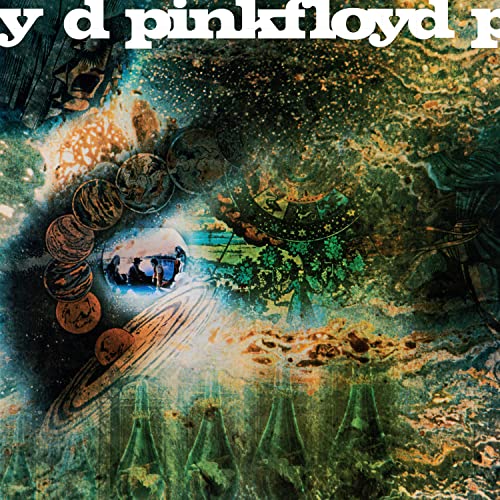
Released June 29, 1968
Pink Floyd’s A Saucerful of Secrets was released on June 29, 1968. This was the second studio album of the band’s career. The album was recorded between 1967 and 1968 at EMI Studios and De Lane Lea Studios in London and produced by Norman Smith. The record marked a transitional period for the band, featuring contributions from Syd Barrett while also introducing David Gilmour, who had joined the group as Barrett’s involvement declined. The lineup included Syd Barrett, David Gilmour, Roger Waters, Richard Wright, and Nick Mason. The album reached number nine on the UK Albums Chart and was later certified gold in the United Kingdom.
CD Track Listings:
- “Let There Be More Light” – 5:38
- “Remember a Day” – 4:33
- “Set the Controls for the Heart of the Sun” – 5:28
- “Corporal Clegg” – 4:12
- “A Saucerful of Secrets” – 11:57
- “See-Saw” – 4:36
- “Jugband Blues” – 3:00
More

Released June 13, 1969
Pink Floyd’s More was released on June 13, 1969. This was the third studio album of the band’s career and served as the soundtrack to the film More, directed by Barbet Schroeder. The album was recorded in early 1969 at Pye Studios and EMI Studios in London and produced by Pink Floyd. The lineup featured David Gilmour on guitar and vocals, Roger Waters on bass and vocals, Richard Wright on keyboards, and Nick Mason on drums. The album reached number nine on the UK Albums Chart and marked the band’s first full soundtrack project, showing a wider range of acoustic and experimental material.
CD Track Listings:
- “Cirrus Minor” – 5:18
- “The Nile Song” – 3:28
- “Crying Song” – 3:33
- “Up the Khyber” – 2:12
- “Green Is the Colour” – 2:58
- “Cymbaline” – 4:50
- “Party Sequence” – 1:07
- “Main Theme” – 5:27
- “Ibiza Bar” – 3:19
- “More Blues” – 2:12
- “Quicksilver” – 7:11
- “A Spanish Piece” – 1:05
- “Dramatic Theme” – 2:15
Ummagumma
Released November 7, 1969
Pink Floyd’s Ummagumma was released on November 7, 1969. This was the fourth album of the band’s career and was issued as a double album. The first disc featured live recordings captured at Mothers Club in Birmingham and the Manchester College of Commerce in 1969, while the second disc consisted of solo compositions by each band member. The album was released through Harvest Records and produced by Norman Smith. The lineup included David Gilmour on guitar and vocals, Roger Waters on bass and vocals, Richard Wright on keyboards, and Nick Mason on drums. The album reached number five on the UK Albums Chart and reflected the band’s move into more experimental and individual studio work.
CD Track Listings:
- “Astronomy Domine” – 8:32
- “Careful with That Axe, Eugene” – 8:50
- “Set the Controls for the Heart of the Sun” – 9:27
- “A Saucerful of Secrets” – 12:48
- “Sysyphus, Part 1” – 1:08
- “Sysyphus, Part 2” – 3:30
- “Sysyphus, Part 3” – 1:49
- “Sysyphus, Part 4” – 6:59
- “Grantchester Meadows” – 7:26
- “Several Species of Small Furry Animals Gathered Together in a Cave and Grooving with a Pict” – 4:59
- “The Narrow Way, Part 1” – 3:28
- “The Narrow Way, Part 2” – 2:53
- “The Narrow Way, Part 3” – 5:58
- “The Grand Vizier’s Garden Party, Part 1 (Entrance)” – 1:00
- “The Grand Vizier’s Garden Party, Part 2 (Entertainment)” – 7:06
- “The Grand Vizier’s Garden Party, Part 3 (Exit)” – 0:38
Atom Heart Mother

Released October 2, 1970
Pink Floyd’s Atom Heart Mother was released on October 2, 1970. This was the fifth album of the band’s career. The album was recorded at Abbey Road Studios in London and was produced by Pink Floyd. The lineup on the album featured David Gilmour on guitar and vocals, Roger Waters on bass guitar and vocals, Richard Wright on keyboards and vocals, and Nick Mason on drums. The album became the band’s first number one record in the United Kingdom. The cover featured a cow standing in a field, one of the most unusual and recognizable album covers of the era.
CD Track Listings:
- “Atom Heart Mother” – 23:44
- “If” – 4:30
- “Summer ’68” – 5:29
- “Fat Old Sun” – 5:22
- “Alan’s Psychedelic Breakfast” – 13:00
Meddle

Released October 31, 1971
Pink Floyd’s Meddle was released on October 31, 1971. This was the sixth studio album of the band’s career. The album was recorded between January and August 1971 at several locations including Abbey Road Studios, AIR Studios, and Morgan Studios in London. It was produced by Pink Floyd. The lineup featured David Gilmour on guitar and vocals, Roger Waters on bass guitar and vocals, Richard Wright on keyboards and vocals, and Nick Mason on drums. The album reached number three on the UK Albums Chart and marked a significant step forward in the band’s development, highlighted by the extended composition “Echoes.”
CD Track Listings:
- “One of These Days” – 5:57
- “A Pillow of Winds” – 5:10
- “Fearless” – 6:08
- “San Tropez” – 3:43
- “Seamus” – 2:15
- “Echoes” – 23:31
Obscured by Clouds

Released June 2, 1972
Pink Floyd’s Obscured by Clouds was released on June 2, 1972. This was the seventh studio album of the band’s career and served as the soundtrack to the film La Vallée, directed by Barbet Schroeder. The album was recorded in February 1972 at Château d’Hérouville in France and produced by Pink Floyd. The lineup featured David Gilmour on guitar and vocals, Roger Waters on bass guitar and vocals, Richard Wright on keyboards and vocals, and Nick Mason on drums. The album reached number six on the UK Albums Chart and number 46 on the Billboard 200.
CD Track Listings:
- “Obscured by Clouds” – 3:03
- “When You’re In” – 2:31
- “Burning Bridges” – 3:29
- “The Gold It’s in the…” – 3:07
- “Wot’s… Uh the Deal” – 5:08
- “Mudmen” – 4:20
- “Childhood’s End” – 4:33
- “Free Four” – 4:16
- “Stay” – 4:05
- “Absolutely Curtains” – 5:52
The Dark Side of the Moon

Released March 1, 1973
If you grew up in the 70s, you had this one. The probaly same goes for just about anyone who is a rock fan no matter what decade they grew up in. Hands down on of the most popular rock albums of all time. Pink Floyd’s The Dark Side of the Moon was released on March 1, 1973. This was the eighth studio album of the band’s career. The album was recorded between May 1972 and January 1973 at Abbey Road Studios in London and produced by Pink Floyd. The lineup featured David Gilmour on guitar and vocals, Roger Waters on bass guitar and vocals, Richard Wright on keyboards and vocals, and Nick Mason on drums. The album became one of the best-selling records of all time and reached number one on the Billboard 200. It remained on the Billboard chart for more than 14 years. The album featured the single “Money,” which became a major hit.
CD Track Listings:
- “Speak to Me” – 1:30
- “Breathe (In the Air)” – 2:43
- “On the Run” – 3:30
- “Time” – 6:53
- “The Great Gig in the Sky” – 4:15
- “Money” – 6:30
- “Us and Them” – 7:51
- “Any Colour You Like” – 3:26
- “Brain Damage” – 3:50
- “Eclipse” – 2:03
Wish You Were Here
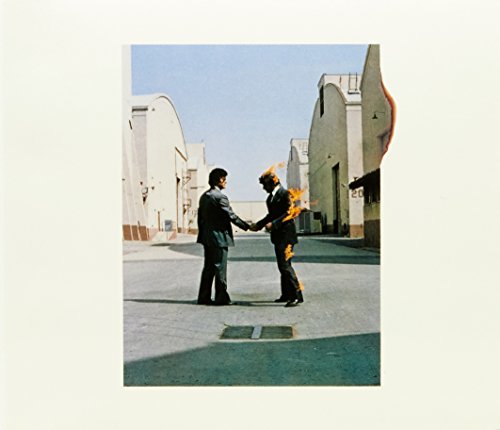
Released September 12, 1975
Pink Floyd’s Wish You Were Here was released on September 12, 1975. This was the ninth studio album of the band’s career. The album was recorded between January and July 1975 at Abbey Road Studios in London and produced by Pink Floyd. The lineup featured David Gilmour on guitar and vocals, Roger Waters on bass guitar and vocals, Richard Wright on keyboards and vocals, and Nick Mason on drums. The album reached number one on both the UK Albums Chart and the Billboard 200. The record was inspired in part by former band member Syd Barrett and included the title track “Wish You Were Here,” along with the multi-part suite “Shine On You Crazy Diamond.”
CD Track Listings:
- “Shine On You Crazy Diamond (Parts I–V)” – 13:32
- “Welcome to the Machine” – 7:31
- “Have a Cigar” – 5:08
- “Wish You Were Here” – 5:40
- “Shine On You Crazy Diamond (Parts VI–IX)” – 12:28
Animals

Released January 23, 1977
The Animals tour ws the forst time I ever saw the band Pink Floyd. It was the summer of 1977 in New York City at Madison Square Garden. This was about two weeks after seeing Led Zeppelin. What a summer of concerts that was. Pink Floyd’s Animals was released on January 23, 1977. This was the tenth studio album of the band’s career. The album was recorded between April and December 1976 at Britannia Row Studios in London and produced by Pink Floyd. The lineup featured David Gilmour on guitar and vocals, Roger Waters on bass guitar and vocals, Richard Wright on keyboards, and Nick Mason on drums. The album reached number two on the UK Albums Chart and number three on the Billboard 200. The record presented a darker, more politically driven direction, built around extended compositions.
CD Track Listings:
- “Pigs on the Wing 1” – 1:25
- “Dogs” – 17:05
- “Pigs (Three Different Ones)” – 11:28
- “Sheep” – 10:20
- “Pigs on the Wing 2” – 1:23
The Wall

Released November 30, 1979
Pink Floyd’s The Wall was released on November 30, 1979. This was the eleventh studio album of the band’s career. The album was recorded between 1978 and 1979 at multiple locations including Britannia Row Studios in London, Super Bear Studios in France, and Producers Workshop in Los Angeles. It was produced by Bob Ezrin, David Gilmour, Roger Waters, and James Guthrie. The lineup featured David Gilmour on guitar and vocals, Roger Waters on bass guitar and vocals, Richard Wright on keyboards, and Nick Mason on drums. The album reached number one on the Billboard 200 for 15 weeks and also topped the UK Albums Chart. It featured the hit single “Another Brick in the Wall, Part 2,” which reached number one in both the United States and the United Kingdom.
CD Track Listings:
- “In the Flesh?” – 3:19
- “The Thin Ice” – 2:27
- “Another Brick in the Wall, Part 1” – 3:21
- “The Happiest Days of Our Lives” – 1:50
- “Another Brick in the Wall, Part 2” – 3:59
- “Mother” – 5:32
- “Goodbye Blue Sky” – 2:45
- “Empty Spaces” – 2:10
- “Young Lust” – 3:25
- “One of My Turns” – 3:41
- “Don’t Leave Me Now” – 4:08
- “Another Brick in the Wall, Part 3” – 1:18
- “Goodbye Cruel World” – 1:17
- “Hey You” – 4:40
- “Is There Anybody Out There?” – 2:44
- “Nobody Home” – 3:26
- “Vera” – 1:35
- “Bring the Boys Back Home” – 1:21
- “Comfortably Numb” – 6:23
- “The Show Must Go On” – 1:36
- “In the Flesh” – 4:15
- “Run Like Hell” – 4:23
- “Waiting for the Worms” – 4:04
- “Stop” – 0:30
- “The Trial” – 5:18
- “Outside the Wall” – 1:41
The Final Cut

Released March 21, 1983
Pink Floyd’s The Final Cut was released on March 21, 1983. This was the twelfth studio album of the band’s career. The album was recorded from July through December 1982 at Mayfair, RAK, Olympic, Abbey Road, Eel Pie, Audio International, and the Billiard Room in London, as well as Hook End Recording Studios in Oxfordshire, England. The album was produced by Roger Waters, James Guthrie, Michael Kamen, and Pink Floyd. It was the last Pink Floyd studio album to feature Roger Waters and the only one without Richard Wright. One single was released from the album, “Not Now John,” and the album reached number one on the UK Albums Chart and number six on the Billboard 200.
CD Track Listings:
- “The Post War Dream” – 3:00
- “Your Possible Pasts” – 4:26
- “One of the Few” – 1:11
- “The Hero’s Return” – 2:43
- “The Gunner’s Dream” – 5:18
- “Paranoid Eyes” – 3:41
- “Get Your Filthy Hands Off My Desert” – 1:17
- “The Fletcher Memorial Home” – 4:12
- “Southampton Dock” – 2:14
- “The Final Cut” – 4:43
- “Not Now John” – 5:02
- “Two Suns in the Sunset” – 5:14
A Momentary Lapse of Reason

Released September 7, 1987
Pink Floyd’s A Momentary Lapse of Reason was released on September 7, 1987. This was the thirteenth studio album of the band’s career. The album was recorded from November 1986 through March 1987 at Astoria, Mayfair, Britannia Row, and Audio International in London, A&M, Village Recorders, and Can Am in Los Angeles, California, and Le Mobile. The album was produced by Bob Ezrin and David Gilmour. The record was the first Pink Floyd studio album made without Roger Waters, and it also marked Richard Wright’s return to the group as a session player. Three singles were released from the album, “Learning to Fly,” “On the Turning Away,” and “One Slip.” The album reached number three in both the United Kingdom and the United States.
CD Track Listings:
- “Signs of Life” – 4:22
- “Learning to Fly” – 4:52
- “The Dogs of War” – 6:03
- “One Slip” – 5:06
- “On the Turning Away” – 5:39
- “Yet Another Movie” – 6:17
- “Round and Around” – 1:06
- “A New Machine, Part 1” – 1:47
- “Terminal Frost” – 6:16
- “A New Machine, Part 2” – 0:38
- “Sorrow” – 8:45
The Division Bell
![The Division Bell [Explicit]](https://m.media-amazon.com/images/I/51mQ1p7vNDL._SL500_.jpg)
Released March 28, 1994
Pink Floyd’s The Division Bell was released on March 28, 1994. This was the fourteenth studio album of the band’s career. The album was recorded from 1993 into early 1994 at Britannia Row Studios and at David Gilmour’s houseboat studio, Astoria, located on the River Thames. The album was produced by David Gilmour and Bob Ezrin. The lineup featured David Gilmour on vocals and guitar, Nick Mason on drums, and Richard Wright on keyboards, marking Wright’s first full participation on a Pink Floyd studio album since Wish You Were Here. Three singles were released from the album, “Take It Back,” “High Hopes,” and “Keep Talking.” The album reached number one in both the United Kingdom and the United States.
CD Track Listings:
- “Cluster One” – 5:58
- “What Do You Want from Me” – 4:21
- “Poles Apart” – 7:03
- “Marooned” – 5:30
- “A Great Day for Freedom” – 4:17
- “Wearing the Inside Out” – 6:49
- “Take It Back” – 6:12
- “Coming Back to Life” – 6:19
- “Keep Talking” – 6:11
- “Lost for Words” – 5:14
- “High Hopes” – 8:31
The Endless River

Released November 10, 2014
Pink Floyd’s The Endless River was released on November 10, 2014. This was the fifteenth and final studio album of the band’s career. The album was recorded in 1969, 1993, and from 2013 to 2014 at Astoria, Britannia Row, Medina, and Olympic. It was produced by David Gilmour, Phil Manzanera, Youth, and Andy Jackson. The album was built largely from material recorded during the The Division Bell sessions and was issued as a tribute to Richard Wright, whose playing is heard throughout the record. One single was released from the album, “Louder than Words,” and the album reached number one in several countries.
CD Track Listings:
- “Things Left Unsaid” – 4:26
- “It’s What We Do” – 6:17
- “Ebb and Flow” – 1:50
- “Sum” – 4:49
- “Skins” – 2:37
- “Unsung” – 1:07
- “Anisina” – 3:16
- “The Lost Art of Conversation” – 1:44
- “On Noodle Street” – 1:42
- “Night Light” – 1:42
- “Allons-y (1)” – 1:57
- “Autumn ’68” – 1:35
- “Allons-y (2)” – 1:35
- “Talkin’ Hawkin’” – 3:29
- “Calling” – 3:38
- “Eyes to Pearls” – 1:51
- “Surfacing” – 2:47
- “Louder than Words” – 6:32
Check out more Pink Floyd articles on ClassicRockHistory.com Just click on any of the links below……
10 Best Covers Of Pink Floyd Songs
Top 25 Pink Floyd Songs
10 Pink Floyd Album Covers We Love
Complete List Of Pink Floyd Band Members
Top 100 Pink Floyd Songs
Ultimate Pink Floyd Page: Complete History, Songs, Albums & More
Top 10 Syd Barrett Pink Floyd Songs
Top 10 Roger Waters Pink Floyd Songs
Top 10 David Gilmour Pink Floyd Songs
A Look Back At Pink Floyd’s Wish You Were Here Album
Complete List Of Pink Floyd Songs A-Z Plus Discography
Top 10 Pink Floyd Albums
Pink Floyd’s Live 8 Performance Proved Why They Should Have Never Broken Up
Best Pink Floyd Box Sets
Read More: Artists’ Interviews Directory At ClassicRockHistory.com
Read More: Classic Rock Bands List And Directory
Read More: 100 Essential Albums From The 1960s That Everyone Should Own
Complete List Of Pink Floyd Albums And Discography article published on ClassicRockHistory.com© 2026
Classicrockhistory.com claims ownership of all its original content and Intellectual property under United States Copyright laws and those of all other foreign countries. No one person, business, or organization is allowed to republish any of our original content anywhere on the web or in print without our permission. All photos used are either public domain Creative Commons photos or licensed officially from Shutterstock under license with ClassicRockHistory.com. All photo credits have been placed at the end of the article. Album Cover Photos are affiliate links and the property of Amazon and are stored on the Amazon server. Any theft of our content will be met with swift legal action against the infringing websites.