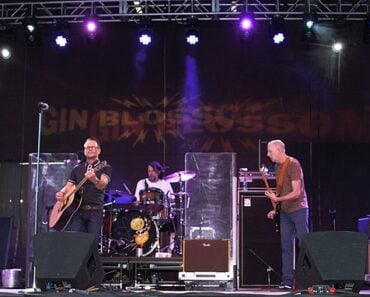
Feature Photo: Raph_PH, CC BY 2.0 <https://creativecommons.org/licenses/by/2.0>, via Wikimedia Commons
Queens of the Stone Age formed in 1996 under the leadership of Josh Homme, with a distinct sound that blended elements of stoner rock, heavy metal, and experimental rock, breaking away from the confines of the genres they were associated with. Their music was defined by Homme’s mastery of innovative guitar tones, which often ranged from hauntingly atmospheric to raw, gritty riffs, and their ability to create complex rhythmic structures. Unlike many of their contemporaries, Queens embraced a fluid lineup, with Homme’s leadership at the core, and their willingness to evolve allowed them to shape an entirely unique musical identity. From their breakthrough album Songs for the Deaf (2002), which explored the intersection of hard rock and experimental soundscapes, to the more atmospheric and melancholic …Like Clockwork (2013) and In Times New Roman… (2023), the band’s music has always been a mix of hard-driving anthems and deep, introspective moments.
What set Queens of the Stone Age apart from other rock bands was their ability to blend heavy riff-driven rock with elements of electronic and progressive music, creating a signature sound that was both innovative and commercially accessible. This fusion, led by Homme’s distinctive guitar work, was exemplified in hits like “No One Knows” and “Go With the Flow,” songs that became anthems not just in rock, but also in pop culture. With collaborations from high-profile musicians such as Dave Grohl, and Homme’s work in Them Crooked Vultures, the band continuously evolved while maintaining a core sense of musical experimentation. Their approach to songwriting, emotionally charged yet experimental, alongside their ever-shifting lineup, has left an indelible mark on the rock scene.
Josh Homme
Josh Homme is the visionary leader, guitarist, and primary songwriter behind Queens of the Stone Age, and his distinctive voice and innovative guitar playing have defined the band since its inception in 1996. Homme’s creative direction steered the band through its early stoner rock roots, while his willingness to experiment with different genres, including elements of hard rock, electronic music, and blues, propelled the band to the forefront of rock music. Homme’s versatility extends beyond guitar, as he frequently plays piano, synthesizers, bass, drums, and other instruments, creating a layered, textured sound that defines the band’s evolving musical identity. His work on albums like Songs for the Deaf (2002), Lullabies to Paralyze (2005), …Like Clockwork (2013), and In Times New Roman… (2023) showcased his ability to merge raw energy with atmospheric and experimental elements.
In addition to his work with Queens of the Stone Age, Homme is involved in several notable musical projects. He is a founding member of Them Crooked Vultures, a supergroup featuring Dave Grohl and John Paul Jones, and he has also collaborated extensively with artists such as Arctic Monkeys, Iggy Pop, Eagles of Death Metal, and Mark Lanegan. Homme has also led The Desert Sessions, the long-running collaborative recording project closely associated with the California desert music scene. Through his multiple musical ventures, Homme has earned his place as one of the most influential figures in modern rock.
Troy Van Leeuwen
Troy Van Leeuwen joined Queens of the Stone Age in 2002 after the recording of Songs for the Deaf, bringing with him a diverse musical background that included work with A Perfect Circle. His contributions as guitarist, lap steel player, keyboardist, and synthesizer player significantly shaped the band’s sound from Lullabies to Paralyze (2005) forward. Van Leeuwen’s versatile playing style allowed him to blend seamlessly with Homme’s vision, adding layers of complex textures to the music while maintaining the band’s raw, rock-driven energy. His skill on instruments like the lap steel guitar brought a unique sonic element to the band’s music, expanding their palette beyond traditional rock sounds.
Before joining Queens of the Stone Age, Van Leeuwen had already established himself as a sought-after musician, collaborating with various bands and projects. His ability to switch between multiple instruments and adapt to different musical styles has made him an essential part of the band’s evolution. He remains part of the current Queens of the Stone Age lineup.
Michael Shuman
Michael Shuman joined Queens of the Stone Age in 2007 as the band’s bassist and backing vocalist after the recording of Era Vulgaris. Shuman’s bass work became an integral part of the band’s evolving live sound, while his first full studio album with the group was …Like Clockwork (2013). His bass lines are known for being melodic yet heavy, providing a strong foundation for the band’s music while allowing for sonic exploration. His contributions continued on Villains (2017) and In Times New Roman… (2023).
Outside of Queens of the Stone Age, Shuman is also a member of Mini Mansions, a project where he plays bass and sings. Mini Mansions’ more pop-oriented and experimental sound allows Shuman to explore different musical territories and collaborate with artists such as Alex Turner of Arctic Monkeys. His work in both bands has solidified Shuman’s reputation as a versatile musician in the modern rock scene.
Dean Fertita
Dean Fertita joined Queens of the Stone Age in 2007 after the recording of Era Vulgaris and plays multiple instruments within the band, including keyboards, synthesizers, guitar, and percussion. Fertita’s multifaceted contributions expanded the band’s sound in the years that followed, particularly on albums such as …Like Clockwork (2013), Villains (2017), and In Times New Roman… (2023). His ability to contribute to both guitar and keyboard parts allowed Queens of the Stone Age to incorporate more layered and expansive sounds while maintaining their hard rock roots.
Before his tenure with QOTSA, Fertita had already established himself as a musician, and he later became a member of The Raconteurs and The Dead Weather. Fertita’s ability to integrate into multiple projects while adding his own touch to each has made him an important part of Queens of the Stone Age.
Jon Theodore
Jon Theodore joined Queens of the Stone Age in 2013 after Joey Castillo’s departure and the later studio return of Dave Grohl during the …Like Clockwork sessions. Theodore contributed to the album and became the band’s permanent drummer for the touring cycle that followed. His technical drumming style, previously honed through his work with The Mars Volta, made him an ideal fit for the band’s intricate rhythms. Theodore’s ability to play with both power and finesse became a major part of the band’s sound on Villains (2017) and In Times New Roman… (2023).
Before joining QOTSA, Theodore had an extensive career performing with The Mars Volta, where his drumming was central to the band’s progressive and experimental sound. He has also been involved with other projects, including One Day as a Lion alongside Zack de la Rocha of Rage Against the Machine.
Alfredo Hernández
Alfredo Hernández was the drummer for Queens of the Stone Age during the band’s early years, specifically from 1998 to 1999. Hernández played drums on the band’s self-titled debut album, Queens of the Stone Age (1998), while Josh Homme handled most of the other instruments. His drumming was instrumental in shaping the band’s raw, gritty approach to rock music, characterized by driving rhythms and minimalist patterns that would become a hallmark of the band’s early sound. Hernández’s tenure was brief, and he left after the debut-album era.
After his departure from Queens of the Stone Age, Hernández played with various other bands and remained connected to the desert rock scene. His contributions during his time with QOTSA remain an important part of the band’s early legacy.
Nick Oliveri
Nick Oliveri was a pivotal member of Queens of the Stone Age, serving as bassist, co-lead vocalist, and backing vocalist from 1998 until 2004. His aggressive bass lines, powerful stage presence, and distinctive vocal style played a key role in shaping the band’s sound, particularly on Rated R (2000) and Songs for the Deaf (2002). Oliveri’s lead-vocal contributions added a unique contrast to Josh Homme’s voice and gave the band another level of intensity.
Oliveri’s time with the band ended in 2004. After leaving QOTSA, he continued with Mondo Generator and other projects and later made guest appearances connected to Queens of the Stone Age. Despite his departure, Oliveri remains an influential figure in the desert rock scene.
Dave Catching
Dave Catching joined Queens of the Stone Age in 1998 as a guitarist, keyboardist, lap steel player, and backing vocalist. He became part of the early touring lineup alongside Josh Homme, Nick Oliveri, and Alfredo Hernández and remained with the band through the Rated R period. Catching’s multi-instrumental role helped broaden the sound of the group during its formative years.
After leaving the regular Queens of the Stone Age lineup around 2000, Catching remained closely connected to the desert rock scene. He later became widely known for his work with Eagles of Death Metal and for operating Rancho De La Luna, the California studio associated with many Desert Sessions recordings and other related projects.
Gene Trautmann
Gene Trautmann served as the drummer for Queens of the Stone Age from 1999 to 2001 following Alfredo Hernández’s departure. Trautmann’s drumming was featured on Rated R (2000), the band’s second album and a significant step forward in their musical evolution. His playing contributed to the album’s tight and dynamic rhythms, providing a solid backbone for the band’s harder and more experimental sound. Trautmann’s time with the band was relatively short, but he made a noticeable impact during his tenure.
After his departure from Queens of the Stone Age, Trautmann continued to work as a drummer and contributed to other projects, including Eagles of Death Metal and recordings associated with the wider Homme musical circle.
Brendon McNichol
Brendon McNichol joined Queens of the Stone Age around 2000, replacing Dave Catching in the touring lineup. He contributed guitar, lap steel, and keyboards and toured extensively with the band through the period leading up to Songs for the Deaf. McNichol also contributed to Queens of the Stone Age recordings during his tenure.
McNichol left the group in 2002. Troy Van Leeuwen joined shortly afterward and became the band’s long-term second guitarist and multi-instrumentalist.
Mark Lanegan
Mark Lanegan, known for his distinct gravelly voice and his work with Screaming Trees, became an important vocalist with Queens of the Stone Age during the early 2000s. Lanegan’s contributions on Rated R, Songs for the Deaf (2002), and Lullabies to Paralyze (2005) expanded the band’s sound, particularly through his powerful vocals on tracks such as “Song for the Dead” and “Hangin’ Tree.” His deep voice provided a stark contrast to Homme’s vocals and added another layer to the band’s music.
Lanegan had a prolific career outside Queens of the Stone Age as well, releasing solo albums and working with a variety of artists including Isobel Campbell and Greg Dulli. His work with QOTSA remains a significant part of his musical legacy. Lanegan died in 2022.
Dave Grohl
Dave Grohl, best known as the frontman of Foo Fighters and former drummer for Nirvana, joined Queens of the Stone Age during the recording of Songs for the Deaf (2002). Grohl’s powerful drumming on songs such as “No One Knows” and “Go With the Flow” gave the album its hard-hitting and energetic rhythm. Grohl also participated in live performances during part of the album’s touring period.
After his time with QOTSA, Grohl returned to Foo Fighters but continued to collaborate with Homme, most notably in Them Crooked Vultures. He also returned to play drums on several tracks during the recording of …Like Clockwork.
Joey Castillo
Joey Castillo was the drummer for Queens of the Stone Age from 2002 to 2012, joining during the Songs for the Deaf touring period. Castillo played on Lullabies to Paralyze (2005) and Era Vulgaris (2007) and contributed to the early sessions for …Like Clockwork. His drumming style was essential in driving the band’s aggressive, hard-rocking sound, and his intense live performances helped cement the band’s reputation as one of rock’s strongest live acts.
After leaving Queens of the Stone Age in 2012, Castillo continued his musical career with other projects, including Circle Jerks and numerous other rock and punk bands.
Alain Johannes
Alain Johannes became part of Queens of the Stone Age’s mid-2000s lineup, contributing bass, guitar, keyboards, and backing vocals. A longtime collaborator with Homme, Johannes played a role in the band’s expanding sonic palette during the Lullabies to Paralyze and Era Vulgaris periods. His versatile musicianship helped the band move through a period of major lineup changes.
Before and after his time with Queens of the Stone Age, Johannes was a key member of Eleven and worked with a variety of artists, including Chris Cornell and PJ Harvey. His diverse musical background made him a natural fit for the band’s evolving sound.
Natasha Shneider
Natasha Shneider was a keyboardist and backing vocalist associated with Queens of the Stone Age during the mid-2000s. Her work during the Lullabies to Paralyze era added another atmospheric element to the band’s music and complemented the guitar-heavy arrangements. Shneider’s involvement with the group was relatively brief but formed part of the more expansive live lineup of that period.
Before her time with Queens of the Stone Age, Shneider worked with numerous artists and was a member of Eleven with Alain Johannes. She also collaborated with Homme through projects connected to the desert rock scene. Shneider died in 2008.
Check out more Queens of the Stone Age articles on ClassicRockHistory.com Just click on any of the links below……
Top 10 Queens Of The Stone Age Songs
Complete List Of Queens Of The Stone Age Albums
Read More: Artists’ Interviews Directory At ClassicRockHistory.com
Read More: Classic Rock Bands List And Directory
updated September 26, 2026
Complete List Of Queens Of The Stone Age Band Members article published on Classic RockHistory.com© 2026