Photo: By Esa Ahola (Own work) [CC BY-SA 3.0 (https://creativecommons.org/licenses/by-sa/3.0)], via Wikimedia Commons
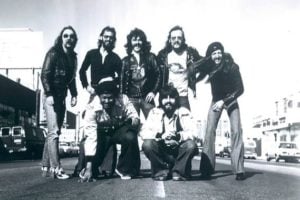
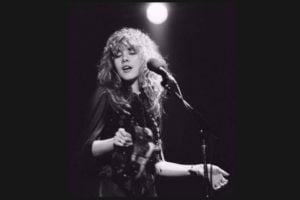
The band was first formed in the late 1960s by Keith Relf and Jim McCarty, former members of the Yardbirds. Additional musicians were added, and the band released its first album, Renaissance, in 1969. Annie Haslam joined in 1971, and her first recording with the group was the band’s third studio album, Prologue, released in 1972.
From 1969 through 1983, Renaissance released eleven studio albums. The band later returned with additional releases during the 2000s and 2010s, but most of its best-known recorded output came from the 1970s. The 1976 album Live at Carnegie Hall has been hailed by many fans as one of the greatest live albums ever released. Renaissance also went through major lineup changes throughout its career.
Every track on this Top 10 Renaissance Songs list is powerful, beautiful, and brilliant. The magnitude of these songs makes it hard to argue that the exact order is essential. Whether a track appears at number six, two, or one is almost insignificant. These are all great pieces of music, and our point is simply to provide another avenue for showcasing these magnificent Renaissance songs.
# 10 – Running Hard
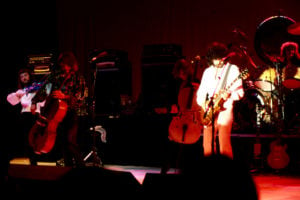
Opening our Top 10 Renaissance Songs list is the live version of “Running Hard.” The song originally appeared as the opening track on the Turn of the Cards album in 1974. The performance below was recorded at New York’s Carnegie Hall and released on the excellent 1976 album Live at Carnegie Hall.
# 9 – A Song for All Seasons
The epic musical journey “A Song for All Seasons” was the title track from the band’s 1978 album A Song for All Seasons. It is almost impossible to describe this music adequately. The depth of the composition, arrangements, production, and performances is stunning.
“A Song for All Seasons” featured the Royal Philharmonic Orchestra. The piece was written by Annie Haslam, Michael Dunford, Terence Sullivan, John Tout, and lyricist Betty Thatcher. It closed the album in spectacular fashion.
# 8 – Bonjour Swansong
“Bonjour Swansong” is an outlier on this list of Renaissance songs. The album and musical style reflect the era in which it was released. The early 1980s marked a turning point in popular music. The industry had not yet erupted into the big-hair band sound associated with groups such as Bon Jovi, while bands such as U2 were emerging with an attractive new sound.
There was no orchestra on the Camera Camera album. This was a different sound for Renaissance, and the band still pulled it off brilliantly.
# 7 – Prologue
Prologue was the third studio album released by Renaissance. It was, in essence, a new band because the lineup had changed dramatically from the first two records. It was also the first Renaissance album to feature Annie Haslam. The title track introduced the sound that would define the band’s classic period.
# 6 – Can You Hear Me
The Renaissance song “Can You Hear Me” appeared on the album Novella, released in 1977. It followed the band’s successful Live at Carnegie Hall album and continued Renaissance’s extraordinary combination of progressive rock, classical music, and Annie Haslam’s soaring vocals.
# 5 – Mother Russia
There are many great versions of the classic Renaissance song “Mother Russia.” Choosing which one to showcase on our Top 10 Renaissance Songs list was difficult. The performance below comes from the Academy of Music recording made in 1974. The original studio version appeared on Turn of the Cards, also released in 1974.
# 4 – Song of Scheherazade
If there were ever a Renaissance song that should not simply be called a song, it would be “Song of Scheherazade.” Although the title uses the word song, this is an epic musical suite. The piece runs for nearly twenty-five minutes and fills an entire album side. This was 1970s progressive rock at its grandest.
# 3 – Northern Lights
“Northern Lights” became the most commercially successful song in the Renaissance catalog. It appeared on the 1978 album A Song for All Seasons and reached the top ten on the United Kingdom singles chart. For a band whose greatest compositions frequently stretched far beyond conventional radio length, a genuine hit single was a rare achievement.
# 2 – Can You Understand
The magnificent “Can You Understand” appeared on the band’s Ashes Are Burning album, released in 1973. The composition opens the record and immediately displays the classical influence, melodic ambition, and instrumental brilliance that made Renaissance unique.
Many Renaissance fans, including this writer, have named Ashes Are Burning as their favorite Renaissance album. The recording featured Annie Haslam on lead vocals, Jon Camp on bass and backing vocals, John Tout on keyboards and backing vocals, and Terence Sullivan on drums, percussion, and backing vocals.
# 1 – Carpet of the Sun
Renaissance fans will never forget the soaring chorus melody of the classic song “Carpet of the Sun.” This incredible piece of music perfectly defines the sound of 1970s progressive rock by blending classical influences with rock instrumentation and one of the era’s most extraordinary vocal performances.
“Carpet of the Sun” opened the second side of our favorite Renaissance album, Ashes Are Burning.
In the end, Renaissance was one of the most unique bands of the progressive rock era. While Annie Haslam’s vocal delivery stood at the center of the band’s sound, one cannot ignore the incredible piano skills of John Tout. Critics often point to Keith Emerson of Emerson, Lake & Palmer and Rick Wakeman of Yes as the classic rock era’s dominant pianists and keyboard players. Listening to any great John Tout performance should convince anyone that he belonged in the same league as those legends.
Check out similar articles on ClassicRockHistory.com Just click on any of the links below……
Make sure to check out our interview with Annie Haslam
Read More: Complete List Of Renaissance Songs From A to Z
Read More: Artists’ Interviews Directory At ClassicRockHistory.com
Read More: Classic Rock Bands List And Directory
Updated August 2, 2026.
Top 10 Renaissance Songs article published on ClassicRockHistory.com © 2026