Photo: Grant Gouldon, CC BY-SA 2.0 <https://creativecommons.org/licenses/by-sa/2.0>, via Wikimedia Commons
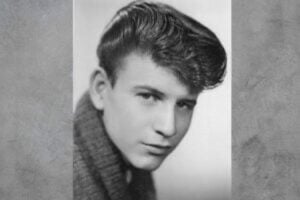
With our Top Ten Tim Buckley songs, we look at one of the greatest artists of folk and rock music who died tragically young. He was the father of Jeff Buckley, who also went on to be a brilliant artist, but also died in similar tragic circumstances. During his short nine-year career, Buckley experimented with several styles, including Jazz, Psychedelia, Funk, Soul, and Avant-Garde.
It should be noted that Buckley never had any kind of relationship with his son, apparently meeting him only once, when Jeff was eight years old. This is due to the fact that Tim separated from his mother when he was just a baby and had no further contact.
Although his son went on to have somewhat of a more popular following, Tim was by far the more prolific of the two Buckleys. In less than a decade, he produced nine albums, some of which were released in the same year. What is even more amazing is how radically different many of these records are in sound, almost as if Buckley had a schizophrenic musical personality. This consistency, which produced practically no bad material, is a tragic reminder that the man probably had so much more to give and would have gone on to be an even greater artist had he lived longer. However, we only have what he have, so let’s look at the best of what there is…
# 10 – Sweet Surrender
Kicking off our Top Ten Tim Buckley songs list is this cut taken from his eighth album, Greetings From LA, released in 1972. At seven minutes long, this song features Buckley performing in an almost rhythm-and-blues style. Although, like most of his albums, it did not sell particularly well, this album was his biggest seller.
# 9 – Come Here Woman
This next track is the opening number of Buckley’s sixth album, Starsailor, released in 1970. This record is his most experimental, and this track makes that clear from the start. The song is very shambolic-sounding, and it is hard to believe it is by the same artist who produced much of the more commercially accessible material.
# 8 – Down By The Borderline
This track is the closer from Starsailor and draws on Mexican music, particularly in the opening section, which features Mexican instrumentation. With this record, Buckley made a complete U-turn in his sound, abandoning any trace of folk music and becoming an avant-garde jazz artist. As a result, the record alienated much of his established fanbase, who found it largely unlistenable and anti-musical. However, it has retrospectively been regarded as a masterpiece in experimental music.
# 7 – Buzzin Fly
Going back a year from the previous entry, but unbelievably three albums, with two albums being produced in the space of a year between the album from which this track is from: Happy Sad and Starsailor. This folk ballad is a brilliant love song, sublime in both its instrumentation and lyrical concept.
# 6 – Lorca
At number six on our Tim Buckley songs list, we have the ten-minute-long title track from Tim Buckley’s fifth album, released in 1970. Despite being recorded simultaneously alongside Blue Afternoon, which was released a year earlier, the two records could not be more different in sound. Whereas the other record was more rooted in the early folk style, this show’s Buckley at his most experimental. Buckley was very clearly showing his defiance here with a different side to him that showed that he was capable of being more than a standard folk singer, which is what some people might have thought he was.
# 5 – Dream Letter
Here we have a song that sees Buckley at his most sensitive and melancholy. It is taken from Happy Sad. The record was a rather grand departure from Buckley’s first two efforts, as it saw him go a lot more experimental. On this album, Buckley was now the sole lyricist, having stopped working with Larry Becket, who co-wrote many of the lyrics on the first two albums. This track is particularly morose as it talks about Buckley’s regret about abandoning his wife and son.
# 4 – Phantasmagoria in Two
Taken from Buckley’s second record, Goodbye and Hello, released in 1967, this track sees him embracing psychedelia. As far as second records go, this is a great triumph, which shows that Buckley was an artist who was going to deliver a lot of fantastic music. It has received much acclaim over the years and is widely regarded as a classic of its era.
# 3 – Once I Was
Also taken from Goodbye and Hello, released in 1967, this track is one of his most poignant and significant. Although he worked across multiple genres, this track is a prime example of protest folk, which he arguably does best, despite his more experimental output. It was released from the album as a seven-inch single along with “Morning Glory.”
# 2 – Hong Kong Bar
This next track is taken from Buckley’s seventh album, Greetings From LA, which was released in 1972. Buckley himself apparently considered this to be his most accessible record. Although this may be the case, it did not sell as well as his previous records, making it less commercially successful despite its more commercial sound. This is one of its best tracks, a very danceable, funky number.
# 1 – Song To The Siren
Buckley performed this song on “The Monkees” tv show in 1968. However, it was not until 1970, two years later, that he recorded a version that was featured on one of his records. It is featured on Starsailor. This song is easily the most accessible cut on the album. It is Buckley’s most famous song due to numerous cover versions, most notably by This Mortal Coil.
Check out similar articles on ClassicRockHistory.com Just click on any of the links below……
Read More: Artists’ Interviews Directory At ClassicRockHistory.com
Read More: Classic Rock Bands List And Directory
Read More: 100 Essential Albums From The 1960s That Everyone Should Own
Top 10 Tim Buckley Songs article published on ClassicRockHistory.com© 2026
Classicrockhistory.com claims ownership of all its original content and Intellectual property under United States Copyright laws and those of all other foreign countries. No one person, business, or organization is allowed to re-publish any of our original content anywhere on the web or in print without our permission. All photos used are either public domain Creative Commons photos or licensed officially from Shutterstock under license with ClassicRockHistory.com. All photo credits have been placed at the end of the article. Album Cover Photos are affiliate links and the property of Amazon and are stored on the Amazon server. Any theft of our content will be met with swift legal action against the infringing websites.