
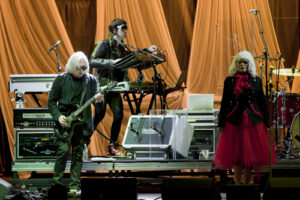
Feature Photo: Glynnis Jones / Shutterstock.com
Rock and roll has always been a genre where numbers speak volumes, from marking milestones to capturing emotions and weaving intricate stories. In this article, we explore 10 exceptional songs that use numbers in their titles to elevate their impact and meaning. Each entry reveals how numerical references can transform a song into a timeless anthem, blending rhythm, lyrics, and artistry in ways that resonate with listeners across generations. From high-energy rock tracks to introspective ballads, these songs demonstrate the versatility of numbers in musical storytelling.
# 10 – One Way Or Another – Blondie
Blondie’s “One Way or Another” is a fiery anthem of determination that merges punk energy with pop sensibilities, showcasing the band’s versatility and edge. Featured on their third studio album, Parallel Lines, released in 1978, the song captures a raw, almost menacing vibe inspired by real-life experiences. Written by Debbie Harry and bassist Nigel Harrison, “One Way or Another” was recorded at the Record Plant in New York City, with production by Mike Chapman.
Read More: Top 10 Blondie Songs
# 9 – Edge of Seventeen – Stevie Nicks
Stevie Nicks’ “Edge of Seventeen” is a masterful blend of emotional depth and rock dynamism that has earned its place among the most iconic songs featuring a number in its title. Released in February 1982 as the third single from her debut solo album, Bella Donna, the song exemplifies Nicks’ ability to craft a personal narrative that resonates universally. The album was recorded between 1980 and 1981 at Sound City Studios in Van Nuys, California, with Jimmy Iovine serving as the producer. The track features Waddy Wachtel’s signature guitar riff, which drives its powerful rhythm, alongside contributions from musicians such as Roy Bittan on keyboards and Russ Kunkel on drums.
Read More: 10 Most Underrated Stevie Nicks Songs
# 8 – Eight Miles High – The Byrds
“Eight Miles High” by The Byrds is a groundbreaking song that fused folk rock with the burgeoning psychedelic sound of the mid-1960s. Released in March 1966 as a single and later included on the album Fifth Dimension, the track represented a bold departure for the band, blending jazz-influenced guitar work with enigmatic lyrics. Written collaboratively by Gene Clark, Roger McGuinn, and David Crosby, the song was recorded at Columbia Studios in Hollywood, California, with producer Allen Stanton overseeing the sessions.
Read More: 10 Best Byrds Songs
# 7 – TVC 15 – David Bowie
David Bowie’s “TVC 15,” from his 1976 album Station to Station, is a striking fusion of avant-garde storytelling and infectious rock energy. Recorded in the latter part of 1975 at Cherokee Studios in Los Angeles, the song was produced by Bowie himself alongside Harry Maslin. Featuring a vivid narrative inspired by surreal scenarios, “TVC 15” blends Bowie’s experimental artistry with a playful rhythm, embodying his transition into the Thin White Duke era.
Read More: 10 Best David Bowie Songs
# 6 – 19th Nervous Breakdown -The Rolling Stones
The Rolling Stones’ “19th Nervous Breakdown,” released in 1966, encapsulates the band’s raw energy and biting social commentary during their meteoric rise in the mid-1960s. The track was recorded over two sessions in late 1965, at RCA Studios in Hollywood, with production helmed by Andrew Loog Oldham. The lineup for the recording featured Mick Jagger’s scathing vocals, Keith Richards’ infectious guitar riffs, Brian Jones’ dynamic rhythm guitar, Bill Wyman’s driving bass, and Charlie Watts’ precise drumming, delivering a quintessential Stones classic.
Read More: Complete List Of Rolling Stones Band Members
# 5 – One – Harry Nilsson / Three Dog Night
Harry Nilsson’s hauntingly minimalist ballad “One,” written in 1967 and first recorded for his album Aerial Ballet, is a testament to the profound emotional weight of simplicity. Inspired by the repetitive sound of a busy signal on his telephone, Nilsson crafted a song that eloquently captures the loneliness of unreciprocated love. The sparse arrangement, driven by a somber piano line and Nilsson’s evocative vocals, places the listener directly in the emotional isolation described in the lyrics: “One is the loneliest number that you’ll ever do.”
Read More: Top 10 Harry Nilsson Songs
Read More: Top 10 Three Dog Night Deep Tracks
# 4 – 2112 – Rush
Rush’s “2112,” the title track of their 1976 album, stands as a monumental piece of progressive rock storytelling. Recorded at Toronto Sound Studios in 1975, the song spans over 20 minutes and is structured as a seven-part suite. Produced by Terry Brown, “2112” showcases the band’s signature blend of intricate musicianship and conceptual lyricism. Geddy Lee’s commanding bass lines and soaring vocals, Alex Lifeson’s virtuosic guitar work, and Neil Peart’s masterful drumming drive the piece, establishing it as a cornerstone in Rush’s discography and a defining moment for the progressive rock genre.
Read More: Alex Lifeson of Rush: The ClassicRockHistory.com Interview
# 3 – 25 or 6 to 4 – Chicago
“25 or 6 to 4” stands as a hallmark of Chicago’s unique blend of rock and jazz fusion. Released in June 1970 as a single from their sophomore album, Chicago (also known as Chicago II), the song was recorded at Columbia Studios in New York and Los Angeles under producer James William Guercio. Written by the band’s keyboardist Robert Lamm, the track became a defining moment for the group, showcasing their ability to merge brass instrumentation with electrifying rock elements. Terry Kath’s soaring guitar solo remains one of the most celebrated moments in rock history, while the driving rhythm provided by drummer Danny Seraphine propels the song’s energy.
Read More: Why Jimi Hendrix Called Chicago’s Terry Kath The Best Guitarist In The Universe
# 2 -Highway 61 Revisited – Bob Dylan
“Highway 61 Revisited” is a bold and rollicking anthem from Bob Dylan’s pivotal 1965 album of the same name, recorded in Columbia Studios in New York City under the expert guidance of producer Bob Johnston. The track captures Dylan at the height of his electric transformation, blending blues and rock with the incisive storytelling that made him a folk icon. Featuring Mike Bloomfield’s scorching slide guitar and Al Kooper’s unconventional police siren whistle, the song’s arrangement underscores its playful yet biting narrative.
Read More: Complete List Of Bob Dylan Albums And Discography
# 1 – Eight Days A Week – The Beatles
As the final entry on this list, “Eight Days a Week” by The Beatles encapsulates the boundless creativity and charm that cemented the band as icons of rock music. Recorded during the sessions for their Beatles for Sale album in October 1964 at Abbey Road Studios, the track showcases the production ingenuity of George Martin and the collaborative songwriting genius of John Lennon and Paul McCartney.
Read More: A Look At 10 Beatles Songs Used In Commercials
Updated November 27, 2025
10 Best Songs That Feature Numbers In The Title article published on ClassicRockHistory.com© 2025


















An extended list may want to consider adding the following classics, that came to mind:
“Eighteen”, by the Alice Cooper Band
“One” recorded by Three Dog Night; written (and also recorded) by Harry Nilsson.
“Three Times A Lady”, by the Commodores
“One Of These Nights” by the Eagles (great intro riff, and later great solo, by Don Felder).
“50 Ways To Leave To Your Lover”, by Paul Simon