

Feature Photo: Ben Houdijk / Shutterstock.com
When we started thinking about great sophomore albums, the biggest challenge was narrowing the list to ten. There are just too many second albums that took everything an artist had done on a debut and pushed it somewhere bigger, deeper, or simply better. We decided to keep this installment focused on solo artists and handle bands separately, which gives us room to talk about these records without rushing. This is obviously subjective, but that is part of the fun. These are ten second albums that, in our opinion, surpassed what came first.
# 10 – The Heart of Saturday Night – Tom Waits

Tom Waits introduced himself with 1973’s Closing Time, an album I have listened to for years and still love because songs like “Martha” cut straight through any roughness in the production. His second album, The Heart of Saturday Night, arrived in October 1974 with Bones Howe producing and immediately felt like a deeper trip into Waits’s world. The folkier side of the debut gave way to more jazz, beat-poetry atmosphere, late-night streets, and characters who sound like they have been sitting at the same bar for hours. “(Looking for) The Heart of Saturday Night” and “Diamonds on My Windshield” show how quickly Waits was developing a musical identity nobody else really had. My favorite Tom Waits album will probably always be Blue Valentine, but between these first two records, the sophomore album gets my vote.
Read More: Complete List Of Tom Waits Albums And Songs
# 9 – Souvenirs – Dan Fogelberg

Dan Fogelberg’s 1972 debut Home Free introduced his gentle folk-rock style, and it remains a record I still put on the turntable. Two years later, Souvenirs took that songwriting and surrounded it with a much bigger sound, thanks in large part to producer Joe Walsh. “Part of the Plan” became Fogelberg’s first major hit, while musicians including Walsh, Graham Nash, Glenn Frey, Don Henley, and other great players helped give the album a richer West Coast feel. The record reached the Top 20 and eventually earned double-platinum certification, a huge step beyond the debut’s original commercial impact. Home Free is a beautiful album, but Souvenirs is where Dan Fogelberg’s career really opened up.
Read More: Complete List Of Dan Fogelberg Albums And Discography
# 8 – Sheryl Crow – Sheryl Crow

I am sure plenty of Sheryl Crow fans would argue with this choice because Tuesday Night Music Club was such an incredible debut. I bought that record in 1995 and was completely taken by this new singer—her voice, style, songs, and just about everything else about her made an immediate impression on me. Still, when the self-titled Sheryl Crow arrived in 1996, it sounded tougher, darker, and more like an artist completely taking control of her own identity. “If It Makes You Happy,” “Everyday Is a Winding Road,” and “A Change Would Do You Good” brought a classic-rock spirit into the nineties without sounding like nostalgia, and the album went on to win the Grammy for Best Rock Album while “If It Makes You Happy” won Best Female Rock Vocal Performance. We are the same age and grew up listening to a lot of the same music, so maybe that is part of why this album connects with me so strongly, but I still think the second record is better.
Read More: Complete List Of Sheryl Crow Albums And Songs
# 7 – The Freewheelin’ Bob Dylan – Bob Dylan

When Bob Dylan released his first album in 1962, I was only one year old, so I did not grow up with that early material the way an older generation did. As Bob Goldthwait, who is the same age as me, once joked, we were part of the “KISS generation,” and as teenagers in the seventies we were surrounded by Springsteen, the Eagles, Zeppelin, and everything else happening then. Over the years, especially through performing in Bob Dylan Tribute Concerts, I came to appreciate just how enormous the leap was from Bob Dylan to 1963’s The Freewheelin’ Bob Dylan. The debut contained mostly traditional material, while the second album gave us songs such as “Blowin’ in the Wind,” “Masters of War,” “A Hard Rain’s A-Gonna Fall,” and “Girl from the North Country,” revealing Dylan as one of the most important songwriters of his generation. For me, this is one of the easiest debut-versus-sophomore comparisons on the entire list.
Read More: Complete List Of Bob Dylan Albums And Discography
# 6 – Everybody Knows This Is Nowhere – Neil Young

Neil Young’s self-titled 1968 debut was an interesting first step, but 1969’s Everybody Knows This Is Nowhere sounds like somebody suddenly found the switch that turned everything on. This was the album that introduced Crazy Horse as Young’s backing band on record, and the chemistry changed the entire feel of his music. Produced by Young and David Briggs, the album gave us “Cinnamon Girl,” “Down by the River,” and “Cowgirl in the Sand,” three songs that would become permanent parts of the Neil Young story. Every garage band and cover band I have ever played in seemed to know “Cinnamon Girl,” because that riff is almost impossible for guitar players to resist. The debut has its moments, but the second album is where Neil Young became Neil Young in the way most rock fans understand him.
Read More: Complete List Of Neil Young Albums And Discography
# 5 – The Wild, the Innocent & the E Street Shuffle – Bruce Springsteen

It is remarkable how different Bruce Springsteen sounds across his first three albums, almost like three separate versions of the same artist trying to find the road forward. For many of us who discovered him through “Born to Run,” going backward to the two 1973 albums was a revelation because Greetings from Asbury Park, N.J. and The Wild, the Innocent & the E Street Shuffle hardly sound like the same record-making approach. The debut leans harder into that word-heavy Dylan influence, while the second album opens up into something looser, warmer, and closer to Van Morrison in places. “Rosalita (Come Out Tonight),” “Incident on 57th Street,” “Kitty’s Back,” and “New York City Serenade” became some of the most important songs of Springsteen’s early career, with “Rosalita” turning into one of the great live encore numbers. Greetings is a phenomenal debut, but the second album is the one I would take home.
Read More: Complete List Of Bruce Springsteen Albums And Songs
# 4 – Astral Weeks – Van Morrison

Growing up as a music fan in the seventies, I was always reading magazines like Rolling Stone, Circus, Creem, and Hit Parader, and I kept seeing people call Astral Weeks one of the greatest albums ever made. At fifteen years old I did not really get it—I thought it was fine, but my ears had not caught up with the record yet. Released in 1968 after the 1967 Bang album Blowin’ Your Mind!, Astral Weeks took Van Morrison somewhere completely different, with producer Lewis Merenstein and jazz musicians including Richard Davis, Jay Berliner, Connie Kay, and Warren Smith Jr. helping create its floating, almost impossible-to-classify sound. Songs like “Sweet Thing,” “Cyprus Avenue,” and my favorite, “The Way Young Lovers Do,” eventually showed me why so many people had been talking about this record all those years. Some albums hit you immediately, and others wait until you are ready for them; Astral Weeks was one of those for me.
Read More: Top 10 Van Morrison Albums Ranked With Complete Discography
# 3 – Tapestry – Carole King
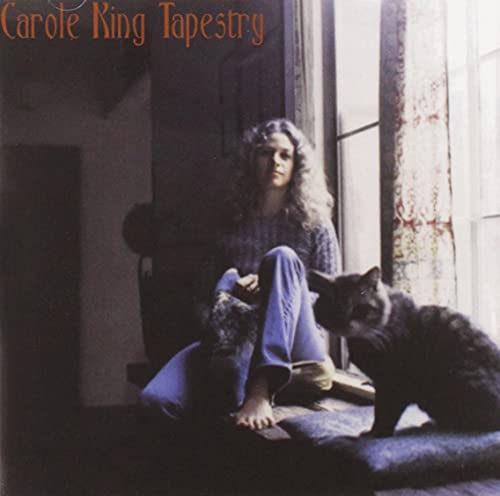
Let me ask one question: did you know anybody in the seventies who did not have a copy of Tapestry? Carole King’s 1971 second solo album followed Writer and turned one of the great songwriters behind other people’s hits into a superstar in her own right. We already knew songs she had written or co-written through other artists, but Tapestry made millions of listeners feel like they finally knew Carole King herself. “It’s Too Late,” “I Feel the Earth Move,” “You’ve Got a Friend,” and her own versions of earlier compositions helped drive the album to number one, while the record went on to win four Grammys including Album of the Year. Writer introduced her as a solo artist, but Tapestry became one of those albums that seemed to live in everybody’s house.
Read More: Complete List Of Carole King Albums And Discography
# 2 – Piano Man – Billy Joel

I think it is safe to say that a lot of people in the seventies assumed Piano Man was Billy Joel’s debut album because Cold Spring Harbor had made so little impact when it appeared in 1971. Piano Man, released in 1973, changed the story with the title track, “Captain Jack,” “You’re My Home,” “The Ballad of Billy the Kid,” and a songwriter who suddenly sounded ready for a much bigger stage. Even then, Billy was not yet the mass-cultural phenomenon he would become when The Stranger arrived in 1977, but the foundation was now impossible to miss. Cold Spring Harbor has plenty of excellent songs, yet the second album is stronger, more confident, and far more representative of the artist Billy Joel was becoming. Nineteen seventy-three was one unbelievable year for albums, and speaking of that era brings us straight to number one.
Read More: Complete List Of Billy Joel Albums And Complete Discography
# 1 – Elton John – Elton John

Like Billy Joel, Elton John made an enormous leap with his second album, and in Elton’s case that sophomore record was the one that introduced him to much of the world. His 1969 debut Empty Sky was initially released only in the United Kingdom, while 1970’s self-titled Elton John became his first album released globally and the record that delivered “Your Song.” Produced by Gus Dudgeon with Paul Buckmaster’s orchestral arrangements, the album sounded richer and more dramatic than the debut without burying Elton’s piano or Bernie Taupin’s words. “Your Song” reached number eight on the Billboard Hot 100, while the album climbed to number four on the Billboard album chart and firmly established Elton in the United States. Empty Sky is a fascinating beginning, but Elton John is the record where everything opened up, which is why it takes the number-one spot.
Read More: Complete List Of Elton John Articles
Updated September 15, 2026
10 Solo Artists Whose Second Album Was Better Than Their First article published on ClassicRockHistory.com © 2026
















Acknowledging that artistic viewpoints are often subjective, and that I personally think they are both excellent, I would give the edge to Chicago’s second LP “Chicago II” slightly over “(The) Chicago Transit Authority”, due mainly to the diversity, and musical arrangements’ strength, of the compositions.
In the spirit of this article’s intent, I would suggest that an additional selection would be Don Henley’s sophomore effort “Building The Perfect Beast” (1984), a nearly flawless solo album, overshadowing his debut solo album ” I Can’t Stand Still” (1982), which in its own right, was a strong debut.