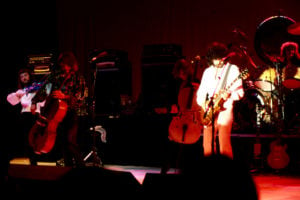
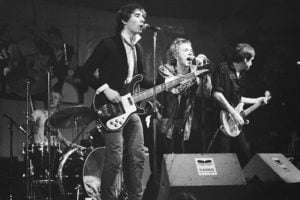
Feature Photo: Cashbox Magazine, Public domain, via Wikimedia Commons
The Small Faces were one of the most influential British mod bands of the 1960s, combining American R&B with a distinctly English sound that later expanded into psychedelic rock and pop. Formed in East London in 1965, the original lineup featured Steve Marriott on vocals and guitar, Ronnie Lane on bass, Kenney Jones on drums, and Jimmy Winston on keyboards. Ian McLagan replaced Winston later that year and completed the classic lineup.
Steve Marriott left in 1969 to form Humble Pie. Lane, Jones, and McLagan then joined forces with Rod Stewart and Ronnie Wood, both from the Jeff Beck Group, and the new lineup became the Faces. The Small Faces later reunited in the 1970s, but the 1965-1969 period remains the era that produced the band’s defining recordings.
The group’s influence carried well beyond the 1960s. Their mix of soul, mod rock, psychedelia, and English music-hall humor became an important reference point for later punk and Britpop artists, including Oasis and The Verve. Our list focuses only on recordings released under the Small Faces name, not the later Faces catalog.
# 10 – “Whatcha Gonna Do About It”
We open our Top 10 Small Faces Songs list with the band’s debut single, “Whatcha Gonna Do About It.” Released in 1965, the song immediately established Steve Marriott’s explosive voice and the group’s hard-driving blend of R&B and mod rock, reaching No. 14 on the UK Singles Chart. It gave the Small Faces the exposure they needed to launch their career and helped establish a sound that would later influence punk singers such as John Lydon of The Sex Pistols and Public Image Ltd.
# 9 – “I’ve Got Mine”
“I’ve Got Mine,” released in 1965 as the Small Faces’ second single, was the first of their singles written entirely by Steve Marriott and Ronnie Lane. Darker and more blues-driven than the debut, it showed the band moving away from straightforward pop toward the tougher sound that would become one of its trademarks. The record failed to chart, but it marked the beginning of the Marriott-Lane songwriting partnership that would produce many of the Small Faces’ greatest songs.
# 8 – “Here Come the Nice”
“Here Come the Nice,” written by Steve Marriott and Ronnie Lane and released in 1967, marked the Small Faces’ move toward psychedelia after leaving Decca for Immediate Records. The song openly deals with a drug dealer and amphetamine use, yet somehow escaped a BBC ban and still reached No. 12 in the UK. Its strange studio-treated outro and increasingly experimental production pointed directly toward the band’s next phase, making “Here Come the Nice” one of the key records in the transition from their early mod-R&B sound to the psychedelic music that followed.
# 7 – “Afterglow (Of Your Love)”
“Afterglow (Of Your Love)” first appeared on the Small Faces’ 1968 masterpiece Ogdens’ Nut Gone Flake and was issued as a single in March 1969 as the original band was coming to an end. The single version was edited down from the album recording and reached No. 36 in the UK, but the chart position hardly reflects the song’s reputation. Marriott’s huge vocal and the band’s mixture of soul, rock, and psychedelia make it one of the most powerful love songs they ever recorded, and it was later covered by artists including Quiet Riot and Great White.
# 6 – “Sha-La-La-La-Lee”

“Sha-La-La-La-Lee” was written by professional songwriters Kenny Lynch and Mort Shuman and became the Small Faces’ third single in 1966, reaching No. 3 in the UK. It was also the first single to feature Ian McLagan on keyboards, completing the classic Marriott-Lane-Jones-McLagan lineup. The song was far more pop-oriented than “I’ve Got Mine,” with its instantly memorable chorus helping push the group into the top tier of British hitmakers. It was also included on the band’s debut album, Small Faces.
# 5 – “The Universal”
“The Universal,” released in 1968, began with Steve Marriott recording himself outdoors at his Essex home with an acoustic guitar and a portable tape machine, leaving birds, barking dogs, wind, and other background sounds in the recording before the band added overdubs. The result has a loose psychedelic-folk character far removed from the Small Faces’ early R&B singles and reached No. 16 in the UK. Its homemade atmosphere gives the song a wonderfully intimate quality that also points toward the pastoral side of British psychedelia heard in artists such as Pink Floyd and Syd Barrett.
# 4 – “Tin Soldier”
“Tin Soldier,” written by Steve Marriott and credited to Marriott and Ronnie Lane, was released late in 1967 and reached No. 9 in the UK. P.P. Arnold’s soulful backing vocals are a major part of the record, locking beautifully with Marriott’s increasingly intense lead performance as the song moves from its quieter opening into one of the band’s most explosive choruses. The track combines the Small Faces’ R&B roots with the heavier psychedelic sound they were developing at the time, and its influence can be heard across later British rock, including artists such as Oasis.
# 3 – “All or Nothing”
“All or Nothing,” written by Steve Marriott and Ronnie Lane, gave the Small Faces their only No. 1 single on the official UK chart in 1966. Marriott’s vocal builds from restraint to a full-throated climax while the band drives behind him with the kind of tough mod-rock attack that made them one of Britain’s best live groups. The lyric centers on the painful end of a relationship, and the combination of vulnerability and sheer power makes “All or Nothing” one of the definitive Small Faces recordings. It was later covered by bands including UFO.
# 2 – “Itchycoo Park”
“Itchycoo Park,” released in 1967, became one of the Small Faces’ biggest international records, reaching No. 3 in the UK and later No. 16 on the Billboard Hot 100 in the United States. Written by Steve Marriott and Ronnie Lane, the song mixes pop melody with psychedelia and is famous for its prominent use of flanging, an innovative studio effect that helped give the record its swirling sound. The exact inspiration for the name has been debated for decades, but the song itself has never lost its appeal and was later covered by artists including Quiet Riot and Alice Cooper.
# 1 – “Lazy Sunday”

“Lazy Sunday,” written by Steve Marriott and Ronnie Lane for the 1968 album Ogdens’ Nut Gone Flake, takes the top spot on our list because almost nothing else sounds quite like it. Marriott’s exaggerated Cockney vocal, Ian McLagan’s keyboards, psychedelic studio touches, and old-fashioned English music-hall flavor turn complaints about Marriott’s noisy disputes with his neighbors into one of the band’s funniest and most distinctive records. Immediate released the song as a single against the band’s wishes, but it climbed all the way to No. 2 in the UK and became one of the Small Faces’ signature songs.
Check out similar articles on ClassicRockHistory.com, including our Artists’ Interviews Directory and Classic Rock Bands List And Directory.
Top 10 Small Faces Songs article published on ClassicRockHistory.com © 2026

Updated September 4, 2026.