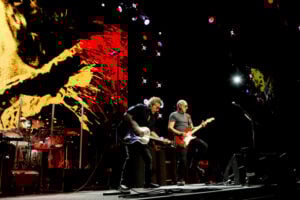
Photo: Patrick Colecchio-management / Public domain
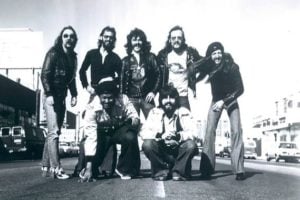
Our Top 10 Songs From The Association list looks back at one of the great American harmony groups of the 1960s. Like The Grass Roots, Paul Revere & The Raiders, The Beach Boys, and Sonny & Cher, The Association worked with some of the remarkable Los Angeles studio musicians now remembered collectively as the Wrecking Crew. Terry Kirkman had played in an early group with Frank Zappa before Zappa formed the Mothers of Invention. Kirkman later joined The Inner Tube and then the larger group The Men before six musicians broke away to form The Association. One of the group’s early singles was “Babe I’m Gonna Leave You” in 1965, the same song Led Zeppelin later recorded for its debut album.
The Association broke nationally in 1966 with “Along Comes Mary,” followed almost immediately by the number-one hit “Cherish.” Their debut album, And Then… Along Comes the Association, and the second album, Renaissance, both arrived in 1966. The 1967 album Insight Out produced the enormous hits “Windy” and “Never My Love.” The band followed with Birthday in 1968, The Association in 1969, Stop Your Motor in 1971, and Waterbeds in Trinidad! in 1972. The later albums did not produce hits on the scale of the group’s mid-1960s run, but the best Association singles never disappeared from oldies radio or American pop culture. This list combines the biggest hits with a few album tracks that show there was more to the group than the songs everybody already knows.
# 10 – On a Quiet Night

We begin with “On a Quiet Night,” a beautiful deep cut from the Association’s 1967 album Insight Out. P.F. Sloan wrote the song, and Bones Howe produced the recording during the sessions that also produced the band’s “Windy” and “Never My Love.” The arrangement is gentler than those giant singles, giving the group’s harmonies plenty of room to carry the song. Members of the Los Angeles studio scene helped shape the album’s polished sound, but the voices remain the real focus. “On a Quiet Night” was never released as a major hit single, which is one reason it still feels like a discovery when people hear it today. It is the kind of album track that proves The Association had much more depth than its chart history alone suggests.
# 9 – No Fair At All

“No Fair at All” comes from the Association’s second album, Renaissance, which was released in November 1966. Jim Yester wrote the song, and his brother Jerry Yester produced the album during a period when the band was trying to follow the enormous success of “Cherish.” The single was released in January 1967 and reached number 51 on the Billboard Hot 100. That chart showing was modest by Association standards, but the song’s melody and harmonies have aged beautifully. The recording sounds more intimate than the band’s biggest productions, which gives it a different kind of emotional pull. “No Fair at All” remains one of the strongest songs from an album that deserves more attention than it usually receives.
# 8 – Enter The Young

“Enter the Young” opens the Association’s 1966 debut album, And Then… Along Comes the Association. Terry Kirkman wrote the song, and its idealistic message fits perfectly with the sense of possibility surrounding youth culture in the middle of the 1960s. Curt Boettcher produced the debut album and helped give the group’s early recordings their bright, layered sound. The arrangement builds from a thoughtful opening into the kind of vocal lift that would become one of the band’s signatures. “Enter the Young” was not one of the album’s giant singles, but the group later revisited it for a 1968 release. It remains one of the clearest examples of The Association sounding ambitious before success had fully defined what audiences expected from them.
# 7 – The Time It Is Today

“The Time It Is Today” appeared on the Association’s 1968 album Birthday. Russ Giguere wrote and sang the song, giving it a slightly different personality from the Terry Kirkman material that supplied many of the group’s best-known recordings. Bones Howe produced the album, surrounding the band’s harmonies with the smooth studio sound that defined this phase of their career. The track was later paired with a new version of “Enter the Young” on a late-1968 single, although it did not become another major chart hit. Its reflective mood and gentle arrangement make it one of the quieter highlights on Birthday. “The Time It Is Today” is exactly the kind of song that rewards listeners who go beyond the Association’s greatest-hits collections.
# 6 – Time for Livin’
“Time for Livin’” was released from Birthday in 1968, not 1969. Written by Don and Dick Addrisi, the song has the easy optimism of its title without losing the sophisticated vocal blend that made The Association distinctive. The single reached number 39 on the Billboard Hot 100 and number 23 on the UK Singles Chart. That made it the group’s final Billboard Top 40 hit, even though several more singles followed. The performance feels lighter than some of the band’s more dramatic ballads, which is part of its charm. “Time for Livin’” captures the Association at the end of its major-hit period while still sounding completely confident.
# 5 – Everything That Touches You
“Everything That Touches You” was one of the final major hits of the Association’s career. Terry Kirkman wrote the song, and it was released as a single in January 1968 before appearing on Birthday. The record reached number 10 on the Billboard Hot 100, giving the band its last American Top 10 single. Its arrangement grows patiently, allowing the harmonies to become larger and more emotional as the song moves forward. The lyric is romantic without becoming overly sentimental, which is one reason the recording has held up so well. “Everything That Touches You” belongs this high on the list because it shows the classic Association sound at full strength one last time.
# 4 – Along Comes Mary
“Along Comes Mary” was the record that changed everything for The Association. Written by Tandyn Almer and released in 1966, the single reached number seven on the Billboard Hot 100 and gave the band its first major national hit. Curt Boettcher’s production is packed with rhythmic detail, quick lyrical phrases, and vocal arrangements that sounded unlike almost anything else on AM radio at the time. The mysterious lyric has inspired endless interpretations, but the record works even if you never try to solve it. Its success led directly into the debut album And Then… Along Comes the Association. More than sixty years later, “Along Comes Mary” still sounds like a band suddenly discovering exactly what it could do.
# 3 – Windy
“Windy” became one of the Association’s signature records when it reached number one on the Billboard Hot 100 in 1967. Ruthann Friedman wrote the song, while Bones Howe produced the recording for Insight Out. The melody is pure sunshine pop, but the arrangement is much more detailed than its effortless sound suggests. The Association’s harmonies turn the chorus into something that seems to float above the rhythm section. “Windy” spent four weeks at number one and became one of the biggest American singles of 1967. It remains one of those songs that can identify an entire era within seconds of the opening vocal.
# 2 – Cherish
“Cherish” gave The Association its first number-one single and turned the group from a promising new act into a major pop success. Terry Kirkman wrote the song, which appeared on the band’s 1966 debut album. Released after “Along Comes Mary,” it climbed to number one on the Billboard Hot 100 and stayed there for three weeks. The record is built around the group’s harmonies, but the emotional tension in Kirkman’s lyric keeps it from becoming just another pretty love song. Its success helped define the softer side of mid-1960s American pop and made The Association a household name. “Cherish” remains one of the most recognizable ballads the decade produced.
# 1 – Never My Love
“Never My Love” takes the top spot because it has become bigger than almost any single moment in the Association’s career. Don and Dick Addrisi wrote the song, and the band recorded it for 1967’s Insight Out with Bones Howe producing. The single reached number two on the Billboard Hot 100 while topping both the Cash Box chart and Canada’s RPM chart. The vocal arrangement is warm and restrained, allowing the melody to carry the emotion without overselling it. Members of the Wrecking Crew helped give the recording its polished instrumental foundation, including Hal Blaine on drums and Joe Osborn on bass. “Never My Love” is not only one of the Association’s greatest recordings; it is one of the enduring love songs of the entire 1960s.
The Association Studio Albums
And Then… Along Comes the Association (1966)
Renaissance (1966)
Insight Out (1967)
Birthday (1968)
The Association (1969)
Stop Your Motor (1971)
Waterbeds in Trinidad! (1972)
Updated September 14, 2026.
For a complete look at the various types of articles we have on the site, make sure to check out our Classic Rock Bands List and Directory.
Don’t miss our fun, in-depth article on the Top 500 Classic Rock Songs Of All Time.
If you want to see how we rank our favorite bands, check out our Top 200 Classic Rock Bands Of All Time article.
If you love interviews with legendary rock stars, we have thousands of them that you can find in our Rock Star Interviews List.
Top 10 Songs From The Association article published on ClassicRockHistory.com © 2026