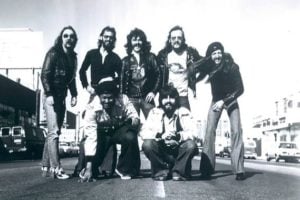
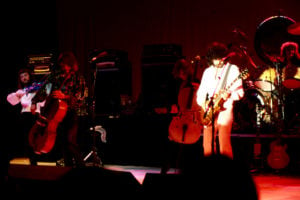
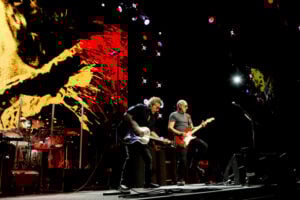
Our Top 10 Songs From the band Orleans features the best Orleans songs, including “Still The One,” “Love Takes Time,” “Dance With Me,” and more. In January 1972, Orleans was founded in Woodstock, New York, by John Hall, Larry Hoppen, and Wells Kelly. Before the year ended, Lance Hoppen, Larry’s brother, joined the group to turn Orleans from a trio to a quartet. Then, in 1976, Jerry Marotta joined the lineup to make it a quintet. This is the same Marotta who later became an elected member of the United States House of Representatives.
Intros & Inspiration
The inspiration behind Orleans originates from the Neville Brothers, as well as Allen Toussaint. The Nevilles, as well as Toussaint, came from Louisiana. This began after Wells Kelly met John Hall just before the release of Hall’s 1970 debut album, Action.
Wells Kelly was part of King Harvest’s original lineup in 1969 before joining Larry Hoppen’s college band, Boffalongo. The band’s home base was Ithaca, New York. This was the same band that first recorded “Dancing in the Moonlight,” a song that was written by Kelly’s brother, Sherman. In 1973, King Harvest turned it into a hit with their version. Boffalongo’s discography included two albums, both released under the band’s name, both by United Artists.
During this time, John Hall and his wife Johanna had already made a name for themselves when Janis Joplin’s performance of “Half Moon” appeared on her album, Pearl. This was a song the couple wrote and recorded themselves. These New Yorkers moved from the Big Apple to Woodstock to be closer to Bearsville Studios and the music scene there. Once they moved there, Hall started his band, recruiting Wells Kelly as his first member.
When Kelly agreed to team up with Hall, the multi-instrumentalist wanted to play the piano. The first lineup featured Kelly on electric piano, Hall on guitar, Bill Gelber on bass, and Roy Markowitz on drums. This lineup didn’t last long as Gelber and Markowitz opted out. Kelly convinced Hall to bring Larry Hoppen from Boffalongo to sign up. When these men became a trio, they chose Orleans as the band’s official name in January 1972. Before the end of October that same year, Larry Hoppen’s younger brother, Lance, joined the band.
East Coast Heroes
It didn’t take long for Orleans to establish a core audience while performing in clubs and the college circuit throughout the Northeast United States. Along the way, the band members met future recording artists Bonnie Raitt, Hall & Oates, and Tom Waits. As far as Rolling Stone magazine was concerned, Orleans was the best unrecorded band in America. In 1973, Orleans released its debut album via ABC Dunhill Records. The recording took place in Muscle Shoals, Alabama, with Roger Hawkins and Barry Beckett as part of the production crew.
In 1974, Orleans II became the second recording by John Hall and his bandmates. However, ABC refused to release it in the United States as it felt there were no hit singles to work with. The label also dropped Orleans, despite the band having this album released in Europe. Orleans II was the first album to feature the first recordings of “Dance With Me” and “Let There Be Music.” It wasn’t until 1978 that Orleans II was finally released in the American market, as a double LP alongside Before the Dance.
This was made possible thanks to Asylum Records, which helped Orleans score its first hit as a band with “Let There Be Music,” which came from its third album in 1975. It was followed by “Dance With Me,” another single that would become a hit for Orleans. For the band, popularity was growing and extending beyond the East Coast as its brand of music gained ground across the nation.
After Orleans recorded and released its fourth album, Waking and Dreaming, in 1976, the band earned a solid North American fan following. It was also this same year that Jerry Marotta joined the lineup as Orleans embarked on a major tour across the United States. From state to state, the popularity of Orleans was growing. The success of Orleans as a band suggested it had the potential to stand the test of time as an elite American band.
By 1977, the tension mounting among the members of Orleans had begun to take its toll. It was enough for John Hall to embark on a solo career. This meant leaving the band he founded behind to carry on without him. However, Jerry Marotta also left, opting to join Hall & Oates before moving on to perform with Peter Gabriel. Some months later, brothers Lance and Larry Hoppen joined Marotta. As for Wells Kelly, he performed with the Beach Boys.
It was also in 1977 that Bob Leinbach and Robert Martin were brought in as replacements so that Orleans could continue as a band. This new lineup was signed to Infinity Records, resulting in the 1979 release of Forever. This album featured the hit single “Love Takes Time.” Thanks to this success, Orleans went on tour, performing with artists such as Chicago and Stephen Stills.
Hard Times
In 1980, despite the success of Forever, Infinity Records became bankrupt and was acquired by MCA Records. The new label failed to promote Orleans’ self-titled follow-up album, which was recorded in Woodstock. Shortly after, Bob Leinbach left the band and was replaced by Dennis Arnero. Leinbach joined the John Hall Band.
Unfortunately for Orleans, the band members discovered their accountant had misappropriated the funds, which put them into debt. Lance and Larry Hoppen, along with their younger brother, Lane, picked up the pieces to keep Orleans going. There was also Wells Kelly, who left in 1981.
In 1982, Orleans signed with Radio Records before releasing One of a Kind. The band’s lineup at this time included new band members Michael Mugrage, Don Silver, and Ben Wisch. Jerry Marotta did join them when they were recording in Florida. After One of a Kind was released, he was replaced by Nicholas Parker.
Unfortunately for Orleans, Radio Records suffered the same fate as Infinity Records. As a result, Orleans was without a record label again. Because of this, the band’s financial struggles continued. To at least make ends meet, the Hoppen brothers performed at a variety of clubs, including their side group, Mood Ring. However, in 1984, Larry Hoppen lost his voice due to poor air quality, which compromised his singing ability. This latest chapter of misfortune had the Hoppens debating whether or not the career run of Orleans was worth continuing.
Wells Kelly
While the Hoppen brothers and Jerry Marotta were busy with their music careers, Wells Kelly did the same from 1981 until 1984. In 1983, he was part of Meat Loaf’s Neverland Express before his body was found dead while he was staying in London, England. According to the post-mortem examination, it was revealedthat Kelly’s cause of death came from his vomit. It was also discovered he had high levels of cocaine and morphine, as well as heroin.
Kelly’s death shocked John Hall, Bob Leinbach, and Larry Hoppen to reunite. They met in Ithaca, New York. Lance Hoppen couldn’t join the band to perform at a memorial for Wells Kelly as he was committed to another event. However, as John Hall and Larry Hoppen reunited, the two rediscovered the Orleans magic that first made the band tick.
The Return
In 1985, John Hall used his connections in Nashville, Tennessee, to bring Orleans back together as a band and record the album Grown Up Children. The album was released in 1986 with John Hall, Lance Hoppen, Larry Hoppen, and Bob Leinbach as the core lineup. There were guest vocal appearances by Chet Atkins, Bela Fleck, Ricky Skaggs, and Steve Wariner.
While in Nashville, Hall and Larry Hoppen realized it was a great place to write songs, but not so great for Orleans as a band. This led the group to fall into a dormant state until it slowly regained its musical presence in the American Northeast. This led to a 1990 opportunity to cut a live album for the growing fan base in Japan. Orleans responded by performing two shows at Woodstock’s Bearsville Theater, featuring John Hall, Lance and Larry Hoppin, and Bob Leinbach. Paul Branin was a member of the band’s lineup at this time. Serving as special guests for the live performances were Lane Hoppen, Rob Leon, Jonell Mosser, and John Sebastion.
Orleans Live was a double-CD set released in Japan in February 1991, a few months before the band performed live there for the first time. This was followed in 1993 by the American release of the band’s live recordings, split into two separate releases. It was also when Orleans didn’t have a label in the United States, so the band was signed to Japan’s Pioneer, which released Analog Men as an album in 1994. Due to the popularity of Orleans at the time, the group returned to Japan to perform more shows.
When Woodstock ’94 was proposed as a concert for Saugerties, New York, this was an opportunity too good for Orleans to turn down. Orleans was touring as a trio with Hall and the Hoppins brothers a year later. Most of the venues they performed in were clubs, but the band also toured with Fleetwood Mac, Pat Benatar, and REO Speedwagon. In 1996, Ride became the latest album released by Orleans. Still, the independent label they dealt with at the time failed to promote the album properly for its single, “I Am on Your Side” from receiving more radio airplay.
Second Split and Reunion
In 1997, the members of Orleans opted to take another break from each other as a band. This came when John Hall spent more time as a songwriter in Nashville, and Lance Hoppin toured with various country artists. A remarried Larry Hoppin wanted to spend more time at home and start a family. However, his love of music led him to become involved with the Voices of Classic Rock beginning in 1997. In 2000, he also formed his band so he could perform again. In 2003, he joined Rock & Pop Masters (RPM) as part of a supergroup that featured lead singers from Rainbow, Santana, Survivor, and Toto.
Despite going their separate ways for a second time, John Hall, the Hoppin brothers, and Bob Leinbach reunited as Orleans and opted to remain together as a band from that point forward. Peter O’Brien was also in the lineup at this time. However, the lineup changed again after John Hall entered politics in 2006 and served as a Democratic congressman until he was defeated by Nan Hayworth in 2010. Replacing Hall was Dennis Amero’s return. Replacing O’Brien was Charlie Morgan. A year later, the band released another live recording, We’re Still Havin’ Fun.
As a group, Orleans continued performing. However, on July 24, 2012, Larry Hoppin ended his own life just before Orleans was scheduled to perform in concert. However, Lance Hoppin rose to the occasion by setting aside his grief over losing his older brother so Orleans could continue the tour. It was assumed that Orleans would cease as a band once the touring was over, and the men would go their separate ways again.
However, this was not the case, as 2013 was a year that featured Orleans’s record and release of The Last Band Standing, as well as the double-disc compilation No More than You Can Handle: A 40 Year Musical Journey.
Orleans continues today as a band with Dennis Amero, Lance and Lane Hoppins, Tom Lane, and Brady Spencer. In 2019, then again in 2022, John Hall retired. After retiring the first time, Hall felt he wasn’t entirely done, but complications from the COVID-19 pandemic put concert tours on hold until the summer of 2021. In the meantime, Orleans recorded a video performance of “No More Than You Can Handle” in memory of Larry Hoppen to boost public morale as the world felt like it was in the middle of its darkest hour.
Top 10 Orleans Songs
# 10 – I Am on Your Side
If you want a song that makes you feel like a superhero, “I Am on Your Side” from the 2017 release Love Takes Time 10 Authorized Hits By Orleans is the one to do it. The guitar solo in this awesome song served as a reminder of why Orleans was so heavily favored by fans who were fortunate enough to encounter the band’s musical material. This is simply a beautiful song. If you feel the world is against you, listen to “I Am on Your Side” to be reminded that it’s no more than you can handle.
# 9 – Don’t Throw Our Love Away
From the album Forever, “Don’t Throw Our Love Away” earned critical acclaim as a witty pop song. The main highlight came from the guitarwork, which demonstrated that not even John Hall’s departure was enough to thwart Orleans from putting forth quality music that could win over and maintain a solid fan base. Unfortunately for Orleans, Infinity Records couldn’t give Forever, nor “Don’t Throw Our Love Away,” the amount of attention they deserved for the musical masterpieces they were at the time.
# 8 – Forever
On the US Billboard Adult Contemporary Songs chart, “Forever” peaked at number 24 in 1979. It was the title track from Orleans’ fifth studio album. After Larry Hoppen ended his life on July 24, 2012, the surviving members of Orleans performed this song. It was written by Hoppen, along with Bob Leinbach, and it was about a friendship that stood the test of time, no matter what fate decided to throw at it. The acoustic guitar that starts the song sets the tone for a heartfelt number that still makes a great tune to listen to when you feel the urge to take a trip down memory lane. Be careful if you do, as you may need a tissue before the song ends.
# 7 – Reach
In 1977, “Reach” became a number fifty-one hit on the US Billboard Hot 100 and a number forty-seven hit on the US Billboard Adult Contemporary Songs chart. In Canada, it peaked at thirty-one on its Top Singles chart. Musically, it shared similar characteristics to “Still the One” but with less funk and more groove. If you’re looking for a good cheer-up song to get out of a bummer mood, “Reach” is it. As a band, Orleans had a knack for delivering cheery material that could take someone from feeling dumpy to feeling groovy as if without effort.
#6 – Spring Fever
The appeal of “Spring Fever” came from the saxophone, which gave the song from Orleans’ Waking and Dreaming album a pop sound that made it an easy fan favorite. Unfortunately, as a single, “Spring Fever” failed to chart, but this song demonstrated Orleans at its finest, earning its place as a world-class talent. This is a cool, fun, and sexy number that’s perfect for a fan of easy-listening music. The beauty behind Orleans was their songs’ easygoing style, which also doubled as a great mood booster.
# 5 – Love Takes Time
“Love Takes Time” reached number eleven on the US Billboard Hot 100 after it was released as a single in 1979. It also became a number thirteen hit on the US Billboard Adult Contemporary Songs chart, and a number twenty-three hit on the Canadian Top Singles chart. From the album Forever, this dynamic tune also became a minor hit in Australia, peaking at number 90. While the critics felt “Love Takes Time” sounded too much like “Dance with Me” and “Still the One,” fans still loved the soft rock melody enough to consider it a favorite.
As a fan, whenever I hear a song with an outstanding piano performance, it’s usually a winner. It’s even better when the guitars and vocals can accommodate a performance that’s every bit as entertaining, not to mention uplifting.
#4 – No More Than You Can Handle
“No More Than You Can Handle” immortalized Larry Hoppen as a songwriter. This Orleans classic was one of the best tunes the band ever performed. If you want a good song that motivates someone from “I can’t” to “I can,” this is it. In a Larry Hoppen memorandum, “No More Than You Can Handle” became one of Orleans’ signature songs. 2017’s Love Takes Time: 10 Authorized Hits by Orleans featured this incredible song, written and performed by such extraordinary talent.
In 2021, when this song was released as a video to lift the spirits of music fans during the COVID-19 pandemic, “No More Than You Can Handle” became an anthem among the fortunate listeners who took the time to absorb its message. If you feel the world around you is more than you can handle, listen to this beautiful song and let it lift your spirits so you may reconsider your line of thinking. When you place faith over fear constructively, you become the best version of yourself.
#3 – Let There Be Music
“Let There Be Music” was the debut single Orleans hoped would earn it the recognition it deserved as a world-class talent, winning over a nationwide audience. It was enough to reach number 55 on the US Billboard Hot 100 and number 96 on the Canadian Top Singles chart. However, the song didn’t receive enough airplay then, so it wouldn’t be until the period before more listeners were treated to the soft rock delight it was. The guitar riffs of this song were simply amazing. If you want that great tune, perfect as you’re on the road, “Let There Be Music” is it.
#2 – Dance With Me
On the US Billboard Hot 100 and the US Billboard Adult Contemporary Songs chart, “Dance with Me” became a number one hit after it was released as a single from the album Let There Be Music in 1975. It also received gold certification from the Recording Industry Association of America. This was a second release of “Dance with Me,” featuring a melodica solo by Larry Hoppen. A melodica is a tiny keyboard that is blown into a tube.
Previously, this song was released as a single in 1974 from the band’s second studio album, Orleans II, but failed to make the same kind of impression as the newer version did. This was a song that John Hall wrote with his wife, Joanna, at the time. She created the title and lyrics while he came up with the melody. “Dance with Me” still has the infectious appeal as a soft acoustic rock number that could easily encourage the listener to take the song up on its offer. It appealed to Canadian fans enough to chart “Dance with Me” as high as number five on its Top Singles chart, and to Australian fans sufficiently to peak at number thirty-three.
#1 – Still the One
“Still the One” was a 1976 release that became a number-five hit for Orleans on the US Billboard Hot 100. From the album Waking and Dreaming, this became the band’s signature single that continues to be a crowd-pleasing favorite. In 1977, Bill Anderson turned this song into a US Billboard Hot Country Singles favorite at number eleven with his cover version.
As a love song, “Still the One” addresses his feelings for his significant other as someone who was still just as awesome to him now as she was when they first met. For Johanna Hall, the lyrics behind “Still the One” were deliberately written as a contrast to the flurry of breakup songs. As soon as the lyrics were handed to her husband, John Hall, he assembled the musical composition in just fifteen minutes. It didn’t take long for Orleans and the record label they had at the time to realize they had a hit single on their hands.
It was more than just some hit single. In 1977, it was used as a jingle to promote the American Broadcasting Company’s 1977 and 1979 television seasons. This came at a time when ABC earned the highest ratings in the United States. The song’s lyrics were also occasionally altered by various advertising agencies to promote a product or service. In 2004, Republican George W. Bush played the song during his campaign until Democrat John Hall forced him to stop. This happened again in 2008 when Republican John McCain did this for his presidential campaign. Hall, however, had no problem with a version of the song’s chorus being played during the 2008 Democratic National Convention after Senator Ted Kennedy made his speech.
“Still the One” also became a number nine hit on the Canadian Top Singles chart, a number thirty-one hit in New Zealand, and a number sixty-one hit in Australia. It also became the second certified gold seller with the Recording Industry Association of America, playing an instrumental role in Orleans’ most successful album.
Feature Photo: Brettalan, CC BY-SA 4.0 <https://creativecommons.org/licenses/by-sa/4.0>, via Wikimedia Commons
Updated January 6, 2026
Check out similar articles on ClassicRockHistory.com Just click on any of the links below……
Read More: Artists’ Interviews Directory At ClassicRockHistory.com
Read More: Classic Rock Bands List And Directory
Read More: 1970s’ Saddest Rock And Pop Songs
Read More: 25 Best Classic Rock Live Albums Of All Time
Top 10 Orleans Songs article published on ClassicRockHistory.com© 2026
Classicrockhistory.com claims ownership of all its original content and Intellectual property under United States Copyright laws and those of all other foreign countries. No one person, business, or organization is allowed to republish any of our original content anywhere on the web or in print without our permission. All photos used are either public domain Creative Commons photos or licensed officially from Shutterstock under license with ClassicRockHistory.com. All photo credits have been placed at the end of the article. Album Cover Photos are affiliate links and the property of Amazon and are stored on the Amazon server. Any theft of our content will be met with swift legal action against the infringing websites.