

From the early 1970s until the end of the decade, Tom Waits released six albums of piano-infused tales of warm beer, cold women, phantom truck drivers, and late-night episodes of shame and pleasure. All songs came from a troubadour’s voice masquerading as a backroom piano man. Over the years, Tom Waits built a loyal following that would define the term cult artist across the board. Tom Waits’ first record, Closing Time, was released in 1973. The same year also brought Bruce Springsteen’s first album, Greetings from Asbury Park, Billy Joel’s Piano Man, and Pink Floyd’s Dark Side of the Moon.
Each album Waits released in the 1970s would present fans with a voice growing more profound and darker. The increasingly rough, blues-driven sound of Tom Waits’ career was apparent by the release of the album Heartattack and Vine . That 1980 record marked the end of his Asylum years. The more dramatic turn toward unconventional rhythms, textures, and instrumentation arrived with Swordfishtrombones in 1983, when Waits developed some of the most distinctive arrangements of his generation. But many fans adore Tom Waits’ 1970s material. His early songs hold a special place in the hearts of longtime Tom Waits fans. Here are some of our favorites.
From Closing Time in 1973 through Blue Valentine in 1978, the six albums of this era traced a remarkable progression: intimate piano ballads, jazz-club storytelling, and increasingly ragged urban blues. These ten songs celebrate the wit, heartbreak, and remarkable characters that have kept those recordings alive for generations of listeners.
# 10 – Martha

Tom Waits’s “Martha” was released on his first album, Closing Time. The song centers around the story of Tom Frost calling an old love after 40 years and suggesting they meet for a cup of coffee. Yes, before Facebook, there was the concept of calling people to go out. Tom Waits’s “Martha” is one of his most beautiful songs. The idea of reaching out to your long-lost love after so much time resonates with so many people.
It is a song of beauty and pain. The strings circle Tom Waits’ vocals and piano chords, adding depth to the music and creating both clarity and ambiguity about the idea of rekindling a lost love. Tragic yet beautiful, it is what came to define the majority of Tom Waits songs in the 1970s.
Recorded for Closing Time in 1973, “Martha” showed how fully developed Waits was as a storyteller from the very beginning. He didn’t need a complicated arrangement to make decades of memory feel immediate. The conversation itself carries the emotional weight, which is why the song still sounds so affecting.
# 9 – Romeo Is Bleeding

Tom Waits’ 1978 album Blue Valentine opens with a haunting treatment of “Somewhere” from the musical West Side Story. The musical is a modern retelling of Shakespeare’s Romeo and Juliet play. The connections between American pop and theater were especially audible in the 1970s. Bruce Springsteen’s Born to Run also drew on the language of streets, young lovers, and dramatic escape, though its relationship to the musical is more a thematic comparison than a direct tribute.
Waits made the theatrical connection explicit by including “Somewhere” on his Blue Valentine album. Opening the record was one of the most heartfelt versions of “Somewhere” ever recorded. Tom Waits’ low, grave baritone set the stage for a record that explores the landscape of the city streets. While “Somewhere” opened the door, “Romeo Is Bleeding” landed the listener in the heart of Tom Waits’ urban drama.
Issued on Blue Valentine in 1978, “Romeo Is Bleeding” gives Shakespeare’s doomed-lover imagery a grimy street-corner setting. Its swaggering rhythm makes a striking contrast with the orchestral opening of the album, showing how easily Waits could move between theater, jazz, and hard-edged urban storytelling.
# 8 – Muriel
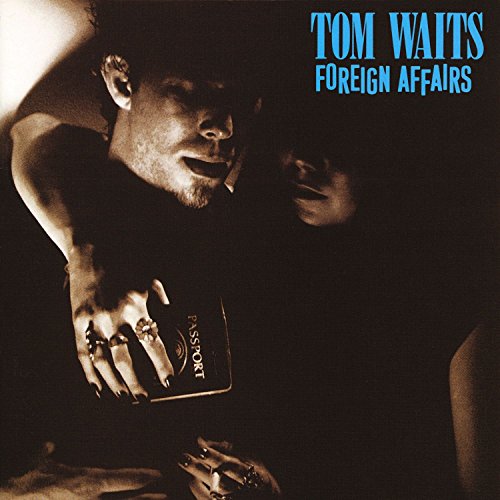
Another tale of lost love, broken hearts, visions of ghosts, cheap cigars, penny arcades, and lonely late-night bars. All wrapped up in gorgeous piano playing and sultry jazz-soaked saxophone lines. It sounds like Sinatra at his finest, but it’s just Waits at his most brilliant. Released on the Foreign Affairs LP, the song “Muriel” is to die for.
The extraordinary Tom Waits album Foreign Affairs was released in 1977. The album featured the legendary trumpet player Jack Sheldon. Also on the record was Bette Midler singing a duet with Tom Waits on the track “I Never Talk to Strangers.” “Muriel” places a lonely memory right at the center of the arrangement, while Waits lets the piano and horns do as much emotional work as the words. It sounds as though it belongs in the last set at a nearly empty nightclub.
# 7 – Ol’ 55
“Ol’ 55” was released on Tom Waits’ first album, Closing Time . The Eagles covered the song and released it on their On the Border
 LP. However, the Eagles’ arrangement of the song was in stark contrast to Waits’ original piano-lullaby version. It’s hard to believe that the same artist responsible for “What’s He Building In There?” composed “Ol’ 55,” but that is exactly what has made so many Waits listeners lifelong fans.
Some love the song, and sadly, some don’t. I always felt it was just one of those great songs that sounded good, driving down the highway on a summer day with the windows open, feeling good. It just had that vibe.
Originally released in 1973, “Ol’ 55” became one of Waits’ most widely covered early compositions after the Eagles included it on On the Border in 1974. Their version introduced the song to a much larger rock audience, although the tenderness of Waits’ original remains difficult to replace.
# 6 – Warm Beer and Cold Women

Well, you don’t have to listen to this one because just the title alone qualifies it as one of Tom Waits’ best songs. Kidding aside, the great song “Warm Beer and Cold Women” was released on the legendary Nighthawks at the Diner LP. It was an album of brand-new material recorded in front of a live audience. The song displayed the dry wit and sarcasm that Waits would present to his fans for the rest of his career. Waits’ observations of ordinary lives soon became the focus of his lyrical ideas and musings.
The performance appeared on Nighthawks at the Diner in 1975, an unusual album recorded with a jazz group before an invited audience inside the Record Plant studio in Los Angeles. The intimate setting helped Waits transform songs and comic introductions into something resembling a night in a crowded, smoky club. That combination of performance, storytelling, and improvisation is one of the reasons this album remains so distinctive among his early recordings.
# 5 – New Coat of Paint

A nice walking bass line, a blues scale, and some downtown street-walking barroom dreams illuminated one of Waits’ most enjoyable pieces. The song “New Coat of Paint” was released on Waits’ The Heart of Saturday Night LP. New Jersey legend Southside Johnny also recorded the song on his 1984 In the Heat LP.
“New Coat of Paint” opened Waits’ 1974 album The Heart of Saturday Night. Its bright piano rhythm and easy blues swing make it an inviting contrast to the more bruised ballads elsewhere in his 1970s catalog, without losing the city-night atmosphere that runs through his best early writing. There is something irresistible about its combination of optimism, late-night romance, and the simple desire to leave the past behind.
# 4 – I Hope That I Don’t Fall in Love with You
Many Tom Waits fans have argued over the years that this was Tom Waits’ best song of the 1970s. It is difficult to argue against the choice. The song was released on Tom Waits’ first record, Closing Time. As beautiful as the song was musically, the ironic twist at the end served as an introduction to Tom Waits’ mastery. One for the books for sure.
I always felt a strong similarity between Tom Waits and Frank Sinatra. Those similarities were based on both singers’ fantastic ability to paint a picture and set the scene, placing you in the shoes of those they were singing about. While Tom Waits was a writer and singer, Frank Sinatra was primarily an interpreter of songs written by others; in the end, they succeeded in the same way. They made you believe in every word that they sang.
The song first appeared on Closing Time in 1973. The lonely narrator’s night in a bar unfolds almost like a miniature movie, with Waits finding a way to make the smallest missed connection feel enormous. That is the quality that makes the Sinatra comparison so natural.
# 3 – Invitation to the Blues
It’s hard to imagine anyone else singing this song besides Tom Waits. As brilliant as Waits is as a songwriter, his performances of his material have become just as iconic. Waits sings about the blues in a growl that can never be duplicated. In the song “Invitation to the Blues,” Waits’ low baritone delivers a haunting, down-and-out portrait of a desperate character seeking solace at the corner bus stop in the middle of the night. It was a place often frequented by the characters in Tom Waits’ art throughout his career.
The song was a chilling and authentic representation of the true meaning of the blues. The song “Invitation to the Blues” was released on Tom Waits’ Small Change LP in 1976. It was Side Two’s opening track.
The combination of spare instrumentation and Waits’ weary delivery makes “Invitation to the Blues” feel less like a performed composition and more like a conversation overheard long after midnight. Waits gives the characters a real sense of place, even when they have nowhere they particularly want to go. It is one of the finest examples of his ability to turn a small human encounter into something unforgettable.
# 2 – Christmas Card from a Hooker in Minneapolis
In the second-to-last spot, we have chosen a song depicting Tom Waits’s persona from the many avenues the man has driven, walked, and slept on throughout his life. First off, how could you not love the title? It perfectly represents the story about a character simply telling a story that is genuinely just a story, if you get what we are saying. Just listen to the song; hopefully, it will all become clear.
“Christmas Card from a Hooker in Minneapolis” appeared on Blue Valentine in 1978. The song builds its impact through an intimate first-person letter, gradually revealing how little can be taken at face value. Its compassion for the narrator is what makes the final turn so devastating. Waits never needs to explain how listeners should feel about his characters, which is one of the reasons this song remains such a remarkable piece of storytelling.
# 1 – Tom Traubert’s Blues (Waltzing Matilda)

The choice for the number-one spot on our Tom Waits Top 10 Songs of the 1970s list was no slam dunk. So many great songs were written and recorded by Tom Waits during his first decade of recording. Tom Waits’ “Tom Traubert’s Blues” was the opening track on his fourth album, entitled Small Change. A beautiful piano, wrapped in luscious, teary-eyed strings and a heartfelt vocal, defines one of Tom Waits’ richest songs. Its refrain references the Australian ballad “Waltzing Matilda,” whose lyrics Banjo Paterson wrote in 1895.
Released in 1976, “Tom Traubert’s Blues” stands as one of the defining performances of Waits’ early career. Its arrangement brings together his weather-beaten voice, the emotional power of a simple piano melody, and strings that seem to carry all the sadness of the story. Waits turns the familiar phrase from “Waltzing Matilda” into a world of his own, creating one of the most moving recordings in his entire catalog.
Feature Photo: Theplatypus, transferred from English Wikipedia to Wikimedia Commons; originally credited under CC BY-SA 2.5/2.0/1.0 and GFDL.
Check out more Tom Waits articles on ClassicRockHistory.com Just click on any of the links below……
10 Best Tom Waits Songs Of All Time
Tom Waits’ Best Song From Each Of His Studio Albums
Our 10 Favorite Tom Waits Albums
Complete List Of Tom Waits Albums And Songs
The Heroines In Tom Waits Songs
Top 10 Tom Waits Songs Of The 1990s
Read More: Artists’ Interviews Directory At ClassicRockHistory.com
Read More: Classic Rock Bands List And Directory
Read More: 100 Essential Albums From The 1960s That Everyone Should Own
Updated November 7, 2026
Top 10 Tom Waits Songs Of The 1970s article published on ClassicRockHistory.com © 2026


















Hi. My name is Kayte & I’m sorry to say I just fell in love with Tom Waits. I’ve known of him & some of his songs by Bruce Springsteen & Southside Johnny, I fell in love with the album Grapefruit Moon. So I decided to delve into Tom’s works. And I do love your top ten list. The only thing I’d change is I’d make Martha #1. This is the song that brought me to my knees & seeped into my soul. I too, have been trying to find my lost love of 30 years ago. We never married, our timing was all wrong. I am still in love with him, so this song does resonate deeply for me. I have a huge collection of cacti/succulent plants & I named my newest Martha. Thank you your list. Please do more Tom things.
OH, btw, does he still perform?? I’d love to see him.
Thanks so much for the wonderful comment. I agree, Martha is the ultimate one that got away song. Its a great one. We have a lot of Tom Waits articles on the site. Just use the search bar at the top of the site and they will all come up.
I hope you find your long lost love………